
- | 9:00 am
The future of design in MENA is already here. It just looks different
Backed by Expo City Dubai Foundation's Global Innovators Programme, ventures such as Morocco's Ecodome and Egypt's Visenleer are showing how local materials, traditional knowledge and circular design can help communities adapt to climate change.
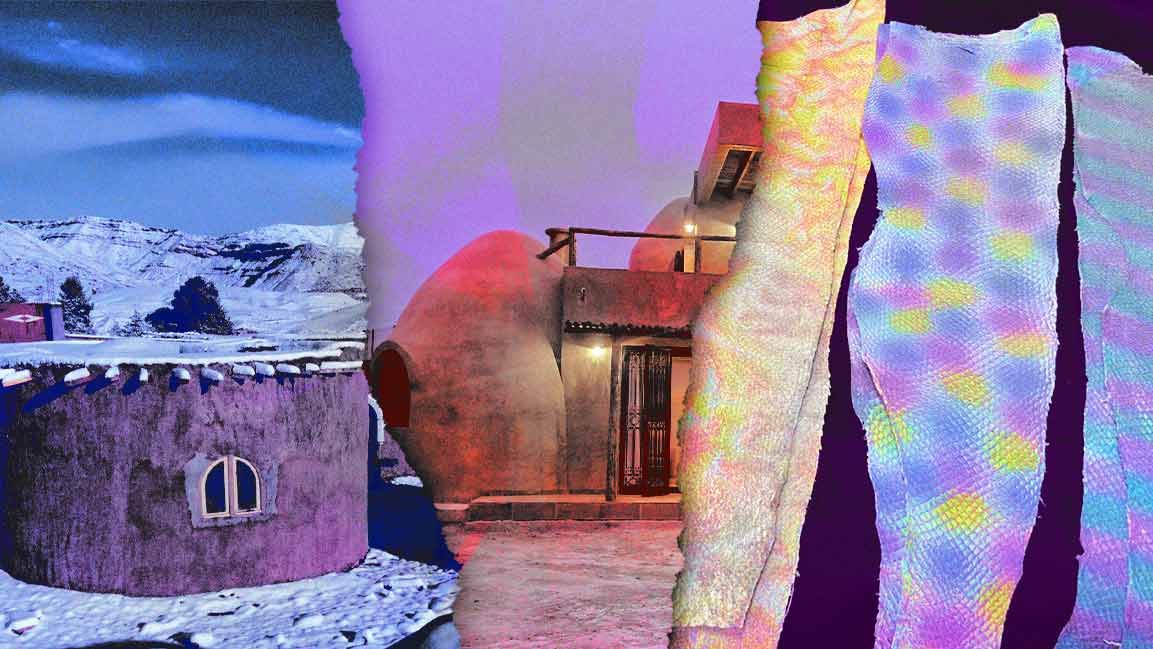


Innovation has been synonymous with creating something new. New materials, new technologies and new manufacturing processes have long been viewed as the hallmarks of progress.
Across the Middle East and North Africa, however, a growing number of entrepreneurs are taking a different approach. Instead of searching for the next breakthrough material, they are finding new value in resources that have existed for generations–Earth, clay, fish skins, ocean-bound plastic, natural fibers.
Collectively, their work reflects a broader shift in design thinking, one that places climate resilience, circularity and community impact at its core. Rather than importing solutions developed elsewhere, these founders are building businesses around local materials, indigenous knowledge and regional challenges.
It is also a movement attracting institutional backing. The Expo City Dubai Foundation’s Global Innovators Programme, which funds, supports and accelerates solutions addressing some of the world’s most pressing environmental and social challenges, recently selected seven ventures from more than 1,000 applications across 84 countries for its eighth cohort.
Following a rigorous selection process, seven ventures from Nigeria, Peru, Morocco, India and Egypt were chosen for their ability to deliver practical, scalable solutions for vulnerable communities. Among them were Morocco’s Ecodome and Egypt’s Visenleer. Although they operate in entirely different industries, both companies are challenging long-held assumptions about where innovation begins.
BUILDING WITH THE PAST FOR THE FUTURE
For Youness Ouazri, CEO and founder of Ecodome, the inspiration did not come from a laboratory. It came from Morocco’s architectural heritage.
Across the Atlas Mountains and the country’s southern regions, centuries-old kasbahs and earthen villages have demonstrated remarkable resilience, naturally regulating indoor temperatures while relying on materials sourced directly from their surroundings.
“Morocco’s rich architectural heritage has been our greatest source of inspiration,” says Ouazri. “Traditional architecture was naturally adapted to the local climate.”
Rather than preserving these techniques as relics of the past, Ecodome has modernized them for today’s challenges.
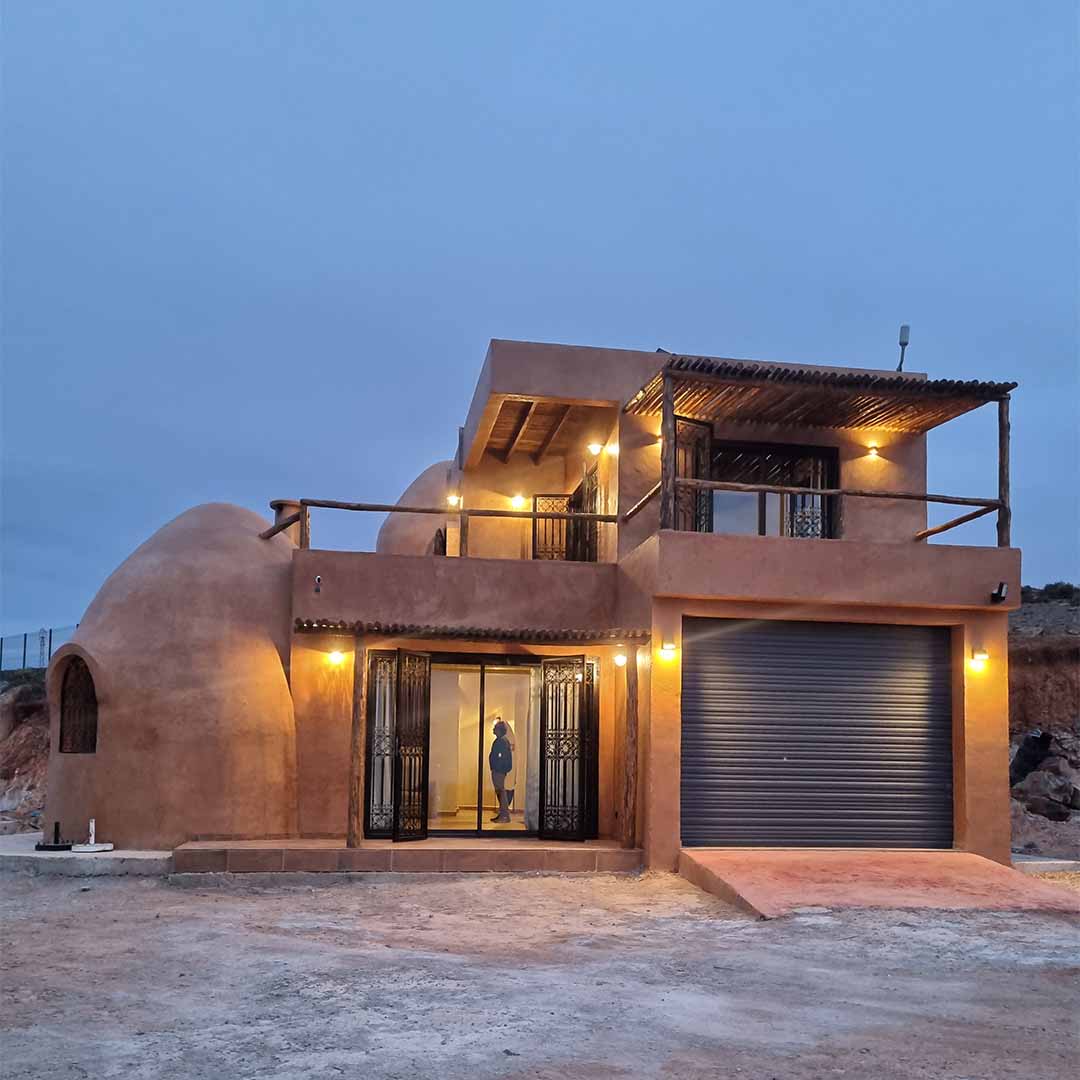
The company combines rammed earth, adobe, and superadobe construction with structural engineering, seismic design standards, and Building Information Modeling (BIM) technology to create buildings that meet modern safety requirements while significantly reducing embodied carbon.
Courtesy: Ecodome
The challenge Ecodome set out to address extends far beyond architecture.
Modern construction depends heavily on cement and steel, materials responsible for a significant share of global carbon emissions. Buildings also consume vast amounts of energy for cooling, particularly in hot climates across North Africa and the Middle East. At the same time, conventional construction remains financially out of reach for many rural communities.
“Our mission is to provide climate-resilient, low-carbon buildings using local earth and natural materials,” says Ouazri.
Instead of transporting materials across long distances, Ecodome starts by asking what is already available.
Locally sourced earth, sand, clay and natural fibers become the building blocks for homes, schools, eco-lodges and community infrastructure. The company also produces ECOBRIQUE, a sustainable earthen brick developed to improve construction efficiency while maintaining the environmental benefits of natural materials.
The model goes beyond reducing emissions. Ecodome works with local artisans and trains rural workers in ecological construction techniques, preserving traditional building knowledge while introducing modern engineering standards and quality control.
Yet the company’s biggest obstacle has not been technical.
“Our biggest challenge has been changing perceptions about earthen construction,” says Ouazri. “Many people still associate earth with poverty or outdated building methods.”
Through engineering validation, laboratory testing and completed projects, Ecodome has sought to demonstrate that earth can perform as a durable, high-performance construction material capable of meeting today’s housing and climate challenges.
WASTE AS A RESOURCE
If Ecodome looks to the ground for answers, Visenleer looks to the coastline.
Founder and CEO Moemen Sobh never intended to build only a fashion company.
“Fashion was the entry point,” he says. “The real mission has always been about showing that waste can become an opportunity for communities facing environmental and economic challenges.”
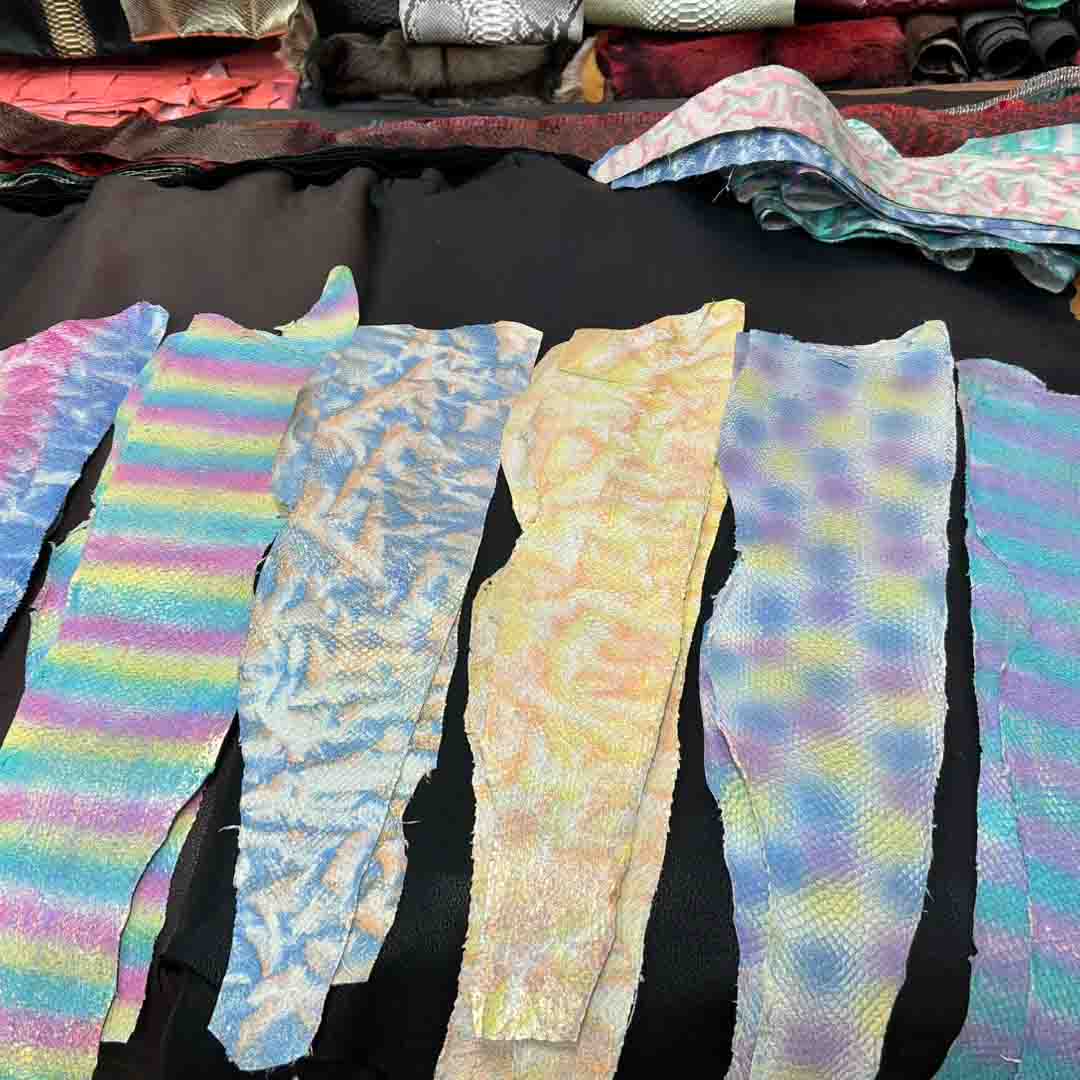
Visenleer transforms ocean-bound plastic, fish skins and other discarded materials into regenerative products, demonstrating that waste can become both a commercial resource and a climate solution.
Courtesy: Visenleer
Its ambitions extend beyond consumer products.
Through projects such as FisherShade™, the company is exploring how regenerative materials can create cooling shade structures for markets, schools and public spaces exposed to rising temperatures. The idea is to address two environmental challenges simultaneously by reducing waste while helping communities adapt to extreme heat.
“I hope Visenleer helps change how people think about resources, climate adaptation and local economies,” says Sobh. “If ocean-bound plastic, fish skins and other materials that are normally discarded can become products, jobs and climate solutions, then communities that are often viewed as vulnerable can become leaders of innovation.”
The philosophy challenges decades of linear manufacturing.
Instead of extracting raw materials, producing goods and eventually discarding them, Visenleer designs around circularity from the outset. Every product begins with questions about where materials originate, how they can be repaired, how long they can remain in use and what happens at the end of their life.
Digital Product Passports are central to that approach. “The Digital Product Passport is not only about data,” Sobh says. “It is also about preserving stories.”
By documenting where materials came from, who worked on them and the environmental impact they created, the company hopes to maintain transparency as it grows without losing its connection to the communities that inspired the business.
DESIGNING FOR PEOPLE AND PLANET
While both founders are tackling environmental challenges, they insist sustainability alone is not enough.
Design must also improve people’s lives.
“For me, the two cannot be separated,” says Sobh. “A solution that is good for the environment but does not work for people will not last. Equally, a solution that benefits people today but damages the environment tomorrow is not truly sustainable.”
That philosophy shapes every decision at Visenleer, from using local waste streams and reducing pollution to creating income opportunities, supporting skills development and designing products that can be repaired rather than replaced.
Ecodome follows a similar principle.
By relying on local materials and local labor, the company reduces environmental impact while creating jobs and preserving construction techniques that have evolved over centuries.
In both cases, sustainability is not simply about lowering emissions. It is about strengthening local economies and building resilience within communities.
CONSTRAINTS THAT ALLOW FOR CREATIVITY
Working with regenerative or natural materials rarely follows the predictability of industrial manufacturing.
Fish skins vary. Ocean plastics vary. Natural fibers vary. Even soil composition changes from one region to another.
Rather than viewing these inconsistencies as limitations, both companies see them as opportunities to innovate.
“Constraints force creativity,” says Sobh.
Working with regenerative materials has required Visenleer to rethink dimensions, textures, manufacturing methods and expected product performance. Instead of forcing materials to behave like conventional industrial inputs, the company has adapted its designs to work with their natural characteristics.
Ecodome has taken a similar approach. Customer feedback pushed the company to improve construction speed, structural performance and finishes while ensuring compliance with modern regulations. Those challenges led to the development of ECOBRIQUE, refinements in earthen formulations for different regions and greater integration of BIM throughout the design process.
In both businesses, innovation has emerged from adapting to the material rather than replacing it.
REDEFINING VALUE
Perhaps the greatest challenge facing both companies has been changing perceptions.
Modern construction has conditioned many people to associate concrete and steel with progress, while earthen buildings are often dismissed as outdated.
Similarly, recycled and regenerative materials continue to battle assumptions that they are somehow inferior to products made from virgin resources.
Sobh believes the same shift is needed in the way consumers think about luxury.
“I hope people stop seeing sustainability and luxury as opposites,” he says.
Historically, luxury has been associated with exclusivity, scarcity and resource-intensive production.
For Sobh, the next generation of luxury will instead be defined by transparency, craftsmanship, responsibility and a meaningful connection between products, the people who make them and the materials they come from.
“The real luxury is knowing that what you own contributes to restoration rather than extraction.”
A REGIONAL MODEL OF INNOVATION
The selection of Ecodome and Visenleer by the Expo City Dubai Foundation’s Global Innovators Program reflects a broader shift in how climate innovation is evolving across the region.
Increasingly, the most promising ideas are not simply adopting global technologies. They are building on local knowledge, abundant natural resources and community participation to solve problems that are becoming increasingly urgent across the Global South.
The program supports that transition by providing funding alongside mentorship, technical guidance and access to partnerships that help early-stage ventures scale their impact.
It also signals growing recognition that climate adaptation will require more than breakthrough technologies. It will require new ways of thinking about the resources already available.
For years, innovation in the Middle East and North Africa was often measured by how effectively local companies could adopt solutions developed elsewhere.
Today’s founders are reversing that equation. Traditional earthen architecture becomes climate technology. Discarded fishing waste becomes regenerative infrastructure. Local craftsmanship becomes industrial innovation.
Importantly, neither company romanticizes the past. Both rely on modern engineering, digital tools and rigorous quality standards to bring their ideas to market.
The innovation lies not in rejecting technology but in using it to unlock the value of local ecosystems, materials and traditions.
As climate change, resource scarcity and extreme heat reshape how countries build cities and manufacture products, that philosophy may become one of the region’s defining competitive advantages.
The future of design may not depend on inventing entirely new materials. It may depend on seeing familiar ones differently. For founders like Ouazri and Sobh, the future is not about extracting more from the planet. It is about designing systems that allow communities to thrive with what they already have. As climate resilience becomes one of the defining challenges of the coming decades, that approach could become one of the Middle East and North Africa’s most valuable exports.

Featured Videos
More Top Stories:



FROM OUR PARTNERS