
- | 9:00 am
The Gulf’s critical minerals strategy is a hedge against a China-dependent world
From mines in Africa to processing hubs in the Gulf, the battle for the metals of the future is reshaping global alliances
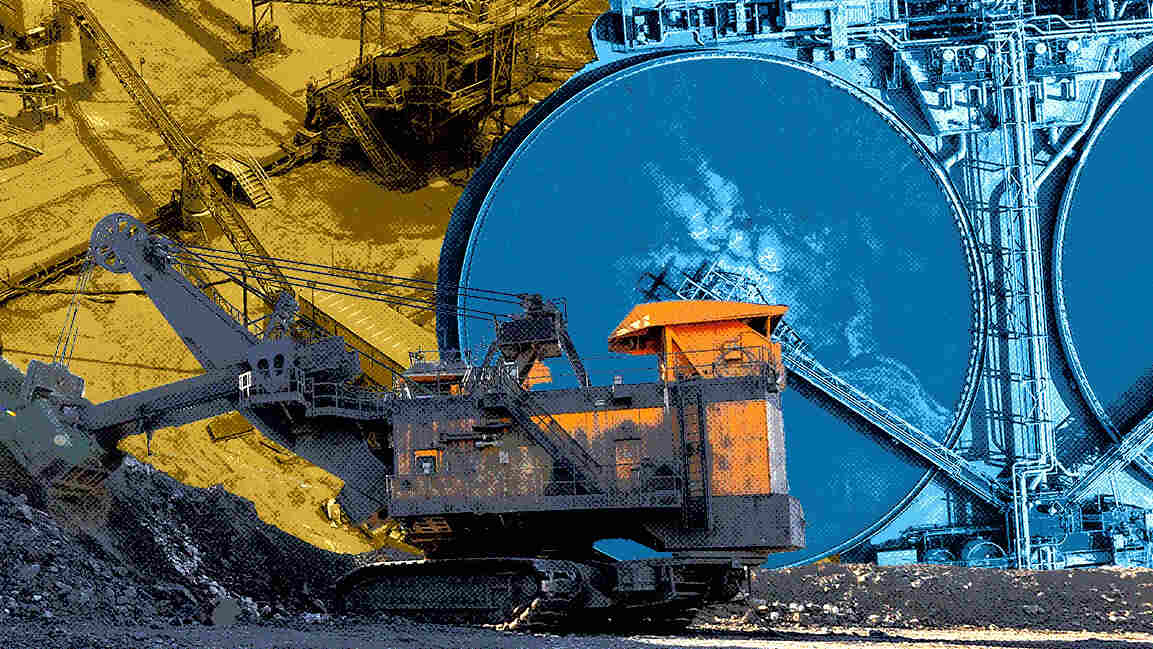


Ask most people what the Gulf has been buying lately, and they will mention football clubs, AI chips, perhaps Manhattan real estate. Almost no one mentions cobalt. While public attention remained fixed on the region’s more visible acquisitions, Gulf sovereign wealth funds spent the past two years assembling something considerably less photogenic: upstream mining stakes, processing capacity, and the port infrastructure required to move it all at scale.
The clearest indication of how far this has progressed came in February, when 54 countries sent representatives to a critical minerals summit in Washington. Among the announcements was a detail that drew little attention outside the industry: a joint venture routing 50,000 tons of Congolese copper toward Gulf allies, separate from the 100,000 tons earmarked for the United States. It is a minor line in a lengthy communiqué. It is also the clearest evidence yet that the Gulf has secured its own allocation in the global critical minerals market.
NECESSITY FINDS ITS FINANCIERS
Whether 2026 actually deserves to be called a turning point rather than simply the continuation of a longer trend is itself contested among those watching this space most closely.
The most cautious view comes from Aidan Davy, Co-Chief Operating Officer at the International Council on Mining and Metals. “The jury is still out on whether 2026 will ultimately be seen as a true turning point rather than the continuation of longer-term trends,” he says.
Even so, he points to three signals of real change. Sovereign wealth funds that once held passive equity stakes are taking a more active ownership role, which he reads as an intent to shape entire value chains rather than simply finance them.
Several Gulf states have completed or are finalizing bilateral mineral agreements that combine investment, infrastructure and diplomacy into a single package. And investments in domestic processing capacity are beginning to pay off.
For Dr. Cauvery Ganapathy, Fellow at the Observer Research Foundation Middle East, a recent regional war looms large over how the moment should be read. The conflict, in her account, exposed how interdependence can be weaponized and how costly it is to be unprepared for that, raising the value of diversification in strategic sectors like critical minerals considerably.
Against that backdrop, she contends that the GCC’s growing engagement with African countries takes on new weight, extending well beyond the upstream extractive segment into the entire critical minerals value chain, with sectoral coordination potentially accelerating the GCC’s own diversification and localization efforts closer to home.
The same conflict, she adds, gave fresh urgency to the energy transition as a route to energy diversification through indigenous sources, and reinforced an already-building push to localize defense production and build domestic industrial bases.
Together, these pressures have sharpened demand for more resilient critical mineral supply chains that give the GCC greater agency, as the UAE and Saudi Arabia ramp up their own diversification strategies.
Somewhere more specific than geopolitics or fund behavior is where Luqman Ahmad, Founder at Basirat Advisory, a firm specializing in mining investment intelligence across Africa and emerging market jurisdictions, locates the shift: in who actually carries financial risk.
Capital was never the Gulf’s constraint, he maintains. “When the Pentagon finances its share of a refinery on Saudi soil on a non-recourse basis, that is no longer a memorandum of understanding, it is American industrial policy underwriting Gulf infrastructure,” he notes. That timing isn’t coincidental. China’s export controls made unmistakably clear that the Gulf’s industrial and AI ambitions depend on minerals that Beijing can restrict at will. “Strategies born of necessity tend to be seen through,” he adds.
That question of necessity runs through Brian Menell’s answer, too. CEO and Chairman of TechMet, a critical minerals investment company focused on the responsible production, processing, and recycling of metals critical to the clean energy transition, Menell sees 2026 as the year Western-aligned governments stopped merely acknowledging supply chain vulnerabilities and began actively funding fixes.
Growing geopolitical tension, in his telling, has reinforced that access to critical minerals isn’t a commercial issue so much as a matter of national security, industrial competitiveness, and the technologies that will define the twenty-first century, pushing governments toward more public sector financing, policies that incentivize investment, de-risking mechanisms, and bilateral and multilateral partnerships aimed at building more resilient supply chains.
The shift is framed in broader terms still by Andrew Naylor, Head of Middle East and Public Policy at the World Gold Council. “Critical mineral strategies are becoming increasingly central to economic security, industrial policy, and the global energy transition,” he says. As geopolitical tensions rise and supply chains grow more exposed to disruption, governments and investors, in his view, are paying closer attention to the minerals, metals and infrastructure underpinning future-facing technologies, national resilience, and long-term economic growth.
Naylor also argues that the definition of “critical minerals” is too narrow, pointing to gold as an example. Although it rarely appears on official critical minerals lists due to its diversified supply, he considers it strategically important for economic resilience, wealth preservation, and advanced technologies.
Beyond its role as a financial asset, gold is used in high-end electronics, healthcare diagnostics, and clean energy research, with applications ranging from mobile phones and vehicle braking systems to disease detection, due to its unique physical and chemical properties.
The broader lesson, in his view, is that strategic importance should not be determined solely by government lists, but by the role minerals play in strengthening industrial capabilities, technological innovation and national resilience. That perspective aligns with the Gulf’s own strategy of investing across mining, processing, logistics and international partnerships to build more integrated and resilient supply chains as part of its wider economic diversification agenda.
THE WEAKEST LINK THEORY
Ask which of the three pillars is weakest, and the closest thing to consensus is that processing is the laggard, though not everyone agrees that the question has a single answer. Ahmad doesn’t hedge. “Processing is clearly the weakest of the three, but the more interesting question is why it has remained weak globally for twenty years,” he says. Refining margins are thin, in his account, and China has repeatedly shown it will price any new entrant out of the market, which is exactly what kept private Western capital away for two decades.
Building that kind of capacity requires investors willing to take a twenty-year view without needing a return by year five, a description he thinks fits sovereign capital unusually well. “The Gulf’s weakest pillar may be the one it is best placed to address,” he says.
A similar conclusion emerges from a different angle in Ganapathy’s answer. He points to upstream partnerships combined with logistics capability as where the GCC has built its most substantive value so far, and likely where its influence will remain strongest in the short to medium term.
The weakest link, in her view, sits in the midstream and processing segment, a gap that isn’t unique to the Gulf so much as a global pattern, where China’s market dominance rests on a vertically integrated model built systematically over decades. She points to the sector’s capital intensity, energy intensity, and demand for advanced technical skill as barriers steep enough to keep out any country other than China, the first mover.
Even so, she sees the UAE and Saudi Arabia specifically as having both the interest and the capability to back that ambition with real capacity.
Menell believes the midstream remains the West’s greatest strategic vulnerability, with insufficient processing capacity to turn raw materials into battery chemicals, magnet materials and specialty metals. China, he notes, refines nearly all battery-grade graphite, more than 90% of rare earths, and 60-70% of global lithium and cobalt.
He also points to distorted market dynamics, arguing that Chinese state-backed producers have a two-decade head start and routinely flood the market with excess supply, driving down prices and making many competing projects commercially unviable.
Davy, however, rejects the idea of a single weakest link. He says the importance of each pillar depends on a country’s strategy, adding that domestic processing is only economically viable with reliable mineral supplies and low-cost energy. Without both, he says, processing becomes more of a political ambition than an economic one.
He believes logistics is just as important as processing. Even with mineral supplies and refining capacity, weak transport infrastructure limits value creation, and he says the Gulf’s logistics network still needs strengthening. While all three pillars should develop together, he believes the region’s low-cost energy and growing renewable capacity, particularly solar, provide a strong foundation for scaling them.
NEITHER LOAN NOR LEVERAGE
Speed and neutrality matter most to Ahmad. “A Gulf sovereign fund can commit in months what a Western development institution might take years to approve, and accepting Emirati capital does not oblige Kinshasa to choose between Washington and Beijing,” he says.
Ahmad argues that the Gulf’s emergence as a third bidder changes the dynamics of negotiations with both China and the U.S., regardless of whether producer countries ultimately choose Gulf partners.
Ganapathy sees Gulf investment as an opportunity for African countries to move beyond extraction into higher-value processing, while noting this must be viewed alongside existing agreements with China and the U.S. As many African states seek to renegotiate those partnerships amid rising resource nationalism, she believes the Gulf’s push beyond upstream mining comes at a pivotal moment.
She also sees a unique advantage in the Gulf’s proximity, logistics networks and industrial capabilities, which could help shorten supply chains and position the region as a trading hub for Africa’s critical minerals. Africa’s vast renewable energy potential, she adds, further aligns with the Gulf’s energy transition ambitions.
Unlike China’s debt-led model or the U.S.’s strategic leverage, Ganapathy adds that the GCC is placing greater emphasis on investing across the midstream and downstream value chain, while acknowledging that commercial interests underpin all three approaches.
Davy credits the Gulf with successfully positioning itself as a long-term strategic partner rather than simply a source of capital or a buyer of materials, operating with a pragmatism he sees as distinct from other suitors, including capital that doesn’t come loaded with the prescriptiveness or debt dependency associated with some other finance pools.
Davy also sees geography as an advantage, arguing the Gulf’s proximity, infrastructure and low-cost energy make it an attractive partner. Rather than a zero-sum contest, he believes African countries now have greater choice, with the strongest partnerships aligning capital, infrastructure, processing and long-term investment with national development priorities.
Menell sums up the Gulf’s offer as a combination of patient, long-term capital, a genuine ambition to diversify away from fossil fuels, and strong infrastructure and logistics capabilities.
As countries diversify their critical mineral supply chains, Davy sees the Gulf as well-positioned to play a larger role.
The sector’s long development timelines and high upfront costs are well-suited to sovereign wealth funds, while the region’s strategic location and industrial expertise position it to connect resource-rich countries with global manufacturing markets and support investment beyond extraction into infrastructure and processing.
EARLY, UNPROVEN, STILL AMBITIOUS
Early-stage has a specific technical meaning that warrants precision, according to Ganapathy. It largely refers to the upstream segment and the first part of the midstream, initial processing and separation, rather than anything further down the value chain.
By her account, the region still has a long way to go before it develops processing capabilities that would matter at a global scale, and the bilateral and multilateral partnerships it’s been building are central to how it plans to close that gap.
Ahmad believes the Gulf’s ambitions remain at a very early stage. “At present, the flagship project is a term sheet rather than a refinery,” he says. The real constraint, he adds, is expertise rather than capital.
Rare earth processing requires specialized know-how, leaving the region five to ten years away from producing material at the scale and quality that battery manufacturers require, despite its growing strategic importance.
Building competitive processing capacity, Menell argues, is a long-term effort requiring sustained investment and technical expertise. Rather than competing head-on with China, he says Gulf states should strengthen diversified global supply chains by focusing on strategic minerals.
In Ahmad’s assessment, the Gulf’s end of the supply chain is largely a solved problem already. “The Gulf end of the corridor is largely solved, Jebel Ali works,” he believes.
Where things actually get decided, in his view, is inland Africa, where a port agreement doesn’t yet amount to a mineral corridor. The corridor itself is the rail, the roads, and the customs regimes behind it, and building that out is a decade of patient, unglamorous work rather than a single deal.
The final piece, he argues, is trust. No manufacturer redesigns its supply chain around a new node until it has watched years of reliable delivery play out. Capital can build the physical infrastructure, but only a track record actually wins the customers.
Ganapathy ties the answer back to the earlier markers she’d already identified around what the Gulf brings to African partnerships, arguing that meeting that potential is the primary requirement. Beyond that, she calls for a genuinely new model of cooperation, one built around the needs and ambitions of African countries themselves rather than imposed from outside.
She points to Africa’s infrastructure and logistics gaps as a key opportunity, arguing the GCC’s expertise in both positions to help move critical minerals more efficiently from mine to market.
Part of the reason the sector receives limited attention, Menell believes, is that progress comes through incremental investments and policy initiatives rather than headline-grabbing events.
As Gulf states deepen investment alongside Western partners, he sees these moves as part of a long-term effort to build secure, diversified supply chains, one that, like China’s rise, will take years to fully develop while advancing both Gulf diversification and Western economic security.
The coverage gap, according to Ganapathy, stems from the narratives that dominate the sector. Attention has focused on China’s dominance and formal government alliances, or on supply shortages severe enough to disrupt industry, as seen in the U.S., India and the EU after Chinese export controls. The GCC, by contrast, has avoided similar disruptions and does not view China through the same lens of strategic competition, making its role in the sector less prominent.
Engagement with Africa, in her account, is mostly read through the lens of economic diversification, a longer-term concern that draws less urgency than an active shortage would, which she suggests is likely why the story hasn’t registered the same level of interest in the Gulf as it has elsewhere.
She adds a second factor, that GCC countries simply haven’t pushed forward the same volume of formal agreements and treaties with African nations that China and the US have, which may have kept the conversation muted by comparison.
Ahmad frames the gap as falling between two separate analytical traditions. “The story falls between analytical traditions. Commodity specialists read minerals as markets and tend to miss the statecraft; those who follow Gulf diversification look at tourism and finance, because that is what appears in the GDP figures, a sovereign fund’s stake in a Congolese mine appears in no quarterly statistic,” he says.
He also points to a kind of learned skepticism among analysts, built up over a decade of memoranda that came to little, which taught people to discount the region’s announcements by default.
That skepticism was reasonable at the time, in his view, but it’s become somewhat outdated. “Pentagon co-investment is a different order of evidence,” he says.
Ganapathy is careful not to overstate where things currently stand, noting that multiple layers of the value chain still sit outside the Gulf’s capabilities. Lead times in this industry tend to run long, she points out, but given the UAE’s own commitments to bringing clean, affordable energy to the Global South, developing capacity in this sector, whether through local capabilities or participation in the midstream, could support that same goal.
Lithium, copper and cobalt sit at the center of the energy transition, and Africa holds all three. How well Gulf states leverage their expertise and investments to secure preferential access to these minerals, in her view, will determine whether the region actually becomes a leader in the energy transition space, a strategic opportunity she believes the Gulf should be capitalizing on.
Ahmad sees two distinct models taking shape rather than one unified Gulf strategy. “Saudi Arabia is building towards being a mining state in its own right, domestic resources, domestic refining, while the UAE is constructing something closer to a trading platform, through which African copper reaches Western buyers via Abu Dhabi,” he says. Neither model, in his assessment, will displace China, whose position in refining he considers structurally secure well beyond 2030.
What these approaches could create instead is something the market currently lacks entirely, a credible, priced channel that exists outside the Chinese system. As buyers increasingly pay for provenance, he argues that’s a smaller position than China’s overall market share, but potentially a considerably better business on a per-tonne basis.
By the early 2030s, the Gulf could play a much larger role in the global energy transition supply chain without displacing China’s processing dominance, Naylor adds.
Instead, he sees the region emerging as a key intermediary, financing upstream projects, supporting selective processing, and connecting African producers with industrial markets across Asia, Europe and North America, while advancing its broader economic diversification ambitions.
THE UNRESOLVED PIECES
Ganapathy points toward the agreements African states actually sign with GCC countries as the thing worth tracking most closely. Africa, in her account, sits at a moment of dramatic transition across both digital sectors, e-commerce, fintech, data centers, AI, and clean energy. Given the size of the market and its demographic dividend for future consumption, she considers it an important market for the GCC to build a constructive presence in now.
Building that relationship and developing African capabilities in the process to harness the strategic value of their own critical minerals could also give African states a meaningful alternative to the US-China binary that currently dominates access to digital models and technologies.
Menell directs attention toward the geopolitical and trade tensions between China and the US and its Western-aligned partners over the coming year. China suspended its October 2025 rare earth export controls for twelve months, a suspension due to expire this November, and how that plays out matters considerably. Equally important, in his view, is how quickly Western-aligned governments move to diversify critical mineral supply chains.
Following the recent G7 Summit in France, member countries and partners committed to reducing dependence on any single supplier outside the G7 and its partners for rare earths and permanent magnets to below 60 percent by 2030, with an ambition to reach 50 percent as soon as possible. The real question, he says, is whether governments can actually create the market conditions needed to sustain private investment.
There’s broad agreement on the end goal, secure and resilient supply chains, but genuine uncertainty remains around how G7 and partner countries will implement plurilateral trade measures and other policy tools to stabilize markets while balancing industrial competitiveness against security of supply.
Davy points to the emergence of the Consolidated Mining Standard Initiative, developed by ICMM, the Copper Mark, the Minerals Association of Canada and the World Gold Council. The framework brings together existing responsible mining standards into a single assurance system designed to improve performance across the industry and encourage adoption beyond its founding organizations.
This matters, he argues, because downstream buyers increasingly demand proof that minerals are produced responsibly. With the Gulf’s mining sector still relatively young, he sees an opportunity for the region to embed responsible mining standards from the outset rather than retrofit them later, making sustainability a core part of its long-term strategy.
Ahmad narrows in on a single concrete milestone: a final investment decision on the Saudi rare-earth refinery. “Until that anchor asset commits capital to the ground, much of this story remains optionality,” he says. The signals worth watching, in his account, arrive earlier than the decision itself: a confirmed site, an engineering contract, and a named capacity.
If the decision lands, he considers it validation of the broader thesis that the Gulf can genuinely host Western-backed processing. If it slips, that would suggest the real constraint was never money to begin with. “Either outcome is informative,” he says.