
- | 1:00 pm
Abu Dhabi records first-ever Olive Ridley turtle nesting
The rare nesting on Saadiyat Island makes the Olive Ridley the third marine turtle species confirmed to nest in the emirate.
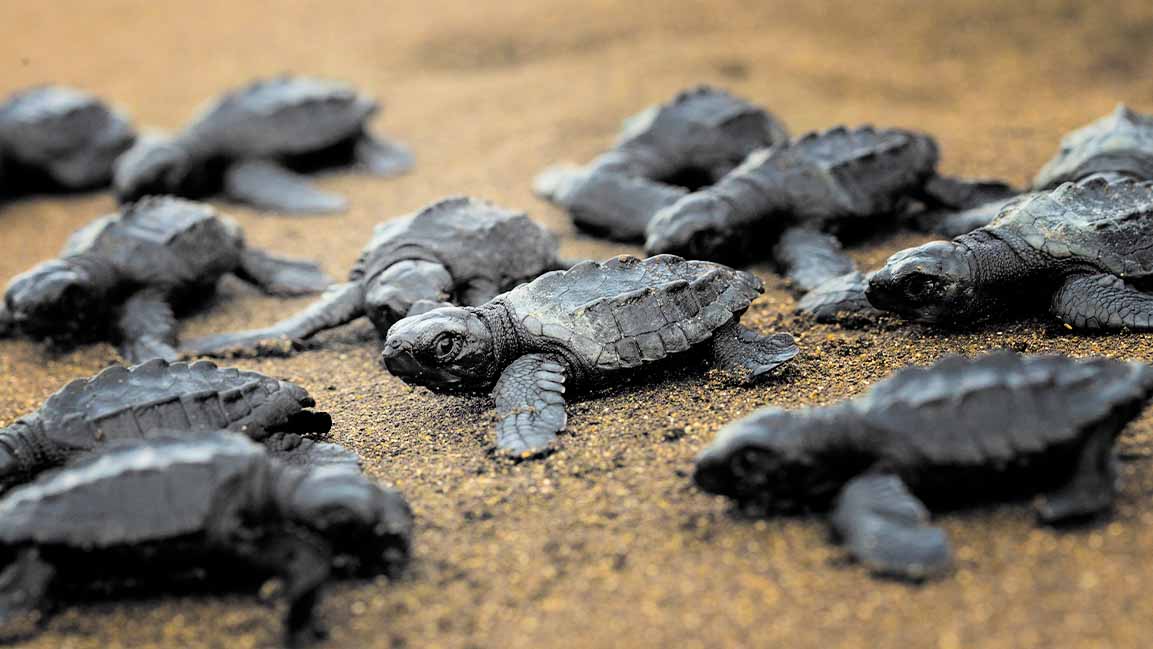


Abu Dhabi has recorded its first-ever nesting of an Olive Ridley turtle, marking a significant milestone for marine biodiversity in the emirate.
The nest was discovered on Saadiyat Island by volunteers from the Environment Agency – Abu Dhabi’s (EAD) Saadiyat Turtle Patrol. The finding makes the Olive Ridley the third marine turtle species confirmed to nest in Abu Dhabi, alongside Hawksbill and Green turtles.
The turtle laid 109 eggs on March 29, 2026, with hatchlings emerging on May 25. Of the eggs, 40 hatchlings successfully reached the sea, representing a hatching success rate of around 37%.
EAD said the successful emergence demonstrates that local environmental conditions can support the species through its full reproductive cycle, providing researchers with an important baseline for future monitoring and conservation efforts.
“The first recorded nesting of an Olive Ridley turtle in Abu Dhabi is a landmark moment for marine biodiversity in the emirate,” said Shaikha Salem Al Dhaheri, Secretary General of EAD.
She added that the discovery reflects the resilience of Abu Dhabi’s marine ecosystems and the impact of the emirate’s long-term conservation efforts.
As Olive Ridley turtles had never previously been recorded nesting in Abu Dhabi, EAD partnered with Khalifa University to verify the species using DNA barcoding. The analysis found a 99% genetic match with Lepidochelys olivacea, scientifically confirming the nesting record.
The nest was monitored throughout its incubation using a solar-powered camera, while volunteers and EAD marine specialists increased patrols as the expected hatching date approached.
Olive Ridley turtles are classified as Vulnerable on the IUCN Red List of Threatened Species and nest in relatively few locations worldwide. They are also considered an indicator species, with their presence helping scientists assess the health of the marine ecosystems they inhabit.
The turtles contribute to marine ecosystems by feeding on species including jellyfish, crabs, shrimp and molluscs, while their nesting activity transfers nutrients from the sea to coastal environments.
The discovery adds to more than 25 years of marine turtle research conducted by EAD. Four of the world’s seven marine turtle species — Hawksbill, Green, Loggerhead and Olive Ridley — have now been recorded in Abu Dhabi’s waters.
According to EAD’s 2024 aerial survey, the emirate’s waters support an estimated 8,000 marine turtles, while at least 17 nesting locations have been identified across its offshore islands.
The latest discovery follows Abu Dhabi’s first confirmed Green turtle nest in 2023 and expands scientists’ understanding of marine turtle distribution and breeding in the emirate.

Featured Videos
Today's Top Stories:
More Top Stories:





FROM OUR PARTNERS