
- | 10:00 am
Travel’s next competitive edge may be less about marketing than movement
At WTTC’s Global Summit in Malta, ministers and industry leaders put border friction, regulatory speed, and investment readiness at the center of the race for travelers and capital.


For decades, destinations competed on the familiar things: beaches, museums, hotel supply, airline routes, and advertising budgets.
That is no longer enough.
The next contest may be decided by less visible forces: how quickly a visitor gets through a border, whether a visa system works when demand surges, how easily an investor can navigate regulation, and whether government policy can keep pace with commercial ambition.
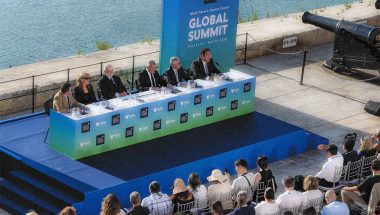
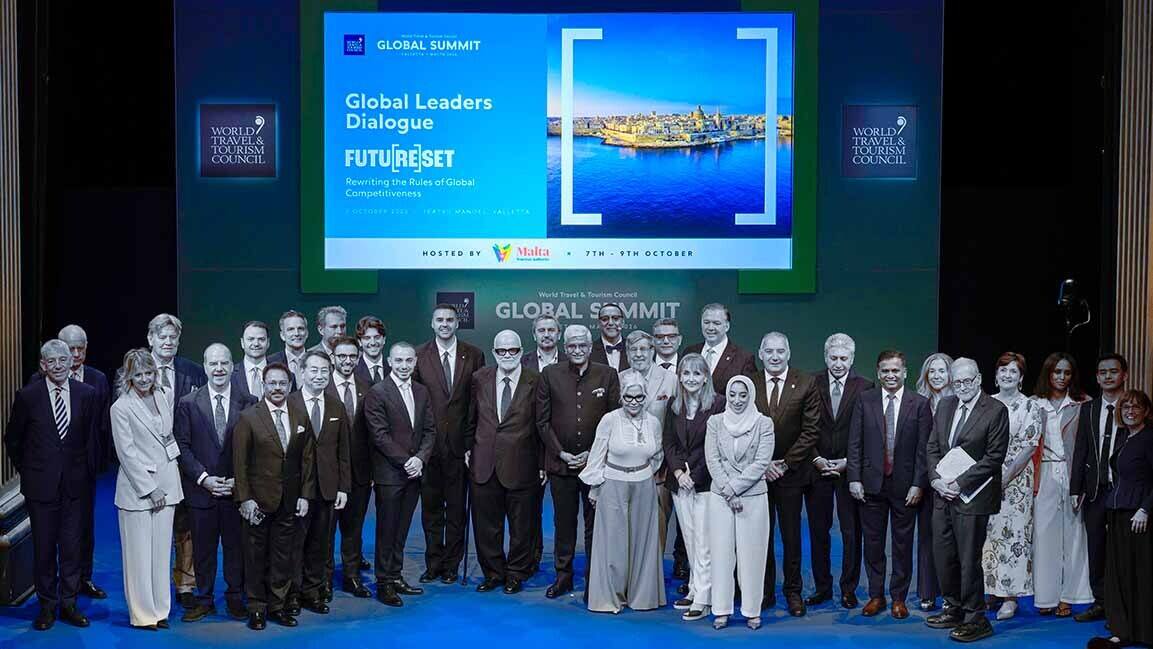
That was the underlying message from the World Travel & Tourism Council’s Global Leaders Dialogue in Valletta on Tuesday, where ministers and executives from 24 countries gathered during WTTC’s 26th Global Summit.
Held under the theme “Rewriting the Rules of Global Competitiveness,” the closed-door discussion focused on two linked questions: how destinations can make travel easier without compromising security, and what it takes to attract investment when capital has more options than ever.
The answers are not as glamorous as a new resort opening or a blockbuster campaign. They are about systems.
THE BORDER IS NOW PART OF THE PRODUCT
The first conversation focused on seamless travel, a phrase that can sound vague until a trip goes wrong.
For a traveler, it means visas, airport queues, biometric checks, rail connections, hotel arrivals, and baggage all working in sequence. For a destination, it is an economic proposition: every unnecessary delay creates a chance for a visitor to choose somewhere else next time.
Ministers from Egypt, Spain, Bahrain, and Malta joined leaders from companies including Minor International, JTB Corp, VFS Global, Amadeus, and Pernod Ricard to discuss how governments and businesses can share responsibility for that experience.
Biometric borders and AI-enabled visa systems featured prominently. The potential is clear: smoother travel, better security, and less manual processing. The harder question is whether those systems are designed around travelers or merely added to an already fragmented journey.
That distinction matters. A digital border that saves time is infrastructure. One that introduces new confusion, long queues, or privacy concerns is simply a new version of friction.
WTTC’s own recent research has made the stakes plain. Travel and tourism contributed $3 trillion to Europe’s economy in 2025 and supported 40.7 million jobs. International visitors spent about $835 billion across the continent. At that scale, border operations and travel policy are no longer administrative details. They are part of a destination’s competitive offer.
INVESTMENT FOLLOWS CERTAINTY
The second discussion turned to capital.
For years, tourism investment has been encouraged through familiar tools: tax breaks, special economic zones, residency incentives, and destination marketing. Those measures still matter. But they are increasingly being judged alongside something more basic: can an investor get a decision, secure approvals, and build with confidence?
That is a sharper test of destination readiness.
A hotel group, airline, cruise operator, or travel-tech company does not invest in a slogan. It invests in a market where infrastructure, regulation, skills, land use, connectivity, and political decision-making appear to be moving in the same direction.
The conversation in Valletta reflected a shift already visible across the Middle East. Tourism is being treated less as a standalone visitor economy and more as a lever for infrastructure, jobs, urban development, trade, and foreign investment.
That changes the role of government. Tourism ministries cannot carry the agenda alone. Immigration authorities, transport agencies, investment offices, city planners, and regulators all shape whether a destination feels easy to visit and viable to build in.
It also changes the expectations placed on the private sector. Businesses want faster approvals and clearer policy. Governments, in return, want investment that creates jobs, extends stays, supports local supply chains, and spreads value beyond a handful of high-season locations.
PARTNERSHIP IS NO LONGER A SOFT IDEA
WTTC President and CEO Gloria Guevara framed the dialogue as a call for greater alignment between the two sides.
“Competitiveness is built through partnership,” she said. “When governments and industry work hand in hand, they create the conditions for investment, innovation, connectivity and growth.”
The phrase can sound like conference language. But the substance is becoming more urgent.
Travel is now competing with every other sector for public funding, political attention, energy capacity, land, and talent. At the same time, destinations are under pressure to grow without creating congestion, pricing out residents, or placing additional strain on fragile infrastructure.
That means competitiveness cannot simply be measured by visitor numbers.
The stronger destinations will be those that can move people efficiently, make investment decisions predictably, and create an experience that holds together from visa application to departure gate. They will also need to decide what growth they want and where they are willing to draw a line.
The Global Leaders Dialogue did not offer a single formula for that. It did, however, make one thing clearer: in the next era of travel, a destination’s biggest advantage may be its ability to make the public and private sectors work as one system.
That is harder to build than a new attraction. It may matter far more.