- | 11:00 am
LEAP 2026 turns its focus to the machines and infrastructure powering AI
On day two of LEAP 2026, companies showcased AI-powered prosthetics, humanoid robots and advanced computing technologies.
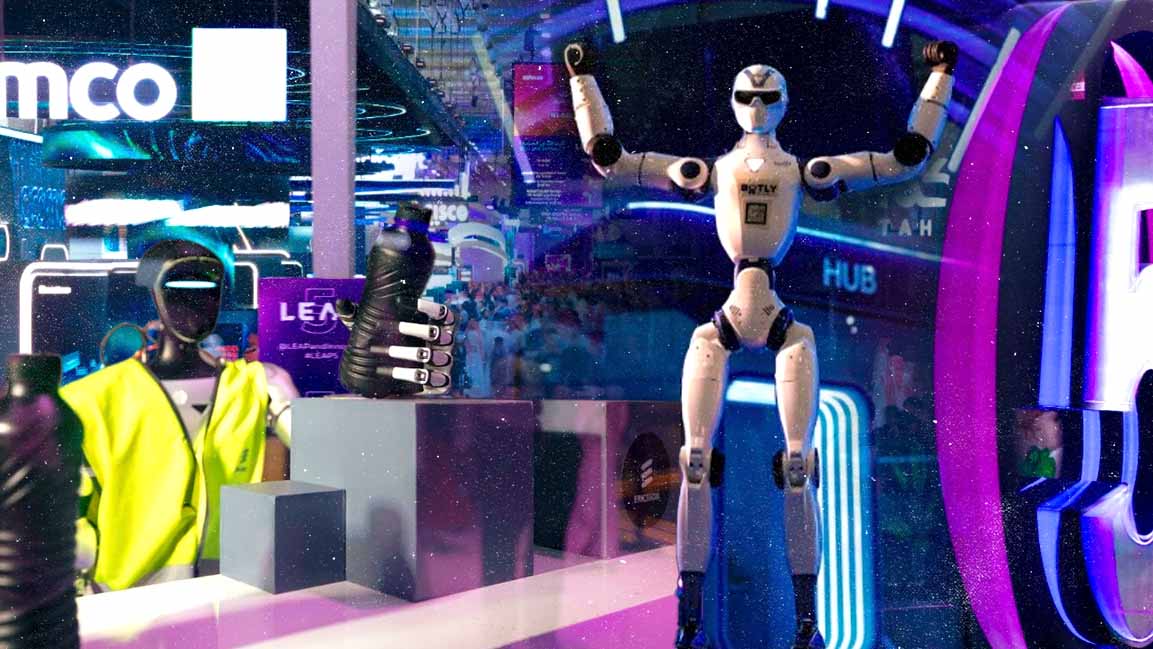


AI-powered prosthetics, humanoid robots and advanced computing systems were among the technologies showcased on the second day of LEAP 2026 in Riyadh, as companies demonstrated how AI is being applied across healthcare, robotics, infrastructure and government services.
Across LEAP and DeepFest, visitors saw demonstrations from technology companies including AGIBOT, Unitree and PSYONIC, alongside computing infrastructure from Supermicro. Together, the showcases offered a look at how AI is increasingly being integrated into physical systems and the infrastructure needed to support them.
Mohammad Zahri, Regional Director at Supermicro, said the focus is increasingly shifting toward the infrastructure required to support AI deployment at scale.
“Delivering AI at scale requires powerful, efficient and adaptable computing environments capable of supporting rapidly evolving workloads.”
Among the demonstrations was PSYONIC’s Bionic Hand, a prosthetic device designed to learn and adapt to its user’s movements. Dr Aadel Akhtar, CEO of PSYONIC, said: “We want the prosthetic hand to feel less like a tool and more like an extension of the user’s body. By collecting movement and sensor data from human users, we can teach robots to perform the same tasks.”
The demonstrations at LEAP were also complemented by examples of technology being deployed at a national level. During the event, 62 government entities were recognized for completing their integration with Tawakkalna, the national comprehensive application enabled by the Saudi Data and Artificial Intelligence Authority (SDAIA).
The milestone brings 926 government services from the 62 entities onto the platform, which now provides access to more than 1,700 services and serves over 36 million users, facilitating more than 85 million transactions a day.
Annabelle Mander, Executive Vice President at Tahaluf, said the event increasingly reflects a shift from discussing AI’s potential to demonstrating its applications.
“Our exhibitors are demonstrating technologies that are solving real-world challenges, whether through robotics, healthcare, space technologies or digital infrastructure.”
Robotics was a recurring theme across the event. Zhang Min, Vice President at Unitree, said AI is increasingly moving beyond digital interfaces and into physical environments.
“Our focus is making advanced robotics more accessible, practical and scalable, helping industries explore new ways to improve productivity, safety and efficiency.”
The theme was also explored at DeepFest, where Abel Deng, President of the Middle East and Asia-Pacific region at AGIBOT, described embodied AI as the next stage in human interaction with technology. Unlike traditional robotics, embodied AI combines perception, cognition, and action, allowing robots to respond to and operate within physical environments.

Featured Videos
Today's Top Stories:
More Top Stories:





FROM OUR PARTNERS