‘We observe diversification rather than wholesale relocation’: DIFC CEO H.E. Arif Amiri on Dubai’s growing appeal
With over 600 wealth and asset management firms at DIFC, Dubai is cementing its position as a global wealth hub.


Dubai is emerging as a key destination for global private wealth as wealthy families increasingly diversify assets across jurisdictions, reflecting a structural shift in wealth management driven by a growing focus on financial stability, regulatory certainty, and long-term wealth preservation,
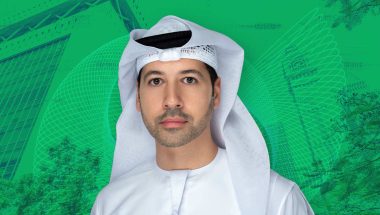
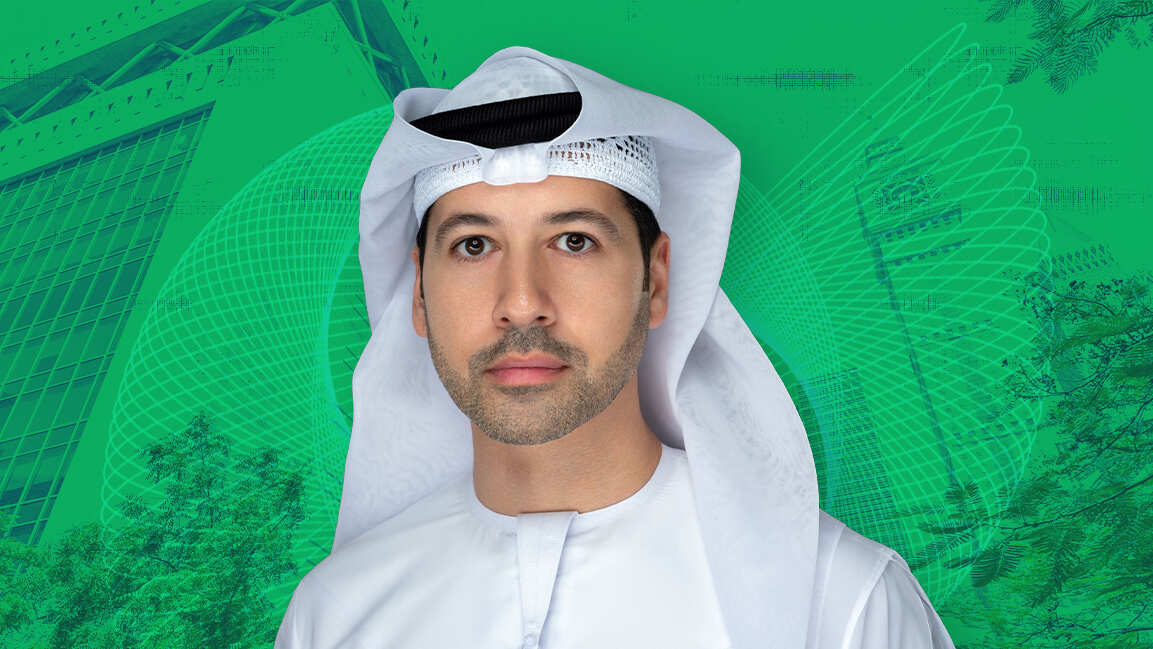
In an interview with Fast Company Middle East on the sidelines of Dubai Finance Week, H.E. Arif Amiri, CEO of the International Financial Centre (DIFC) Authority, said wealthy families are increasingly spreading their assets across different countries to reduce risks and protect their wealth over the long term.
“Yes, it is a structural shift rather than cyclical. The clearest evidence is that geography has become a portfolio consideration in its own right,” Amiri said.
“Families now examine jurisdictions with the same rigour they apply to asset allocation, because jurisdictional risk has become a defining factor in long-term wealth preservation.”
Amiri noted that the trend is not necessarily driven by families relocating their wealth entirely, but rather by a growing preference to spread assets and financial structures across multiple markets.
“We observe diversification rather than wholesale relocation. Families hold assets and structures across several jurisdictions, and Dubai is increasingly an important part of that footprint. They want certainty, connectivity, and the ability to take a long-term view,” he added.
The shift comes as DIFC continues to expand its wealth management ecosystem, with more than 600 wealth and asset management firms operating within the financial hub. The number of family-related entities reached 1,408 in the first half of 2026.
To support growing demand, DIFC’s Family Wealth Centre is helping multi-generational families strengthen governance and succession planning, while a NextGen Internship Programme announced during Dubai Future Finance Week aims to support the next generation.
DXB’S EVOLVING ROLE IN GLOBAL FINANCE
Beyond private wealth, Amiri said Dubai’s next phase of growth as a global financial centre will be driven by the convergence of finance, technology, and private capital, as institutions increasingly integrate these areas into their operations.
“The next phase will come from the convergence of finance, technology and private capital as we believe these are no longer separate conversations,” he said.
He noted that artificial intelligence, digital assets, and private markets are transforming financial services and capital allocation, while the expansion of family wealth is creating greater demand for governance and advisory capabilities.
According to Amiri, Dubai’s appeal to international financial institutions has also evolved beyond establishing a regional presence, with companies increasingly basing senior decision-makers, substantial operations, and international mandates in the emirate.
The changing global financial landscape is also creating opportunities for Dubai to strengthen its position as a link between international capital and high-growth markets.
Amiri said capital, clients, and economic growth are increasingly spread across different regions, creating demand for financial centres that can connect investment opportunities in the Middle East, Africa, and South Asia with capital from Asia, Europe, and the Americas.
“The opportunity is not to receive relocating capital. It is to be where capital from one region meets opportunity in another,” he said.
As part of these efforts, DIFC signed a partnership with Japan’s Mizuho Financial Group, providing up to 6,000 Japanese startup clients with access to the region through the DIFC Innovation Hub.
TECH RESHAPING FINANCIAL SERVICES
Amiri also highlighted the growing role of artificial intelligence and financial technology in transforming the global financial industry, as DIFC advances its ambition to become the world’s first AI-native financial centre.
“For most of the past decade, innovation sat alongside the financial system. Now, it is becoming the system, with technology moving from the periphery of financial services into its core infrastructure,” he said.
DIFC is seeking to integrate AI across its legal frameworks, regulatory processes, talent development, and infrastructure, while supporting the adoption of emerging financial technologies.
The financial centre now hosts more than 2,000 FinTech, AI, and innovation companies, up from an initial cohort of 11 startups when DIFC FinTech Hive was launched in 2017.
During Dubai Future Finance Week, DIFC also announced the Dubai FinTech Stack, an initiative designed to provide startups with capabilities ranging from onboarding and payments to risk management and AI integration.
However, Amiri cautioned that the shift towards AI-driven financial services could present challenges for traditional financial institutions.
Citing DIFC’s Future of Finance research, he said global banking profit pools could decline by $170 billion by 2030 unless institutions undertake significant transformation.
He also emphasised the importance of regulatory frameworks evolving alongside technological developments to support responsible adoption.
“Responsible adoption is not a constraint on innovation; in finance, it is the precondition for it,” he said.
EXPANDING TALENT & INFRASTRUCTURE
As Dubai strengthens its position in global finance, DIFC is also investing in talent development and infrastructure to support the sector’s long-term growth.
Amiri said DIFC Academy will expand tenfold to 370,000 square feet within the planned Zabeel District, with capacity to train 50,000 learners annually from 2030.
The expansion comes as financial institutions increasingly seek professionals with expertise in AI and data. DIFC research covering 50 major banks found that their AI workforce grew by 12.6% over six months, with more than 70% of institutions providing AI-specific training to existing employees.
“The scarcest capability is not technical. It is the judgement to know which decisions should be automated and which should not,” Amiri said.
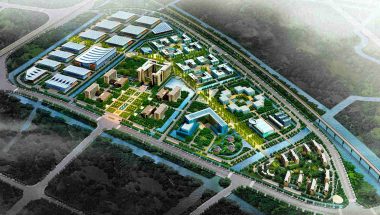
The wider DIFC Zabeel District expansion will cover more than 17.7 million square feet, with plans to accommodate 42,000 companies and a workforce of 125,000.
More than one million square feet will be dedicated to future technologies, including an expanded Innovation Hub and a purpose-built AI Campus.
Amiri said the development is designed to bring financial institutions, technology companies, regulators, and talent closer together, creating an environment that supports collaboration and innovation.
“Financial centres have historically clustered capital. The more valuable clustering now is capital, technology and talent together,” he said.
Looking ahead, Amiri said DIFC’s success would be measured not simply by the number of companies operating within the centre, but by its ability to develop globally competitive businesses, attract international decision-making functions, and establish frameworks adopted beyond Dubai.
“We do not intend simply to respond to the future of finance. We intend to help shape it,” he said.