
- | 9:00 am
AI is eliminating one of the biggest bottlenecks of car design
Aerodynamics is a necessary but time-consuming part of car design. For General Motors and Jaguar Land Rover, AI is stepping in to help.
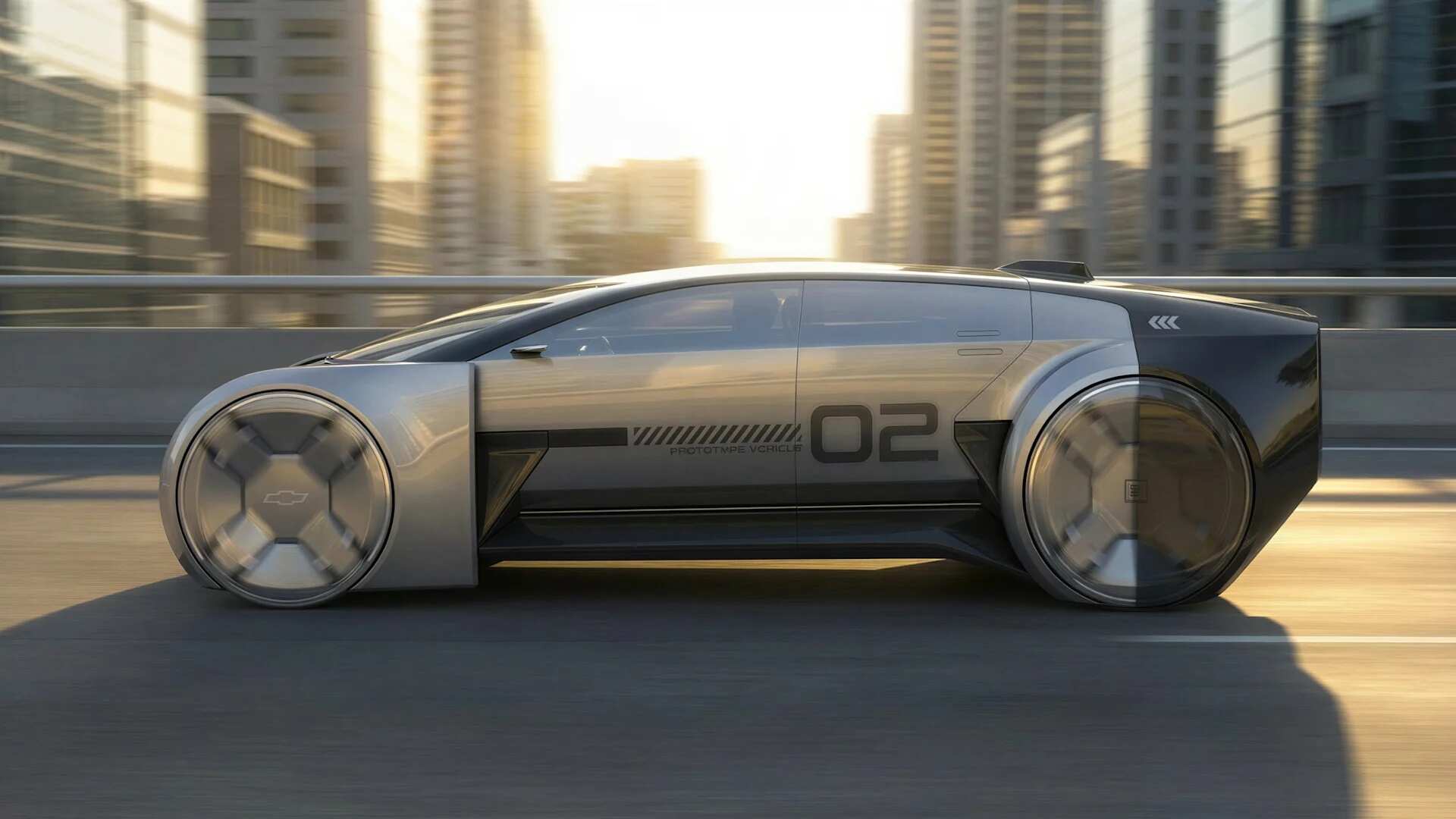


For all the sketches, concepts, and slick imagery coming from the minds of designers in the car industry, the production cars that end up on roads around the world are shaped most significantly by aerodynamics. How smoothly a vehicle can cut through the air has major implications for its fuel efficiency, and in the era of electric vehicles, it can greatly offset the weight of a battery and increase the overall range.
But the aerodynamic analyses car designers rely on are excruciatingly slow.
“We’ll release a design surface, and then it can take days or weeks to get a full set of analysis back on the performance of that surface,” says Bryan Styles, director of design innovation and technology operations at General Motors. “By that time, the design surface has changed, and then we’re trying to understand, well, how do these results actually translate into the surface that we now have in design?”
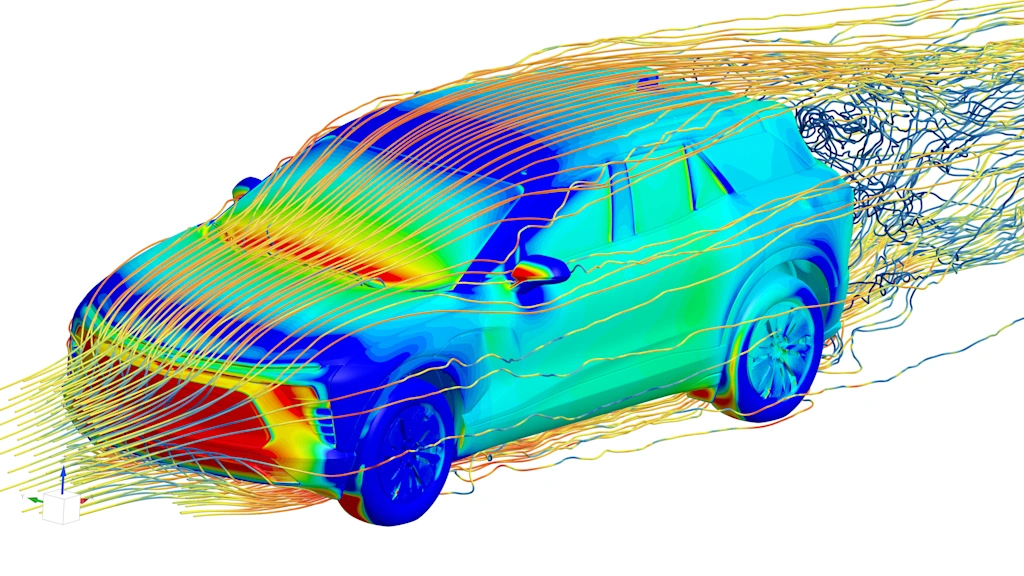
Those delays could be coming to an end. Increasingly, major car companies are turning to artificial intelligence to accelerate aerodynamic work to a scale unimaginable in the early days of the wind tunnel and in the present day of modeling with computational fluid dynamics. GM and Jaguar Land Rover are just two of the companies using new AI tools to tackle one of the biggest bottlenecks in car design.
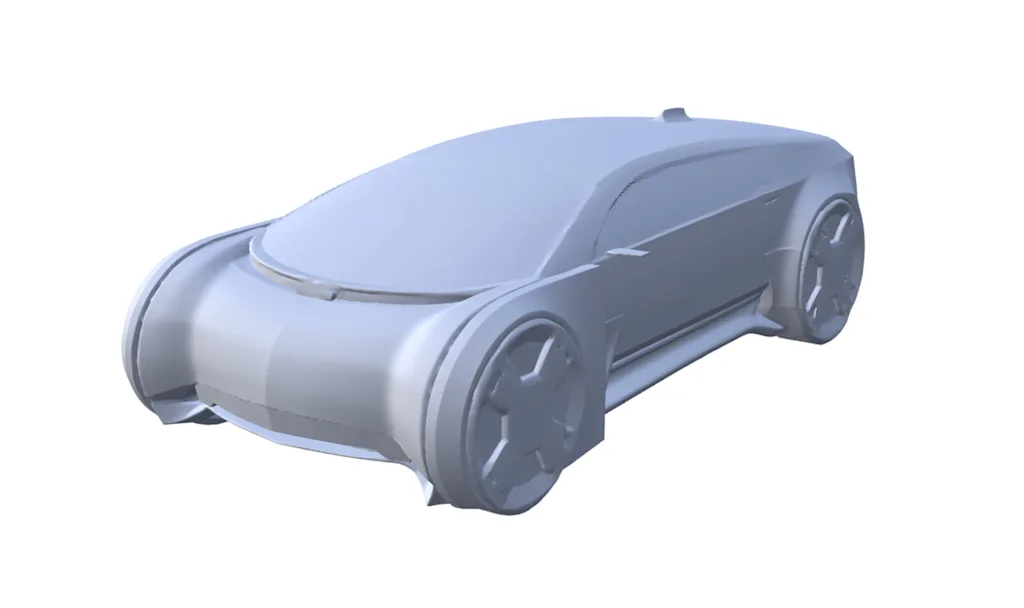
GM, for example, has developed what it calls a “virtual wind tunnel,” with an AI model trained on previous computer-based aerodynamic modeling. Applying previous analyses to new designs, GM’s designers and engineers are able to quickly see how a contour would perform if put to a physical wind tunnel test. This data is then fed back directly into the digital sculpting tools designers use to give cars shape.
“We are using it on our next products,” says Rene Strauss, GM’s director of virtual integration engineering. “So this isn’t a vision of the future. This is happening right now.”
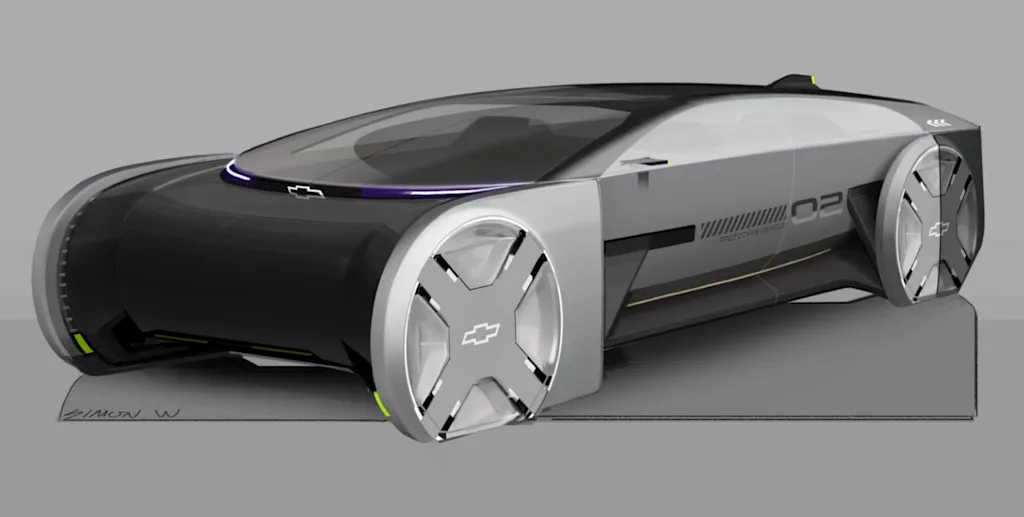
And it’s happening across the industry. Like GM, Jaguar Land Rover is using AI tools to run robust aerodynamic performances on its car designs, often at the scale of hundreds or even thousands per day. Though the science of aerodynamics is established, each automaker is developing its own AI model using its existing cars to enable more accurate predictions of the drag or air pressure on, say, a boxy Land Rover SUV or a jet-like Chevrolet Corvette.
“The better the training data, the better the model performance,” says Scott Parrish, a technical fellow and lab group manager in research and development for GM. “We use a variety of vehicles and we actually alter their shape so we can gather more and more surfaces for robust prediction. If a designer brings in a vehicle and moves a surface up or down or in or out, the training data comprehends that.”
Jaguar Land Rover is working directly with an outside company to make this work possible. Neural Concept, a startup spun out of an AI research lab at the Swiss technical university EPFL, has created an AI platform for engineering in product design, and has several major clients in the automotive space, including Jaguar Land Rover. Cofounder Thomas von Tschammer says his company’s platform helps carmakers use their own proprietary data to build AI models that they can then use to guide their aerodynamic designs.
“Why those models are becoming extremely valuable in our space is because they allow designers and aerodynamicists to sit around the same table and make real-time design decisions and trade-offs,” von Tschammer says. “Not only can they reduce time to market because they can converge faster on a solution, but they can also innovate more, because they can explore more variations.”
Aside from cutting down the time it takes for a supercomputer to run a precise aerodynamic analysis of a car design, tools like these are also eliminating some of the back-and-forth delays that can come from separate departments relying on results from the other before moving ahead with a design.
“One person would work on it and then another person would work on it,” Strauss says. “Each of these iterations would take around five days. Imagine that now with this tool, you can sit together and work on it concurrently and make instant decisions.”
Those decisions move projects forward, but not to instant approval. GM is using the AI aerodynamics tool to streamline its car design discovery phase, but once a design looks promising it still gets the full computational fluid dynamics analysis. It might even move its way into a scale clay model. And if the design is still working, it will find its way into the actual physical wind tunnel.
“[AI] doesn’t actually change the process steps that we go through,” Styles says. “But it allows us to go through those process steps more quickly.”

Featured Videos
Today's Top Stories:
More Top Stories:



FROM OUR PARTNERS