

- | 9:00 am
Global trade is becoming more expensive to insure, and consumers are paying for it
War risk, climate volatility, and chokepoint pressure are pushing insurance costs higher across shipping, aviation, and cargo. The question is, who absorbs it?
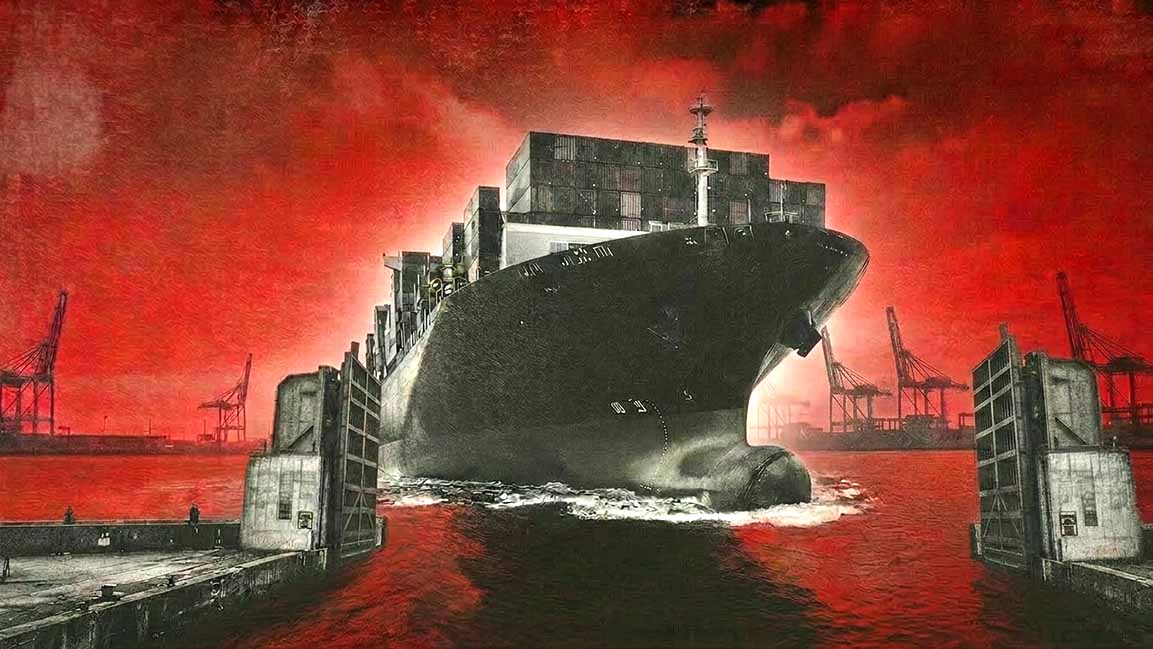


What does it cost to move a container through one of the world’s most contested shipping lanes, or to fly cargo over airspace that has become a geopolitical flashpoint overnight? Increasingly, the answer depends on what insurers think the risk is worth, and right now, they are pricing it higher than ever.
Conflict in the Red Sea, war risk exclusions over Eastern Europe and the Middle East, and accelerating climate disruption have replaced the slow-burning risks of previous decades. Premiums that were once adjusted quarterly are now adjusted within days of a significant event.
For freight operators, airlines, and traders, insurance is no longer a quiet operational expense buried inside a shipping quote. It is a live variable that reprices faster than businesses can plan around it. So, who ultimately bears that cost, and what happens to global trade when the price of risk becomes too unpredictable to hedge?
THE BILL NOBODY SEES COMING
The Strait of Hormuz is perhaps the starkest illustration of how concentrated global trade risk has become. “17 million barrels of oil transit that 21-mile chokepoint every single day. Roughly 20% of the world’s petroleum supply,” observes Akshay Sardana, CEO of Continental Group. A single escalation between Iran and the West, whether a seized tanker, a miscalculated naval maneuver, or a drone strike on the wrong vessel, would not just reprice the Hormuz corridor. It would reprice everything downstream: fuel costs, freight rates, manufacturing inputs, consumer goods.
Marcus Baker, Global Head of Marine, Cargo and Logistics at Marsh United Kingdom, sees the same pattern playing out across multiple flashpoints. “The biggest cost drivers are concentrated around global chokepoints. The Red Sea, Bab al-Mandab, the Strait of Hormuz, the Black Sea, the South China Sea, and the Malacca Strait matter because they concentrate operational, geopolitical and insurance risk in one place.” When one of these routes becomes unstable, the consequences extend well beyond the vessel in transit, touching crew safety, cargo values, energy prices, port congestion and contractual delivery obligations all at once.
For Capt. Abhishek Sabharwal, Head of Operations at United Africa Feeder Line and a Master Mariner, what makes the current environment uniquely difficult to price is the convergence of threats rather than any single one.
The biggest cost drivers, he argues, are “the overlap of multiple risks happening simultaneously, conflict zones, missile and drone threats, cyber risks, sanctions exposure, and extreme weather disruptions.” It is the combination, not the individual elements, that exerts the greatest pressure on premiums. During the recent Strait of Hormuz tensions, a sharp rise in fuel prices, combined with real-time security threats, pushed premiums higher almost immediately, leaving operators with little room to adjust.
The speed of that reaction is itself a defining feature of today’s market. Mohanad Yakout, Senior Market Analyst at Scope Markets, part of Rostro Group, notes that premiums, once adjusted annually, are now recalibrated daily, or even intraday, in response to events such as missile strikes, airspace closures, or sudden weather events. Notably, increases in war risk premiums are not uniform. Assets linked to certain nationalities face sharper increases than those linked to others, reflecting how granular and targeted modern risk pricing has become. “This creates a high-frequency, high-severity risk landscape where both conflict and climate events can immediately reprice global trade flows.”
Sardana puts a precise figure on it: a vessel that costs $125,000 to insure for a single Gulf transit can climb to $200,000 within a week of one incident, as war risk premiums in major corridors are now reviewed weekly and move within 72 hours of a significant event. Baker adds that the war risk market is structured precisely for this kind of response. “It has an established mechanism for short-notice cancellation and repricing. The market may be volatile, but it is not improvised.”
Equally telling, he notes, is how early the market begins to move. Rhetoric alone can shift pricing. Even comments suggesting that a state may seek greater influence over a strategic route such as the Malacca Strait can influence shipowners and insurers. “The market does not wait for disruption to become fully visible. It starts by pricing credible scenarios.”
Climate risk adds another layer of complexity, one that operates on an entirely different timeline. Baker explains that where geopolitical shocks trigger immediate war-risk repricing, climate disruption tends to work through capacity, reliability, and delay. Drought is cutting vessel slots through the Panama Canal, typhoon seasons in the South China Sea are lengthening, and port infrastructure built for 1990s weather patterns is regularly overwhelmed by events once classified as outliers.
Flooding affecting ports and industrial clusters, and severe weather interrupting production, all push up the cost of moving goods without necessarily creating a war risk event.
Yakout notes that these climate-related pressures create persistent upward pressure on baseline premiums, a slow but relentless force that compounds over time. Because climate risk accumulates gradually rather than erupting overnight, Sardana argues, it never triggers the emergency response that geopolitical shocks do. “It just quietly raises the floor on what everything costs to move.”
The deeper challenge is that these risk categories are increasingly converging. “A route can be geopolitically sensitive, climate-exposed, and commercially critical at the same time,” Baker argues, making it harder than ever to price, plan, or hedge against what lies ahead.
This overlap has become the defining complexity of the current environment, one that traditional underwriting frameworks were never designed to handle simultaneously. The distinction between the two forces, however, remains important. “Geopolitics is the fire alarm. Climate is the rising damp,” as Sardana observes. The end user pays for both.
THE NEW ANATOMY OF RISK
Insurance pricing in global trade has shifted fundamentally in how it weighs risk. According to Sabharwal, underwriters today assess far more than just the asset and its geography. “Voyage duration, cargo type, sanctions exposure, and the vulnerability of trade routes to disruption” are all now factored into premium calculations, reflecting a level of granularity that would have been unusual even a decade ago. The numbers tell their own story.
For vessels operating around the Strait of Hormuz and nearby regions, premiums have risen sharply and coverage conditions have become far more restrictive. Sabharwal points to a striking example: even ports in Oman and the East UAE currently fall under the High-Risk Area category, resulting in Enhanced War Risk Insurance costs of between $80,000 and $150,000 per port call, even for smaller feeder vessels. “The market is highly reactive at present,” he notes, “with premiums sometimes changing within hours based on security incidents or geopolitical developments.”
That real-time responsiveness is now a defining feature of how the entire market operates. Yakout describes an industry that has fundamentally rewired its pricing of risk, shifting from static, voyage-based pricing to dynamic, real-time underwriting that reflects current risk conditions. In maritime trade, additional war risk premiums are layered on top of traditional coverage and continuously adjusted based on a range of vessel-specific factors, including flag state, ownership ties, asset value, onboard safety capabilities and even behavioral history.
“Real-time intelligence feeds, tracking drone activity, electronic interference, or nearby incidents, can trigger premium changes within hours.” Aviation underwriting has undergone a similar transformation. Pricing has become flight-specific, driven by operational disruption risks and accumulation risk at major hubs, with insurers using live risk scores to price routes differently depending on timing and prevailing threat levels.
Across both sectors, Yakout notes, the key metrics driving decisions have fundamentally changed. “Geopolitical exposure, asset concentration, route vulnerability, and real-time threat intelligence” have replaced simple geography as the primary inputs, reflecting a market that is now as much about intelligence and speed as it is about actuarial modeling.
Sardana is blunt about what has changed. “The traditional model of marine underwriting had a certain elegance: historical loss tables, actuarial forecasts, and a syndicate in London hoping the weather would behave. It worked reasonably well in a stable world. That world no longer exists.” Insurers, he argues, are no longer pricing last year’s losses. They are pricing the probability distribution of where the next disruption occurs.
War risk premiums in the Red Sea rose sharply within months of the Houthi escalations, not because losses multiplied overnight, but because the expected risk had fundamentally changed.
The metrics driving those decisions have evolved accordingly. Underwriters now monitor incident frequency weekly, track satellite imagery of conflict zones, analyze deviations in vessel routing, assess the complexity of sanctions, and monitor military activity near chokepoints such as the Strait of Hormuz.
The practical consequences are significant. Two identical cargo shipments can now incur very different insurance costs, depending solely on the route taken. As Sardana puts it, “Premiums are no longer determined by cargo value or distance. They are determined by risk geography.” The industry has completed a fundamental shift away from actuarial hindsight toward near-real-time geopolitical underwriting.
Baker reinforces that point, describing a market that has moved decisively away from broad-brush regional pricing. “Insurers are no longer pricing high-risk regions with a broad-brush approach. They are looking at the specific voyage, vessel, cargo, counterparties, and port calls, as well as any connection to sanctioned entities, politically exposed interests, or parties that may be targeted.” That granularity, he explains, reflects the changing nature of risk itself.
Clients are increasingly concerned about the combined effects of geopolitical instability, supply chain structural weaknesses, logistical chokepoints, and demand-side pressures. A disruption in one location can quickly interact with supplier concentration, cargo accumulation, port congestion, sanctions risk and downstream delivery obligations, creating a compounding effect that simple geographic pricing was never designed to capture.
War risk insurance is where this shift is most visible. In areas such as the Red Sea, the Arabian Gulf, and the Strait of Hormuz, cover may still be available, but conditions have tightened considerably. “Pricing can move quickly, validity periods can be short, and underwriters may require detailed voyage and vessel information before committing capacity,” Baker notes.
The assessment has also broadened beyond pure insurance metrics. Shipowners and insurers are now weighing whether it remains viable to trade through certain areas at all, whether additional controls are needed, or whether bypassing a route entirely is the more prudent decision.
“That assessment now includes crew welfare, delivery commitments and the wider cost of disruption,” reflecting a market that is pricing not just financial risk, but operational reality.
THE INVISIBLE PASS-THROUGH
The relationship between insurance costs and trade economics is more layered than it first appears. Baker argues that the insurance premium is rarely the whole cost. “It is usually a signal that the operating environment has become more expensive,” a signal that is now being felt across every link in the global trade chain.
For shipping, the transmission is swift and sequential. When war risk surcharges are added to a bill of lading, the freight forwarder passes the cost to the importer, the importer builds it into landed cost, the retailer protects their margin, and the consumer pays a little more for something ordered online without once thinking about the Strait of Hormuz.
“The transmission is quiet, incremental, and entirely logical,” Sardana observes, “just rarely visible.” The figures behind that invisibility are significant. Surcharges can add thousands of dollars per container, and for larger vessels, even a small percentage increase in premiums translates into millions of dollars per voyage. That cost cannot simply be absorbed and it does not stay where it lands.
For Sabharwal, the shift goes beyond cost. Insurance expenses ultimately flow into freight rates, surcharges, and, eventually, consumer pricing, but what companies are actually purchasing has changed. “Today, many companies are paying not just for transportation, but for predictability and operational security.” In a risk environment this volatile, that distinction matters more than ever.
Aviation tells its own version of the same story. Despite premiums reaching a 20-year high in 2024, Sardana notes that carriers with strong safety records saw largely flat costs. “The market rewards the prepared,” he argues. But the real pressure, he explains, is not the insurance line itself. It is airspace avoidance. Flying around Ukrainian, Iranian, or Sudanese airspace adds fuel burn, reshapes crew scheduling, and compresses margins in ways that never appear on an insurance invoice but absolutely appear on a profit and loss statement.
Baker echoes the point. Avoiding high-risk airspace means longer flight paths, higher fuel burn, additional crew hours, schedule disruption and reduced operational flexibility, costs that compound quietly but consistently across an entire network.
Yakout adds that the combination of surging insurance premiums and fuel costs is significantly inflating overall operating expenses, prompting airlines to raise ticket prices and reduce capacity.
The broader economic consequences are harder to quantify but no less real. Emir Mujkic, Director of Financial Services and Insurance Ratings at S&P Global Ratings, draws a direct line between rising premiums and inflationary pressure.
Higher costs move through the supply chain almost as a matter of course, with carriers and logistics providers passing them on to customers.
Mujkic is measured about the precise scale of the impact, but is clear about the direction. Sustained increases in oil prices, when combined with rising insurance costs, are expected to add inflationary pressure both regionally and globally, creating a compounding effect that extends well beyond the shipping lane or flight path where the original risk was priced.
At a structural level, the debate has shifted from cost management to resilience. For many years, supply chain strategy has been weighted towards cost containment, speed, and working capital efficiency. In a stable risk environment, investing in resilience can look like unnecessary overhead. That logic, as Baker argues, is now being challenged.
Geopolitical instability is forcing companies to use risk quantification to decide where they can still cut costs and where they need to invest, whether that means stockpiling critical components, diversifying suppliers or reconsidering which materials can still move on a just-in-time basis. “Rising insurance costs are one part of that debate,” Baker concludes, “but the larger question is how much risk the operating model can absorb.”
The urgency behind that question is equally felt by Sardana, who argues that a fundamentally different reality is now testing supply chains engineered for efficiency under stable assumptions. Insurance has quietly graduated from a background cost to an active strategic variable. “The companies treating it that way are already ahead.”
THE GREAT REROUTE
The strategic response to escalating insurance costs is already reshaping how companies think about logistics, and the adjustments go well beyond simple rerouting. “Companies that once optimized purely for cost are now optimizing for resilience,” reflects Sardana, a shift that is playing out across routes, carriers, cargo types and even the way businesses engage with insurers.
On the ground, the evidence is tangible. Yakout points to visible structural shifts in global trade patterns.
Many shipping operators are rerouting vessels along safer but longer routes, such as detouring around the Cape of Good Hope rather than using high-risk canals, accepting higher fuel and time costs to avoid extreme insurance premiums. Others are diversifying carrier selection based on safety records and insurance resilience, or shifting toward multimodal solutions that combine rail and sea to reduce exposure on the most vulnerable legs of a journey.
Mujkic points to a concrete example of this adaptation: some car dealers have begun shipping new vehicles through the port of Jeddah to the UAE following the closure of the Strait of Hormuz, a practical illustration of how once straightforward route decisions are now being reconsidered from the ground up.
Sabharwal confirms the same directional shift on the ground. Companies are actively rerouting cargo, diversifying supply chains and turning to safer transshipment hubs, even where that means accepting higher costs and longer transit times. The industry mindset, he observes, is gradually but unmistakably shifting away from a singular focus on speed and cost. “The shift is from fastest and cheapest to most reliable and least exposed to disruption.”
That shift is also reshaping how goods move within regions. Road logistics via regional land corridors has grown significantly as companies seek alternatives amid maritime uncertainty. The UAE-to-Saudi Arabia land route has emerged as one of the strongest logistics legs in the region today, a telling indicator of how ground-level trade flows are being redrawn in response to risk at sea.
Cargo strategies are evolving in parallel. High-value goods such as electronics, pharmaceuticals and luxury products are increasingly shifting toward air freight despite the higher cost, driven by a simple calculation: predictability now commands a premium. A similar bifurcation is emerging across insurance coverage, with high-value goods receiving comprehensive policies while lower-margin goods move under more limited ones, a pragmatic response to a market where blanket coverage across an entire supply chain is becoming prohibitively expensive.
Baker argues that the most mature response is not to reroute everything away from risk, but to practice selective resilience. Companies are segmenting cargo, suppliers and routes more carefully, recognizing that not all goods carry the same risk profile or tolerance for delay. Some components may justify stockpiling, while others can remain on a just-in-time basis.
The semiconductor sector illustrates why these decisions carry such weight, with layered and interconnected risks spanning concentrated production, Taiwan exposure, AI-driven demand, data center expansion, rare-earth dependency, and geopolitical sensitivities arising from China’s capacity to scale production of more traditional chips.
Mercer’s 2026 outlook notes that hyperscaler business investment is expected to reach nearly $500 billion in 2026 and 2027, adding further pressure on already strained technology supply chains. “Companies need to decide where additional protection is worth the cost, and where the risk can be carried,” Baker concludes, framing resilience as a capital allocation issue, not just a logistics one.
Perhaps the most telling shift, Sardana argues, is in how companies are engaging with insurers. Businesses that treat underwriting as a strategic conversation rather than a procurement exercise are gaining access to parametric insurance products that trigger payouts for delays or disruptions, not just physical loss. Mujkic echoes the broader imperative: companies are increasingly focused on balancing cost efficiency with risk mitigation in an increasingly complex logistics environment. “Flexibility,” Sardana concludes, “is becoming the most valuable asset in global trade.”
INTELLIGENCE IS THE NEW PREMIUM
The insurance industry’s relationship with data has undergone a fundamental transformation, and the scale of that shift is difficult to overstate. Modern underwriting now integrates satellite vessel tracking, maritime traffic data, sanctions monitoring, weather analytics and geopolitical risk platforms, systems that allow insurers to identify emerging threats, from piracy clusters to missile risk zones, and adjust pricing before claims occur. “Insurance has become one of the world’s largest consumers of geopolitical intelligence,” as Sardana observes, a statement that would have seemed extraordinary even a decade ago.
Mujkic describes how that intelligence is being put to work. By aggregating information from shipping records, geopolitical developments and real-time intelligence feeds, insurers are building the capability to identify emerging risks such as geopolitical conflicts, supply chain disruptions and cyber incidents before they fully materialize. Underpinning this is a growing ecosystem of specialist risk intelligence platforms that provide real-time monitoring and visualization of exposures across global trade routes, compressing the gap between when a risk emerges and when it is priced into the market.
Yakout points to the granularity that this technology now enables. High-resolution satellite imagery, geospatial analytics, and AI-driven platforms are allowing insurers to monitor assets, validate claims and track emerging threats in real time. Predictive models analyze historical behavior, routing patterns, and external risk signals to generate dynamic risk scores for individual vessels and flights, enabling pricing decisions with a precision unimaginable under traditional actuarial approaches. Crucially, these systems are not purely reactive. They are increasingly being used to support proactive risk management, recommending safer routes or speeds to reduce exposure before an incident occurs, shifting the insurer’s role from loss absorber to active risk partner.
Sardana notes that predictive modeling is advancing in step with that data capability. Insurers can now simulate how a port closure, conflict escalation, or extreme weather event might ripple through shipping lanes and cargo flows, giving underwriters a forward-looking view of risk that simply did not exist a decade ago. Parametric insurance is gaining traction as a direct result, with policies now able to trigger automatic payouts when predefined events occur, such as port shutdowns or typhoon thresholds, eliminating the lengthy claims processes that have historically slowed the industry’s response to disruption. “Technology has made insurance faster,” Sardana concludes. “Judgment still makes it accurate.”
For Sabharwal, the transformation is best understood through the lens of what insurers have become. Underwriters now rely on live vessel tracking, weather analytics, sanctions screening, conflict monitoring and predictive risk models to assess exposure in real time. “In many ways, insurers today are operating more like intelligence analysts than traditional policy providers.” The implications of that shift extend beyond the industry itself. Insurance premiums, Sabharwal argues, have become one of the clearest indicators of global stress, a barometer of geopolitical and environmental tension that is updated not annually or quarterly, but continuously.
Baker offers a more precise framing of what all this data is actually achieving. “The insurance industry is using data less to predict the next crisis and more to understand where exposure is building before a crisis hits.” No model, he argues, can reliably forecast the next geopolitical shock. But better data can show which routes, suppliers, cargoes, ports, and counterparties would be affected if one were to occur. For clients, the value extends well beyond a more accurate premium. It is a clearer view of where the business is genuinely vulnerable, and that visibility matters most beyond the first tier of suppliers.
Many companies have reasonable oversight of their direct suppliers but far weaker visibility into tier-two and tier-three relationships, where the real vulnerability often lies. “Insurers’ price uncertainty,” Baker notes. “If a company cannot explain its cargo exposure, supplier dependencies, or contingency options, the market has to make assumptions.
Those assumptions are rarely generous.” Better risk intelligence, he concludes, helps companies demonstrate control in a market where geopolitical and climate risks can shift very quickly.