
- | 10:00 am
Why grey became a defining part of New Balance’s sneaker identity
By not chasing trends, the brand turned a muted color into a widely recognized marker of craft and longevity in culture
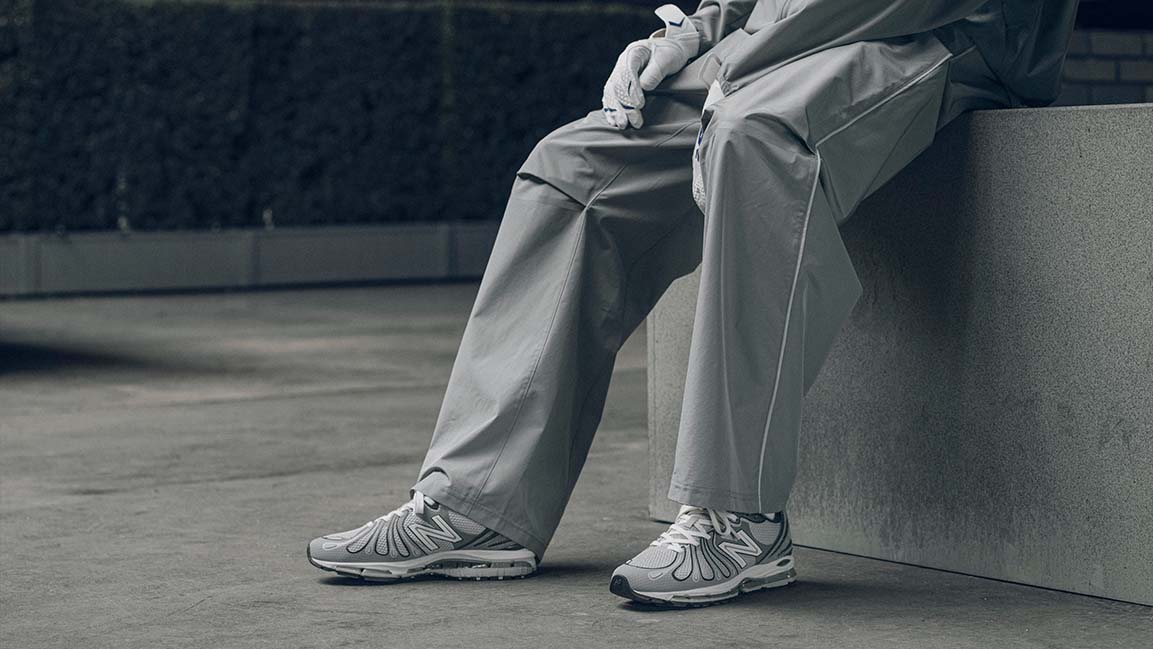


At a time when sneaker brands were competing to be louder, brighter, and harder to ignore, New Balance went the other way. It chose grey. Not as a statement. As a solution.
“Grey didn’t start as a brand statement. It started as a practical one,” says Ana Elisa Seixas, Head of Marketing at New Balance Middle East, Africa & India. “When New Balance introduced grey on its running shoes in the 1980s, it was born out of function: a neutral, urban-ready colorway that worked for runners navigating city streets,” she says.
While the category moved toward neon and high-contrast whites designed to stand out, New Balance stayed deliberately understated.
“Grey was chosen because it blended into the concrete and asphalt of the city, which made it very different in a category that was becoming louder and more visually aggressive,” Seixas says.
What started as a practical design choice turned out to be harder to plan for. It stuck.
Today, grey is closely associated with New Balance, not as a branding exercise but as something that has stuck over time through repetition and familiarity. In a category defined by constant reinvention, it has come to signal restraint.
“What makes it genuinely interesting is what happened over time,” Seixas says. “Grey outlasted every trend and became the visual shorthand for everything we stand for: confidence, craftsmanship, and an independence that never needed to shout.”
THE POWER OF NOT CHASING TRENDS
In fashion and sportswear, brand identity is usually built on novelty. Newness drives relevance, and reinvention becomes routine.
New Balance took a different approach, holding its ground long enough for recognition to build around it.
“As a privately owned brand with a legacy of over 120 years, that sense of doing things differently has always been part of our DNA, and grey very naturally came to represent that fearless independent spirit,” Seixas says.
Grey was never treated as a seasonal drop or a marketing idea. It became part of the brand’s design system and stayed there.
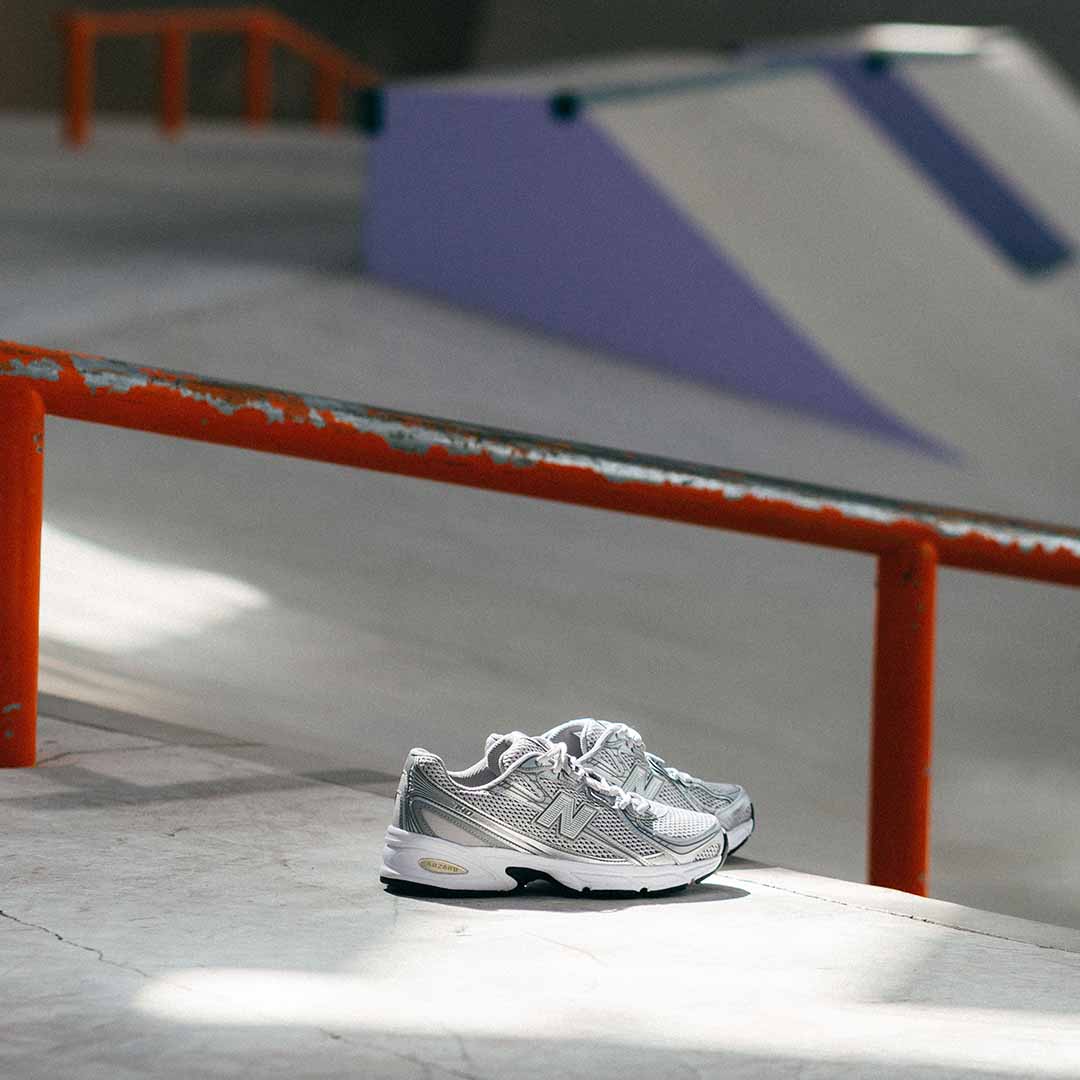
Courtesy: New Balance
“You protect it by never treating it as a trend in the first place,” Seixas says. “Brands that chase trends borrow cultural currency they don’t own and eventually have to return it. Grey for us has never been borrowed, it’s foundational.”
That consistency matters even more now, as trend cycles accelerate and consumers grow more skeptical of constant reinvention for its own sake.
“The way we protect it is by continuing to root it in craft and intention,” Seixas says. “Every time grey appears in our product, it’s considered. The tonal variations, the material choices, the silhouette it lives on, none of that is accidental.”
Instead of chasing reinvention, New Balance kept refining the same idea. Over time, repetition did what novelty usually does. Consistency became the differentiator.
FROM RUNNING SHOE TO CULTURAL REFORM
New Balance’s shift from performance footwear into lifestyle culture did not come from a deliberate repositioning strategy. It happened more organically, with the brand observing how consumers were already using the product and choosing not to intervene.
“Honestly, we didn’t force that transition,” Seixas says. “We saw it happening and we let it happen.”
What emerged over time was a quiet expansion of context. Grey New Balance sneakers moved beyond running tracks and gym use into everyday wardrobes, appearing on creatives, designers, and people styling them far outside their original performance setting.
“Runners were wearing their New Balance off the track,” Seixas says. “Then we started seeing them on creatives, on people in completely different spaces, styled in their own way.”

Courtesy: New Balance
Rather than being driven by a top-down narrative, the shift was shaped by usage. The product moved first, and culture followed.
“The shoe was moving between performance and everyday life without us directing it,” Seixas says. “The cultural relevance comes from the product itself, not from a repositioning exercise.”
That distinction has become increasingly relevant in a market where consumers are quick to recognize when cultural positioning feels manufactured.
Today, New Balance sits in a relatively uncommon space in sneaker culture. It is globally recognizable and widely worn, but not defined by constant hype cycles or frequent reinvention.
“The same grey silhouette that a marathoner trains in can sit alongside a creative’s wardrobe or someone who wants a comfortable shoe for walking,” Seixas says. “That versatility isn’t something we engineered.”
WHY IT PAYS TO BE EVER GREY
Fashion cycles operate at high speed. Trends shift quickly, algorithms reward novelty, and attention is increasingly fragmented.

Against that backdrop, New Balance continues to center one of the least attention-seeking colors in its palette.
“With today’s trend cycles moving so quickly, there’s always external noise,” Seixas says. “But we don’t approach grey as something that needs to respond to trend cycles.”
Rather than reshaping its identity to match shifting aesthetics, the brand evolves through subtler levers: material innovation, craftsmanship, and context. The color itself remains steady, while its expression changes around it.
“Grey has been part of our design language for decades,” Seixas says. “While it continues to evolve, it’s deliberate through craftsmanship, material innovation and how it shows up across different silhouettes.”
At its core, the approach is less about chasing relevance and more about staying usable across different moments and needs.
“We are not interested in changing it to keep up with trends,” Seixas says. “We are interested in making sure it stays relevant to how people actually use and wear our product today, whether that is in sport, at work, or everyday life and beyond.”
That long-term view has arguably become an advantage in a market increasingly fatigued by constant reinvention and short-lived aesthetics.
“What we have seen over time is that consistency builds trust,” Seixas says. “And in a market where things move faster and faster, that consistency becomes even more important.”
TURNING HERITAGE INTO PARTICIPATION
Legacy brands often face a simple tension: how to make heritage feel current without turning it into nostalgia. New Balance has approached it by not treating the two as separate in the first place.
“The key is that we don’t treat those as two separate audiences requiring two separate strategies,” Seixas says, referring to older loyalists and younger consumers discovering the brand for the first time.
“The entry points differ, but the foundation is the same.”
Instead of focusing heavily on storytelling about its past, the brand increasingly creates environments where people encounter its identity directly, through movement, creativity, and community rather than explanation.
Its annual “Grey Days” initiative has expanded across the Middle East, activating communities through fitness classes, workshops, running crews, artists, and local collaborations.
“Grey Days plays an important role in keeping that discipline alive,” Seixas says. “It gives us a moment each year to bring the story forward in different ways, not by changing what grey is, but by showing how it lives today across sport, culture and everyday life.”
The emphasis is less on telling people what the brand stands for and more on letting them move through it.

Courtesy: New Balance
“If a young creative in Dubai or Riyadh comes to one of our Grey Days experiences, they might start with a CRANK class or a workshop or even a run with New Balance run crews,” Seixas says. “They are not being told what the brand means. They are experiencing it through movement, creativity, and community.”
That shift reflects a broader change in how brands are being built, with audiences increasingly forming connections through participation and shared spaces rather than one-way messaging.
“Heritage is most powerful when it is not treated as something distant or only rooted in the past,” Seixas says. “It becomes relevant when people can interact with it in the present.”
HOW RESTRAINT BECAME A COMPETITIVE ADVANTAGE
There is a quiet irony in New Balance’s rise. The brand did not grow by competing for attention, but by largely staying outside that race. Grey worked not because it changed, but because the context around it did.
“Grey is the perfect expression of where New Balance sits now,” Seixas says. “It exists at the intersection of sports and culture. It can live in performance, but it also feels completely natural in lifestyle and creative spaces.” That versatility has allowed the brand to remain relevant across generations without fundamentally changing what it stands for. “Grey Days reflects who New Balance is at its core,” Seixas says. “The question for us is never whether to continue, it’s how to deepen it.”
For years, grey was treated as a background choice: safe, neutral, and easy to overlook. New Balance didn’t change what it was so much as the context it sat in.
In doing so, it highlighted something that is becoming more visible in consumer culture: consistency can carry weight, and restraint, over time, can become a signal in itself.

Featured Videos
Today's Top Stories:
More Top Stories:




FROM OUR PARTNERS