- | 10:00 am
Visa’s Oliver Jenkyn on why trust will decide the future of agentic commerce
A year into building agentic commerce, Oliver Jenkyn explains what has actually changed
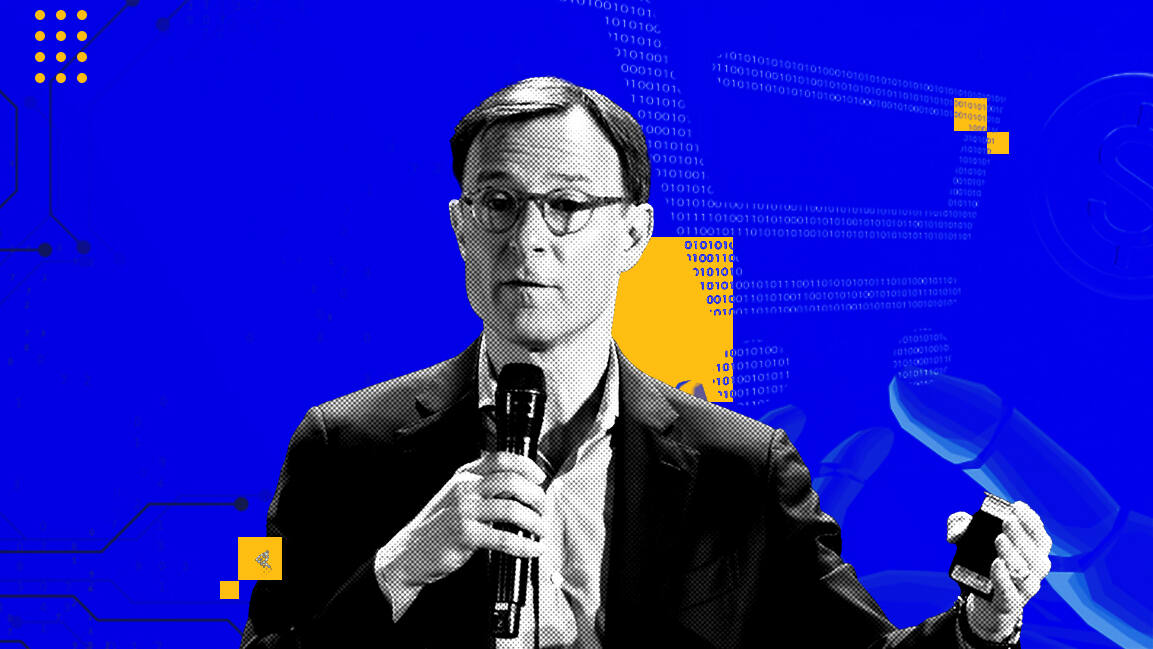


Somewhere between a shopper typing a search query and an AI agent completing a purchase, commerce is quietly being rebuilt. Not through headline-grabbing breakthroughs, but through protocols, trust frameworks, and standards most consumers will never see. It is a slower, more deliberate process, according to Oliver Jenkyn, Group President, Global Markets at Visa.
Jenkyn spoke to Fast Company Middle East in an exclusive conversation on the eve of Visa Payments Forum in Paris, the company’s flagship European gathering, which brought payments leaders to the Paris Convention Center on July 1 and 2.
A year ago, Jenkyn called this stage “AI commerce 2.0,” the phase after launch when adoption either compounds or stalls. Twelve months on, the debate is no longer whether AI agents will participate in commerce, but how they will authenticate themselves, move money securely, and earn the trust of consumers and merchants.
Visa has built infrastructure to match: the Trusted Agent Protocol, launched in October to verify legitimate agents and block malicious bots; Intelligent Commerce Connect, unveiled in April as a single on-ramp for merchants to accept agent-initiated payments; and a partnership with OpenAI, formalized in June. The question Jenkyn arrived in Paris to answer is in which direction the curve is now bending.
THE HARD WORK OF TRUST
His assessment of the past year starts with conviction rather than a progress report. “How we would summarize the past year on agentic is that we have even greater conviction that agentic commerce will be this powerful and positive transition and impact on commerce, much like ecommerce and m-commerce were before it.”
The scale of that shift comes with a caveat: “This past year has shown us that these major transitions take some time.” That timeline maps onto three hurdles Jenkyn has flagged before: technology, psychology, and business. Most of the past year went into groundwork rather than headline moments. “This magnitude of change, as we move to agentic, needs to be built out in an industrial-strength manner so everything is prepared.” On the technology front, that meant API work on both the issuing and merchant sides, as well as protocol conversations across the industry. The psychology piece is a longer game, one he sees largely as Visa’s job to manage through communications.
Of the three hurdles, he is most relaxed about the one that sounds hardest. “The business one is actually probably the easiest, but even on the psychology side, we’re very confident it will happen in the same way it did when ecommerce first happened. People said, ‘Well, I’m never going to buy my groceries online. Sure, I’m never going to buy a car online.’ And now people have developed the habituation, and it’s incredibly common.”
If the first year of agentic commerce had a defining quality, it was unglamorous by design. “It’s really been dirt-under-the-fingernails, sleeves-rolled-up work to make agentic commerce a reality,” he says. “Less about visionary innovation and more about the practical execution of the innovation, making it real and tangible so that it can reach millions and billions of people over time.”
STANDARDS & PROTOCOLS
Building agentic commerce, Jenkyn argues, requires collaboration rather than competition. “No pride of authorship. Let’s work together. Let’s get the standards in place,” he says. But he leaves little doubt about who should hold the pen. “Setting standards for how commerce happens and how money moves is literally our raison d’être. It’s why Visa exists, and we’re really, really good at it.”
Two newer tools extend that logic to verification. Agent Score, built with New Generation, gives merchants a report card on whether AI agents can actually navigate their websites. The Agentic Directory is a vetted list of agents and merchants that each side can treat as legitimate. Jenkyn frames both as foundational rather than experimental. “There’ll be a lot of agents that are engaging in commerce. Most of them will be trusted, valid, robust agents. And then there’ll be the more nefarious ones. Having a way for agents to be validated and entered into a trusted list of ones that you know you can let through and consider valid would be very helpful for the industry.”
For merchants, the benefit runs in the other direction. “Having the ability to essentially have a report card of how well agents can navigate their website would also be very valuable, so that they can make sure they are agentic commerce-ready, if you will,” he says.
OPENAI, STABLECOINS, AND AGENTIC COMMERCE
Jenkyn describes the OpenAI partnership as a pairing of two distinct strengths rather than an overlap of capabilities. “OpenAI is incredible in its discovery, its ideation, its capabilities, its learning, and its knowledge transfer, and Visa is incredible and the leader in moving money safely, securely, and seamlessly.”
That division of labor reflects where consumer trust already sits. Visa’s own research finds that consumers trust companies like OpenAI for ideation and discovery, but trust Visa and its ecosystem for moving money. As the partnership moves from agreement to implementation, attention turns to what developers will build once OpenAI’s tools, credentialing capabilities, and APIs open up. Jenkyn keeps the outlook brief but pointed: “It’s an important partnership, and there’s much more to come.”
Stablecoins, the other trend dominating the payments conversation this year, stay firmly apart in this framing. “Right now, we see agentic commerce, GenAI commerce, and blockchain stablecoins as two separate trends. There are areas where there could be overlap and interplay, but as a company, we see them as two different but important trends.”
Specifically on stablecoins, he sees a gap between attention and traction. “I think the level of ink that’s been spilled on stablecoins relative to the actual activity that’s happening is a little bit out of whack, but that’s okay because there’s a lot of great potential in the space.” Blockchains, in his view, still need development on privacy, throughput, stability, and reliability, and the supporting infrastructure of wallets, key management, and tooling remains to be built.
The dividing line he draws is the consumer checkout. “We think agentic commerce is going to be much more card-based and card-credential-based, token-based money movement, and less about stablecoin. We don’t really see stablecoin moving into the consumer point of sale.” Where the two trends do meet, he expects it to be in cross-border B2B money movement, where agents could eventually direct stablecoin flows.
WHY TRUST STILL MATTERS MOST
For all the innovations, Jenkyn points to something more basic that underpins them. “The foundational element for commerce, in our opinion, isn’t going to be the technology for consumers; it’s going to be the underlying trust. If you trust the credential that you’re using, and you trust the network and the companies that stand behind it, then consumers will be willing to lean into that new digital economy.”
Asked directly whether trust and AI fraud rank among the year’s biggest topics, he doesn’t hedge. “So, 100% on your question. I think it’s easy to have conversations about this technology or that technology, or this frontier model, or this cybersecurity risk, but for a regular consumer like you and me, the question is: do I trust my payment credential, and am I willing to engage?” That, he says, is the message Visa will keep returning to in the years ahead.
DESIGNING COMMERCE FOR AUTONOMOUS AGENTS
For merchants, the shift starts with a fundamental mismatch between how the web is built and what agents need. “The web as it is currently built was designed for humans. On merchant webpages and marketplace webpages, there are pictures and fonts and hues and aesthetics, and it’s essentially marketing to convince the consumer to engage in commerce,” he says. “For an agent, a lot of that is confusing. I don’t need the fonts, colors, hues, or pictures.” What an agent needs to know, he says, is simply whether the blue size eight sneakers are in stock.
That mismatch is forcing a rewrite of some of the most established merchant playbooks. “In a world where agents are going to be showing up at my storefront shopping, how do I optimize that experience for agents as opposed to humans?” he says. Search optimization is the obvious casualty. “You have search engine optimization for Google Ads, or something like that. Is it now going to be more agent engine optimization so the agents are showing your products?”
Loyalty programs face a similar reckoning, an adjustment for merchants he calls “exciting and daunting at the same time.”
THE COMING AGENTIC ADOPTION CURVE
Looking ahead, Jenkyn points not to a new technology but to the speed of consumer adoption itself. “It’ll be one of these things that is slow while we’re finalizing the technology and the psychology and the business trends, but once it turns on, I think the adoption will be very, very quick.” His comparison is characteristically confident: “It’ll be like ecommerce on steroids, all the efficiencies of what we came to love in ecommerce and m-commerce, with agents doing it for us.”
He expects resistance before acceleration and has no doubt which one wins. “I think there’ll be initial apprehension, and then the S-curve will be very steep. I’m convinced that will be the case. It’s just a matter of time before we get onto the steep part of that S-curve,” he says. “That’s what I’m hoping we’re talking about next year, or hopefully not later than the year after that.”