
- | 9:00 am
How Meta designed its new eyewear to appeal to smart glasses skeptics
In the race to own your face real estate, Meta is doubling down on fashion with a new line of glasses.



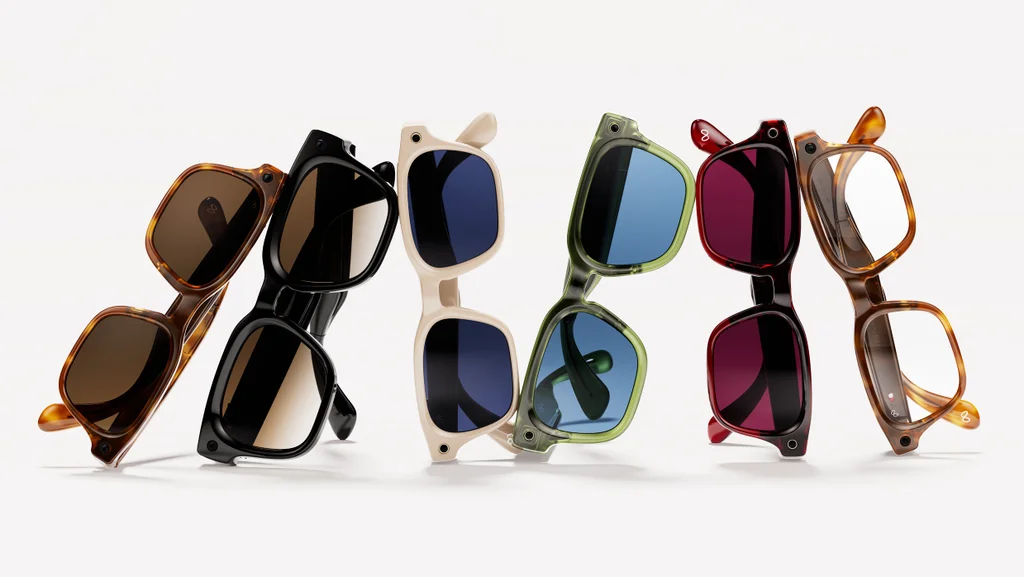
Meta is now a fashion brand. Today, the tech company launched a new collection of smart glasses designed for the first time in-house and manufactured by its longtime partner EssilorLuxottica.
“This is the first step of Meta taking a really hard pass at becoming relevant in the fashion glasses world,” Peter Bristol, the VP of Industrial Design at Meta, said during a press briefing yesterday. “I hope to earn that right with the products that we ship.”

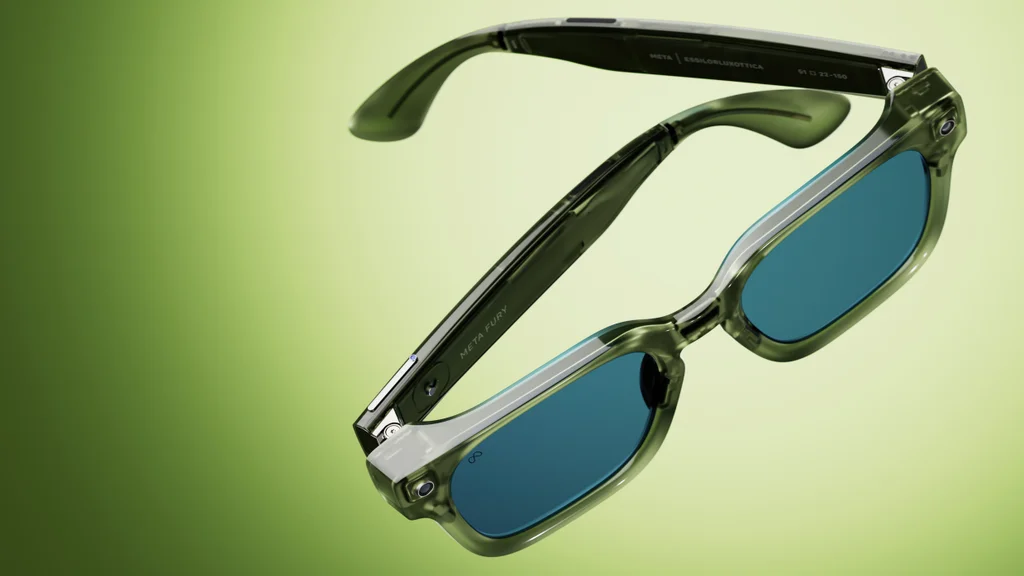
The silhouettes are archetypal—a squarish rectangle (the Meta Adventurer), a chunkier squarish rectangle (the Meta Fury), and a slim oval (the Meta Starfire Kylie Edition, a collaboration with Kylie Jenner). Each is designed to flatter a wide range of faces.
Bringing design in house “allows just a little bit more flexibility in terms of price tiering and feature decisions over time,” Bristol tells Fast Company. “There is no world where one brand is sufficient to bring smart glasses to the right kind of breadth in the world.” The collection starts at $299.
Tech companies have been racing to corner the smart glasses market, and they’re doing it by normalizing the aesthetic. Gone are the days when these wearables resembled a cyborg’s appendage. Today’s smart glasses are increasingly indistinguishable fashion glasses without technology. Meta has been working with EssilorLuxottica (which owns Ray-Ban, Oakley, and Persol) since 2019; Google recently announced partnerships with Samsung, Warby Parker and Gentle Monster on a series of fashion-forward frames to help encourage adoption. On the other end of the spectrum, last week, Snap released Specs, a hulking pair of AR glasses that don’t rely on a smartphone for computing power and support spatial apps.
The move into smart glasses has been successful for Meta. Last year, Meta and EssilorLuxottica sold 7 million pairs of AI glasses. In January, Bloomberg reported that Meta founder Mark Zuckerberg wanted to increase its production capacity to 20 million pairs by the end of 2026.
For Meta, the adoption of smart glasses goes hand-in-hand with the adoption of artificial intelligence. “We’re at the front end of agents becoming incredibly valuable in your life,” Bristol said during a Q&A at the collection’s launch. “The glasses right now are almost like they’re being set up to be the vehicle for an incredible agent relationship. I think of it like public transportation—people will use it when it’s good enough.”
As a design challenge for Meta, that translates to integrating the technology into your life so seamlessly that it essentially becomes an always-on feature versus an episodic use case. “Getting them to become daily drivers is really critical,” Bristol says.
That’s where fashion comes in. There’s been vocal opposition to Meta’s glasses from people who are concerned about the privacy implications of always-on glasses and the potential to abuse features like facial recognition. Catering to a wider swath of consumers by offering varied styles is one way to normalize the technology.
At the event, Meta CTO Andrew Bosworth said he predicts smart glasses will have a similar trajectory to smartphone cameras, which have long presented their own privacy concerns. “There is this social norming thing that has to happen,” he said.
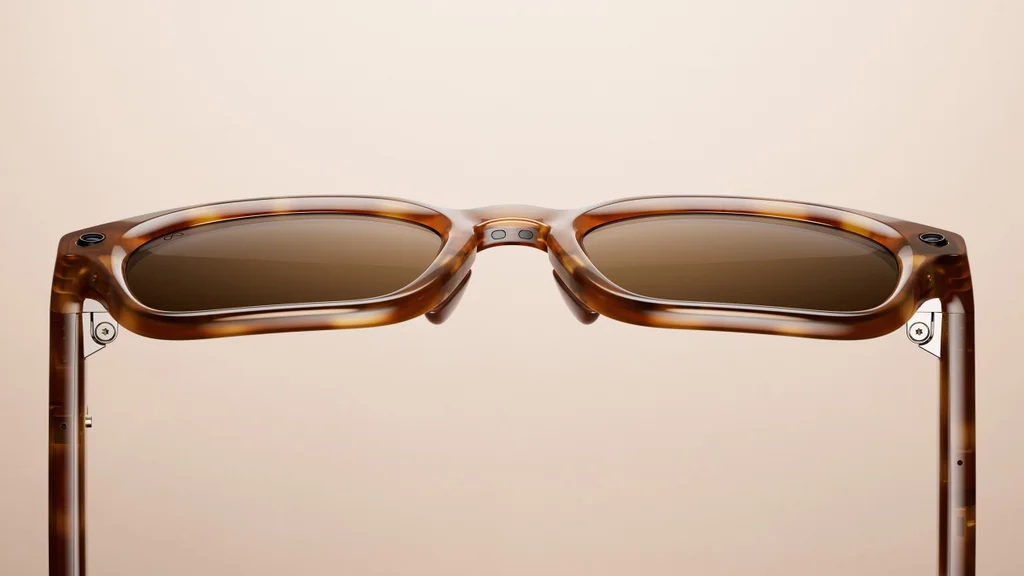
Aside from the camera and LED indicator light on the front of the glasses, which appear smaller than previous generations of Meta’s smart glasses, they don’t look much different from a regular pair. Bristol and his team paid close attention to fit through details like adjustable nose pads and temple tips and spring hinges. “First and foremost, they just need to be great glasses,” Bristol says.
Advances in hardware also help the technology become more discreet. It’s possible to make more powerful batteries and printed circuit boards in smaller sizes, and Meta’s glasses take advantage of both. The microphones, for example, are hidden underneath the adjustable nosepads. On the Adventurer and Starfire models, the Meta logo is discreetly located on the inside of the temple tips. Wearers can activate AI verbally, or with the press of a button.
“Early adopters are often similar sets of folks, right?” Bristol says. “Part of the work here is to get the product category out of being an early adopter category and into being mainstream and widely acceptable and adoptable.”
The new collection also seems to be a play to appeal to more women. “The cat eye is one of the styles that we know uniquely women would appreciate,” Ming Hua, the VP of Wearable Devices at Meta, told me at the preview. She also noted that Skyler, the most feminine shaped design from Meta’s Ray-Ban collaboration, is one of their bestselling styles.

A celebrity endorsement and playing into the influencer set helps with this, too. Meta designed special packaging for the Kylie Jenner collaboration. Unboxing the glasses—which come in a matte black box and include a card printed with a message in Kylie’s handwriting—looks like it was tailored for unboxing videos. And the case has a mirror integrated into it.
“Comfort is extremely critical to get right, but it’s also an extension of your personal brand, right?” Bristol said. “You’re taking a pair of glasses on as a piece of yourself, just like your facial hair, hair decisions, and your jewelry.”
Between frame shape and color, plus lens options, there are 26 different permutations in the new Meta collection. They can be customized with prescriptions, too. The Meta smart glasses are available today on Meta.com and at LensCrafters, Sunglasses Hut, Best Buy, and Amazon.

Featured Videos
Today's Top Stories:
More Top Stories:





FROM OUR PARTNERS