- | 1:00 pm
Egypt’s infrastructure boom is forcing a reckoning with how to protect its ancient cities
As Egypt invests billions in infrastructure, Dr. Abdelhamid Salah Al-Sharief says heritage must become central to the country's development strategy.


Egypt’s infrastructure sector has undergone one of the region’s most ambitious periods of expansion over the past decade, with more than $100 billion invested in megaprojects and the market projected to exceed $70 billion by 2031. Driven by major public investment, the country has launched a series of large-scale developments aimed at modernizing its economy, strengthening connectivity and supporting long-term growth.
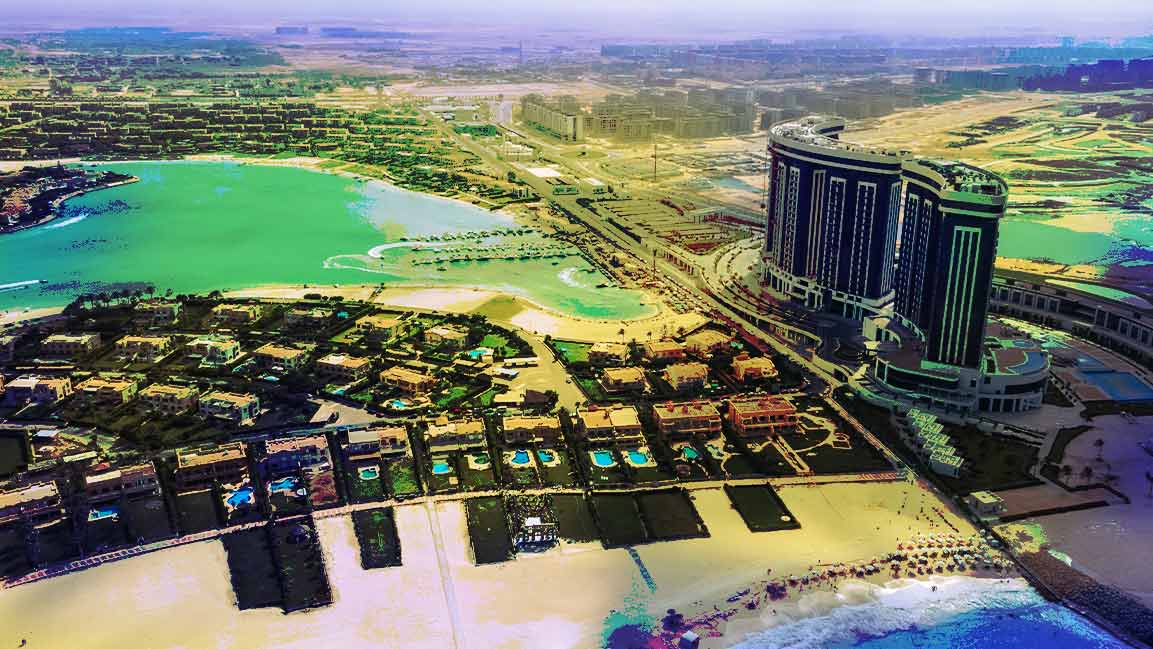
From the New Administrative Capital and 14 new smart cities to the expansion of the North Coast and New Alamein, Egypt has embarked on an unprecedented wave of megaprojects. Recent initiatives include The Spine urban development, a $560 million solar project expected to add 1GW of renewable energy capacity, and major transport investments such as the Cairo Monorail and the country’s $4.5 billion high-speed rail network.
As these projects reshape Egypt’s urban and economic landscape, they also raise an important question: how can rapid modernization be balanced with the preservation of one of the world’s richest historical and cultural legacies?
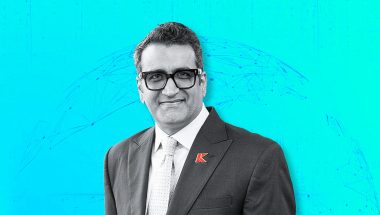
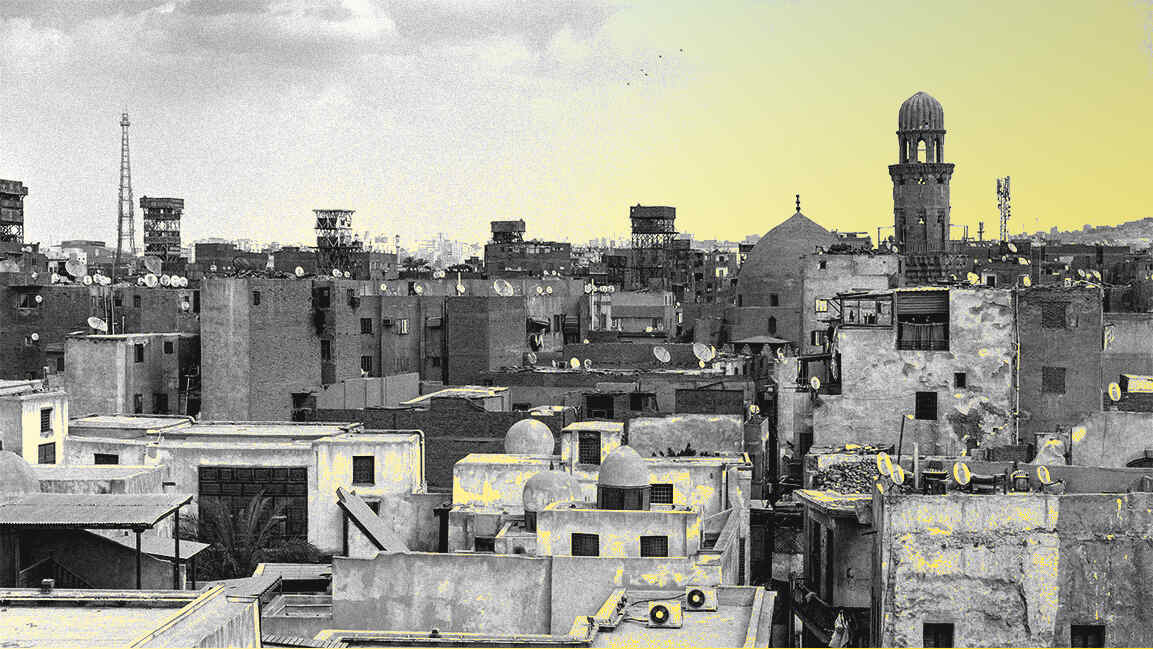
Egypt’s built heritage spans more than five millennia, encompassing Pharaonic, Graeco-Roman, Coptic, and Islamic civilizations. At Egypt’s Big 5 Construct Exhibition, Dr. Abdelhamid Al-Sharief, Chairman of the Egyptian Heritage Rescue Foundation, highlighted the importance of integrating heritage conservation into long-term planning to ensure that development enhances, rather than compromises, the country’s unique historical identity.
“Ideally, there should be no conflict whatsoever between conservation and development,” said Al-Sharief. “When there is a comprehensive understanding of what needs to be preserved and what our heritage actually is, the development plan becomes adaptable and smart enough to actually add value to that heritage instead of chipping away at it.”
GAPS IN LEGISLATION
Al-Sharief said that, unfortunately, this comprehensive understanding is lacking in most cases. Despite having strong laws, there are often gaps. He explained that Egypt’s legislative framework for heritage preservation has evolved over the past four decades, but gaps in existing laws continue to pose challenges to protecting the country’s historic urban fabric.
He pointed to the Antiquities Protection Law of 1983, which provides strong legal protection for officially registered archaeological sites but does not adequately recognize broader elements of cultural heritage.
“It only recognizes archaeological buildings that are officially registered by the state as antiquities. Consequently, it fails to see historical buildings, heritage buildings, customs, traditions, and traditional or heritage crafts.”
He also noted that the Unified Building Law of 2008 marked an important shift by expanding the focus from individual monuments to the preservation of entire historic districts and urban character.
“This is supposed to be excellent because it shifts our thinking from the individual building level to the urban level, viewing the urban fabric through a heritage and historical lens.”
However, Al-Sharief argued that the law’s implementation has not matched its original intent.
“The law’s executive regulations and interpretations were not drafted in a way that fulfills the brilliance with which the law itself was written.”
He added that Egypt’s legislation on demolition and construction also contains provisions intended to protect historic areas, but the absence of a unified framework means the laws often operate independently rather than as a coordinated system.
“If we took these three laws and created a clear, unified framework that binds them together, the state would finally see the old, historical city not just as a collection of monuments or a museum, but as a living city.”
According to Al-Sharief, the lack of consistent standards can leave heritage decisions vulnerable to subjective interpretation, particularly when evaluating the historical significance of older buildings and neighborhoods.
He stressed, however, that the challenge is not a lack of political will to protect Egypt’s heritage, but rather the need for clearer definitions and stronger coordination among existing legislation.
“The state has every intention to preserve everything of heritage value,” he explained, noting that there is a requirement for “someone to define these parameters clearly, and it requires the laws to complement one another rather than conflict when establishing these boundaries.”
CONSERVATION IN PLANNING
As Egypt continues to expand its cities and infrastructure, Al-Sharief said heritage conservation should be embedded in the earliest stages of planning, particularly where new developments border historic districts.
According to Al-Sharief, projects that adjoin heritage areas should be guided by a fundamental principle of preserving visual harmony. “The baseline must be the absence of visual conflict between that form of heritage and that form of development. Visual conflict creates a major issue and leads to a lack of harmony.”
He shared the Fustat Project near Magra El-Oyoun as a respectable and successful attempt.
“The architectural and urban planning of that compound was designed in a way that doesn’t alienate you from the old city. It doesn’t make you feel like you’ve traveled a million years through time; it is a smooth transition from one side of the wall to the other.”
Rather than replicating historic architecture, he said new developments should draw inspiration from the character and identity of existing urban environments while responding to modern needs.
“When we have that baseline and an understanding of what this heritage is, both tangible and intangible.”
He added that successful urban expansion should create a seamless transition between historic and contemporary neighborhoods, allowing cities to evolve without losing their cultural identity.
“We all want our country to develop, but we want it done while preserving our identity and heritage.”
Al-Sharief said achieving this balance requires close collaboration between heritage specialists, urban planners and architects throughout the planning process.
Heritage experts, he explained, should define the cultural significance and conservation parameters of historic areas, while urban planners must understand how older cities were shaped by factors such as climate, street patterns, and local context. Architects, in turn, should ensure that new buildings complement rather than compete with their historic surroundings.
“These three must work together constantly within this context to achieve true interaction.”
For entirely new cities built away from historic areas, Al-Sharief said architects and planners should be given the freedom to innovate without unnecessary restrictions. However, he argued that creative freedom should not come at the expense of national identity.
“We need people to dream, innovate, and think without limits, but without winding up with a carbon copy of another city we have no connection to.”
UNDERSTANDING OLD INFRASTRUCTURE
Al-Sharief said preserving Egypt’s historic cities begins with developing a comprehensive understanding of how they have evolved over time. He outlined a three-layer framework, beginning with an analysis of the city’s urban form through urban morphology and morphogenetic analysis, which examines street networks, public spaces, architectural typologies and the broader urban fabric to establish a baseline for future planning.
The second layer, he said, focuses on historical continuity by connecting the city’s built environment with its customs, traditions and community life.
“We connect the tangible with the intangible, linking material heritage with living heritage.”
A third layer examines authenticity, tracing how historic places have evolved through political, social and cultural change. According to Al-Sharief, understanding these three dimensions enables cities to modernize while preserving their identity.
“We can absolutely have modernity alongside preservation; the two should never conflict if there is a comprehensive understanding.”
THE ROLE OF TECHNOLOGY
Al-Sharief said advances in digital technologies are transforming the way Egypt’s historic buildings and urban environments are documented, analyzed, and preserved, building on earlier tools such as Building Information Modeling (BIM).
He noted that technologies, including artificial intelligence, drones, and aerial imaging, now allow specialists to collect and process vast amounts of heritage data far more efficiently than in the past.
“A young professional with a camera-equipped drone and a handheld device can gather massive amounts of data,” he said. “An analysis that used to take six months can now be completed in a single day.”
According to Al-Sharief, these technologies also improve planning by enabling specialists to generate 3D models, simulate conservation scenarios and assess the potential impact of interventions before work begins.
“You can conduct decision impact assessments to measure the potential outcomes of your intervention and conservation choices.”
CLIMATE CHANGE ADAPTATION
Al-Sharief said climate change is placing increasing pressure on Egypt’s historic buildings, with prolonged heatwaves, rising temperatures and drought among the most significant threats.
According to Al-Sharief, many heritage structures rely on traditional mortars that require moisture to maintain their structural integrity. As temperatures rise and conditions become drier, these materials lose their binding properties, leaving buildings more vulnerable to collapse during heavy rainfall or ground movement.
He said the growing frequency of extreme weather events means conservation strategies must shift from mitigation towards adaptation, helping historic buildings withstand a changing climate.
“We need to think beyond just mitigation measures; we must focus on adaptation—how these buildings will coexist with these changes.”
Through the Egyptian Heritage Rescue Foundation, Al-Sharief said his team has implemented projects in Cairo and Rashid that combine traditional knowledge with modern conservation approaches to improve climate resilience. The initiative also works with local communities to adapt conservation techniques into more affordable solutions.
He also highlighted lessons from Egypt’s historic architecture that remain relevant for contemporary urban design, including narrow streets, internal courtyards and passive cooling techniques that naturally regulate temperature.
“The technology used back then clearly proved its efficiency by lasting this long.”
Al-Sharief added that Egypt is incorporating climate adaptation into national planning through specialized working groups and updated building regulations, with an increasing focus on ensuring modern standards are compatible with historic structures.
THE ECONOMIC VALUE OF CULTURAL PRESERVATION
Al-Sharief said heritage preservation should be viewed not only as a cultural responsibility but also as a major economic asset, particularly for countries such as Egypt that possess globally significant historical and cultural sites.
Pointing to destinations such as Italy and Spain, he argued that visitors are drawn primarily by historic cities, monuments and cultural experiences rather than climate or shopping opportunities.
“They go for the heritage, to see the historic cities and the ancient buildings that date back nearly 2,000 years.”
Al-Sharief said preserving heritage can create a broader cycle of tourism, economic and social development when paired with appropriate infrastructure and services.
“Heritage development drives tourism development, which in turn fuels economic development.”
He added that local communities are more likely to protect historic areas when they directly benefit from the jobs and income generated by heritage tourism.
“When the local community experiences these tangible economic benefits, they become the ones who protect the heritage.”
“There is absolutely no conflict between the two; in fact, they reinforce each other.”
A SHARED RESPONSIBILITY
Al-Sharief said safeguarding Egypt’s historic cities requires a coordinated effort that extends well beyond heritage specialists, with government, media, investors and local communities all playing a role in conservation.
“Conservation is not the responsibility of a single entity. It is a shared responsibility among numerous sectors.”
He argued that journalism and media have a particularly important role in shaping public perceptions of heritage, but said coverage should move beyond criticism to explain the long-term consequences of heritage loss and highlight successful preservation efforts.
“Criticize the shortcomings, but ensure the coverage builds genuine awareness,” he said. “This media layer is highly influential, yet it currently fails to support the cause.”
Al-Sharief also called for stronger collaboration between the state, investors and heritage authorities to encourage sustainable investment in historic districts. Rather than relying solely on regulation, he said policies should incentivize conservation and make it easier for investors and communities to participate in revitalising old cities.
“Laws should not function purely as punitive measures; they should be designed to encourage conservation.”
He added that attracting private investment will require the government to establish successful local projects and reduce perceived risks before expecting wider investor interest.
“The state must create a strategic methodology for attraction.”
According to Al-Sharief, once viable investment models are established, they can generate the confidence and data needed to attract both domestic and international investors, helping transform heritage conservation into a long-term driver of economic and urban regeneration.