
- | 9:00 am
Why sleep could be the next power move for organizations in the Middle East
The culture of glorifying late nights and constant availability may be undermining the very skills leaders are expected to bring to work.
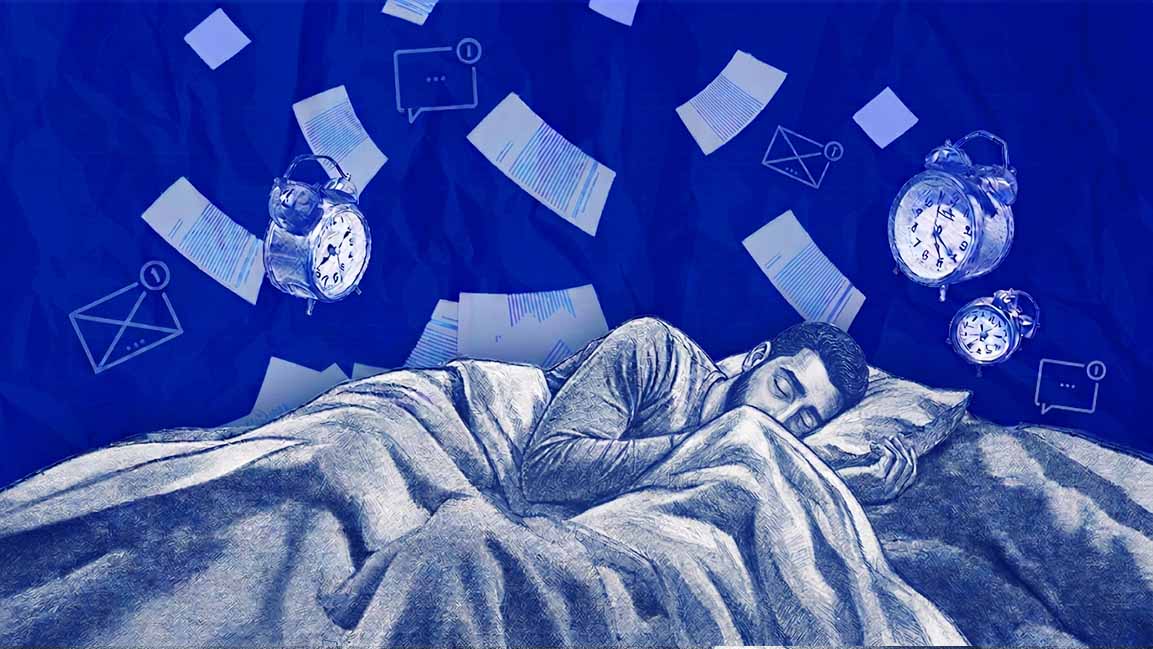


Sleep scores have become the antithesis of screentime. Yet, people rarely draw attention to the quality of their sleep at work. In fact, across the GCC, sleep deprivation is a real issue. Surveys indicate that more than 40 percent of UAE residents sleep fewer than six hours a night, while studies in Saudi Arabia suggest that roughly half the population fails to reach the recommended seven-hour minimum. Insomnia rates in some areas are over 60 percent, with the UAE and Saudi Arabia among the highest, and it is often sleep deprivation—not recovery—that is worn like a badge of honor.
There are several reasons for this rhetoric. “For a long time, business culture confused exhaustion with ambition,” says Adriana Usvat, Founder and Managing Partner, FLC Marketing Group. There’s also the tendency to put overworked individuals on a pedestal, sweeping their exhaustion under the rug. “If you were sleeping four hours a night, answering emails at midnight, and always available, somehow that meant you were more committed,” says Usvat.
But the idea that exhaustion is evidence of ambition is increasingly difficult to defend. Sleep is not simply downtime between working hours. It is part of the cognitive machinery that determines how people perform at work.
“The reality is that sleep enables performance,” says Riddhima Whabi, Brand Director at Rocket Linen. Chronic sleep deprivation, she says, can affect “concentration, decision-making, productivity, emotional regulation, and judgment.”
According to Paddy Upton, an international mental performance coach, “Sleep deprivation is not evidence of ambition. It’s more impaired performance dressed up as commitment.”
That distinction matters most at the top of an organization, where a tired employee may affect their own work, but a tired leader can influence an entire team.
THE LEADERSHIP COST OF RUNNING ON EMPTY
For senior executives, performance is less about how many tasks they can complete and more about the quality of their decisions.
“As leaders become more senior, we are valued less for simply doing and more for the quality of our judgment: seeing what others don’t see, deciding what deserves attention, staying calm when things go wrong, and knowing when not to react,” says Usvat.
Those capabilities can become harder to access when sleep is compromised.
Upton says two types of sleep play different roles in recovery. Deep sleep is important for physical recovery, while REM sleep supports mental recovery and memory. “Lack of REM sleep impairs thinking,” he says. “Leaders think less clearly, become more reactive, miss nuance, and often don’t recognize how compromised they are.”
Sleep deprivation can create a strange contradiction: the person whose performance is deteriorating may be the least equipped to recognize it.
Under sleep deprivation, Upton says, “the brain doesn’t stop working, it simply starts taking shortcuts.” That can mean relying on familiar answers, missing alternatives, or failing to challenge assumptions.
Creativity suffers, too. “A tired brain is more likely to reach for the quickest, most obvious solution than come up with a genuinely better one,” he says.
Whabi sees a similar risk in the gap between strategy and execution. “You can have the best strategy, but if you’re exhausted, your ability to execute it thoughtfully can be compromised.”
For businesses whose competitive advantage relies on innovation, sound decision-making, and rapid adaptation, the detrimental effects of sleep deprivation pose a significant threat to organizational performance and long-term success.
WHEN EXHAUSTION SPREADS THROUGH A TEAM
The consequences of poor sleep don’t stay neatly contained within an individual.
Across an organization, Upton says insufficient sleep can show up as “lower productivity, more mistakes, absenteeism, and people being at work but functioning below capacity.”
It can also change the way people interact.
“Tired people tend to be less patient, listen less well, and react more emotionally,” he says. “One sleep-deprived leader can lower the quality of thinking and interaction across an entire team.”
Usvat points out that a leader’s internal state similarly has a ripple effect. Exhaustion can make people “less patient, quicker to react, more likely to miss something important,” she says, affecting colleagues and, over time, the organizations they lead.
The onus for an employee’s sleep rests with the organization rather than solely on the employee. Organizational research suggests that workplace culture influences individual well-being and health behaviors, including sleep (Keller et al., 2014).
THE OFFICE DOESN’T ALWAYS STAY AT THE OFFICE
The present workplace has made that boundary harder to maintain.
“One of the challenges today is that we leave the office, but the office doesn’t necessarily leave us,” says Usvat.
WhatsApp messages, emails, unfinished conversations, tomorrow’s decisions, and the news cycle can follow people well beyond working hours. “Our body may have stopped working, yet our attention hasn’t,” she says.
The first step, she argues, is protecting that attention. Exercise, walking, reducing screen time before bed, and avoiding caffeine later in the day can all help create a transition out of work mode.
But there is also a mental component to switching off.
Usvat recommends writing down what remains unresolved and deciding the following day what genuinely needs attention. “Not everything deserves another hour of thinking tonight,” she says.
Upton takes a similar approach: “The goal is not to force yourself to sleep, but to stop giving your brain reasons to stay awake.”
Whabi also emphasizes the importance of deliberate boundaries. Consistent sleep schedules, less screen time before bed, and a bedroom designed for rest can all help. So can a calming wind-down routine, whether that means reading, meditation, prayer or simply creating a more comfortable sleep environment.
The details may vary, but the underlying idea is the same: people need a clear signal that the working day is over.
A SLEEP-POSITIVE WORKPLACE STARTS AT THE TOP
That signal cannot come entirely from employees.
Companies can offer wellness programs, sleep apps, and advice about healthy habits, but those efforts will have limited impact if the workplace continues to reward constant availability.
“I don’t think organizations should tell adults when to go to bed,” says Usvat. “They should look at the culture they create while people are awake.”
That means examining workloads, unnecessary after-hours communication, expectations around responsiveness, and what gets rewarded.
An organization cannot tell employees that well-being matters while celebrating the person who answers emails at 1 AM, she says. “Culture isn’t what we say is important. It is what we repeatedly reward, tolerate, and demonstrate.”
Upton agrees. “A sleep-positive workplace respects recovery,” he says. “It doesn’t reward late-night emails, overload people, and then offer free access to a sleep app.”
The most visible signal comes from leadership. If executives send messages at all hours, employees can reasonably assume that being permanently available is part of the job—even when no one says so explicitly.
“If leaders are sending emails at 2 AM and celebrating exhaustion as a sign of commitment, employees will follow,” says Whabi.
The alternative is not a workplace where nobody works late or every employee follows an identical sleep schedule. It is one where recovery is treated as compatible with ambition.
FROM TIME MANAGEMENT TO ENERGY MANAGEMENT
For years, workplace productivity has been framed around doing more with the hours available: better calendars, tighter meetings, faster communication, and longer stretches of focused work.
Sleep introduces a different question: What condition is your mind in when those hours begin?
“We spend enormous amounts of time teaching leaders how to manage time,” says Usvat. “Perhaps we should spend more time teaching them how to manage the energy and clarity they bring to that time.”
That reframes sleep from a lifestyle choice into an ingredient for organizational success.
The shift may be subtle, but its implications reach well beyond individual leaders. If exhaustion stops being read as proof of dedication, what replaces it is a shared understanding that clear thinking is the thing being paid for.
By reframing rest as a strategic asset rather than a personal indulgence, organizations can foster healthier work environments and drive collective success.
For Whabi, that is ultimately the goal. “Being well rested should be perceived as a competitive advantage.”
And perhaps that is the workplace flex worth talking about next.