- | 9:00 am
How the UAE is becoming an art world powerhouse
As the Guggenheim joins the prestigious list of museums, the UAE is quickly becoming a major center for art worldwide
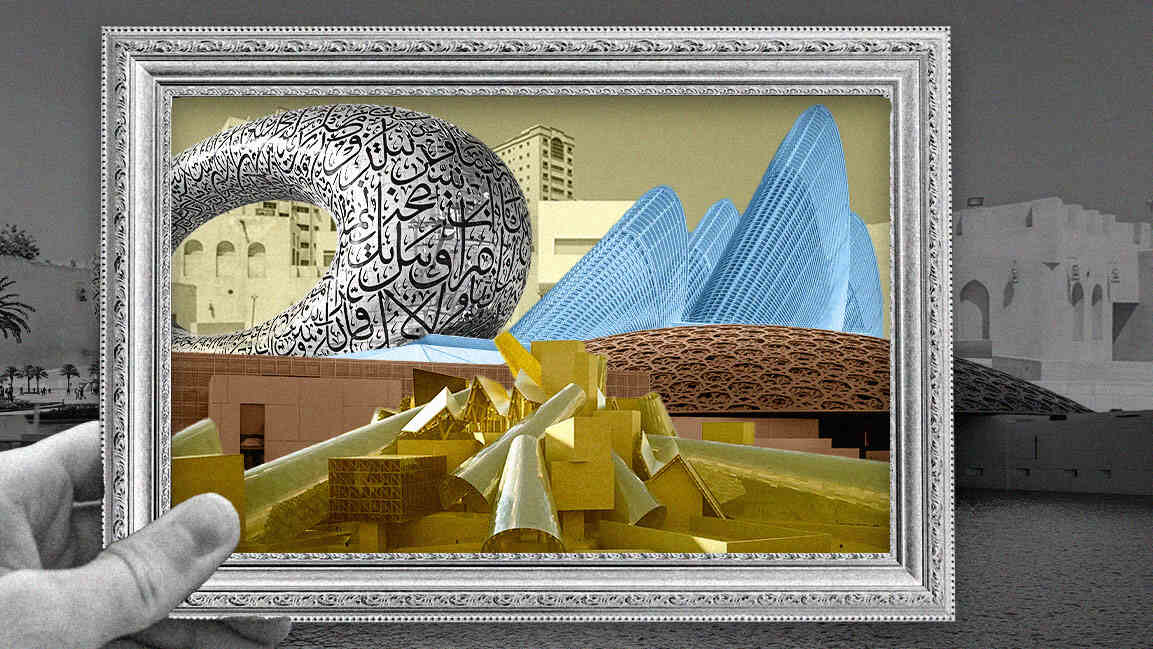


The transformation of the art scene in the UAE has been extraordinary. Two decades ago, the balkanized art community was small in Abu Dhabi, Sharjah, and Dubai. Now it’s big. Very big. A few signs of contraction have been glimpsed — a gallery closure here and there — but it won’t ever be small again. There was always another neighborhood where an artist could find studio space, or a gallery could open up shop. And they did.
It was the opening of the Louvre in 2017, followed by the Zayed National Museum in 2025, that witnessed art’s truly staggering expansion across the UAE’s rich demographic diversity.
This transformation might be most apparent when Guggenheim Abu Dhabi opens its doors in December. The Department of Culture and Tourism – Abu Dhabi said the new museum is intended to cement the capital’s position as a “leading global capital for the arts”.
CULTURE A PRIMARY REASON TO VISIT?
Sure, tourists and the media attention had been fixated on Dubai and Abu Dhabi for decades, but the focus was on luxury, beautiful resort beaches, and shopping. For the first time, would cultural offerings, with the opening of the Guggenheim, adding to the prestigious roster of museums, become the primary reason tourists visit the country?
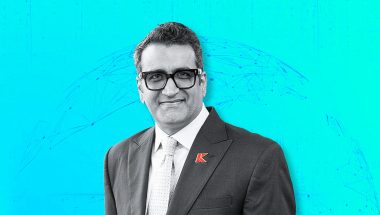
“Not yet the primary reason, but increasingly a decisive one,” says Elie Khouri, Founder and Chairman of Vivium. “People still come for the lifestyle, safety, and connectivity, but culture is what turns a visit into a deeper relationship with the country.”
“The Louvre Abu Dhabi, Zayed National Museum, and now the Guggenheim are giving the UAE an institutional depth very few destinations can match,” he adds.
Today, cities like Dubai and Abu Dhabi are firmly among the handful of cities worldwide with an astonishingly diverse cultural infrastructure. What made that happen was an explosion in the talent pool. Artists are always the drivers; there are many art festivals, such as Art Dubai, Abu Dhabi Art Fair, and Sharjah Biennial. And there’s government support, and infrastructure.
Path-breaking art institutions opened. Museum of the Future, Etihad Museum, which were expressly designed to present, collect, preserve, and interpret the art of our time.
Now, Guggenheim Abu Dhabi, spanning 11,600 square meters of indoor exhibition space, will showcase a collection comprising painting, sculpture, installation, photography, moving image, and new media, including works by Andy Warhol, Angela Bulloch, Douglas Wheeler, Jean-Michel Basquiat, Robert Irwin, and Yayoi Kusama.
Here’s the thing: The goal is simple, yet radical. The development of Saadiyat Cultural District in Abu Dhabi and Dubai Design District is part of a long-term plan to make global culture a key part of the UAE’s economic and international identity.
“The real value of these institutions is that they deepen a destination’s relationship with its audiences, and in a subtle manner create a positive geopolitical image of the country, often referred to as ‘soft power,’” says Prashant Malaviya, Professor of Marketing and Vice Dean of Programs, Georgetown University’s McDonough School of Business, Dubai.
Culture is one of the most generative long-term investments a city can make, shaping how a place is understood and valued, says Benedetta Ghione, Executive Director of Art Dubai Group. “The UAE’s cultural landscape has always been part of its appeal, and that role deepens as the ecosystem matures.”
Events like Sharjah Biennial and Art Dubai have been established in the international art calendar, drawing global visitors to discover new practices and perspectives and to engage with the histories and ideas shaping the wider Gulf, adds Ghione. “With newer developments including the Zayed National Museum and MODA, the region’s first museum dedicated to digital art, that pipeline continues to build.”
The shift didn’t happen overnight, but was built over two decades. When Art Dubai launched in 2007, for example, the city had around 10 operating galleries; today, that number exceeds 40. “That growth has been mirrored institutionally, from artist-led spaces and research foundations to major national museums and auction houses,” says Ghione.
This doesn’t happen, Ghione adds, without sustained government investment that treats culture as long-term infrastructure. “What’s followed is private and philanthropic capital willing to build alongside that commitment, and a deliberate positioning of the region’s own artistic voice within the wider international conversation.”
ECONOMIC IMPACT
Cultural offerings, especially museums, are not only the glue that binds communities together and provides ways to understand the world we live in, but also vital to the economy.
“Globally, cultural tourism accounts for an estimated 40% of tourism, so its economic importance is significant. We are beginning to see that impact very clearly here: Abu Dhabi’s cultural sites and libraries attracted more than 8.6 million visits in 2025, while hotel revenues grew nearly 20% to AED 9.1 billion,” says Khouri.
The impact goes beyond tourism. Since the pandemic, he says, collectors, artists, and creative professionals from Europe and elsewhere are not simply visiting, but moving to the country.
Museums create ecosystems around them: galleries, fairs, artists, education, conservation, logistics, hospitality, and creative industries.
“But there is also a less measurable effect: culture makes cities more interesting, more desirable and ultimately more valuable places to live, visit and invest,” adds Khouri.
“Art Dubai’s own economic impact study in 2023 demonstrated the city seeing a measurable boost each time Art Dubai Fair takes place, and museums operate on the same principle — each new institution contributing to the cultural capital and economic permanence of the city beyond its own walls,” adds Ghione.
ATTENDANCE AND ADAPTING TO CHANGING TIMES
Artists and institutions are adapting to changing times. The issue of attendance has been a focus of museums large and small across the globe, as tourism has shifted, interest among younger people has waned in some places, and regional demographics have changed.
Museums have taken various steps to address the challenge, including featuring newer, sometimes lesser-known artists and adding technological enhancements to attract nontraditional visitors.
What’s more important, Malaviya says, is which audience a museum is trying to serve and what value it wants to create for them, as cultural institutions can appeal to very different segments. “A museum built around major collections, scholarship, and cultural heritage may naturally attract a more traditional arts audience, while another institution may prioritize younger visitors seeking immersive, social, or experiential forms of cultural engagement. Both can be successful without trying to occupy the same space.”
This is particularly relevant in the UAE, Malaviya adds, where Abu Dhabi, Dubai, and Sharjah are already developing distinct cultural propositions.
Accessibility is a bigger priority. While programming can draw people in, museums also work hard to engage visitors.
“Museums are seeing real gains in engagement. Tate Modern extended its hours after record youth turnout last year, and globally, the world’s museums drew over 200 million visitors in 2025, with the sharpest growth in Asia and Latin America,” says Ghione.
Regardless, Ghione adds, museums need to adapt their models, and that was the motivation behind Dubai Collection — a museum without walls, growing through long-term loans that let patrons keep their works while making them publicly accessible for research. “It has since hosted major exhibitions and partnered with Zayed University, bringing students directly into that work. It’s a model shaped around what a city needs — generative, agile, and built to evolve.”
Circling back to accessibility, Khouri says it’s important to take art out of the museum and into daily life, into offices, hotels, and public spaces, “because the person who encounters a great work at their workplace becomes the museum visitor of next year.”
The UAE has an advantage, he adds, because its population is young and curious, and the habit of museum-going is being formed now. “If we make people feel the collection belongs to them, attendance takes care of itself.
ROOM TO GROW
What’s undeniable is that the rich artistic holdings are vital to the national identity. “Great cultural institutions do more than house important works; they help define how a country sees itself and how the world sees it,” says Khouri.
Building serious collections and institutions creates a cultural legacy alongside the extraordinary economic legacy already built. “Over time, these museums will become part of the country’s identity and collective memory,” he says.
What is interesting, says Khouri, is how complementary the two cities have become. “Abu Dhabi is building the institutional and cultural infrastructure; Dubai provides the commercial energy and international connectivity. Together, they are creating something far more significant than either could alone.
Interestingly, the MENA region still accounts for less than 0.5% of the global art market. “So we have come a very long way, but there is still enormous room to grow,” says Khouri. “The next chapter is perhaps the most exciting. If we are still below 0.5% of the global art trade, the opportunity is not to celebrate having arrived. It is to build from here.”
For the UAE, creating further distinctiveness between the emirates could strengthen the overall cultural ecosystem, says Malaviya.
Abu Dhabi, with its concentration of major global museums and internationally significant collections, could continue to develop its appeal to connoisseurs of traditional arts and culture. Dubai could further lean into attracting a younger, more experiential audience, building on its strengths in contemporary culture, events, design, and highly social forms of engagement. Sharjah has already established another distinctive position through its contemporary art, scholarship, and critical discourse.
“The objective should therefore be to make each institution genuinely accessible to the audiences it wants to reach through language, pricing, digital channels, education, and programming, while maintaining a clear point of view,” adds Malaviya.
There are obvious things that lend the UAE its identity. It could be the Sheikh Zayed Grand Mosque, the many colorful majlis, the luxury hotels, the wind towers, or the big shopping centers. And then there are the identifiers that are often overlooked yet contain the essence of the country and are woven into its identity. The UAE’s rise in the art world is fully in step with the developing maturity and resonance of its extraordinary art institutions.
Artists, government investment, and infrastructure — the thriving triad was extraordinary to watch erupt.
“These institutions develop how the UAE understands and presents itself — a body of work that reflects the diversity, ambition, and openness of the country, built and shared through sustained institutional relationships rather than assembled quickly,” says Ghione.
Of course, international tourists have their own ideas of what will make them feel an emotional connection and give them a reason to return. But Khouri says, “Culture is becoming not only a reason to visit the UAE, but a reason to stay and invest.”