- | 8:45 am
How women in the Levant region are cutting out the middlemen—and building businesses
Across Jordan, Lebanon and the West Bank, rural women are turning overlooked farm work into tourism, branded food and direct sales. The upside is real, but so are the barriers.
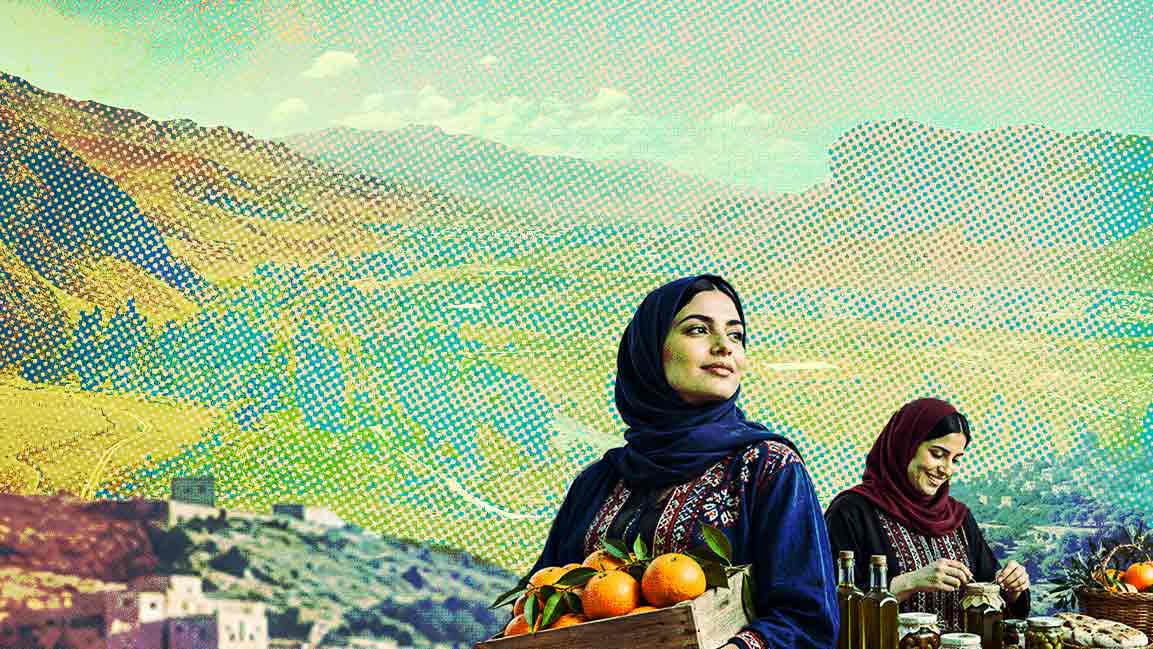


Official data point to a persistent gap in women’s labor-force participation across the Levant. In Jordan, the female labor-force participation rate was 16% in 2025; in Lebanon, it was 22.2% in 2023, according to World Bank data.
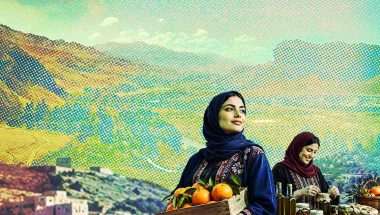
But step into the olive groves of the Jordan Valley or the terraced hills of the West Bank, and a different reality emerges: women are the backbone of the rural economy.
For generations, much of that labor has been unpaid family work or seasonal work without reliable social protection. Now, agritourism platforms, food cooperatives and direct-export projects are helping some women retain a greater share of the value they create. The work is not a wholesale structural fix, but it can give women a more direct route to customers, income and influence within their households.
DISRUPTING THE TOURIST TRACK
Until recently, tourism in the Levant operated on a predictable, top-down model. Foreign travelers were funneled through major archaeological sites like Petra, Jerash, or the Dead Sea, eating from identical hotel buffets that bore almost no relation to local culinary heritage.
“The tour packages were always the same,” recalls Rudaina Haddad, founder and CEO of BookAgri, an agritourism platform launched in Jordan. “Tourists would often hesitate to eat from the repetitive menus.”
Haddad saw an untapped opportunity sitting right inside rural homes. Since 2015, BookAgri has trained and rehabilitated over 300 women across Jordan’s governorates, designing more than 50 hands-on agricultural experiences. Travelers pay around $35 per person for a one-to-two-hour immersive visit—learning to harvest produce, bake traditional breads, or prepare regional dishes.
“Bookagri’s community of rural women and households had so much debt on their shoulders, and they did not have any bank accounts,” says Haddad. “They now have bank accounts and no debt at all… they paid for their kids’ education and rents and expanded their agriculture.”
PATHWAYS TO INDEPENDENCE
In the West Bank and East Jerusalem, the Palestinian Heritage Trail has applied a similar ethos across more than 90 local communities, partnering with over 40 women’s cooperatives. Beyond offering hiking routes, the trail intentionally directs visitor spending toward home-based lodging and culinary heritage.
“Gastronomy is always one of the most expressive parts of reflecting cultural heritage,” explains George Rishmawi, director of the Palestinian Heritage Trail.
“We trained women cooperatives on lunches during the trail, and homestays on what to prepare when hosting travelers… A lady called Ayat Mardawi, an active member in a women’s cooperative, became a local family host and now runs a homestay business hosting over 20 people. We provided a $20,000 grant for her expansion.”
Rishmawi notes that the impact reverberates far beyond tourism: “My parents paid for my education by hosting travelers in our homes for 40 years. When we started this work, a few families worked with us. Now local communities call us asking to join because it supports entire families.”
FROM RAW CROPS TO VALUE-ADDED BRANDS
Hosting travelers provides vital cash flow, but long-term economic independence requires scalable products that endure long after a tourist returns home.
In the Jordan Valley, Reeman Dweik, destination narrative strategist at Project Narrate, led ORANJ—a project in Deir Alla under the UNDP’s Food Systems Resilience program. The region produces vast quantities of oranges, yet local families historically sold the raw crop for pennies while throwing away the rest.
“Women hold only around 6% of agricultural holdings in Jordan, so most do not own the land or the trees,” Dweik explains.
“A woman paid a daily wage to pick oranges has nothing of her own to turn into a brand. Instead of selling the orange, we built an experience around it: orange pickle, candied orange peel, tree planting, and a farm stay. We gave it a name, packaging, and a story that belongs to the place.”
The psychological impact was immediate. “What moved me most was the women’s reaction,” says Dweik. “They had grown up with oranges all their lives, but nobody had ever shown them that the peel they threw away could become a product people pay for. When they saw their own work presented under a real brand, the excitement was obvious. The women’s own assessment of their skills rose by 53%.”
CUTTING OUT THE MIDDLEMAN
Across the border in Lebanon, women are taking over crucial roles that were previously dominated by brokers and intermediaries.
“In many villages, the sequence actually runs the other way: women’s food-processing cooperatives were already producing, and visitors came to them because of the products,” says Laurent-Marc Gharzani, director of projects and coordination at Fair Trade Lebanon.
Through its Terroirs du Liban brand, Fair Trade Lebanon works with over 50 cooperatives representing roughly 1,500 producers—two-thirds of whom are women—exporting artisanal goods like za’atar, kishk, grape molasses, and extra virgin olive oil to Europe, Canada, and the United States.
“What we see now is women taking on the business functions that used to sit with intermediaries: managing quality certifications, product development, costing and pricing, packaging, and negotiating with exporters,” Gharzani says.
“The durable gains come from what visitors take home and reorder. Fair pricing and a guaranteed outlet change earnings far more than seasonal tourism.”
WEATHERING CRISIS AND CONFLICT
This transition is rarely seamless. The region remains extraordinarily vulnerable to geopolitical unrest and economic shocks.
In Lebanon, the systemic collapse of the banking sector wiped out local savings and access to commercial credit. “The constraint is no longer skill,” says Gharzani. “It is working capital, packaging costs, and access to stable buyers.”
In Palestine, ongoing military conflict and instability have severely curtailed foreign travel. “Sadly, with the war, there haven’t been many people coming,” says Rishmawi. “We continued our development work despite the unrest, in the hope that tourism will return. Over the past three years, we provided more than 110 grants to local communities. We Palestinians are resilient, and we find ways to survive.”
Even technological infrastructure carries risks. When an Amazon server facility in Bahrain was disrupted, BookAgri temporarily lost access to its custom booking app data while expanding across North Africa and the Middle East.
THE LONG ROAD TO REAL EQUITY
Despite these headwinds, the shift in household power dynamics remains unmistakable. As rural women transition from invisible farmhands to primary breadwinners, traditional village structures are adapting to a new equilibrium.
“When a woman’s cooperative becomes a reliable source of household income, her voice in family decisions grows,” Gharzani observes. “Women also gain public roles: leading co-ops, representing their villages at trade fairs, and negotiating with buyers. A generation ago, those spaces were largely closed to them.”
The obstacles remain structural. Unpaid domestic work still rests disproportionately on women, while land ownership, working capital and market access remain difficult to secure.
“Tourism can change women’s economic position, but only if it reaches the women who already do the hard agricultural work,” says Dweik.
“That means paying fairly for the labor tourism is built on, registering women in social protection programs, and helping them sell under their own names. Otherwise, women remain the heart of the experience—and the least paid people in it.”