
- | 9:00 am
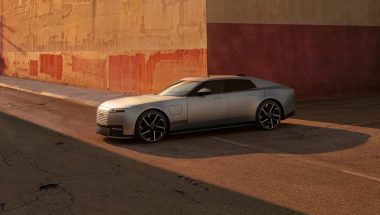
Ferrari is embracing electric. The Luce still feels like a Ferrari
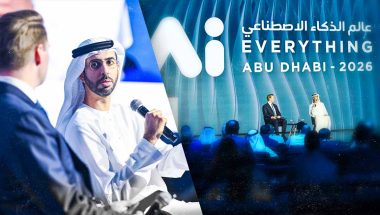
Giorgio Turri, Managing Director of Ferrari Middle East, discusses the Luce as an expansion of Ferrari’s electric-era offering.



From limited-edition supercars to bespoke hypercars, the Middle East is a key market for some of the world’s most exclusive automobiles, with collectors in the UAE and Saudi Arabia fueling demand.
The GCC luxury car market is currently valued at $17 billion and is forecast to reach around $26.2 billion by 2031, growing at a 7.5% CAGR.
Giorgio Turri, Managing Director of Ferrari Middle East, discusses the potential he has seen across the region’s luxury car market.
For Ferrari, Turri says the company’s growth in the region extends beyond vehicle deliveries, reflecting a broader strategic approach to the market.
“In fact, not only have we been able to grow deliveries and expand the ‘Ferrari Family’, but also we have achieved amazing results with the other key areas of the Business: from Pre-Owned sales, to the level of Personalization, to Racing and Motorsport.”
He explains that the company’s strategy remains centered on its model range, commitment to innovation, and the role of its clients and wider Ferrari community.
“Numbers aside, we are on a growth trajectory that we want to keep, as we believe in the potential of the Middle East and we continue investing to enhance our offer, engage the community and elevate the experience of our clients with Ferrari.”
THE ERA OF ELECTRIC CARS
Electric vehicles have become a growing focus for major automotive brands, and the region is rapidly adapting to the shift. Dubai had more than 1,270 EV charging points in 2025, while Saudi Arabia’s EVIQ aims to deploy more than 5,000 fast chargers across the Kingdom by 2030.
Turri says Ferrari’s approach to electrification is rooted in flexibility and “technological neutrality,” rather than a shift toward a single powertrain. The company’s 2030 plan calls for a product mix of 40% internal combustion, 40% hybrid and 20% fully electric models, with the electric Ferrari positioned as an addition to the existing range.
For Turri, the Luce should not be viewed as a bet on electrification, but as an expansion of what Ferrari can offer. “The Luce claims its own place, positioning and clientele with a unique combination of performance, versatility and craftsmanship.”
“The launch of the Ferrari Luce perfectly reflects the mission of offering different Ferraris for different Ferraristi and different Ferraris for different moments,” Turri says. The electric architecture, he explains, gave Ferrari more freedom to work around spatial constraints associated with internal combustion and hybrid powertrains, including the space required for the engine and transmission.
The result is a model designed to occupy a different space from the Purosangue. The distinction, he argues, is less about powertrain than purpose. While the Purosangue represents Ferrari’s approach to performance, versatility and driving emotion within its own segment, the Luce applies those same values to a new market space.
For Ferrari, however, electrification does not mean abandoning the characteristics that have defined the marque. “Before being an ‘electric Ferrari,’ the Luce is first and foremost ‘a Ferrari’,” Turri says.
That means maintaining the brand’s focus on innovation, performance, and emotional impact while combining luxury and versatility. Turri describes Ferrari’s definition of performance as broader than acceleration and top speed, encompassing longitudinal and lateral acceleration, braking, sound, and power delivery.
The Luce incorporates these elements through new technologies, with more than 60 exclusive patents developed for the model, Turri says. The aim is to preserve the driving experience associated with Ferrari while adapting it to an electric powertrain.
Ferrari is also taking a long-term approach to ownership. The company has chosen to develop and build strategic components internally, including key elements of the electric powertrain, battery, and software ecosystem. For Turri, this is intended to ensure the Luce can be maintained and supported over the long term, allowing owners to continue using and enjoying the car for decades.
DESIGN PRINCIPLES
The Luce’s design was developed in collaboration with LoveFrom, the creative collective led by Sir Jony Ive and Marc Newson. Turri says the project began with a shared ambition to create a Ferrari rooted in the brand’s DNA while exploring new possibilities in architecture, interaction, and usability.
“LoveFrom was given the creative freedom to bring a multidisciplinary perspective that extended beyond traditional automotive design,” he says. The collaboration became an opportunity to rethink the Ferrari experience, from proportions and ergonomics to the relationship between driver and car.
The result, Turri says, is a design built around “purity and simplicity,” with an onboard experience that keeps the driver at the center.
Asked whether the Luce should be viewed as a model or a platform for future Ferrari vehicles, Turri says he sees the project as an important source of knowledge for what comes next.
“We never share or anticipate our product development plans, and in this respect I can’t give you a detailed answer,” he says. “But what I can say is that the will to progress and the relentless pursuit of innovation remain at the core of our values and strategies.”
LOOKING TOWARDS THE FUTURE
The Luce is set to arrive in the Middle East in mid-October. While only a limited number of clients and prospective buyers have experienced it firsthand, Turri says interest is already building.
He points to three factors that could support the model’s appeal in the region: the Middle East’s openness to new technologies, its relatively young population and Ferrari’s typical usage patterns. Unlike markets where long-distance driving is more common, cars in the region are largely used for commuting, which could make an electric Ferrari a more practical proposition.
“I think that this translates into a different perspective, one that allows us to look at innovation with different eyes and one that does not consider the ‘new’ as a threat to the past but instead embraces evolution as inevitable.”
He also sees the Luce as an opportunity to bring new buyers into the Ferrari community, much as models like the California, Roma, and Purosangue have. Rather than targeting a specific customer profile, he expects the car to appeal to buyers drawn to its combination of design, technology, luxury, performance, and versatility.
The bigger question is how Ferrari will measure the Luce’s success in the region over time. For Turri, sales figures will only tell part of the story.
“This will be a success story only if numbers are coupled with the genuine appreciation, love and satisfaction of the Luce clients to come.”
He believes the model has the ingredients to become a strong addition to Ferrari’s Middle East portfolio. Still, ultimately its success will depend on how customers respond to the car once it reaches the region.