
- | 10:00 am
UAE targets 50% autonomous AI integration across government by 2028
Under directives of President His Highness Sheikh Mohamed bin Zayed Al Nahyan, the UAE advances AI-led governance.
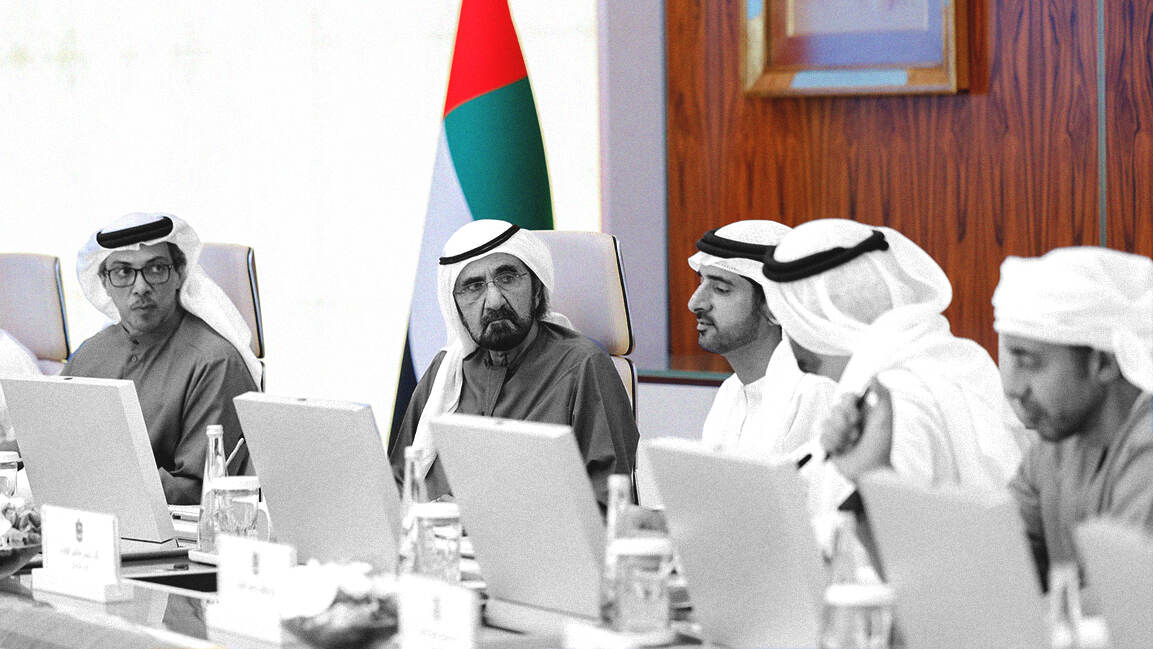


In a move that signals a decisive shift from digital transformation to autonomous governance, the UAE has unveiled a new government framework to deploy Agentic AI across 50% of its federal entities within the next two years. The announcement was made during a UAE Cabinet meeting chaired by His Highness Sheikh Mohammed bin Rashid Al Maktoum, Vice President, Prime Minister, and Ruler of Dubai, following directives from President His Highness Sheikh Mohamed bin Zayed Al Nahyan.
Described as a global first, the framework aims to embed Agentic AI, systems capable of autonomous execution and decision-making, across government sectors, fundamentally reshaping how public services are delivered and managed. Sheikh Mohammed bin Rashid said the government would become “the first in the world to largely deploy Agentic AI models across its sectors and operations.”
He added, “Today, AI models can monitor changes, provide analyses, offer recommendations, manage operations, and run an independent series of actions without human intervention. AI will become our government’s executive partner, supporting decisions, enhancing services, boosting operational efficiency, and even evaluating results while introducing improvements in real time.”
The transformation will be implemented over a two-year period, during which ministers, directors general, and government entities will be assessed on their ability to adopt AI, the speed of implementation, and their understanding of emerging technological realities. Mastery of AI tools will become a key benchmark for leadership performance.
To support the transition, Sheikh Mohammed emphasized a nationwide effort to upskill federal employees through continuous, specialized AI training. The initiative aims to build one of the world’s most advanced public sector talent pools in artificial intelligence, ensuring employees are equipped to manage what he described as the largest government transformation project in the country’s history. “Our goal is to fully engage them in this transformation,” he said.
Oversight of the initiative has been assigned to His Highness Sheikh Mansour bin Zayed Al Nahyan, with a dedicated task force formed to drive execution. The task force will be chaired by Mohammad Abdullah Al Gergawi, Minister of Cabinet Affairs, who will oversee implementation and monitor progress.
The project will be rolled out in phases across ministries and federal entities, supported by continuous performance and impact assessments to ensure optimal outcomes before wider expansion. It will also involve redesigning policies, processes, and procedures around AI capabilities, enabling systems to operate more proactively and with greater precision.
The initiative is expected to reduce operational costs, enhance productivity, and deliver faster, more efficient government services.
This move builds on more than two decades of digital transformation in the UAE, from early eGovernment initiatives to mobile government and integrated platforms such as UAE Pass. It also follows key milestones, including the appointment of the world’s first Minister of State for Artificial Intelligence in 2017 and the launch of the UAE Artificial Intelligence Strategy 2031 under the UAE Centennial 2071 vision. The establishment of the Ministry of Artificial Intelligence, Digital Economy and Remote Work Applications in 2020 further reinforced this direction.
During the meeting, the Cabinet also approved a series of policies and initiatives to strengthen the government services ecosystem. These include adopting the UAE Code for Government Services and the Zero Bureaucracy initiative, which establishes unified national standards to improve service quality, simplify procedures, enhance the customer experience, and accelerate digital transformation.
The Cabinet approved a government services digital records policy to establish a national framework for managing data, define digital records as the official source of core information, enhance transparency, and ensure continuous data quality.
In addition, a government services data-sharing policy was introduced, based on the principle of collecting data once and using it securely across entities. The policy sets out governance frameworks to improve integration across federal and local entities and the private sector, while safeguarding privacy and information security.
A federal government guide to aligning digital projects with national priorities was also endorsed, promoting more efficient use of resources, the reuse of digital capabilities such as identity systems and digital wallets, and stronger governance mechanisms to improve planning and execution.
Further initiatives approved include a Geographical Indication framework to protect and promote national products, and a unified Digital Postal Addressing System to enhance logistics, geospatial infrastructure, and smart city development.
Emphasizing the broader vision behind the transformation, Sheikh Mohammed bin Rashid Al Maktoum noted that while technology continues to advance rapidly, the core principle remains unchanged. “People come first. Our goal is to create the best environment to unlock their potential, improve their lives, and build a better government, one that is faster, more responsive, and more impactful,” he said.
The meeting was attended by senior leadership, including H.H. Sheikh Mansour bin Zayed Al Nahyan, Vice President, Deputy Prime Minister, and Chairman of the Presidential Court; H.H. Sheikh Hamdan bin Mohammed bin Rashid Al Maktoum, Crown Prince of Dubai, Deputy Prime Minister, and Minister of Defence; H.H. Sheikh Maktoum bin Mohammed bin Rashid Al Maktoum, First Deputy Ruler of Dubai, Deputy Prime Minister, and Minister of Finance; and H.H. Sheikh Abdullah bin Zayed Al Nahyan, Deputy Prime Minister and Minister of Foreign Affairs.

Featured Videos
Today's Top Stories:
More Top Stories:




FROM OUR PARTNERS