- | 9:00 am
Private tutoring dominates Egypt’s education system. The consequences are troubling
The shortcomings of Egypt’s education system are cementing reliance on private tutoring and, in turn, quietly reshaping the way schools, teachers, and students approach learning.
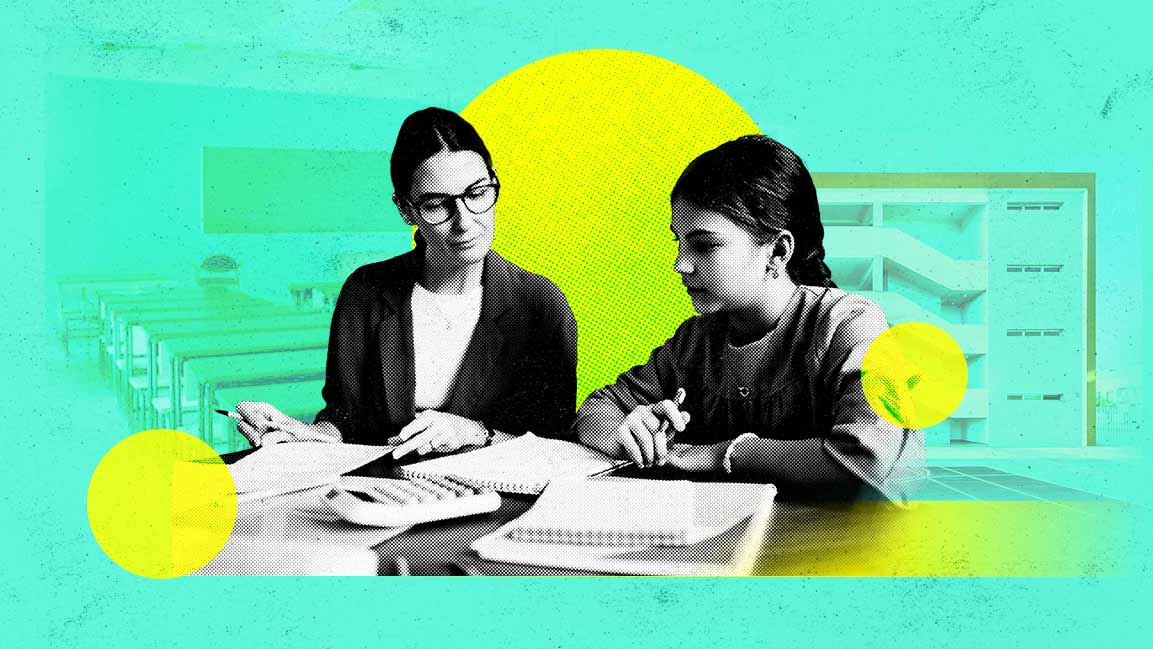


Nicole Aziz was scoring 30% in her university course. She started private tutoring. Her next exam: 100%. The transformation wasn’t unusual — it was expected. In Egypt, the school system and the tutoring industry have become so entwined that one can barely function without the other. And the industry is winning.
An indispensable by-product of the Egyptian education system is the need for private tutoring. The industry’s unyielding growth is in part due to the poor quality of the Egyptian education system, with glaring problems in public schools that still permeate and persist in private schooling.
Egypt’s private tutoring market size is only growing, valued at $0.78 Billion in 2024, and expected to reach $1.75 Billion by 2033, at a CAGR of 9.26% spanning 2026–2033.
Nicole Aziz, a 17-year-old early school graduate and first-year computer science student, spent much of her high school years, and even her first year at university, relying on private tutors and extra sessions outside school as her primary way of understanding the curriculum and preparing for exams.
Aziz explains that she used to take private tutoring classes in high school because her teachers were never able to fully explain all the content in depth during class hours. As a result, she had to pay for extra lessons outside of school to revise certain topics and fully understand concepts.
Aziz also took private tutoring classes during her first year of university after receiving a significantly lower grade on one of her first exams than the grades she had achieved in high school. “My classmates told me it would be impossible to pass the course without private tutoring lessons, so I started attending them,” she adds.
“It depends on the professor teaching each course, but I believe that more difficult courses, where professors do not put in the required effort to help students pass, often push students toward private tutoring lessons. In one of my courses, I had gotten a 30% before I started private tutoring, and my grades improved significantly afterward, reaching 100% on the following exam,” she says.
CLASSROOM STRUCTURES
Farah ElAbd, Teaching Assistant at El Alsson International School, attributed the vital presence of private tutoring to factors like overcrowded classrooms.
The Egyptian government has been actively building 10,000-15,000 classrooms annually. In 2025, it was stated that the total number of public school classrooms increased by an additional 98,000. In turn, the average classroom density dropped to fewer than 50 students per class in 99.9 percent of schools nationwide, an improvement, yet still an impossible number to supervise by a single teacher.
“It is nearly impossible to give each child the individual attention they need,” ElAbd notes, adding that children’s attention spans have also been increasingly eroding due to constant exposure to screens and the internet.
“The curricula are dense and fast-paced, and when a student falls behind, there’s simply no institutional room for support to help them catch up within school hours,” she states, adding that this gap often spurs parents into panicking about their children’s progress. Hence, they turn to private tutoring as a safety net.
Hanaa Farouk, Head of Primary School and Secondary School Teacher at Capital School, also points to overcrowded classrooms as a key factor driving demand for private tutoring. In public schools, she says, many students fear that teachers are not fully explaining class lessons, leading them to believe that private lessons are necessary.
Farouk also notes that students across both public and private schools are experiencing shorter attention spans, contributing to what she describes as a self-reinforcing cycle. Parents fear their children will struggle to focus in class and, therefore, enroll them in private tutoring. At the same time, some students become less attentive during school lessons, knowing the material will be explained again by tutors later.
She further highlights the growing pressure surrounding university admissions in Egypt, particularly due to the high cost of private universities. According to Farouk, many parents fear their children’s grades may not be sufficient to secure scholarships or admission opportunities, further increasing reliance on private tutoring to achieve higher scores.
INADEQUATE SALARIES
ElAbd says teacher salaries in Egypt, particularly for educators early in their careers or without costly diplomas and certifications, are often inadequate relative to the cost of living.
According to Glassdoor data, salaries for Egyptian teachers in private schools range from EGP 4,000 ($75) to EGP 16,000 ($302) per month.
ElAbd argues that low wages are pushing some educators away from the profession while incentivizing others to rely on private tutoring as a primary source of income.
“When a teacher’s income depends on students seeking them out after school hours, there is an inherent conflict of interest,” ElAbd says. “Consciously or not, it can lead to a classroom where explanations are incomplete, where the most important examples are ‘saved,’ and where students are subtly made to feel that they won’t truly understand unless they pay extra.”
While she believes this dynamic can damage the relationship between teachers and students, ElAbd stresses that the issue stems from broader structural problems rather than individual educators. “The solution isn’t to blame underpaid teachers but rather to pay them a dignified salary that doesn’t require them to have another line of work,” she says.
Farouk also points to the financial pressures facing teachers, noting that inadequate salaries often force educators to work longer hours through private tutoring. According to Farouk, the added workload contributes to exhaustion and burnout, limiting teachers’ ability to remain fully present and productive in classrooms.
Farah Mostafa, an FS1 Class Teacher and IGCSE private tutor, says teachers can often earn significantly more through tutoring centers than through fixed school salaries, particularly by teaching large groups of students at once. However, she notes that many educators remain in formal school employment because of the stability it provides.
Mostafa argues that the growing dependence on private tutoring has, in some cases, affected classroom teaching standards. “Some teachers will tell students to come to them in tutoring centers, or assume the student is already going to another tutor and therefore does not need extra support in school,” she says.
She also notes that some schools have adapted their business models around the tutoring culture, either by offering lower salaries under the assumption that teachers earn income elsewhere or by recruiting well-known private tutors to attract students.
Mostafa further describes what she sees as an emerging trend among senior students, where some schools allow pupils to remain officially enrolled without regularly attending classes. Instead, students rely primarily on private tutoring and use schools mainly as venues for official examinations.
CULTURE AND EXPECTATIONS
ElAbd says Egyptian culture also largely builds this reliance, which she explains is segregated into two parts.
“In lower-class Egypt, the Thanaweya Amma score is treated almost like a life sentence. It determines your university, your faculty, your career, and in many families, even your social standing and marriage prospects,” she states. “With so much riding on a single set of exams, no parent is willing to leave anything to chance (the school).”
The other part concerns the upper class, who view which university their offspring attend as a social token, and the options are narrowed to either studying abroad or attending the American University in Cairo.
“This extreme high pressure culture has made private tutoring feel not just helpful but a societal obligation for any parent who cares about their child’s future. It no longer matters how capable or hardworking a student is; the social expectation is that you take private lessons, full stop.”
“I believe that parents aren’t choosing private lessons out of luxury but out of the feeling that they have no other option. The system has quietly normalized the idea that school alone is not enough,” ElAbd adds.
Mostafa says private tutoring has become deeply embedded within the culture surrounding Egypt’s education system, particularly among IGCSE students.
“There’s a prevalent mentality amongst IGCSE students that they will not be able to succeed or pass their exams without the need for private tutoring,” Mostafa says.
She adds that repeated exposure to the same material through multiple tutors often leaves students “overly dependent” on external support rather than classroom learning alone.
According to Mostafa, parental pressure also plays a major role in reinforcing this dependence. “Parents do not trust their children to succeed without extra tutoring, so they force them to go for private sessions,” she explains, describing a growing belief that students constantly need someone monitoring their academic performance outside school hours.
Farouk also points to deep-rooted cultural pressures surrounding academic achievement in Egypt, particularly the long-standing preference for fields such as medicine and engineering.
According to Farouk, many families continue to view these disciplines as the primary markers of success despite growing opportunities in other profitable sectors and industries. She says this mindset places significant pressure on students to achieve exceptionally high grades, often pushing parents to encourage, or insist on, additional private tutoring to secure academic results.
LONG-TERM CONSEQUENCES
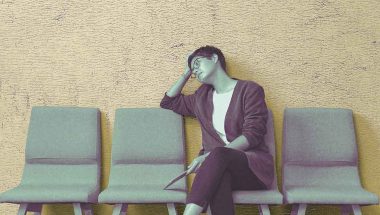
For students, the rise of private tutoring can have consequences that extend beyond financial burdens. Aziz notes that private tutoring has significantly reduced her free time throughout the week.
“I now spend almost nine hours at university and then still have to come home and attend private tutoring classes, which leaves me with no time to self-study or have a social life,” she states, explaining that this has increased her academic stress and, at times, has worsened her overall mental health.
“The consequences are already beginning to show, and they frighten me,” says ElAbd.
She explains that quality education is increasingly becoming a commodity accessible only to financially comfortable families, deepening inequality in a country already struggling with it.
“Second, the public school system will continue to deteriorate, because why fix something that has an alternative?” she says.
ElAbd also argues that students are being conditioned to believe schools alone are insufficient and that paying for an alternative channel is necessary to achieve academic success.
“That is the complete opposite of what schools and learning should be instilling in our children,” she says.
She further warns that talented students from lower-income families risk being excluded from top universities and professions “not because of their ability, but because of their parents’ bank accounts.”
“And finally, as a teacher, I worry about what this does to the profession itself — when the real work of teaching moves into private homes and online platforms, the school becomes a hollow shell, and teaching as we know it will not exist anymore,” ElAbd adds.