
- | 9:00 am
Is AI ruining younger generations’ critical thinking? And can it be fixed?
There is growing concern that as younger generations offload more of their thinking to AI, their memory and problem-solving skills may decline
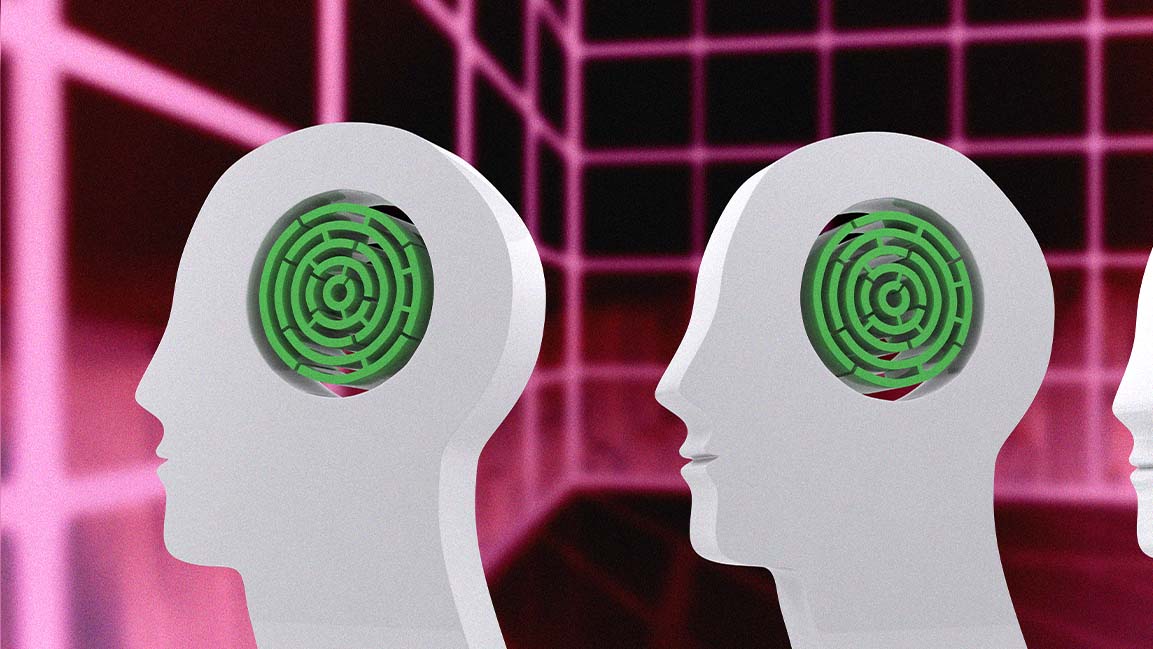


Is artificial intelligence (AI) making younger generations less independent thinkers? With chatbots such as ChatGPT, Gemini, and Claude taking over more and more cognitive tasks, such as brainstorming, analyzing, and problem-solving, experts warn that this mental outsourcing and overreliance have long-term implications.
Dr. Jane Halsall, a chartered counseling psychologist, says AI is changing the way younger generations engage with knowledge.
“Rather than memorizing information, many young people now expect information to be instantly accessible,” she explains, adding that while this can accelerate learning, creativity, and problem-solving, a potential downside is the impact on the development of important cognitive skills such as critical thinking and independent problem-solving, which are often strengthened through grappling with uncertainty and learning from mistakes.
“If AI consistently removes that struggle, we risk creating learners who are skilled at finding answers but less confident in generating their own,” adds Dr. Halsall.
The statistics are also worrying.
Four out of ten Gen Z workers say they can’t imagine working without AI, and 38% trust AI’s judgment more than their own. In the Middle East, almost three-quarters of Gen Z and millennials expect generative AI to change how they work in the next year, and over half already use it often.
Dr. Fedaa Mohamed, an associate professor at Ahram Canadian University, sees these changes among her students. She notes that AI is moving the focus from remembering information to simply finding it, and from solving problems step by step to getting answers by entering prompts.
“Younger users increasingly treat AI as an external cognitive ‘exoskeleton’, outsourcing memory by using search instead of recall, critical thinking by accepting AI-generated summaries without verification, and even basic writing or math reasoning.”
She explains that young people are more likely to know where to find answers than to know the answers themselves. Instead of working through tough problems step by step, many now use ChatGPT or other AI tools for help. While this makes things easier and faster, it also limits the brain growth that comes from working through challenges.
RESPONSIBLE USE
Andrey Sidenko, Cyber Literacy Projects Lead at Kaspersky, says recent observations show that AI apps and tools are among the most-searched categories worldwide, including in the UAE. He says this “highlights how early these technologies are becoming part of everyday life.”
Sidenko says parents and teachers should help children use AI as a tool for learning, not as a substitute for independent thinking. “The goal is to help younger generations become active thinkers and informed digital citizens rather than passive consumers of automated responses.”
Responsible AI use begins with recognizing that while these tools can be valuable, they are not infallible, he adds. Children should be encouraged to view AI-generated responses as starting points for further exploration rather than definitive answers.
“Parents and educators should teach young people how to verify information, recognize misinformation, protect their privacy, and understand where AI systems may have limitations.”
Sidenko adds that maintaining interests beyond digital environments remains equally important. “Balanced engagement with creativity, social interaction, and offline activities helps reduce overreliance on technology while supporting broader cognitive development.”
Mohamed says that using AI responsibly means creating what she calls “intentional friction.” This means making a conscious choice not to rely on AI all the time and to use it as a tutor rather than a crutch.
She recommends that students and professionals first attempt a task independently before turning to AI. The technology should then be used to compare, critique, or refine their work. “This preserves active recall and critical thinking,” she says.
Mohamed says the way people interact with AI tools plays a key role in maintaining cognitive skills. Rather than asking chatbots for answers outright, users should ask them to challenge their reasoning, explain concepts, or support research and exploration.
“In addition, designate technology-free learning periods. Use browser extensions that delay or block AI tools during core thinking tasks. Also, actively look for hallucinations, bias, or oversimplifications in AI outputs. This builds skepticism and reinforces the need for human verification, a form of cognitive resilience.”
Ultimately, Mohamed says the key difference is in how we use it. “Dependency happens when AI replaces thinking; responsible use happens when AI extends thinking you are already doing.”
LASTING IMPACT
AI’s impact on cognition is reversible, although Dr. Halsall notes that the long-term societal effects are still unfolding.
“The human brain remains remarkably adaptable throughout life, and many cognitive skills can be strengthened when we intentionally practice them,” she says. “However, at a societal level, we may be witnessing a lasting shift in how people process information, pay attention, and solve problems.”
“Just as calculators changed our relationship with mental arithmetic, AI is likely to change our relationship with memory and knowledge retrieval,” she adds.
While technology continues to shape how people behave and learn, Sidenko says that if young people rely solely on automated tools to make decisions or solve problems, “We may see reduced emphasis on independent verification, patience in learning processes, or critical evaluation skills.”
At a societal level, the long-term impact may be a greater need for skills such as critical thinking, adaptability, cyber awareness, and information verification, adds Sidenko. “These capabilities will become more valuable as AI becomes more integrated into everyday life and work.”
EDUCATION SYSTEMS NEED TO EVOLVE
Bringing in an important angle, Dr. Halsall says education systems need to evolve beyond simply testing knowledge recall. “Future success will depend increasingly on critical thinking, creativity, emotional intelligence, ethical reasoning, and the ability to evaluate information.”
Experts agree it’s important to teach young people not just how to use AI tools, but also how to question them.
Sidenko says that education systems should focus more on teaching students how to evaluate information sources, recognize misinformation, understand privacy risks, and use AI responsibly.
Instead of relying solely on traditional teaching, Sidenko supports hands-on learning that puts young people in real-world situations and helps them build lasting habits.
“The limits of reasonable use depend largely not so much on age as on the child’s level of digital literacy and the environment in which they grow up,” he says. “Important factors include the behavior patterns they observe, how they interact with content, and the extent to which they have developed basic norms of communication and critical perception of information.”
A shift is needed in the workplace as well. According to Dr. Halsall, employers should place greater emphasis on developing uniquely human capabilities such as judgment, collaboration, adaptability, and relationship-building. “We should also create opportunities for deep work, reflection, and problem solving without constant technological assistance to ensure cognitive skills remain strong,” she says