
- | 4:00 pm
82% of UAE businesses rethink tech investments amid AI boom
Economic uncertainty drives 82% of UAE leaders to rethink technology investments, while 86% favor a single strategic partner.
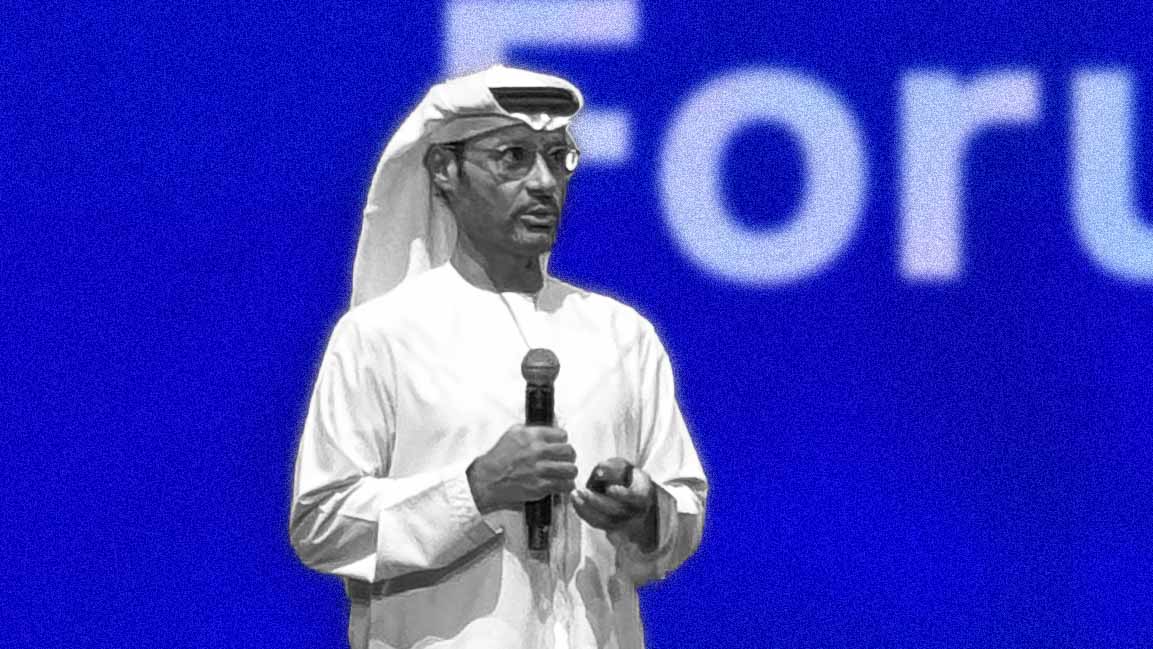


Economic uncertainty is prompting 82% of UAE business and IT leaders to become more selective about technology investments, prioritizing efficiency and measurable returns amid rapid AI adoption, according to Dell Technologies’ Modern Enterprise Readiness Study 2026, released at its Dubai forum.
Rather than reducing technology spending, organizations are placing greater emphasis on investments that deliver business value, reflecting growing pressure to balance AI ambitions with economic returns.
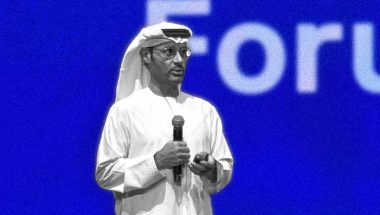
Speaking to Fast Company Middle East on the sidelines of the forum, Mohammed Amin, Senior Vice President, CEEMETA at Dell Technologies, said AI investments would not necessarily deliver the same returns for every business.
He explained that outcomes would depend on each organization’s stage of digital transformation, infrastructure readiness, and pace of AI adoption.
“It depends on how you are in the journey, how you are in the transformation, how quickly you’re gonna have the right infrastructure, how quickly you’re gonna adapt the AI,” he said.
He added: “So is the investment going to be off? Definitely. It’s going to be off for everybody. No. It’s going to be off similarly to everybody, no.”
Amin identified the high cost of AI and a shortage of skilled talent as two major challenges facing businesses.
However, he noted that declining AI usage costs could make the technology more accessible, allowing organizations to expand their use and improve efficiency.
He also pointed to the growing importance of AI agents, which are moving beyond answering questions to performing more complex business tasks.
“AI is not anymore like I ask ChatGPT for something, I get research,” Amin said, explaining that AI agents can now take on entire tasks rather than simply provide information.
He emphasized that businesses must consider how to combine human workers with AI agents to improve their operations.
On that note, Adrian McDonald, President of EMEA at Dell Technologies, described AI as part of an accelerating digital revolution that could give rise to entirely new business models.
McDonald believes AI could pave the way for an entirely new generation of businesses, in which a single individual could build and operate a company worth millions of dollars without the need for a large workforce.
“When’s the first $10 million one-person company, the first $100 million one-person company in the UAE? It’s coming,” he told Fast Company Middle East.
He argued that increasingly affordable AI tools could particularly benefit smaller businesses by giving them access to capabilities that were previously difficult to obtain, including product development, marketing, customer research, and pricing analysis.
McDonald also highlighted the growing adoption of AI agents, which could allow individuals and small teams to manage multiple functions traditionally handled by larger workforces.
For McDonald, the rise of agentic AI is no longer a distant possibility but a transformation already underway.
“Agentic AI is here. It’s not going away. It’s only multiplying at pace. It is changing the world,” he said.
However, as AI transforms business operations, questions remain about its impact on employment. Asked whether the technology would create enough jobs to replace those displaced by automation, McDonald acknowledged the uncertainty.
“We’ll see. I don’t think anyone knows the answer to that question per se,” he said.
While AI is already taking over certain tasks, McDonald noted that its expansion could also increase demand for workers in infrastructure development and skilled trades, including electricians, plumbers, and construction workers. “Technical skill.”
Beyond its economic implications, the rapid adoption of AI is also creating new cybersecurity challenges.
According to Dell’s study, 68% of UAE business and IT leaders say security and compliance concerns have already slowed or delayed AI initiatives, while 94% consider integrated data protection and cyber recovery capabilities important when evaluating infrastructure platforms.
During the forum’s keynote, Mohamed Al-Kuwaiti, Head of Cybersecurity for the UAE Government, highlighted the growing sophistication of cyber threats, including the use of AI for phishing, deepfakes, social engineering, and malicious software.
Al-Kuwaiti outlined how the UAE had faced between 600,000 and 800,000 daily cyberattacks targeting critical infrastructure, including energy facilities and ports, during a period of heightened threats.
He also highlighted the growing convergence of physical and cyber warfare, with threats increasingly targeting infrastructure, data, and individuals.
To strengthen national resilience, the UAE is advancing sovereign cybersecurity capabilities and early-warning systems, including a national Security Operations Center that connects public and private entities to help detect and respond to emerging threats.
Al-Kuwaiti emphasized that cybersecurity requires collaboration across government, businesses, and society, particularly as the country moves toward AI agents and increasingly autonomous systems.
The focus on security is reflected in the changing priorities of UAE businesses.
Dell’s study found that 90% of business and IT leaders expect security to be included in every proposal from a strategic technology partner, while 78% anticipate increasing their use of managed security services over the next two to three years.
Workplace modernization is another growing priority, with 94% of UAE leaders saying AI PCs and modern devices will play an important role in their future workplace strategies.
Meanwhile, 66% say outdated devices are limiting their ability to adopt new technologies.
The study also found that 86% of UAE leaders would prefer to meet more of their technology needs through a single strategic partner, reflecting demand for simplified operations and integrated technology solutions.
Asked whether this could increase dependence on major technology providers, Amin acknowledged the risks but stressed the importance of customer choice and collaboration across the technology industry.
“If anybody tells you I can do everything alone, he’s lying,” he said, emphasizing that delivering AI solutions requires partnerships between technology providers.
The Dell Technologies Forum, held at Coca-Cola Arena in Dubai, brought together business and technology leaders to discuss AI, digital infrastructure, cybersecurity, and workforce transformation.
The event also showcased sovereign AI solutions, AI-powered devices, and the newly launched UAE National Vault, developed by Dell Technologies, CPX, and the UAE Cyber Security Council.
As economic pressures reshape technology spending, the findings point to a shift in how businesses approach AI adoption, with greater emphasis on building the infrastructure, skills, and security capabilities needed to turn technological investment into measurable business value.