
- | 10:00 am
LEAP 2026 was about more than AI. Here’s what unfolded
From cloud and AI infrastructure to telecom, venture capital and skills, LEAP 2026 highlighted Saudi Arabia’s expanding digital economy
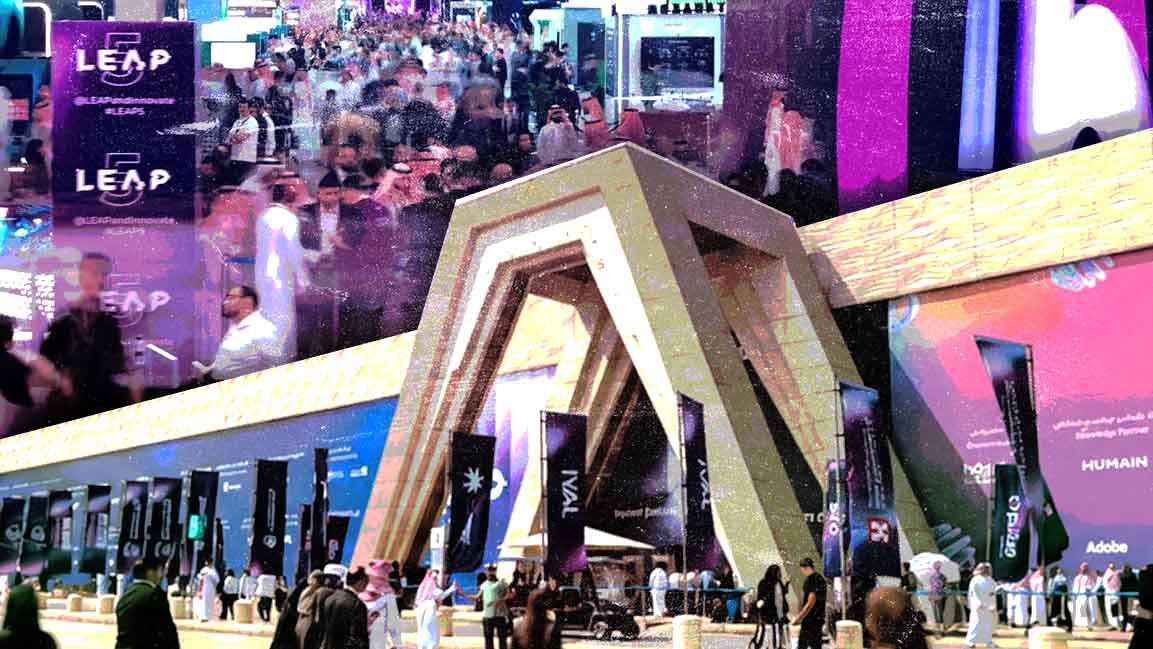


Saudi Arabia’s technology ambitions came into sharper focus at LEAP 2026. Over four days in Riyadh, a wave of investments, partnerships, and launches across AI, cloud, connectivity, gaming, venture capital, and skills development revealed how the Kingdom is building out the different layers of its digital economy.
At a press conference held a day before LEAP opened, Saudi Minister of Communications and Information Technology Abdullah Alswaha outlined the Kingdom’s next phase of technology development. Saudi Arabia, he said, was moving toward a more ambitious phase of its technology strategy, one built around artificial intelligence, advanced infrastructure, national talent, and an investment ecosystem capable of turning innovation into Saudi products and companies with global reach.
He also stressed that the Kingdom’s technology ambitions would ultimately be measured by their impact on people, from better connectivity to faster digital services.
By the end of LEAP’s opening day, more than $15 billion worth of launches, investments, and partnerships in AI and advanced technologies had been announced. The deals stretched across energy, semiconductors, data centers, accelerated computing, cloud services, AI models, and industry-specific applications.
Behind the sheer volume, however, a clearer picture emerged. LEAP 2026 was less about one breakthrough technology than about assembling the different layers of a digital economy: compute, cloud, connectivity, capital, applications, and the people required to make all of it work.
Here are some of the biggest announcements.
SAUDI ARABIA IS BUILDING THE INFRASTRUCTURE FOR AN AI ECONOMY
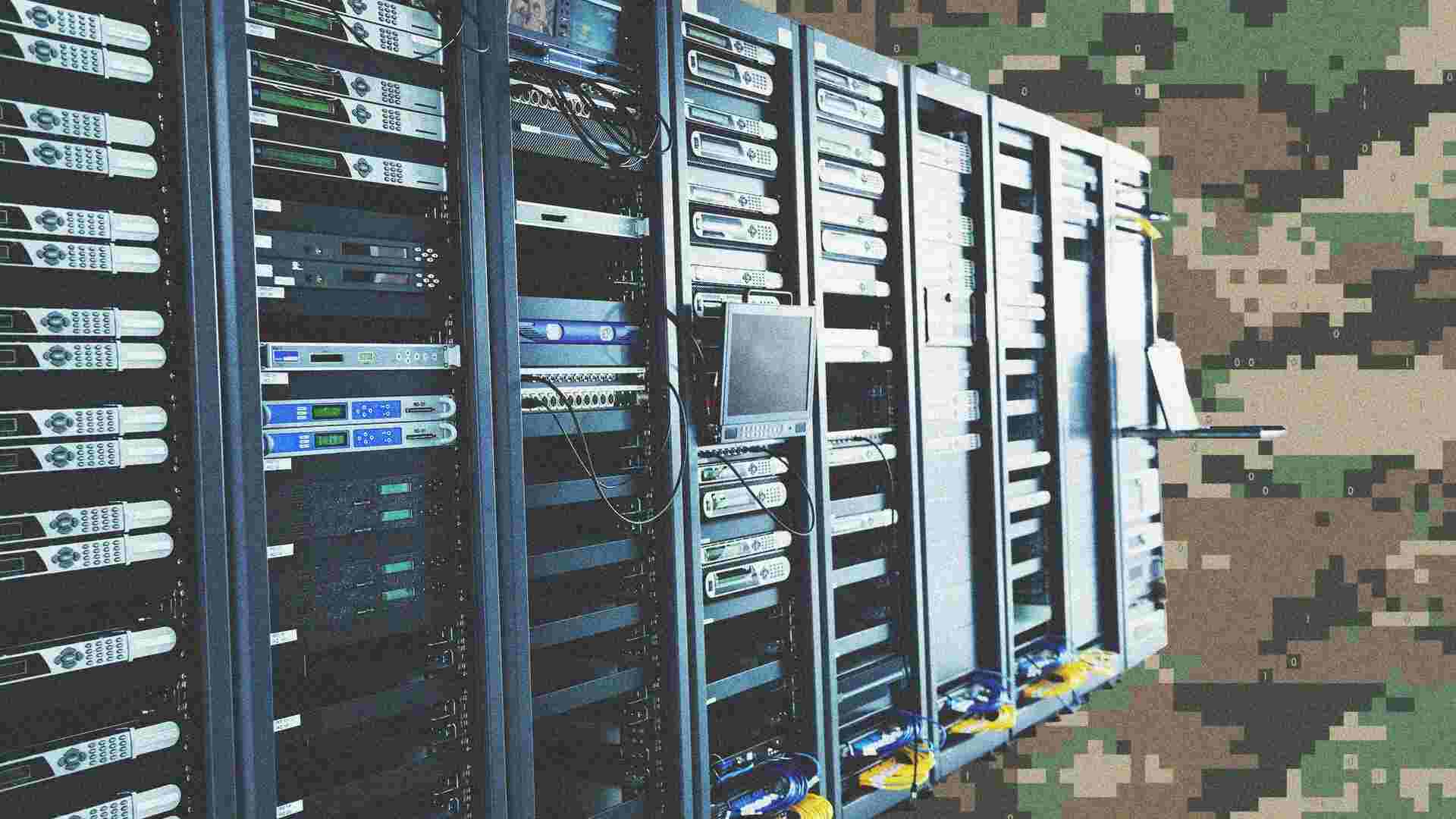
Some of LEAP’s largest announcements were not about chatbots or apps, but about the physical infrastructure required to run them.
Amazon Web Services said its first AWS Cloud Infrastructure Region in Saudi Arabia remains on track to launch in December 2026. The project represents more than $5.3 billion in planned cloud infrastructure investment in the Kingdom. First announced in 2024, the Region will allow developers, startups, government entities, and companies to run workloads from data centers located in Saudi Arabia.
AWS also deepened its partnership with PIF-owned AI company HUMAIN. The companies plan to make up to 50MW of capacity available in Saudi Arabia’s first AI Zone by 2028, using AWS Trainium chips and NVIDIA infrastructure for AI training and inference. HUMAIN’s Arabic large language model ALLAM is also expected to become available through Amazon Bedrock, while its HUMAIN Fabric data platform will be offered through AWS Marketplace.
HUMAIN was particularly busy at LEAP.
The company and DataVolt announced an expanded partnership to jointly develop 100MW of the first 360MW phase of an AI-ready data center at Oxagon in NEOM. Construction is underway, with the first 100MW expected to become available in 2028.
Meanwhile, AMD, Cisco, and HUMAIN said production AI computing infrastructure powered by AMD Instinct MI355X GPUs, AMD EPYC CPUs, and Cisco networking is now live in Saudi Arabia. The companies plan to deploy up to an additional 250MW beginning in 2027, while their joint venture remains on track to reach as much as 1 GW of AI infrastructure by 2030.
HUMAIN also launched an AI cloud in Saudi Arabia powered by NVIDIA HGX B300 Blackwell Ultra systems. The locally hosted platform currently provides 1.1MW of operational AI infrastructure and has recorded utilization exceeding 90%, with plans to expand capacity to 35.1MW by 2027.
The infrastructure buildout continued beyond Day One. LEAP’s second day brought more than $2.5 billion in announced investments aimed largely at expanding data centers and advanced technology capacity in the Kingdom.
On Day Three, another $857 million in technology and manufacturing investments was announced, including projects spanning cloud infrastructure, data center manufacturing, and venture funding.
Taken together, the announcements point to a broader shift: Saudi Arabia is not only trying to attract companies that use AI but also, increasingly, the computing power, data centers, networking equipment, and cloud infrastructure on which those companies depend.
HUMAIN IS PUSHING FURTHER UP THE AI STACK
Infrastructure was only one part of HUMAIN’s LEAP push. The company announced a strategic investment in Arabic.AI and Tarjama to expand its capabilities in Arabic-language translation, document intelligence, and enterprise AI.
The partnership will initially focus on areas including translation management, digitizing legacy archives into searchable Arabic content, and AI agents capable of processing documents such as contracts, tenders, and filings.
HUMAIN also partnered with Reflection AI, a frontier AI lab developing open models.
Reflection’s first generally available model is expected to be deployed on HUMAIN infrastructure in Saudi Arabia following its release later this year, with the companies also exploring model customization, sovereign AI deployment, and the use of HUMAIN compute for future training and inference.
HUMAIN also announced that Adobe will become the first global software company to move its AI workloads onto HUMAIN’s AI Compute infrastructure, accelerated by Qualcomm Technologies. Adobe will initially run regional AI data-captioning workloads on the platform using Qualcomm Dragonfly AI accelerators, marking one of the first enterprise deployments on HUMAIN’s infrastructure.
The move builds on a collaboration announced by HUMAIN, Qualcomm, and Adobe at the US-Saudi Investment Forum in November 2025 and offers an early test of whether the Kingdom’s expanding AI infrastructure can translate into real enterprise demand.
For Qualcomm, the partnership also reflects a broader effort to deepen its presence in Saudi Arabia beyond supplying technology. Charles Chebli, Managing Director, UAE and Head of AI & Cloud, MEA at Qualcomm, said the company has moved AI engineers, data scientists, machine learning specialists, and other technical teams to Riyadh, with some working directly alongside HUMAIN.
“We are not just here to sell our products. We are here to bring value to the country, to co-create together,” Chebli said. “Those teams are sitting in HUMAIN’s office, working closely with the HUMAIN team to co-engineer and co-design products.”
Chebli adds: “This is was developed jointly between Qualcomm and HUMAIN, and this AI PC will be embedded with agentic AI solution applications, and then it will be taken to the GCC market and later to the international market
That collaboration is also extending into devices. Qualcomm and HUMAIN are jointly developing an AI PC built around agentic AI applications, which Chebli said is expected to launch first in the GCC before expanding to international markets. The idea is to move away from users navigating individual applications and toward a conversational interface capable of carrying out tasks across calendars, travel bookings, HR systems, and CRM platforms.
“When you open the PC, you don’t have any application. It’s just a window. You have a voice,” Chebli said, describing a system that could reschedule meetings, check leave balances, book travel, and interact with enterprise systems through natural-language commands.
A collaboration with KORA Systems takes the company even closer to the device itself.
The companies are co-developing HUMAIN OS, an enterprise-focused, AI-native Linux operating system designed to interpret user intent and determine what model, application, or computing environment should be used to complete a task.
Microsoft and HUMAIN, meanwhile, expanded their partnership with a proposed “AI productivity bundle” combining HUMAIN ONE and Microsoft 365 Copilot. The companies are initially targeting one million enterprise users across the Middle East and Africa. HUMAIN also plans to launch an AI PC running Microsoft Windows, with enterprise availability beginning in September.
The common thread across the announcements is that HUMAIN is trying to occupy multiple layers of the market, moving from data centers and computers to models, enterprise software, devices, and operating systems.
CLOUD ADOPTION IS MOVING DEEPER INTO SAUDI INDUSTRIES
The arrival of more local cloud capacity is also prompting technology providers to deepen their enterprise partnerships.
stc group expanded its strategic collaboration with AWS to accelerate cloud and AI adoption across Saudi Arabia. The agreement covers sectors including government, healthcare, finance, sports, education, energy, industry, and logistics, and includes joint investment in cloud and AI skills development.
ZainTECH also signed a multi-year strategic collaboration with AWS focused on helping organizations in government, financial services, energy, and healthcare modernize their systems, adopt AI, and address security, compliance, and data residency requirements.
The story is increasingly moving beyond the technology sector itself.
Almosafer announced plans to migrate its enterprise resource planning systems to RISE with SAP on AWS. The travel company said the move would help unify data across its operations and introduce capabilities spanning advanced analytics, automation, AI, predictive forecasting, and customer personalization as Saudi Arabia’s tourism industry expands.
The Ministry of Tourism signed a separate agreement with Accenture Saudi Arabia to explore how AI could support the development of the Kingdom’s tourism sector.
Saudi Aramco and Aramco Digital also announced agreements spanning cybersecurity, industrial AI, technology localization, and national industrial capabilities, highlighting how AI investment is increasingly moving into sectors beyond consumer and enterprise software.
THE NETWORKS UNDERNEATH ALL THAT TECHNOLOGY ARE CHANGING TOO
All the AI infrastructure in the world becomes less useful if the networks connecting people and businesses to it cannot keep pace.
TAWAL, PIF’s telecommunications infrastructure company, used LEAP to showcase its expansion beyond its traditional tower business into more advanced connectivity solutions.
The company is supporting major developments, including Qiddiya, Diriyah, the Red Sea, and the Prophet’s Mosque, with telecommunications infrastructure to deliver high-speed, reliable connectivity.
Speaking on the sidelines of LEAP, TAWAL’s CEO Mohammed Alhakbani said the company had completed a pilot with Mobily and Rakuten, with participation from King Abdullah University of Science and Technology, to develop an Open RAN stack on Saudi Arabia’s west coast.
“We’ve developed, for the first time, an Open RAN stack that will help efficiently deploy capital, reducing it by 20% or even more,” he said.
TAWAL also received certification from Ookla for the Wi-Fi infrastructure deployed at the LEAP venue and announced several strategic partnerships, including with the Balady platform, which supports the company’s work with municipalities across the Kingdom.
“TAWAL has evolved from the basic core infrastructure of towers to more innovative and creative solutions that we are very proud to offer,” he said.
For consumers, the shift is less about network architecture and more about whether their connection works when they need it.
“Having reliable coverage and high speed that could serve them on a day-to-day basis in using their applications, social media, and watching movies at home, having reliable infrastructure is essential,” he added.
That focus on connectivity also appeared elsewhere at LEAP. On the final day, the Communications, Space and Technology Commission granted Technical Links Services a permit for international cable landing stations and connectivity services, linked to expected investments of SAR100 million ($26.8 million). The regulator also granted the National Water Company a carrier service provider license, which could unlock an estimated SAR455 million ($122 million) by enabling licensed operators to use existing infrastructure, including fiber networks and towers, more efficiently.
AI CAN BE MORE ENTERTAINING
Not every AI announcement at LEAP involved servers, enterprise software, or government systems.
Hero Esports, one of Asia’s largest esports companies, announced that it will launch “the region’s first humanoid combat tournament in Riyadh this September”, bringing together robotics, artificial intelligence, and competitive gaming.
The inaugural Cyber Hero tournament will take place on September 9 and feature full-sized humanoid robots competing in a kickboxing format. Rather than fighting autonomously, the robots will be controlled by professional esports athletes using advanced systems.
The announcement is an unusually literal example of the convergence between gaming and robotics, but it also reflects the broader expansion of Saudi Arabia’s gaming ecosystem.
Other applications were more practical. King Salman Park Foundation signed an MoU with Huawei to explore AI and advanced digital technologies for Riyadh’s development, including smart-city capabilities to improve visitor experiences and operations.
VENTURE CAPITAL HAD ITS MOMENT
While billion-dollar infrastructure projects dominated many of the headlines, LEAP also brought a wave of startup and venture capital announcements.
On Day Three alone, nearly $293 million in venture activity was announced across 11 deals. Nine funding rounds totaled $126.15 million across companies working in AI, fintech, travel, gaming, HR, and automotive services,
Ula Capital also partnered with South Korea’s FuturePlay to launch a $100 million fund aimed at connecting deep-tech investment opportunities between Saudi Arabia and Korea.
The funding activity matters because the Kingdom’s AI ambitions will ultimately depend not only on whether multinational technology companies establish infrastructure in the country, but also on whether local and regional businesses can build products on top of it.
THE NEXT BOTTLENECK MAY BE PEOPLE
Amid the data centers, models, and investment funds, LEAP’s final day turned attention to a less glamorous but equally important part of the equation: who will actually build and use all this technology?
The Ministry of Communications and Information Technology and the Saudi Digital Academy launched a Gemini initiative with Google to provide 1 million Saudi university students with access to advanced AI tools. An AI academy developed with WeCloudData will train educators, university faculty, startup founders, and tens of thousands of online learners.
MCIT, the Digital Cooperation Organization, and AMD also launched an open AI ecosystem initiative at LEAP to strengthen AI capabilities and support innovation in the Kingdom.
Cybersecurity skills were part of the push too. Kaspersky and Tuwaiq Academy announced that 49 participants had completed two Cybersecurity Solutions & Analytics bootcamps and were set to graduate during LEAP.
AWS has its own workforce ambitions. Alongside its infrastructure announcements, the company said the Amazon Academy, launched with MCIT, aims to train more than 100,000 Saudis in areas including cloud, AI, logistics, and retail.
It is also working with 11 higher education institutions and training up to 10,000 women through its Saudi Arabia Women’s Skills Initiative.
Saudi Arabia has spent the past few years attracting global technology companies and investing in digital infrastructure.
This year’s announcements suggest the question is shifting from whether the Kingdom can participate in the AI economy to how much of the stack it can build, operate, and eventually export.
The servers are arriving. The cloud regions are going live. The investment funds are getting larger. Even humanoid robots are preparing to enter the ring.