- | 10:00 am
The Gulf’s AI maturity test, according to OpenAI
OpenAI's Farouk El Hamzawi on the missing piece that kept Gulf banks from deploying AI at scale



Enterprise software vendors have spent years telling Gulf regulators that their data would stay exactly where it was told to. That promise has rarely been enough on its own for regulated industries like banking, where compliance teams tend to ask a second question once the first is answered, about where the data is actually processed.
OpenAI addressed that gap this year in two parts: first, in-region data residency for ChatGPT Enterprise in the UAE. Then, inference residency, closing the loop between storage and processing within the country. It’s a shift that sits underneath something the region has been grappling with for the past year: whether all the ambition around AI is translating into anything real once the pilot ends.
How fully the infrastructure shift satisfies regulators across every sector is still being worked out. What it has done, more immediately, is unlock deployment that had stayed stuck at the pilot stage across banking, energy, healthcare, and government.
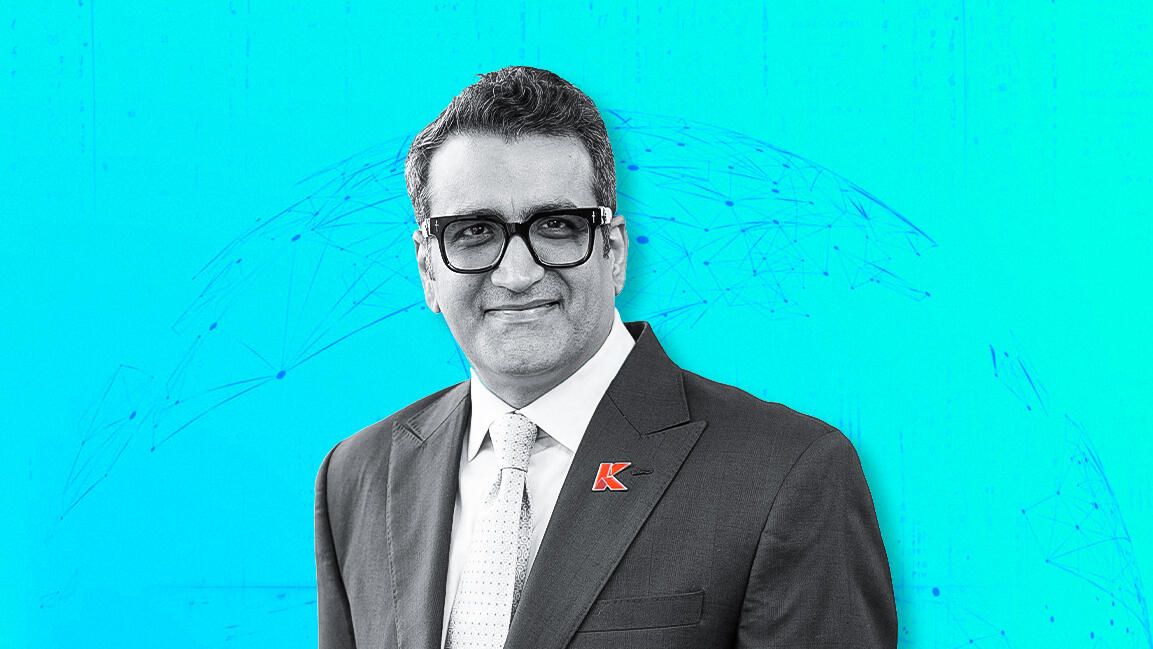
Farouk El Hamzawi, Head of Enterprise at OpenAI, MENA, has had a close view of that shift and spoke about what enterprise AI adoption in the Gulf actually looks like now, what regulators still need convincing on, and where the region is headed over the next eighteen months. He started with the most basic question of all: What does adoption on the ground actually look like once a company moves past the pilot stage?
THREE LAYERS OF ADOPTION
Enterprise adoption in the region breaks down into three distinct layers, according to El Hamzawi, each moving at a different pace but reinforcing the others. The first is workforce adoption, giving employees tools that improve everyday work. “Organizations across the UAE, Saudi Arabia, and Morocco are already deploying ChatGPT Enterprise and Codex at scale, helping teams improve productivity across coding, research, documentation, and more,” he says.
The second layer moves further into how organizations actually operate. Business transformation, in his framing, means using AI agents to reimagine entire workflows, with agents working alongside employees rather than simply assisting them, automating routine tasks until they become part of the operating model itself rather than a bolt-on tool. The third layer goes further still, building AI-native products and services that create new customer experiences and business models across an industry.
None of this, he argues, is really about adoption for its own sake. “The real opportunity is not simply adopting AI, but embedding it into how organizations operate,” he says, adding that doing so takes leadership, change management and trust, not just the technology itself.
CLOSING THE COMPLIANCE LOOP
Local storage alone, in El Hamzawi’s account, was never going to be enough to satisfy regulated organizations across the Gulf. “In-region data residency was a prerequisite, but local storage alone was not the full answer,” he says. For many of these organizations, the missing piece sat one layer deeper, inference residency, or where the actual computation happens, rather than just where the data sits.
That gap has since closed. Inference residency is now available in the UAE, meaning data can be stored and processed there, on dedicated GPUs rather than infrastructure elsewhere. “This creates a closed regional loop for both data storage and processing, allowing us to work with a much broader set of highly regulated organizations,” he says. He’s careful to frame this as an early milestone rather than a finished story, noting there’s more to share soon about what the capability actually enables.
Government ambition on AI across the Gulf has been moving fast, and El Hamzawi doesn’t hedge on whether OpenAI’s own expansion is keeping up. “While global demand for AI is insatiable, the Gulf stands out for the ambition and commitment of its governments and enterprises,” he says, adding that OpenAI’s offering in the region is accelerating to match it.
That expansion, in his account, is tied directly to regulatory readiness rather than running ahead of it. With foundations like data residency now in place, he expects the region’s presence to accelerate considerably, building on the support OpenAI has already been providing across the Gulf. He points to what an in-country deployment model actually unlocks for a bank, specifically, keeping data processing within UAE jurisdiction, aligning with local regulatory and localization expectations, reducing latency for real-time use cases, and operating within enterprise-grade security frameworks.
Taken together, he says, this lets a bank deploy generative and agentic AI workloads while still meeting the region’s stringent requirements around data governance, privacy and regulatory compliance.
MOMENTUM, MODELS AND LANGUAGE
Rather than singling out laggards, El Hamzawi points to a broad shift underway across sectors. Governments across the Gulf, he says, are taking an AI-native approach with a clear commitment to deploying at scale. That same ambition extends into banking, energy, healthcare, and the public sector, all of which are moving past pilots into real-world deployment.
One factor keeps surfacing across nearly every sector he mentions: cybersecurity. Organizations across the region are focused on ensuring their systems remain resilient against evolving threats, a priority serious enough that OpenAI has launched a dedicated initiative. “Through our Daybreak program, we have been able to partner closely with customers on that priority,” he says.
That sector-wide momentum raises a separate question: whether the push is coming from employees or from leadership. El Hamzawi doesn’t take a side in the top-down versus bottom-up debate, arguing that the balance shifts depending on the sector and use case.
What gives ChatGPT a specific advantage here, in his view, is familiarity. Millions of people already use it in their personal lives, and that existing comfort translates into genuine bottom-up demand at work, with far less resistance than typical enterprise software tends to face.
The bigger shifts, though, happen once leadership gets involved. “The biggest transformations, however, happen when CEOs and boards enter the conversation,” he says, pointing to enterprise-wide priorities like workforce enablement, upskilling and cybersecurity as things that only scale successfully with real commitment from the top.
The strongest outcomes, in his account, come when both forces move together: executives committed to transformation, employees already eager to use the technology.
That question of what enterprises actually need to succeed extends into a related debate, whether the language and infrastructure behind the models matter as much as the demand for them. El Hamzawi pushes back gently on the premise that Arabic-first models are the missing piece. The conversation itself isn’t new, he notes, but the data hasn’t shifted in that direction.
“Across benchmarks, OpenAI’s general-purpose models have continued to perform better than most specialized models,” he says.
He compares it to a debate that arises in nearly every industry vertical: whether a company actually needs a finance- or healthcare-specific tool rather than a strong general-purpose one. As frontier models keep improving, he argues, they tend to outperform the narrower, specialized alternatives built around a single use case or language.
OpenAI’s approach follows the same logic: building the strongest possible models and ensuring they perform well across as many languages as possible, Arabic included, rather than building separate regional versions. That strategy, he says, hasn’t changed customer demand in the region.
BETTING ON WHAT’S UNBUILT
The region’s trajectory over the next 18 months looks strong, in El Hamzawi’s view, though with a specific caveat about how it gets there. “Over the next 18 months, the Gulf has the potential to overtake many other regions in enterprise AI maturity,” he says. The risk, in his view, sits in exactly the kind of careful groundwork organizations have been laying, isolated ecosystems built to be thorough that end up, almost accidentally, delaying full-scale deployment instead.
Part of the problem is speed. Model development moves fast enough that a static foundation, or a pilot that drags on indefinitely, struggles to keep up with what’s actually available.
The better approach, he argues, is deploying agents directly into production, scaling them quickly, and learning from real usage rather than theoretical readiness, a process that prepares an organization for whatever comes next and gives it a clearer sense of what’s actually worth building. “As general-purpose models improve, some highly specific agents or use cases can become obsolete very quickly,” he says, arguing that the most mature enterprises will be the ones that keep learning inside production rather than holding out for a perfect pilot.
That approach, he says, is already playing out with organizations across MENA that OpenAI is working with directly, deployments he expects to become reference points for the rest of the market, giving other enterprises the confidence to follow the same path.
Looking further out, past what’s already in motion, the question becomes harder to answer with any certainty.
Pressed for something concrete, a MENA-born AI business that doesn’t exist anywhere else yet, El Hamzawi resists the temptation to guess. “With the democratized power of AI, the possibilities are endless,” he says. His reasoning is less about the region specifically and more about what AI changes structurally, expanding access, empowering more people, and lowering barriers that once separated a handful of experts from everyone else.
That framing leaves the actual answer open on purpose. Rather than pick a use case, he lands on a broader claim: that AI’s real advantage is making innovation possible regardless of someone’s technical skills, language, or location, which is as much a bet on where the next big idea comes from as it is a description of the technology itself.