
- | 9:00 am
Is cultural intelligence a key skill to thrive in the UAE’s diverse workplace?
They translate tone, decode silence and repair relationships. But what happens when companies build their culture around a few people doing the invisible work?
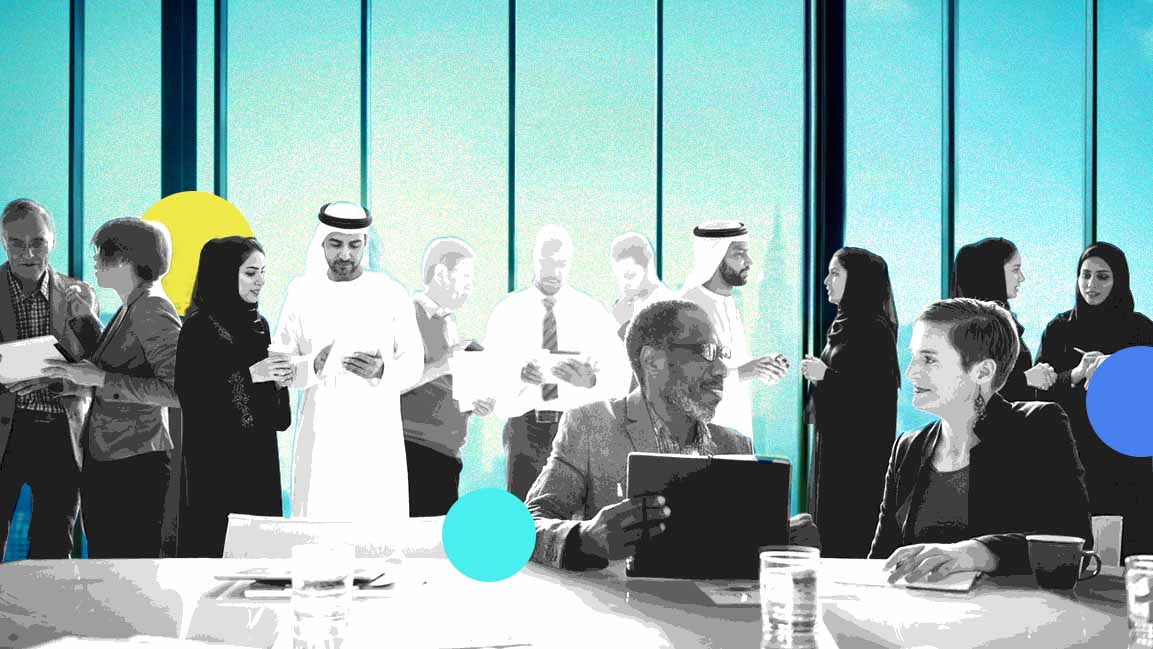


The UAE hosts some 8.7 million migrant workers, which is over 80% of its population, according to the International Labor Organization. Most private-sector jobs are held by migrants, making the UAE workplace more multicultural than most.
A typical team might include Emiratis working with colleagues from India, the Philippines, Egypt, Pakistan, the UK, Lebanon, Nigeria, France, Jordan, and many other countries.
They share an office and may have identical job descriptions. But they might not agree on what it means to be direct, urgent, respectful, confident, flexible, or even what ‘yes’ means.
Someone is always translating, in one way or another.
It’s the extra step of interpreting things when people with different backgrounds need to work together toward the same goal.
And this skill set is rarely spelled out in a job description.
But is cultural intelligence becoming a basic part of how companies operate?
Dr. Roma Raina, Head – Corporate Alliances & Partnerships at MAHE Dubai, sees the same dynamic among students as they move from classrooms into professional environments.
“A student on an internship may feel uncomfortable when a supervisor gives very direct feedback, interpreting it as criticism or dissatisfaction,” she says.
“The supervisor, however, may simply see direct feedback as an efficient and normal way of working.” The intervention is not about deciding who is right. It is about making the invisible interpretation visible.
“It is not simply about knowing that different cultures exist,” Dr. Raina says. “It is about recognizing that people may interpret the same behavior differently, questioning our own assumptions, and adapting how we communicate as a result.”
EVERYONE CODE-SWITCHES
It’s normal to adjust how you talk to different people. You speak differently to a client than to a friend. You change your tone with a CEO. You learn that one colleague prefers direct feedback while another responds better to a conversation over coffee.
Dr. Katherine Iscoe, author of The Self-Respect Playbook and a leadership mentor, draws a line between adapting and disappearing.
“Some level of code-switching is just basic human decency,” she says. “You wouldn’t greet a client the same way you’d greet a friend for lunch, and that’s true anywhere in the world, not just the UAE.” The problem begins when adaptation becomes an identity strategy.
“Where it gets interesting is with what I call the high-achieving people pleaser,” she says. “Their operating system is ‘if I do amazing and you like me, I’m good enough, and I like me.’”
In a country where business is heavily relationship-driven, that instinct can be rewarded.
“There’s real psychology behind why this works,” Dr. Iscoe says. Research by Tanya Chartrand and John Bargh on the “chameleon effect” found that unconscious behavioral mirroring can increase interpersonal liking and trust.
But there is a point at which connection becomes performance.
“The professionals I worry about aren’t the ones who adapt their style,” Iscoe says. “It’s the ones who’ve changed themselves and forgotten who they actually are.”
MULTICULTURALISM BECOMES A PROFESSIONAL COMPETENCY
According to Dr. Randall Peterson, Professor of Organizational Behavior at London Business School, cultural intelligence is moving from being a desirable interpersonal quality to an expected professional capability.
“It is treated as a core career competency in some organizations,” he says. “The reason why it is not more widely appreciated is, I think, because it is easily taken for granted.”
In some organizations, employees are simply expected to conform to local customs and norms. But that becomes increasingly difficult when teams themselves are multinational.
“Every manager deals with these issues because in any culture there are individual differences we call personality,” Dr. Peterson says. “Great interpersonal skills are a leadership essential in any culture, and cultural differences put that to a particularly strong test.”
Dr. Raina sees the same evolution. “In the UAE, multiculturalism is no longer simply a demographic reality,” she says. “Working in Dubai means working with diversity every day.”
And helping them understand, adapt, and work with one another is what makes that diversity work, Dr. Raina adds.
THE INVISIBLE PROMOTION CRITERION
The problem is that cultural intelligence may already be influencing careers without being formally recognized. Peterson believes the UAE has reached a point where, in many roles, cultural intelligence is simply expected.
“In industries like finance, where the workforce, even at the top levels, is multinational, cultural intelligence is required to succeed,” he says.
In other industries, he says, evolution is less advanced. But the best executives still tend to be effective with people from many countries.
Dr. Raina sees a particularly revealing consequence: some employees become unofficial cultural bridges. “They explain misunderstandings, adapt messages, adapt their communication, and prevent small differences from becoming larger conflicts,” she says.
And because they do this naturally, Dr. Raina says their contribution can gradually become an “expectation rather than something we recognize as a leadership capability.”
That creates an unusual career dynamic. The person who can handle the difficult client becomes the person who always gets the difficult client. The manager who can repair tension gets asked to repair more tension.
“The employee is effectively doing additional relational work,” Dr. Raina says, “but it may never appear in a job description, performance review, or promotion conversation.”
THE FREE-RIDER PROBLEM
But if one person is exceptionally good at absorbing cultural friction, everyone else can become less motivated to develop the same capability.
Dubai-based behavioral strategist Jocquine Charbel describes dynamics at play. “At the individual level, colleagues rarely calculate how they can contribute less,” she says. “They simply default to whoever is already absorbing the friction.”
That can become what she describes as diffusion of responsibility: if someone else is handling the difficult conversation, everyone else can quietly step back.
But the organizational dynamic is more uncomfortable. “There is often a silent strategy at work beneath the informality: it is cheaper to let a handful of people absorb cultural friction than to build genuine capability into hiring, performance metrics, and promotions.”
Simply put, the company may not deliberately exploit its workplace diplomats. It may simply mean that they will always pick up the slack.
Charbel compares the dynamic to the Titanic: disaster can emerge not from a single catastrophic decision but from a sequence of small choices and omissions.
“No single executive sets out to exhaust their most collaborative people,” she says, “but a chain of small, passive choices creates systemic failure.”
Her test for whether free-riding is really taking place is simple. “If cross-cultural contributions were built into hiring standards, weighted in promotions, and modeled by leadership, would participation broaden?”
DON’T SEND EVERYONE TO ANOTHER WORKSHOP
This is where Charbel takes aim at one of corporate culture’s favorite solutions: training. “Three decades of data across 800+ companies show mandatory training rarely shifts behavior and often backfires,” she says, referencing research by Frank Dobbin and Alexandra Kalev.
Her point is not that learning is useless. “Anyone can check a box in a workshop; almost no one can fake a promotion earned through sustained behavior change.”
The solution is to embed cultural contribution into the systems that actually shape careers. “If participation expands once contributions count toward advancement, it was never free-riding, but misplaced investment.”
That also changes the question of incentives. Should employees receive bonuses for being culturally collaborative?
Charbel is skeptical. “You can’t actually incentivize a value. Companies can only reward behavior, and that is where this gets risky.”
Putting a price on “being collaborative” can make a human norm transactional. “Put a price tag on relationship-building, and you tell employees the behavior needed an external reason to exist.”
Instead, companies should strengthen the conditions that make collaboration sustainable: psychological safety, operational support, and credible career progression. “Training is a test you pass by attending; culture is a test you only pass by being different afterward,” Charbel says.
There is another risk. The people best at cultural diplomacy may be the people least likely to protect their own boundaries.
Dr. Iscoe describes two possible outcomes when cultural tension emerges. “Either it gets swept under the rug,” she says, “or it lands on the shoulders of ‘the peacemaker’, the person with enough emotional intelligence to sense the tension but not necessarily the ability to keep their boundaries in place.”
That employee becomes the team’s unofficial relationship-repair department. “That person becomes the unofficial matchmaker, broker and relationship-repairer for the whole team, on top of their actual job,” she says.
THE TRUST INFRASTRUCTURE NOBODY OWNS
Charbel takes the argument one step further. Companies often talk about trust as if it’s something they own. But trust isn’t just a line in a values statement. People maintain it.
“Infrastructure is something you build once and rely on. Trust doesn’t work that way,” she says. “It must be earned daily, person by person.”
In workplaces, that maintenance is often performed by people whose names never appear in annual reports.
The local employee who knows who to call when a shipment stalls. The coordinator who can navigate an unfamiliar government process.
The manager who can prevent a late-night crisis from becoming a public one. The employee who knows which relationship needs attention before anyone else notices the problem.
“What holds operations together is closer to borrowed capital: a handful of individuals’ relationships, reputations, and years of quiet effort.”
If those employees leave, companies may discover that they did not actually own the relationships they thought they had built.
“They lose the invisible infrastructure they never actually owned, discovering the deficit at the worst possible time.”
A NEW DEFINITION OF CAREER READINESS
Dr. Peterson says London Business School deliberately puts students into multicultural teams, often drawing participants from different continents.
“We spend a lot of time on interviews, networking, and leadership with our students, where multiculturalism is always present in the background,” he says. “Is it enough? Probably it is impossible to do too much of this to prepare our students, and we can do more.”
Dr. Raina believes the same logic needs to be applied to reshape career preparation. “We spend considerable time preparing students for CVs, interviews, and networking,” she says. “But are we equally preparing them to enter a meeting where people may communicate, disagree, lead, and respond very differently to them?”
Her answer is to teach practical cultural intelligence: read cues, ask rather than assume, adapt communication, and make space for different perspectives.
“Technical knowledge may help students enter the workplace,” she says, “but cultural intelligence can help them collaborate, build relationships and succeed within increasingly multicultural organizations.”
The UAE’s diversity creates a competitive opportunity, and the advantage is what a company can do with it. That means making cultural fluency part of leadership. Every good company needs people who can sense what’s going on in a group. But they shouldn’t be the only ones with that skill.