AI rebuilt Bustanica’s farm management system in two months. The bigger win is what comes next
Emirates Flight Catering used AI-assisted development to modernize a mission-critical application, replace aging infrastructure, and give its team greater control over the technology supporting its vertical farm.


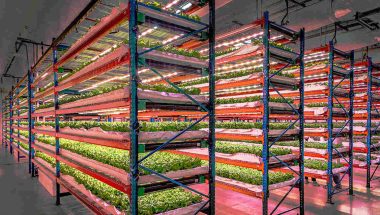
For a business operating at industrial scale, outdated software can become more than an IT headache. It can hold back operations, limit visibility, and make even routine improvements difficult to deliver. At Bustanica, the world’s largest vertical farm based in the UAE, an aging farm management application had become increasingly unreliable. Running on a single on-premises server, the system was running out of storage, struggling to scale, and suffering outages. Documentation was limited, the original vendor was no longer in business, and the technology team was finding it increasingly difficult to keep pace with business requirements.
Rebuilding the application the traditional way could have taken 12 to 18 months. Instead, Emirates Flight Catering (EKFC) worked with Microsoft to modernize it using AI-assisted software development, completing the project in approximately two months.
The project involved modernizing roughly 75,000 lines of legacy code, moving the application to Microsoft Azure, and reducing the codebase to approximately 24,000 lines, according to Tad Nadolny, Vice President, IT Information Systems at EKFC. The result is an application the company owns and can continue to develop without depending on its original vendor.
“We used AI to actually code for us and build a product that we deployed,” Nadolny says.
The project used GitHub Copilot to help analyze, plan, and rewrite the legacy application, with developers reviewing the business logic and the resulting code throughout the process. Rima Semaan, Data and AI Lead at Microsoft, says the work involved collaboration between Microsoft’s engineers and EKFC’s technology team, which understood the business processes the application needed to support.
FROM AN AGING SYSTEM TO A MORE RELIABLE TECH
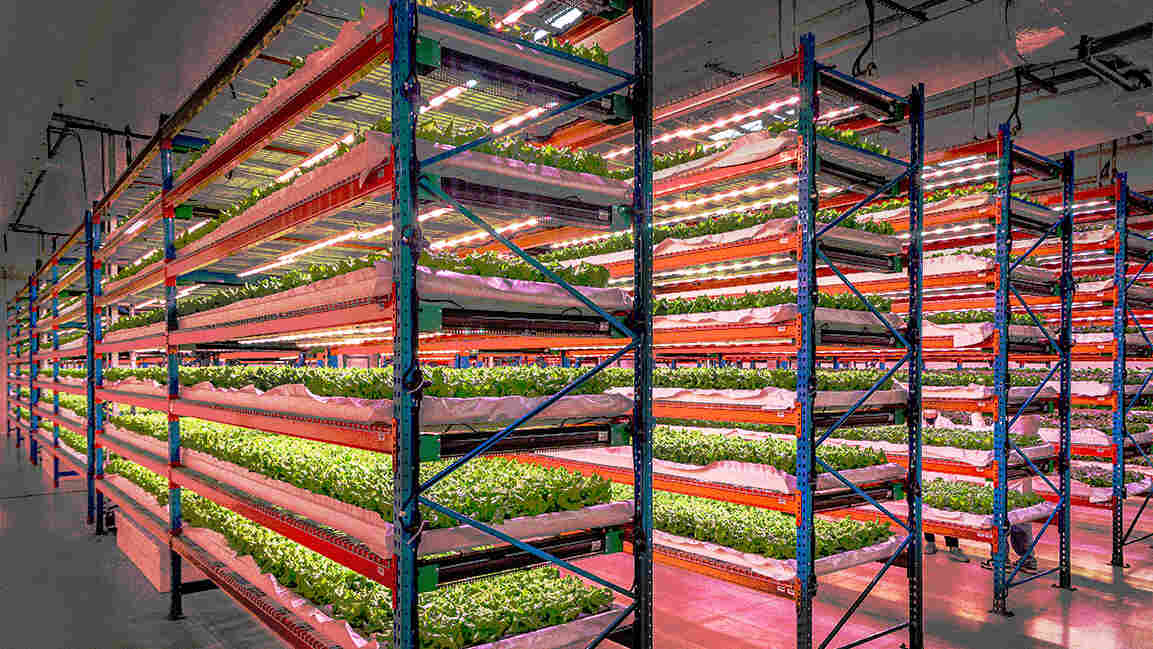
Bustanica produces approximately three tons of leafy greens daily. Its farm management application oversees data from IoT sensors across around 30 growing rooms, monitoring environmental conditions and operational variables such as humidity, irrigation, fertilizer, lighting, and ventilation.
That makes the reliability of its software particularly important. Operators need timely, accurate information to understand what is happening across the farm and respond when something requires attention.
“The application now provides the reliable information coming back to the operators,” Nadolny says. “They can see immediately where things are at which kind of point of the life cycle of growth, and then they can make timely decisions based on that.”
The modernization was not simply a matter of moving an old application to the cloud. EKFC used AI to analyze the legacy code and extract the business logic that had been difficult to document, laying the foundation for rebuilding the system.
Semaan says the team was able to modernize the application while reducing its complexity, making it easier to maintain and adapt to new requirements as they emerge.
The distinction matters for businesses dealing with legacy technology. In many cases, the knowledge needed to maintain an application is embedded in code accumulated over years, rather than in readily available documentation. AI-assisted development offers another way to understand that knowledge, though developers still need to validate the technology’s output.
THE ECONOMICS OF REBUILDING WITH AI
The appeal of AI-assisted development is often framed in terms of speed. But in this case, the potential savings extended beyond the time spent writing code.
Nadolny says the team avoided much of the conventional discovery process, which would typically involve documenting business workflows, engaging vendors, creating specifications, and then beginning development. Instead, AI helped the team understand the existing application and develop a plan to rebuild it.
“The traditional way would have been much, much more expensive,” he says.
The project also gave EKFC ownership of the application and its code, reducing its reliance on an external vendor for future development. That creates more flexibility to introduce new features, respond to operational needs, and maintain the system internally.
Semaan argues that the cost of AI should be considered alongside the time it frees up for developers and the operational efficiencies it enables.
“When we talk about cost, I think we usually tend to directly look into the cost of the technology itself. But I think the lens is even way broader,” she says, pointing to the engineering time saved and the opportunity to direct resources toward other business-critical problems.
That does not mean AI makes software development effortless or eliminates the need for technical expertise. The project still relied on developers who understood the application, assessed the generated outputs, and ensured the rebuilt system met operational requirements.
FROM ASSISTANCE TO INFRASTRUCTURE
For EKFC, Bustanica’s application is part of a broader effort to modernize business-critical systems using AI. The company had previously developed a VIP catering application using AI, which helped build confidence in applying the approach to another operational system.
Nadolny says the Bustanica project is significant because the technology is now being used in production, rather than remaining an experiment or proof of concept.
The application also gives the company a platform for future development. With greater control over the code and a modern cloud infrastructure, EKFC can introduce additional capabilities more quickly as the business evolves.
For Bustanica, that could eventually mean using the data it collects not only to monitor operations, but to improve planning, forecasting, and resource use.
The farm already uses significantly less water than traditional farming, Nadolny says, and improved access to operational data could help the business identify further opportunities to optimize resources.
“We are creating a roadmap of future capabilities and features,” he says.
Semaan sees this as part of a larger shift in how organizations approach AI transformation. Rather than simply adding AI tools to existing processes, businesses need to rethink how their applications and workflows are designed.
“Don’t take your old code and sprinkle agents on top of it,” she says. “Redesign.”
The next phase, she says, will involve organizations rethinking their most important business processes and deciding how AI can operate within them, while people remain responsible for oversight and decisions.
For EKFC, the Bustanica application is an early example of that shift: AI is no longer simply helping employees complete tasks. It has helped rebuild the technology that supports the operation, enabling the business to develop and maintain it on its own terms.