GymNation’s startup bet is bigger than its checks
With $272,000 and access to more than 200,000 members, the gym operator is offering founders a route to customers
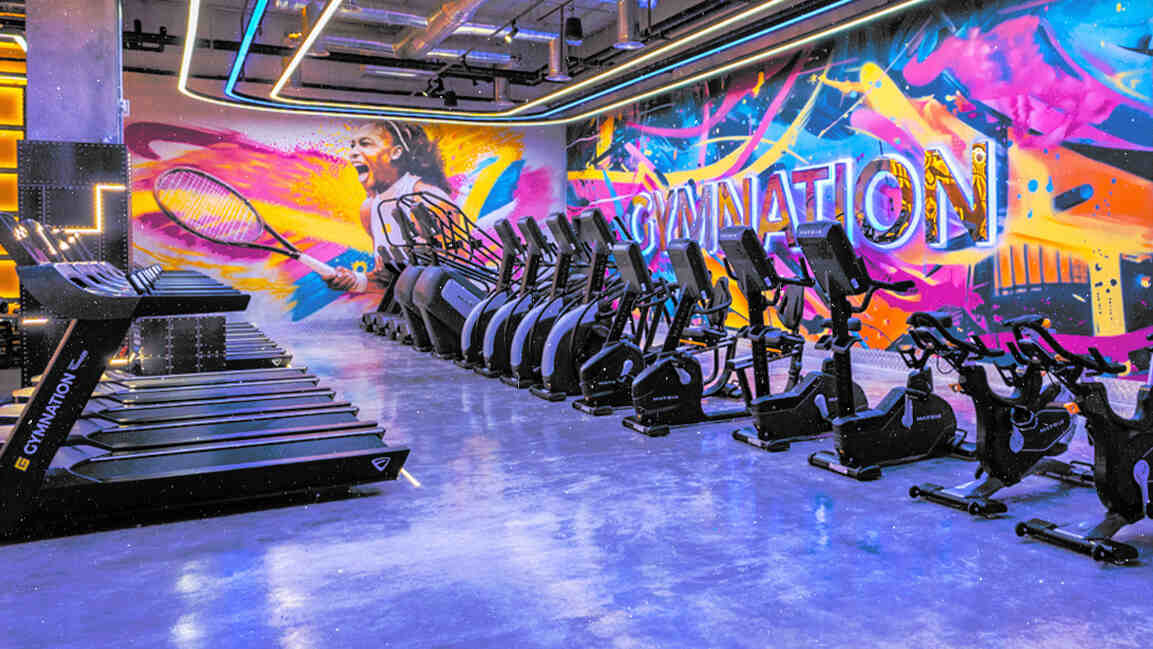


GymNation has secured a private credit facility of up to $100 million to finance its own expansion. For entrepreneurs joining its new startup program, it has set aside approximately $272,000 (AED 1 million).
The more interesting number is 200,000.
That is the size of the member community GymNation says selected founders could reach through The First Rep, its health and wellness incubator. For a nutrition brand seeking its first retail placement or a training app looking for users, the gym floor could matter more than the check.
Across the UAE, Saudi Arabia, and Bahrain, GymNation has assembled something an early-stage investor cannot necessarily offer: customers already spending time and money on fitness. Its move into startup investing puts that distribution network to work for other businesses, while giving the operator a way to test products that could improve its own offering.
“The biggest gap we’re looking to address is the distance between having a good idea and actually being able to bring it to market,” Ant Martland, GymNation’s cofounder and chief commercial officer, tells Fast Company Middle East in a written interview.
His answers make the distinction between funding and distribution unusually concrete. A physical product might enter a handful of gym shops or vending machines. Instructors could trial software before members volunteer to test it. GymNation’s screens and radio network could help promote selected businesses.
That is a useful place to start: somewhere a founder can find out whether anyone wants the product.
THE CHECK BUYS A START, NOT A RUNWAY
The First Rep forms part of the GymNation Foundation, alongside community support and athlete development programs. Although launch coverage has sometimes presented the money as a foundation-wide commitment, Martland confirms its narrower purpose in writing.
“We’re putting AED 1 million into direct investment and allowing founders to pitch directly to us, rather than having to navigate traditional investment networks.”
The number of investments and individual check sizes remain unspecified. Divided among several businesses, the pool would leave each with a modest amount of capital.
Consider the contrast with GymNation’s own financing. Its HPS Investment Partners facility, announced in May, includes $75 million committed and a further $25 million expansion option. HPS is part of BlackRock. The financing supports Gulf expansion, technology investment, and entry into markets beyond the region.
The startup program operates on a different scale. Its strongest offer is a place to test demand before a founder spends heavily trying to manufacture it.
Martland says selected businesses will receive help from GymNation’s technology, data, and marketing teams. The company is considering ideas and prototypes as well as businesses already expanding, with interests including nutrition, recovery, mental wellbeing, sports technology, and digital health.
But what does a founder give up in return?
Asked whether GymNation will take equity, Martland leaves the structure open.
“Founders will continue to own and lead their businesses. Any investment terms will be agreed individually with each founder,” he says.
There is no standard equity stake or published investment structure in his answers. For applicants, the negotiation will determine the value of the offer as much as the funding amount.
ONE PARTNER, THREE ROLES
GymNation could become an investor, distribution partner, and venue operator for the same startup.
That combination can shorten the distance between a pitch and a paying customer. It also concentrates several important decisions in one relationship. The organization deciding whether to invest may also decide which gyms carry a product, how it reaches members, and whether a trial expands.
A founder should therefore ask how much freedom comes with the access. Can the business sell through competing gyms? Who owns the findings from a trial? What happens to distribution if the investment relationship ends?
Those questions belong in the agreement.
Martland offers a clearer account of member participation. Trials will vary by product, but participation will be voluntary, and members can withdraw.
“First Rep partners will never get direct access to our member database, and results are only shared as anonymized feedback.” That offers access to opportunities for research and testing, not possession of 200,000 customer records. Nor does the membership figure mean every selected company will reach every member.
For a founder, a small, well-designed trial could still answer an expensive question. Do people buy the recovery product again? Will an instructor keep using the software once the demonstration ends? Does the service solve a problem members recognize?
THE OPERATOR GETS SOMETHING, TOO
Backing founders gives GymNation a way to explore products without building every one itself.
Martland says members increasingly expect recovery services and newer training formats alongside conventional gym equipment. He points to HYROX, Reformer Pilates, ice baths, saunas, and steam rooms as examples of changing demand.
The commercial challenge is adding things people value while keeping membership affordable.
“In our view, the biggest prize in the region is the people who have never set foot in a gym,” he says.
That is a more demanding target than persuading an existing fitness enthusiast to try another product. Price matters. So does whether a beginner feels comfortable entering the building and returning the following week.
Martland argues that operators should take responsibility for those barriers, rather than simply serving people already committed to exercise. A startup that makes training less intimidating or helps someone maintain a routine could therefore support GymNation’s core business.
The company’s next market will test that approach. Martland says its first flagship branch in Thailand is planned for early 2027. Launch materials list founders in the UAE, Saudi Arabia, Bahrain, and Thailand as eligible for The First Rep.
Expansion creates more potential testing locations. It also makes a founder’s dependence on the operator’s priorities worth considering: a product that suits one country’s members may need substantial changes elsewhere.
FOUNDERS WILL NEED ROOM TO LEAD
GymNation’s own growth has required its founders to surrender decisions they once made themselves.
During the early years, Martland says, they found sites, opened gyms, ran campaigns, and trained staff. Specialist departments now handle that work. More than 50 senior leaders participate in its long-term incentive plan.
“I used to believe I needed to be involved in every decision. I don’t anymore.”
That lesson will matter when GymNation sits on the other side of the funding conversation. Supporting an entrepreneur requires knowing when operational experience helps and when the founder needs room to make a different choice.
Martland says the foundation will publish updates about initiatives and outcomes through its website and social channels. His answers do not specify a reporting timetable.
Applicants also need a confirmed deadline. Launch coverage gives February 2027, while the live foundation page currently says April, without specifying a year, and pitches from October. The dates need clarification before founders plan around them.
Once the first businesses are selected, the test becomes simpler. A product goes into a gym. Someone tries it. Then the founder discovers whether they will pay for it again.