The UAE is learning the costs of climate risk. Can insurance keep up?
The 2024 floods exposed a significant gap in risk modeling. In an era of extreme weather and AI risk assessments, the question is no longer just how much insurance costs, but who pays when it falls short.
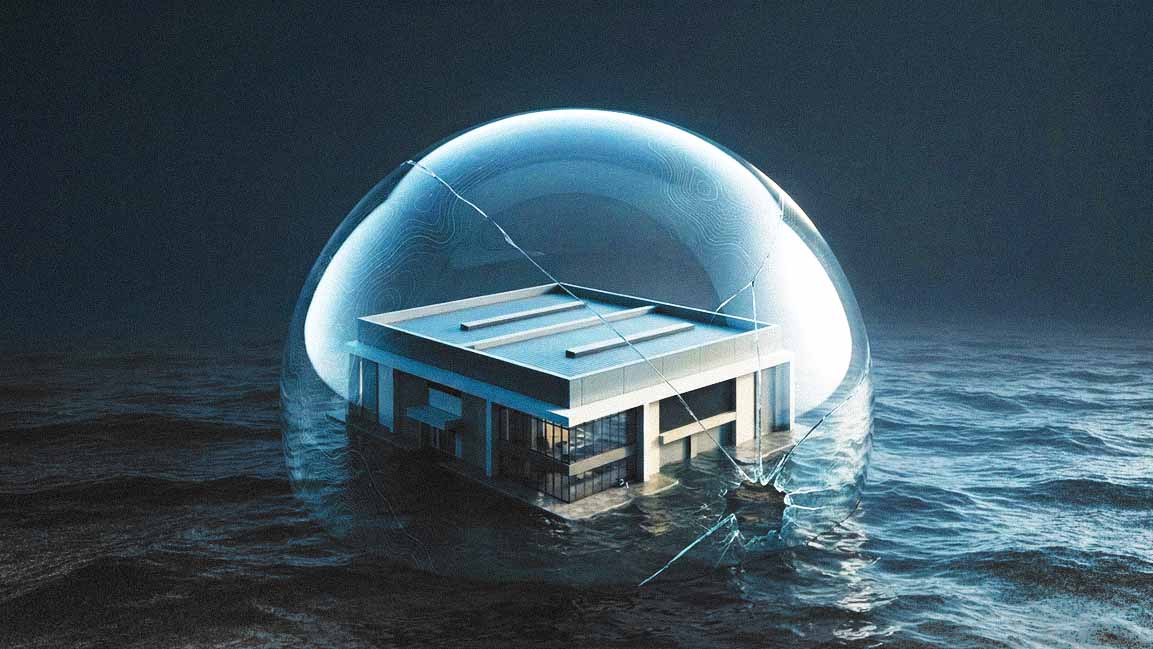


A flood can destroy a warehouse in hours. Rebuilding it might take months. But the financial consequences can linger for years, particularly if the business discovers that its insurance no longer covers what it needs.
That is the uncomfortable reality of climate risk the UAE has faced since 2024. Data from the Swiss Re Institute reported that rainfall across the UAE, Oman, and surrounding countries caused an estimated $8 billion in losses, of which insurance covered just $3 billion.
So who absorbed the rest? It moved to the policyholder, the business balance sheet, lenders, customers, or, eventually, the state.
THE RISK HIDING IN THE FINE PRINT
Climate insurance is not currently a neat, standalone product that customers can buy off a shelf. Floods, storms, water damage, and business interruption are generally covered, subject to their wording, exclusions, and limits.
That is where the protection gap becomes more complicated than the difference between economic and insured losses.
As Ryan George, Chief Digital Officer at ASIB.ae, explains, “The protection gap is not only about whether insurance exists; it can also arise from underinsurance, inadequate limits, deductibles, sublimits, missing extensions, or misunderstanding what triggers the cover.”
Essentially, a business with property insurance may find that the policy doesn’t adequately cover the disruption caused when roads become inaccessible, utilities fail, or suppliers cannot deliver. For smaller companies operating on tight margins, that interruption can be more damaging than physical repairs.
The same principle goes for individuals. Having a policy does not automatically guarantee protection against every weather-related loss. In motor insurance, for example, comprehensive cover should not be assumed to include natural-disaster damage by default. The actual wording and any relevant extensions matter.
However, George does not believe in a standalone product being the need of the hour. “The future of climate protection in the UAE is not necessarily a new product called climate insurance; it is making catastrophe and extreme-weather protection visible, understandable, and relevant,” he says.
THE PROBLEM WITH LOOKING BACKWARDS
For insurers, the difficulty extends beyond tangible damage.
Amar Rahman, Global Head of Climate and Sustainability at Zurich Resilience Solutions, says insurers are increasingly using forward-looking climate scenarios alongside historical data.
“The biggest misconception is that climate change is a future problem,” he says.
In the UAE, that means considering some mix of extreme heat, flash flooding, and water stress. But some of the most consequential climate risks may sit outside a company’s own premises. Rahman points out that most businesses focus on their facilities without modeling what happens when the infrastructure they depend on fails.
A local water treatment plant going offline, for instance, could disrupt a water-dependent business more severely than damage to the business’s own building.
The same logic applies to transport links, utilities, and suppliers. A business can emerge from a flood with its equipment intact and still be unable to trade. For insurers, this makes the question more complicated than estimating repair costs for a damaged property, because it also involves wider network disruptions.
Recovery can also create a bottleneck itself. According to Rahman, companies often underestimate the time required to resume operations. Major weather events lead to competition with other businesses and local authorities for contractors, labor, and building materials.
For insurers, that matters because the financial loss may continue long after the floodwater recedes. For businesses, does their cover realistically reflect recovery time when an entire area is trying to rebuild at once?
The Central Bank of the UAE’s Climate-related Financial Risk Management Regulation, issued in 2025, reflects the growing importance of identifying and managing climate-related risks in the financial sector.
But more precise information about risk does not, by itself, make the risk cheaper to cover.
ARTIFICIAL INTELLIGENCE, REAL CALCULATIONS
Of course, there’s always an AI angle.
“Machine learning and AI are being used to develop forward-looking hazard data and to fill gaps in information about building characteristics,” Rahman adds, highlighting how these tools can improve the accuracy of risk assessment.
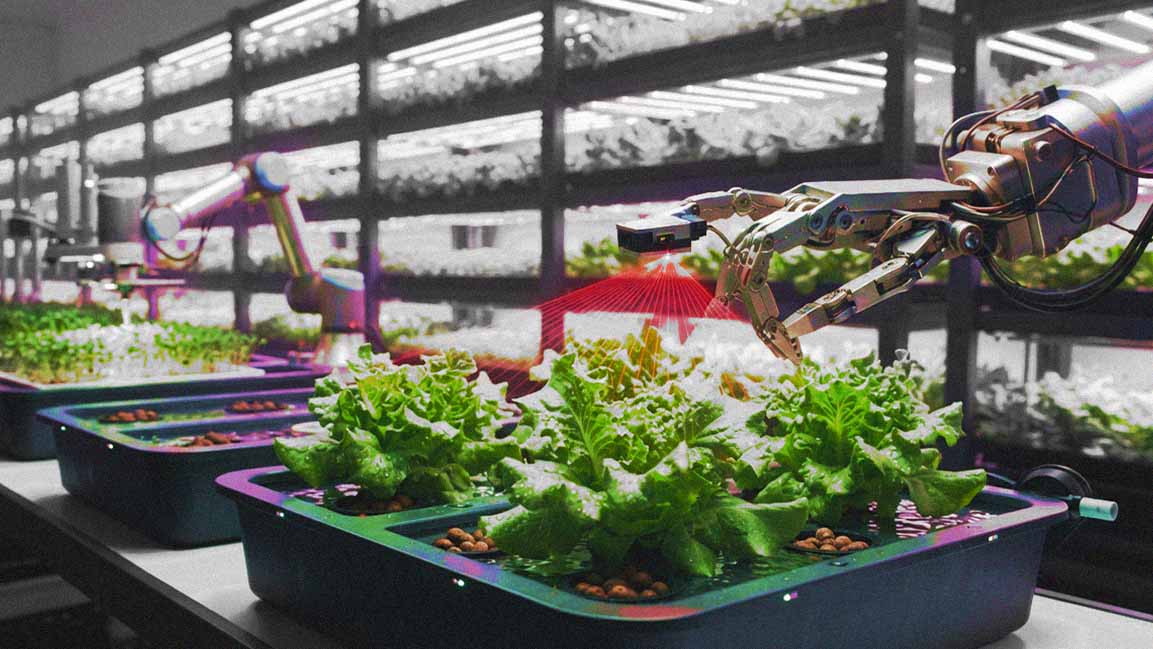
In practice, AI can help analyze satellite imagery, infrastructure information, and climate models to assess hazards such as flooding, extreme heat, and water stress. Combined with data on a property’s elevation, construction, drainage, and previous claims, this can help insurers move beyond broad assumptions based on location or property type alone.
However, George describes the direction of travel as one towards more granular risk assessment. Two properties in the same district, he explains, could receive different insurance terms because their elevation, drainage, construction, layout, or protective measures differ.
THE PRICE IS NOT ALWAYS RIGHT
When it comes to climate risk and costs, insurance has a unique advantage: it can change fairly quickly. Ioannis Ioannou, Associate Professor of Strategy and Entrepreneurship at London Business School, explains that annual renewals can make the consequences of physical risk visible sooner than changes in regulation or infrastructure planning.
“Over the past decade, the question has gradually changed from ‘How much will this coverage cost?’ to ‘Will meaningful coverage still be available?’” he says.
That shift has consequences beyond the insurance premium. Higher deductibles, reduced limits, or exclusions can leave businesses to bear most costs themselves. Rising premiums and narrowing coverage also signal less secure economic returns, affecting investment decisions.
This makes insurance not just the risk-management tool it has historically been, but a marker for whether the investment makes sense to begin with.
Yet the burden is unlikely to be shared equally. More sophisticated risk modeling can further expose gaps between large and small businesses, leaving one far more exposed.
As Ioannou warns, “Sometimes the absence of insurance is the strongest price signal of all.”
The signal may be financially useful, but it is not necessarily fair. If risk becomes too expensive to insure, people and businesses with the least capacity to adapt will likely be the ones left holding the largest share of the bill.
The UAE’s climate exposure is also unfolding against a more immediate backdrop of regional conflict. War risk and climate risk differ in terms of coverage. But for businesses operating in the region, their consequences can overlap. A company already preparing for extreme weather may also have to contend with more expensive transport, delayed supplies, and a lot of uncertainty.
SO, WHO PICKS UP THE BILL?
Insurance remains essential, but it cannot replace resilient drainage, effective land-use planning, reliable infrastructure, or public investment in adaptation. Nor can it guarantee that every risk will remain affordable to cover.
The challenge is ensuring that insurance does not simply identify who is vulnerable, but helps create the conditions for more businesses and households to withstand the next shock.
Insurers can improve the quality of their assessments and make the reasoning behind decisions clearer. Brokers can help customers understand exclusions, limits, and deductibles before a claim occurs. Businesses can reduce avoidable risks, while governments have a role in addressing infrastructure vulnerabilities and considering how the costs of extreme events should be shared.
The question facing the UAE is not whether climate-related losses will have a price. They already do. It is whether that price will encourage better protection, or simply determine who can afford to stay protected.