Your next government appointment could start with a chat. Meet Mira, the UAE’s AI assistant for public services
With expected roll-out in 2027, Mira will be able to handle everything from passport and business registration renewals to summarizing healthcare notes before your doctor's appointment


From renewing an Emirates ID or business permit to booking a child’s doctor’s appointment or extending an employee’s work permit, government services could soon be handled through a simple chat.
The UAE has unveiled Mira, an AI-powered government concierge that will give citizens, residents and visitors a single interface for accessing public services directly from their mobile phone. The first phase is scheduled to launch in March 2027.
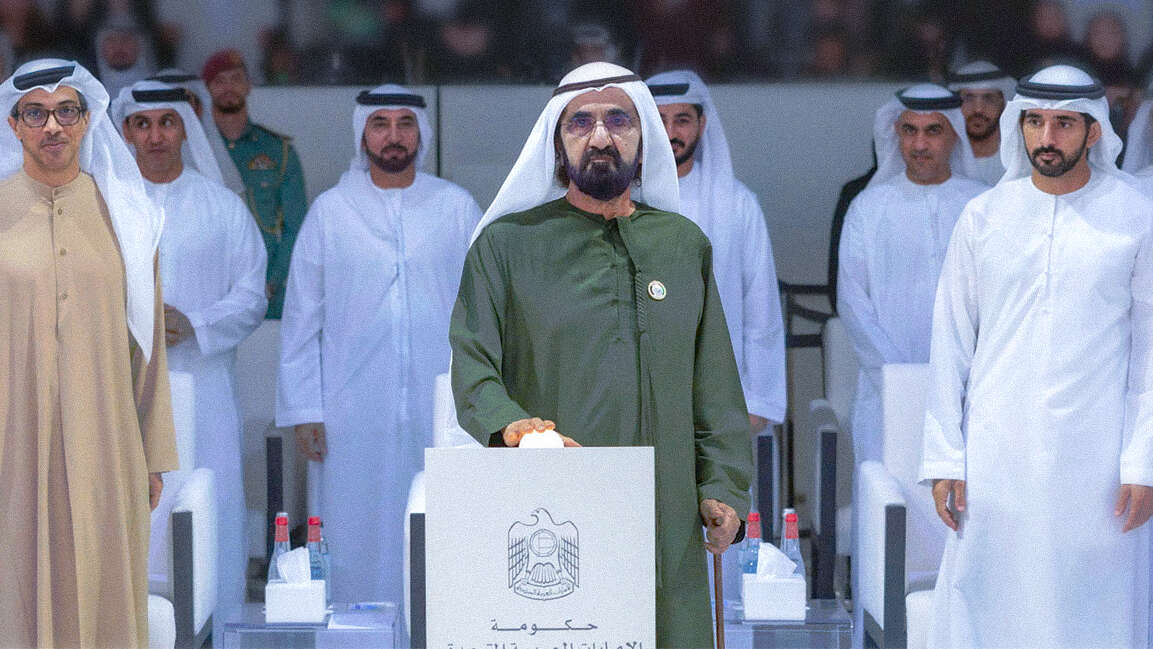
Sheikh Mohammed bin Rashid Al Maktoum, Vice President and Prime Minister of the UAE and Ruler of Dubai, launched Mira at Expo City Dubai on Monday. The event was also attended by Sheikh Mansour bin Zayed Al Nahyan, Vice President, Deputy Prime Minister and Chairman of the Presidential Court, and Sheikh Hamdan bin Mohammed bin Rashid Al Maktoum, Crown Prince of Dubai, Deputy Prime Minister, Minister of Defence and Chairman of Dubai’s Executive Council.
“We have launched a new model for UAE Government services and our personal government assistant, ‘Mira’, marking the beginning of a new phase in the development of government services. Our goal is to make services simpler and faster, bringing government closer to people and enabling it to better anticipate their needs,” His Highness Sheikh Mohammed bin Rashid said.
Demonstrations showed how the assistant could support passport and Emirates ID renewals, family residence permits, and employment contracts. In addition, the new model will also be used for healthcare services, business services and provide access to essential school information.
Mohammad bin Abdullah Al Gergawi, Minister of Cabinet Affairs and chairman of the National Committee for the Agentic AI Project, said the platform would change how people interact with government.
“‘Mira’ gives people a new way to interact with the government. They no longer need to search for a service or know the steps involved. They can start simply by telling ‘Mira’ what they need,” he said.
He added that government entities were working together to redesign services that currently require users to navigate multiple channels.
Renewing IDs and work permits
Ali Mohammed Al Shamsi, chairman of the Federal Authority for Identity, Citizenship, Customs and Port Security, demonstrated how Mira could handle passport and Emirates ID renewals, newborn documentation and family residence permits.
“With ‘Mira’, people can renew their passport or Emirates ID in one conversation, without having to move between services and applications,” he said. “By connecting government data and systems, we can simplify procedures, save people time and deliver services that meet their needs at different stages of life.”
Employers could use Mira to identify contracts nearing expiry, review employee details, make changes, pay fees and receive renewed work permits, according to a demonstration by Dr. Abdulrahman Al Awar, Minister of Human Resources and Emiratisation and Acting Minister of Higher Education and Scientific Research.
“Mira makes it easier for business owners to manage their transactions and keep track of contracts that are about to expire,” he said. “In one conversation, they can review the details, make any necessary changes, pay the fees and receive the renewed work permit. This saves them time and allows them to focus on running and growing their businesses.”
Healthcare, education and business services
Mira will be used to help patients prepare for medical consultations. In a demonstration, users described symptoms and answered questions in a video conversation. The assistant prepared a summary for a doctor to review ahead of the appointment. Patients will also be able to choose a specialty and health center, then book, reschedule, or cancel consultations.
The service extends to education services, where students can compare universities and programs, check admission requirements, submit applications and track their progress. Parents will also have access to their children’s school grades, exam dates, and alerts, and can track school buses.
Dr. Sultan Al Jaber, Minister of Industry and Advanced Technology, presented an Industrial Investor Package that would bring services such as industrial registration renewals, customs duty exemptions and In-Country Value certificates into one process.
Sheikh Mohammed said the initiative reflected the UAE’s aim to build a more efficient and proactive government.
“People are at the heart of every government project and initiative,” he said. “The true measure of success lies in people’s satisfaction and quality of life.”
Turning that ambition into practice will require more than giving people a new way to access existing services, said Dr. Raymond Khoury, senior partner and innovation practice lead at Arthur D. Little Middle East. The larger task, he said, is to redesign how government works across agencies.
“Mira marks a fundamental shift from digitizing existing services to reimagining how government operates—moving towards proactive, personalized and seamlessly integrated service delivery,” he said.
“The real opportunity lies in leveraging agentic AI to redesign end-to-end processes across government entities, rather than simply adding AI to existing interfaces. If executed at scale, Mira could become a defining example of AI-native government globally, setting new benchmarks for efficiency, citizen experience and public sector innovation.”
The initiative is part of the UAE’s 2026 framework to deploy agentic AI across 50% of federal government sectors, services and operations within two years. The government has yet to publish the full list of services planned for Mira’s launch or a timeline for subsequent phases.

Featured Videos
Today's Top Stories:
More Top Stories:



FROM OUR PARTNERS