The Gulf’s air-taxi ambitions face a test beyond flight
Air taxis are advancing, but reliable services will depend on charging, airspace coordination, and whether passengers save enough time to justify the fare.
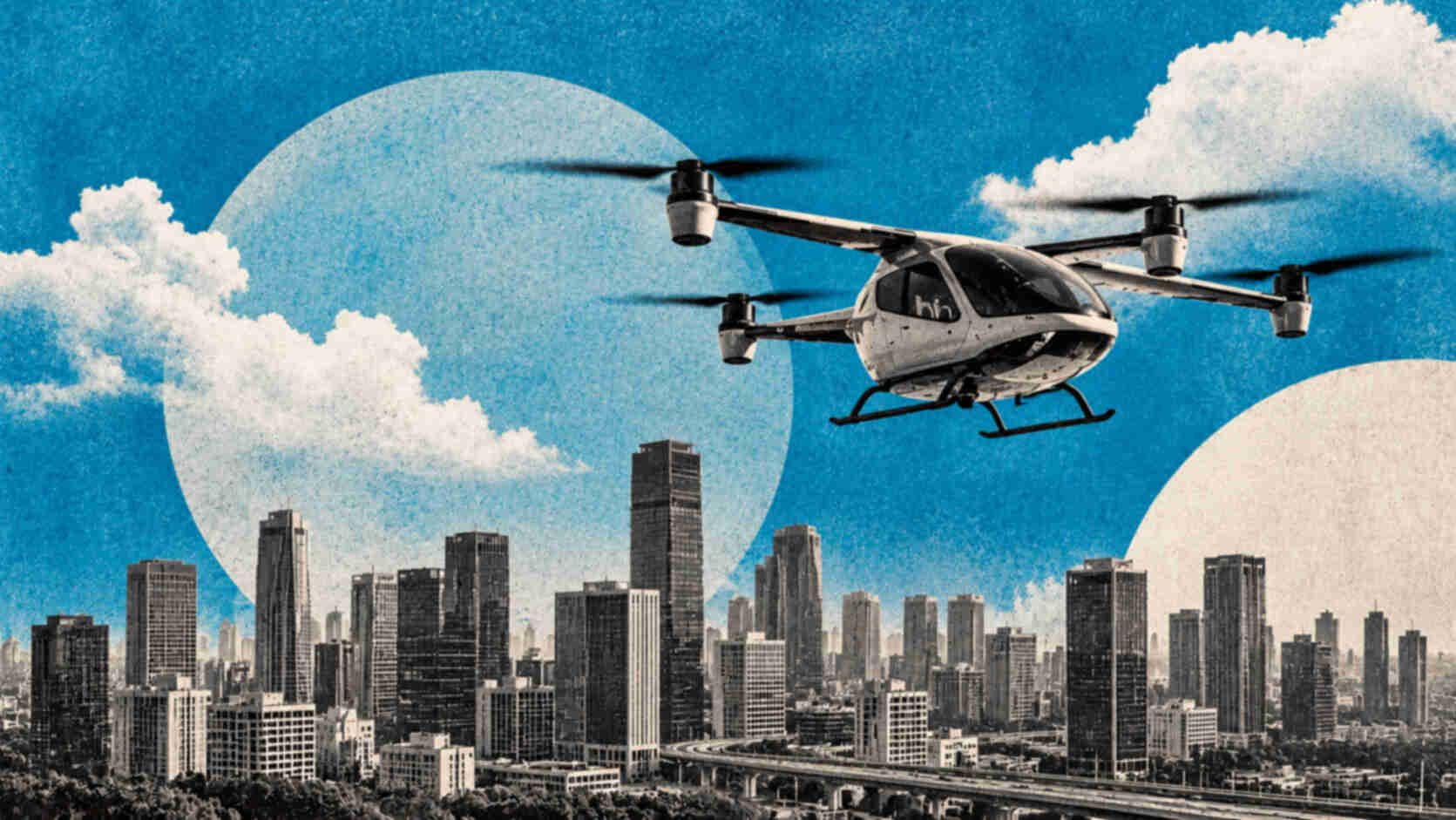


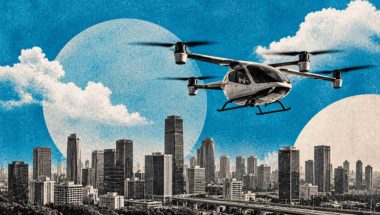
Electric vertical take-off and landing (eVTOL) aircraft, also known as air taxis, used to seem futuristic. Now, first passenger services are expected to launch in the UAE as soon as next year.
Progress is being made in aircraft certification, flight testing, and vertiport development, supported by new regulations. Companies like Joby Aviation, Archer Aviation, and EHang are also advancing their aircraft development.
Air taxis could cut travel times in congested cities and offer a quieter, lower-emission alternative to conventional helicopters. But can it become a regular part of urban transport in the Gulf?
Experts say it will depend on wider adoption, safety, regulatory approvals, infrastructure readiness, and commercial viability.
LAUNCHING IS DIFFERENT FROM RUNNING A SERVICE
Air taxis will become a regular part of urban transport in the Gulf within the next ten years, says Dr. Jennifer Simonjan, Research Director at the Autonomous Robotics Research Center, TII. But starting commercial services is different from having them widely used every day.
Simonjan believes the Gulf, particularly the UAE, is well positioned to become an early adopter.
“There is strong government ambition, significant investment in emerging mobility technologies, and a willingness to develop the regulatory and infrastructure frameworks needed to support these systems.”
She expects the initial phase to focus on selected routes and specific applications, including airport transfers, connections between key urban destinations, and tourism.
“As technology matures, operational costs decrease, and infrastructure expands, these services could gradually become more accessible. Ultimately, the transition will depend not only on the maturity of the aircraft, but also on whether AAM can deliver a safe, reliable, convenient and economically competitive service that genuinely complements existing transport options.”
Efforts to establish the necessary regulatory and operational frameworks are already underway, says Dr.Talib Alhinai, Managing Director for the UAE at Archer Aviation.
Abu Dhabi is set to be Archer’s first market outside the US, and the rules for operating there are already being set up. Archer’s Midnight aircraft is the first eVTOL to be on a Restricted Type Certificate track with the GCAA, opening the door to limited commercial flights with Abu Dhabi Aviation.
In Saudi Arabia, Archer has teamed up with The Helicopter Company and Red Sea Global to create a regulatory sandbox with the General Authority of Civil Aviation (GACA). This will let them test the Midnight aircraft in real-world conditions under official supervision.
Dr. Alhinai says things are moving forward in the Gulf, alongside Archer’s recent achievements in the US. There, the Midnight aircraft has flown over 300 miles between cities in the San Francisco Bay Area. The FAA has now given it a Special Airworthiness Certificate, allowing piloted flights in Los Angeles and flights with non-paying passengers.
“We anticipate the Gulf to follow a similar trajectory. With the GCAA alone, we are working across eight workstreams, from operations and maintenance to crew training, airspace and vertiports, and each phase builds on the one before it.”
THE VERTIPORT IS ONLY THE BEGINNING
Making eVTOL services commercially viable will require more than building landing sites.
“We need to think of Advanced Air Mobility (AAM) as an integrated transport ecosystem, bringing together physical infrastructure, energy supply, airspace management, digital systems and ground transport connectivity,” says Morsi Berguiga, Partner, Transport & Logistics at KPMG Middle East.
Dubai’s initial network illustrates how the first phase of development can be organized around major travel destinations.
“The next step is to ensure these locations connect effectively with airports, hotels, business districts and the wider public transport network, rather than operating as isolated air taxi terminals,” says Berguiga.
He adds that how many flights a vertiport can handle depends more on how fast aircraft can be prepared for their next trip than just the number of landing pads. Facilities will need to include passenger terminals, aircraft parking, security, fire and rescue services, maintenance, and spare parts. Choosing locations will also require considering noise, zoning rules, and whether the community supports it.
Reliable power supply is another requirement, with high grid capacity and fast-charging systems supported by managed charging, energy storage and renewable sources to meet demand.
Cities will also need to integrate low-altitude air traffic safely with conventional aircraft, helicopters and drones. This will require designated flight corridors, real-time weather data, surveillance systems, contingency protocols and shared digital standards. Dubai Air Navigation Services (DANS) is already leading initiatives to support the safe coexistence of traditional and next-generation airspace users.
Simonjan emphasizes that infrastructure planning must extend beyond physical facilities to include the systems needed to manage increasingly complex operations.
“One of the most important aspects of AAM is that the aircraft is only one component of a much larger ecosystem,” she says.
Cities will need integrated infrastructure that supports the entire operational lifecycle, alongside advanced air traffic management systems that can accommodate larger numbers of low-altitude aircraft, coordinate their movements, and maintain safe separation from other airspace users.
“This requires interoperable traffic management systems, reliable communication and surveillance capabilities, and the ability to exchange information between different operators and service providers.”
PRESENT CHALLENGES
Dr. Alhinai identifies the electric powertrain as one of the industry’s main engineering challenges, noting that Archer designs and manufactures its own system. He says the aircraft uses redundant components across critical systems, including its engines, flight controls, pilot displays and electric propulsion, to maintain safety in the event of a component failure.
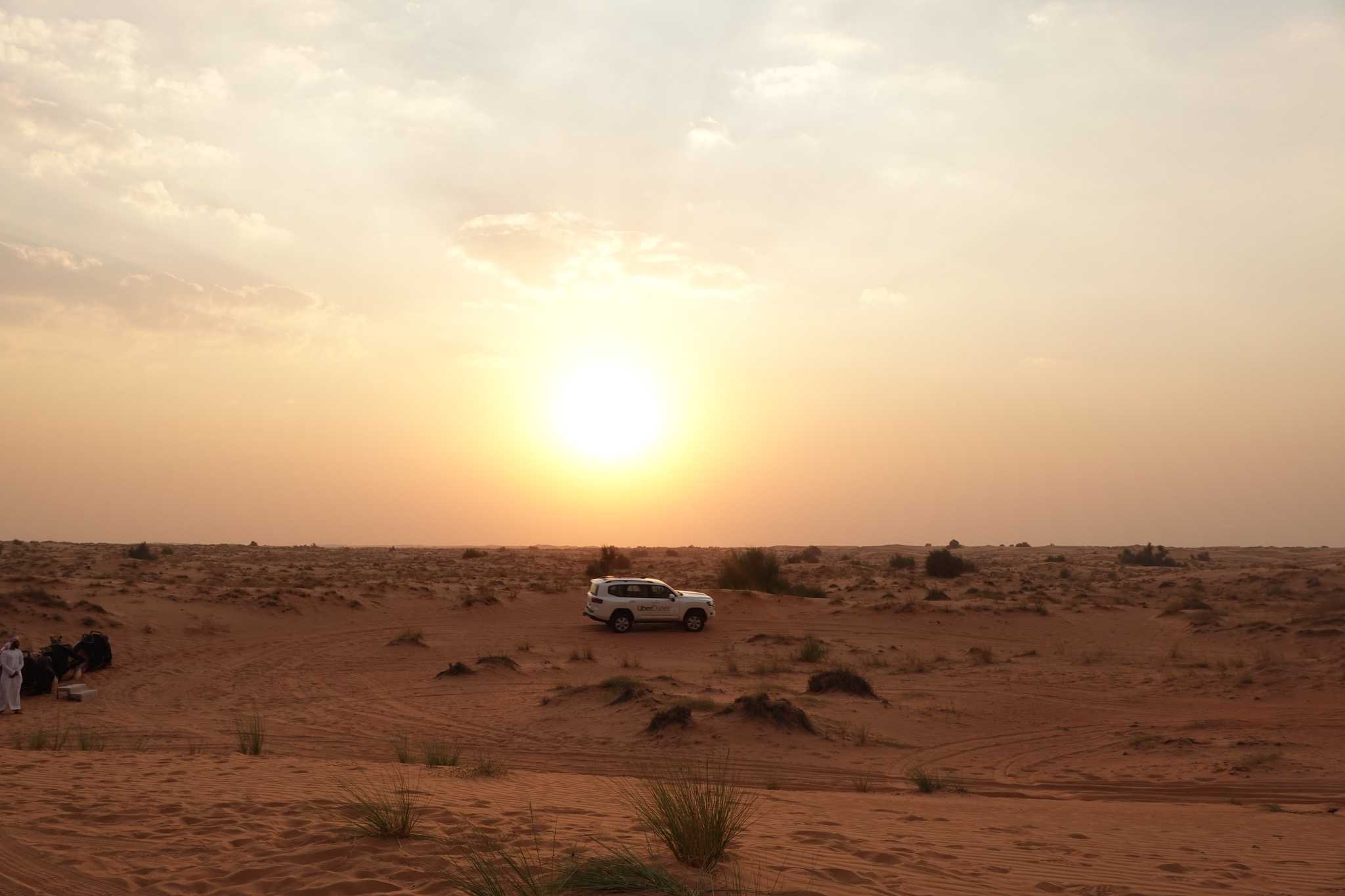
He adds that testing how the aircraft performs in local weather is another challenge. In the UAE, high heat, humidity, sand, and dust mean the aircraft needs extensive flight testing to see how it holds up.
“Extreme heat places additional demands on batteries and electrical systems: thermal management becomes harder, power margins narrow, and charging can slow. Hot, thin air also reduces lift, which can limit payload and range. Dust, sand and humidity can affect sensors, motors, rotors and materials, and poor visibility or changing weather may require operators to adjust or suspend flights,” says Berguiga.
Manufacturers and operators will need to demonstrate that their aircraft, charging infrastructure and maintenance systems can withstand these conditions.
Berguiga adds that safety certification must account for system redundancy, battery safety and potential failure scenarios. Reliable operations will also depend on regular maintenance, real-time monitoring, accurate weather information, trained personnel and established emergency-response procedures.
He says public acceptance will ultimately depend on whether passengers consider air taxis as safe and reliable as conventional public transport. This perception will require consistent operations and transparent safety standards over time.
INTEGRAL REGULATIONS
Simonjan says regulators must balance innovation with safety through a phased, evidence-based approach that allows new technologies and operational concepts to be tested before wider deployment.
“This requires more than certifying individual aircraft. We also need clear frameworks for operational approvals, pilot and operator requirements, infrastructure certification, traffic management, communication and surveillance, and the responsibilities of different stakeholders.”
She identifies integrating AAM into existing airspace as another challenge, as helicopters, general aviation, drones and other aircraft already share low-altitude airspace.
“This is where simulation-driven airspace design, digital twins and hybrid validation become particularly valuable. We can model traffic demand, assess corridor configurations, evaluate separation requirements and test interactions between different aircraft and traffic management systems before introducing operations in the real world.”
In the UAE, collaboration between research institutions, regulators and industry is helping address these challenges, she says. “Ultimately, successful regulation will require international alignment where possible, while remaining flexible enough to accommodate regional operational requirements.”
SUSTAINABLE EXPANSION
Dr. Alhinai says that electric air taxis could reduce energy consumption and emissions on certain journeys by avoiding road congestion and idling. There’s also a potential to repurpose existing aviation infrastructure, including helipads, by upgrading them with charging facilities and the necessary landing and safety systems. This could reduce the time and investment required compared with developing entirely new facilities, while adding capacity to urban transport networks.
Dr. Alhinai believes the Gulf is well positioned to develop this infrastructure, given its existing aviation facilities, investment in emerging mobility technologies and relatively predictable weather conditions.
“The larger opportunity lies in infrastructure. Ground transportation scales by pouring concrete. Every increase in demand eventually requires new roads, bridges, tunnels, and the land and maintenance that come with them. Air mobility scales differently.”
Berguiga says scaling AAM will depend on commercially viable routes, with airport transfers and connections between major business and tourism destinations among the most promising early applications. Investment in vertiports and charging facilities should also be phased according to demand to avoid underused infrastructure.
As aircraft production scales and supply chains mature, lower maintenance costs and higher fleet utilization could improve service economics, eventually making air taxis more accessible beyond premium customers.
“Environmental performance should be assessed per passenger-kilometer, accounting for occupancy and the electricity mix. On similar routes, eVTOLs should compare favorably with conventional helicopters. Against a well-occupied electric car, however, they may use more energy per passenger-kilometer, so their case rests on the value of the time saved rather than on being the lowest-energy option,” says Berguiga.
He says the Gulf can use its aviation know-how, investment strength, and energy infrastructure to build a strong AAM market.
FUTURE OUTLOOK
The first AAM services in the Gulf will focus on routes where air taxis clearly beat current transport options, says Simonjan.
Airport transfers could be among the first applications, particularly in cities where road congestion makes journey times unpredictable. Tourism routes and connections between urban centers, islands, coastal destinations and major infrastructure hubs are also potential use cases.
Beyond passenger transport, Simonjan identifies emergency medical services, time-critical logistics, infrastructure inspection and offshore operations as applications that could gain traction earlier, given their more specialized requirements.
She says commercial viability will depend on demonstrating safe and reliable operations, competitive pricing, sufficient demand, high aircraft utilization, accessible vertiports, and integration with existing transport networks.
“The regions that approach AAM as a complete mobility system, rather than just aviation technology, will be best positioned to lead its adoption.”