
- | 9:00 am
Cheap EVs are about to flood the used car market. Will more buyers make the switch from gas?
If you need a car, this is a good time to buy a used EV.
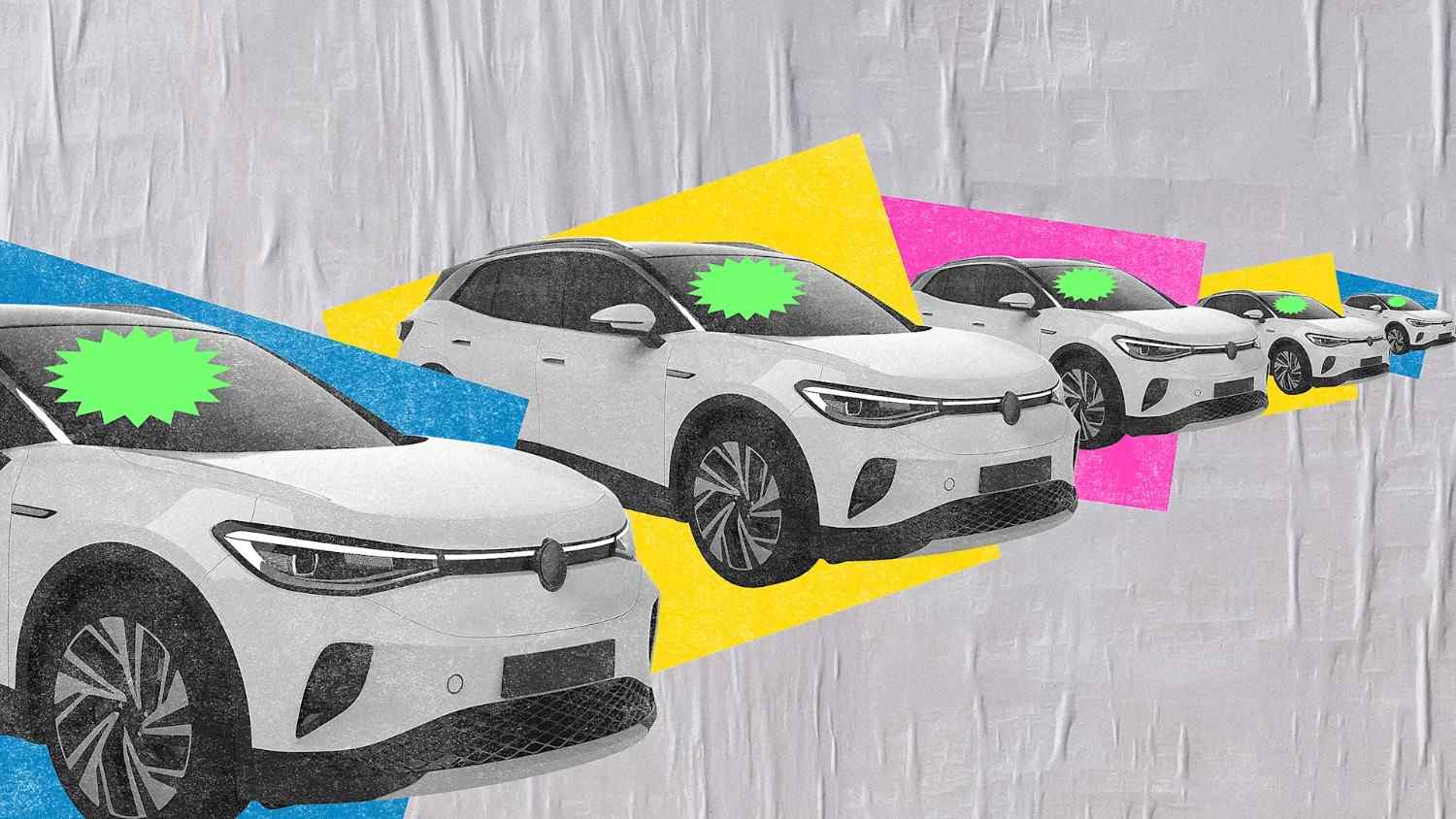


A surge of affordable used EVs is about to hit the market—at exactly the same time as drivers are looking to avoid high gas prices.
Around 300,000 EV leases are set to expire this year, driven by a leasing boom that started around three years ago, when leasing offered the widest range of models eligible for federal tax credits. A wave of hybrid leases is also expiring this year. At the same time, there are fewer used gas cars on the market than usual because of slow sales in 2023 and 2024.
Used EV sales are already strong, even as the rest of the EV market is struggling. Right now, buying an electric car can be a better deal than a similar used gas vehicle. At $20,000 to $30,000, a typical used gas option might be a five-year-old Toyota Camry or RAV4 with 50,000 miles, according to Recurrent, a company that studies the EV industry. In the same price range, you can get a Tesla Model 3 or Volkswagen ID.4 that’s a year newer, with 20,000 fewer miles on it. For cars that cost less than $20,000, the average EV is two years newer than a gas car, with 40,000 fewer miles.
“For the same amount of money, you’re getting a newer used car with lower miles on it and more technology,” says Scott Case, Recurrent’s cofounder and CEO. “And also, right from the jump, you’re saving a substantial amount of money in gas prices.”
EVs have depreciated faster than gas cars in part because the technology is improving so quickly; the latest models have the best features. But for budget-conscious buyers, a two or three-year-old EV is still a good option and “very undervalued,” Case says.
When the Trump administration ended EV tax credits last September, including incentives for used EVs, sales were expected to plummet. “Everyone thought, ‘That’s it for EVs—there aren’t going to be more sales,’” says Case. “I think to an extent that was true on the new side—there was just a ton of pull-forward demand and Q4 was really, really soft. But we work with used EV specialists all over the country and almost immediately—October 1st, the day after the deadline—we were hearing from dealers all over that were selling used EVs.” By December, used EV sales were up 10.2% year-over-year. Total used EV sales in 2025 were up 35% compared to 2024. More than half of the inventory is $30,000 or less.
Now, as leases end, there will be many more options. “What that means is that for consumers who have found new car sales to be too high and have wanted to get an electric vehicle but have found it too pricey in the past, they’re now going to have two or three-year-old vehicles that are top quality, and still under EV battery warranty,” says Corey Cantor, research director at the nonprofit Zero Emission Transportation Association.
In the past, consumers have cited cost as one of the top barriers to buying an EV. Range or charging is the other top issue, but that’s less of a challenge now as well. A typical EV might have a range of 300 miles. More than 18,000 new public fast chargers were added throughout the U.S. last year, up 30% from 2024. And current batteries aren’t degrading quickly.
Recurrent tracks battery health, and has found that after three years, EV batteries still show 97% of their original range. In many cases, three-year-old EVs are getting better than their initial advertised EPA range. “Across the board, batteries and range are holding up better than people think,” says Case. “There’s this big misconception about buying an ‘iPhone on wheels’ and expecting the battery to wear out in three years just like an iPhone. And that’s not true.”
Recurrent has also studied how gas prices affect EV sales. Spikes in gas prices don’t necessarily mean that people run out to buy electric vehicles. When the company looked at data over the last 10 years, gas prices only had a meaningful impact when they stayed high in the wake of the Ukraine invasion. Still, that could happen again now. “If this is just a spike that jumps and then goes back down, that probably doesn’t lead to a lot of new EV sales, but if it stays around, we’ve forecasted that could lead to an extra two to four percentage points above baseline [sales] for the year,” Case says.
Already, Edmunds reports that it’s seeing an uptick in searches for EVs. EV dealers also say that they’re seeing more interest. “I’ve never seen so many trade-ins come in on fumes because people are trading in a gas car and literally, we can’t get it to the other side of the parking lot because it has so little gas in it—people don’t want to hit the pump one more time,” says Jesse Lore, CEO of Green Wave Electric Vehicles, with dealerships in Massachusetts and New Hampshire.
Lore says that he recently sold a plug-in hybrid to a Trump supporter with a big diesel pickup. “He was putting $60 in his tank every weekend, and that was going to go up 20 or 30%,” he says. “We did the math. On the plug-in hybrid, he has a 20-mile commute. He’s going to put $40 in every six weeks.”
Even for new EVs, and even when gas prices are lower, the total cost of ownership is often less than the cost of owning a similar gas car. That’s both because of fuel savings and because EVs require less maintenance over time. The benefit varies by location, as this gas-versus-electric calculator shows. But the cost savings are clearest for used cars.
Many customers who are concerned about gas prices now are particularly interested in lower-cost used EVs, says Shannon Golbienko, co-owner of Eco Auto Northwest in Washington State. “They’re looking for Chevy Bolts, and they’re looking for Nissan LEAFs,” she says. A used Bolt can sell for around $15,000.
Historically, “whenever there is a gas price spike new car sales collapse, and used car sales stay remarkably resilient,” says Case. “People don’t stop buying cars, they just trade down to cheaper ones. What I think is interesting and unique about 2026 is this is the first time—if gas prices stay high—that there have been enough used EVs to make that a really interesting segment.”