
- | 10:00 am
‘Resilience is built ahead of disruption’: DHL’s Orkun Saruhanoglu on future-proofing supply chains
Trade is still moving, but the routes are changing fast



There is nothing abstract about supply chain disruption when it begins to affect air routes, sea lanes, and road networks simultaneously. At this point, across the Middle East, logistics corridors are facing significant disruption, with shifting airspace access, pressure on key maritime routes, and added strain on overland transport. Businesses are operating in an environment that demands faster decisions, tighter coordination, and far greater flexibility. Cargo is being rerouted, alternative gateways are being activated, and contingency planning is now built into daily operations.
The shift is structural and ongoing, with trade flows continuously recalibrating routes, timelines, and costs in response to mounting pressure. What was once episodic disruption has become a constant, forcing businesses to plan for volatility as part of everyday operations. As a result, flexibility and execution speed are becoming as critical as cost and efficiency. Orkun Saruhanoglu, CEO of DHL Supply Chain Middle East & Africa, describes a disruption that now spans the entire logistics network, unfolding simultaneously across air, sea, and land.
ADAPTING ROUTES, MANAGING RISK
That complexity is playing out in day-to-day operations, where supply chains remain active even as conditions shift. “We are seeing increased complexity across key Middle East logistics corridors, and supply chains are under pressure. However, they continue to operate, with cargo being moved in and out of the GCC region,” adds Saruhanoglu.
This disruption is driven by multiple factors, including airspace restrictions and the suspension of maritime traffic through the Strait of Hormuz, creating a highly volatile environment that requires constant monitoring and careful management. “Several airspaces in the region are affected, and maritime traffic through the Strait of Hormuz has been suspended. The situation remains highly volatile,” he notes.
In response to these conditions, companies are actively rerouting shipments away from impacted airspace and traditional transit hubs, while relying on alternative gateways within the GCC, particularly through Saudi Arabia and Oman, supported by additional trucking capacity. This is increasing transit times, costs, and operational complexity depending on the route and mode of transport.
Even so, movement has not stopped. “There is no standstill,” he says, emphasizing that DHL continues to serve the GCC and wider region, adapting routes as needed while prioritizing safety and aligning with local authority guidance. The process remains dynamic, with ongoing adjustments as conditions evolve.
This need for constant adjustment is not new. He also places the current disruption in a broader global context, noting that supply chains have long operated in complex environments, with contingency and business continuity plans enabling companies to adjust quickly and keep goods moving wherever conditions permit.
Against this backdrop, maintaining continuity has required rapid route reconfiguration. DHL has activated a range of contingency pathways across air, ocean, and road, designed to preserve connectivity without relying on a single alternative. “Early in the conflict, we activated a range of contingency routes across air, ocean, and road, with the clear objective to maintain connectivity into and out of the region,” he says.
In air freight, more cargo bound for the GCC is now being redirected to Muscat and Riyadh, creating additional capacity outside affected airspace before being transported by road to final destinations.
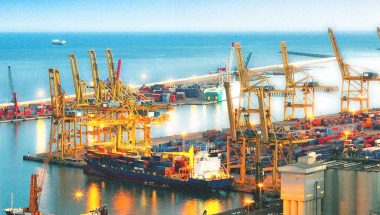
Ocean freight has also been reconfigured, with shipments discharged at alternative ports, including Sohar, Salalah, and Khorfakkan, as well as at Red Sea gateways in Saudi Arabia, such as Jeddah. From there, distribution continues via regional road networks, which remain operational despite the disruption.
Within this setup, road transport has become a critical link. “Right from the start, we secured additional, dedicated trucking capacity, on top of our own fleet. This helps us to keep cargo moving in and out of the region,” he notes.
These flows are being managed by dedicated teams working around the clock in close coordination with stakeholders, supported by integrated road networks connecting ports, airports, free zones, and industrial areas. This allows routes and capacity to be adjusted dynamically as conditions evolve.
Looking ahead, even if tensions persist, the expectation is not a breakdown of global trade, but a continued process of adjustment. Supply chains, by design, are built to adapt rather than stop. “What experience consistently shows is that supply chains do not stop. They adjust,” he says, adding that trade flows are still moving across record distances despite ongoing geopolitical stress.
This signals a longer-term shift toward resilience, as companies redesign supply chains to absorb shocks and maintain the flow of goods.
For DHL, this reinforces a broader reality: volatility is no longer an exception, but a recurring feature of the operating environment. “Supply chains that are built around resilience, flexibility, and collaboration are the ones that continue to function, even when conditions remain difficult,” he notes.
Over time, that adaptability keeps global trade moving, even as pressure builds across regions and markets.
VISIBILITY TO PROACTIVE DECISION-MAKING
Managing disruption at this scale increasingly depends on real-time visibility and faster decision-making. DHL’s globally connected control towers, operating around the clock, provide oversight across networks and allow teams to respond quickly as conditions shift. “Through our globally connected DHL control towers, which operate 24/7, we maintain real-time visibility across the network and can respond quickly as conditions change,” he says.
At the core of this capability is the integration of data from multiple sources, including customer data, carrier data, local conditions, and on-the-ground operations, enabling more informed, timely interventions. The same visibility is extended to customers even when they work with multiple logistics providers, creating a more unified view of supply chain activity.
Building on this foundation, advanced analytics and AI-supported tools are playing an increasingly important role in decision-making. They allow teams to process large volumes of data, optimize routing and customs processes, and identify risks earlier. When combined with digital twin technology, these tools enable scenario simulation and more proactive responses to disruptions. “It is no longer just about efficiency. It is about decision quality during highly volatile times,” he notes.
At the same time, these capabilities are reshaping how supply chains themselves are designed. Rather than relying on a single route or gateway, companies are encouraged to build multi-node networks with strategically placed regional distribution centers and alternative entry points. “Resilience comes from having options,” he says, emphasizing the importance of flexibility across both transport modes and infrastructure.
This shift also calls for a change in mindset. Companies are being encouraged to regularly test their supply chains under different disruption scenarios and treat volatility as a constant. Here, resilience lies in building networks that can adapt without compromising efficiency.
RESILIENCE AS STRATEGY
Despite operating in a complex geopolitical environment, the Middle East’s long-term trajectory remains defined by resilience and sustained growth. Over the past two decades, the GCC has navigated global shocks, from financial crises to the pandemic, while continuing to invest in infrastructure that supports trade flows. “The region has navigated the global financial crisis, the COVID pandemic, and multiple geopolitical tensions, while continuing to grow and invest in its strong infrastructure,” he says.
This resilience is increasingly reflected in global data, with countries like the UAE showing a sharp rise in global connectedness over time, an indicator of deeper integration into international trade networks. At the same time, the region’s position as a connector between Asia, Europe, and Africa continues to reinforce its long-term relevance. “We see two powerful dynamics: the ability to absorb and respond to short-term disruptions, and a compelling long-term growth opportunity,” he notes.
Taken together, these dynamics are shaping both strategy and investment across the region. DHL, for instance, is committing €500 million across the Middle East through 2030, with a focus on strengthening infrastructure and logistics capabilities. This includes large-scale projects in Saudi Arabia and the UAE, as well as broader ecosystem initiatives such as ASMO, its joint venture with Saudi Aramco. Underpinning this is a clear view that resilience must be built in advance, through strategic locations, advanced warehousing, and integrated logistics networks. “Resilience is built ahead of disruption, not during it,” he says.
For businesses, this translates into a more deliberate approach to supply chain design. Flexibility is critical, ensuring operations are not dependent on a single route, gateway, or transport mode. “Supply chains work best when companies are not depending on a single route,” he says, pointing to the importance of multimodal options and alternative pathways to maintain continuity.
Beyond flexibility and visibility, data are becoming central to decision-making, with companies investing in transparency, early warning signals, and scenario planning to anticipate disruptions and respond before they escalate.
At the same time, collaboration is emerging as a key differentiator. In volatile environments, closer coordination with logistics partners, particularly those with scale and regional depth, can make the difference between disruption and continuity. “In fast-moving situations, early and open communication and collaboration matter,” he notes.
Taken together, these shifts point to a more practical approach to managing supply chains, where resilience, flexibility, and foresight are built in as standard rather than treated as a response to disruption.