- | 9:00 am
How Gulf chocolatiers turned heritage flavors into a global obsession
The worldwide popularity of a pistachio-filled chocolate bar from Dubai shows how the Gulf is gaining influence in using heritage ingredients, creating new flavors, and sharing its culture through food.
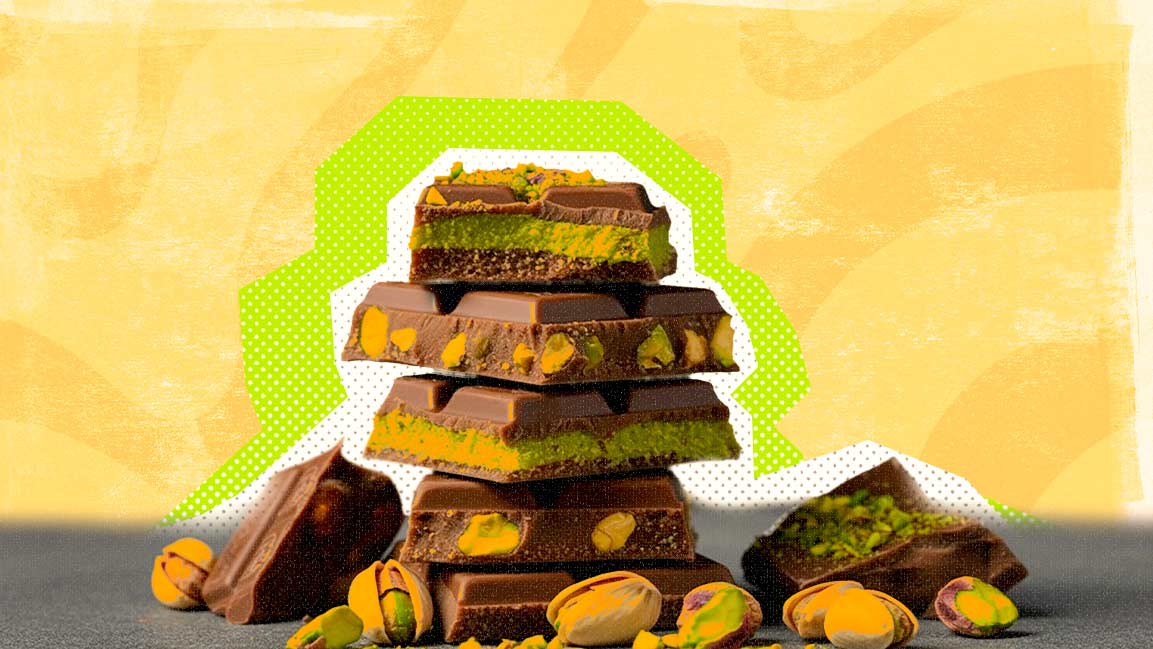


From the streets of Prague to the souqs of Istanbul, the past few years have seen an explosion in Dubai Chocolate. The milk chocolate bar filled with pistachio, tahini, and knafeh pastry was first launched by Dubai-based FIX Dessert Chocolatier in 2022, before going viral on TikTok in 2024. Since then, it has become a global phenomenon.
Speaking of its early beginnings, Chef Nouel Catis, who co-created the famous indulgence, says the goal was to create a chocolate that celebrates Dubai. “My role was to develop flavor combinations that resonate in the region… So, when the Dubai Chocolate became a global sensation, it was far more than I could have ever expected.”
CREATING A SWEET LEGACY
The popularity of Dubai Chocolate is part of a bigger trend in the Gulf, where chocolate makers are raising their standards and challenging global traditions. VOCCA is one example. Its Chief of Chocolates and Co-Founder, Ashwin Nayanar, explains that luxury chocolate used to focus on European heritage, but now local brands are looking inward. “Today, a small independent brand can launch with a single breakthrough product and gain global traction overnight. The barrier to entry is lower, but the bar for innovation is dramatically higher.”
Chef Catis agrees. While Europe set the standards for chocolate for many years, the Gulf is now building its own identity based on flavor and creativity, blending heritage ingredients with new ideas. “It won’t try to replicate European chocolate culture; it will express the region’s own story.”
Nayanar agrees, adding that the Gulf has its own sophisticated sensory vocabulary, including saffron, loomi, Arabic coffee, dates, and cardamom. “It is no longer about importing the world’s best. It is about creating something the world wants to import from us.”
HERITAGE INGREDIENTS IN A GLOBAL STORY
Elevating these regional ingredients, however, must be done thoughtfully and authentically. “The rule is simple,” says Nayanar, “If we use a local ingredient, it must earn its place in the recipe,” he says. Thus, he shares that when saffron is used, it is infused with house-made caramel with no artificial flavoring; Emirati honeycomb is created in-house using real honey; and za’atar praline transforms a familiar regional herb into a balanced ganache enrobed in milk chocolate.
This approach is also championed by Dr. Sven Mostegl, Founder of Sven’s Baker’s Kitchen and LEVA Hotels. “For us, using local ingredients is not a marketing tool or a decorative element; it must have a clear purpose in taste, structure, and function,” he says. “Ingredients like dates, saffron, or local honey are only used if they truly improve the product – whether in flavor balance, nutritional value, or digestibility.”
Authenticity, he says, comes from understanding an ingredient and integrating it into a complete system, not placing it on top of a product to follow a trend.
Even the creation of Dubai Chocolate, Chef Catis says, stems from his exposure to Arabic confectionery dating back to his time in Jordan, when Knafeh Nabulsiya left a strong impression, often leading him to use kataifi — the shredded, crispy phyllo dough — when creating something nostalgic for the Arabic palate.
“The region has incredibly distinctive ingredients, including pistachios, cardamom, rose, orange blossom, and many others, that carry deep cultural meaning,” he says. “I’m not trying to highlight their character in a different format.”
He says his role is to respect the origins of these flavors while presenting them in ways a global audience can appreciate. “It’s a balance of preserving heritage, modernizing it, and ultimately exporting it.”
As chocolate becomes a bridge that introduces these regional flavors to a wider audience, local tastemakers are also beginning to understand their role within the wider chocolate ecosystem.
Nayanar says that with local creators using cocoa beans from farms across Latin America and West Africa, understanding that journey from harvest to finished product is essential. Sourcing remains a challenge, he says, as everything is imported and premium-quality ingredients come at a structural cost disadvantage compared to European producers. “For the region to become a serious craft destination, it needs stronger supply frameworks, greater support for artisan producers and more investment in confectionery-specific talent development.”
“The more serious players in the Gulf are moving toward ethical sourcing and greater traceability,” he adds, noting that the “bean-to-bar mindset” is gaining traction.
Against this backdrop, the UAE, and in particular Dubai’s unique makeup, also lends itself to a flourishing environment. That combination of diversity, tourism, and constant reinvention makes Dubai fertile ground for viral, cross-cultural food innovations, says Chef Catis. “As a chef, it pushes you to think beyond a single tradition and to understand how flavors translate across cultures.”
THE FLAVOR OF A REGION IN MOTION
Nayanar adds that this diversity is an advantage, as demand for innovation comes from tourists, expatriates, and residents alike, creating a healthy appetite for new ideas. “We have invested in a dedicated innovation function separate from operations, which allows us to move quickly and experiment,” he says.
Social media is another amplifier. “Trends from Tokyo or New York land here instantly, so we operate with one foot in trend awareness and one in trend setting,” says Nayanar. With one of the most diverse and globally connected consumer bases concentrated in a single region, he notes that a product that resonates here across cultures has global potential, proving that the Gulf is on its way to becoming a serious global craft-chocolate player.
“We’re witnessing the birth of a Gulf chocolate industry,” adds Chef Catis. “As more chefs, artisans, and brands begin to explore these flavors with intention, the region has the potential to create a chocolate culture that is both authentic and globally influential.”