
- | 9:00 am
Saudi Arabia’s mining ambition faces its biggest test: execution
Maaden has pledged $110 billion to develop a mining industry, but it remains uncertain if Saudi Arabia can also build the workforce and supply chains needed to support it.



Saudi Arabia has $2.5 trillion in mineral reserves. Mining has become the country’s third main economic sector, alongside oil and petrochemicals.
In January, Maaden, Saudi Arabia’s mining company, said it would invest $110 billion in exploration over the next decade. The company, whose majority shareholder is the Public Investment Fund (PIF), announced the plan at the Future Minerals Forum in Riyadh, where CEO Bob Wilt described it as “the largest capital program in the history of mining.
This is a serious commitment.
The company plans to accelerate exploration for gold, phosphate, aluminum, copper, and rare earth elements.
However, the main challenge is putting these plans into action. Can Saudi Arabia develop its workforce, expand processing capacity, and bring in the technical expertise it needs?
MOST PROSPECTIVE IN THE MINING ECOSYSTEM
The scale of Saudi Arabia’s ambition is clear. Its exploration budget grew by 595% from 2021 to 2025, according to S&P Global, though it’s still small compared to established mining countries like Canada and Australia.
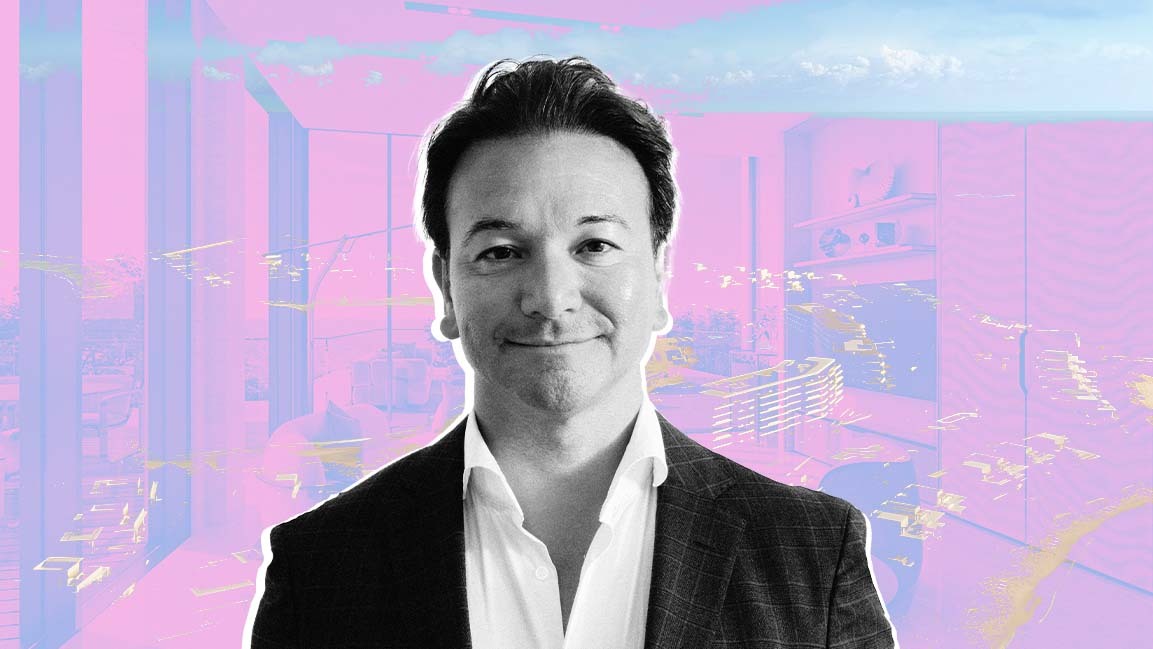
Hassan Morsy, partner and managing director at AlixPartners, says that comparing Saudi Arabia to Australia right now is “a bit of an unfair stretch.” Still, he notes, “It’s definitely a real shift, and the jump is real,” though by some estimates, Saudi Arabia’s exploration spending is still less than a quarter of Australia’s.
Official estimates of the kingdom’s mineral wealth have risen sharply. New surveys of the Arabian Shield increased the figure by 90% in less than 10 years, from about SR5 trillion in 2016 to SR9.4 trillion today, or roughly $2.5 trillion.
“Saudi Arabia is now one of the most prospective areas in the mining ecosystem globally,” says Morsy, pointing to what he calls a near-unanimous agreement among respected geologists around the world.
Maaden’s results show how quickly things are moving. The company added 7.8 million ounces of new gold resources in just one reporting period this year. Wilt’s $110 billion plan aims to triple the company’s phosphate and gold businesses and double its aluminum output within five years, which he described at the Riyadh forum as deploying capital “at an unprecedented pace.”
Maaden has formed a joint venture with US-based MP Materials and the US Department of Defense to build a rare-earths refinery in the kingdom, a project first announced during Crown Prince Mohammed bin Salman’s visit to Washington
However, most agree that geology and capital are the easy parts. “The next challenge is not discovering minerals; it is moving them efficiently, competitively, and reliably from mine to market,” says Gavin Erasmus, global sector head for mining and industrial projects at DHL Global Forwarding.
THE ECOSYSTEM MONEY CAN’T BUY
The workforce challenge is a long-term issue. Morsy says Saudi Arabia is “doing all the right things when it comes to the mining workforce,” including working with local and international universities to bring in technical knowledge and offering vocational training.
Still, he adds, “Saudi will need to rely on foreign expertise for the next decade in some shape or form, whether that’s blue-collar workers or technical positions.”
Erasmus puts the issue more directly. “Capital can be deployed quickly and infrastructure can be constructed,” he says. “Operational capability takes much longer to develop.”
As Saudi Arabia moves further into refining and advanced materials, he says the skills needed are increasingly like those in a mature industrial economy.
“Supply chains will increasingly resemble those found in advanced manufacturing sectors rather than traditional mining operations,” Erasmus says. “A shortage of a single component or raw material can disrupt an entire manufacturing value chain.”
By the end of March 2026, Saudi Arabia had 3,017 active mining licenses. However, having a license does not create a workforce. It does not provide mine managers, place geologists on-site, or resolve visa issues, according to a workforce readiness report from TASC Outsourcing.
Water is another challenge. Saudi Arabia already produces about 20% of the world’s desalinated water, according to Morsy, but even this will not be enough to keep up with the mining sector’s planned growth. He says mining companies will need to improve significantly at managing water.
Processing is the last big challenge. The kingdom has pursued a 400,000-tonne copper smelter through “multiple unsuccessful trials,” Morsy says, though he expects renewed regulatory support to finally get it built.
The sovereign wealth fund has changed its approach at Manara Minerals. Instead of taking small stakes in foreign mines, it is now investing directly to strengthen supply chains. This shows that the state is now supporting the more difficult, slower process of building value chains rather than just buying into them.
A REALISTIC OBJECTIVE
Morsy says the main risk is not cost overruns or falling commodity prices, which all capital-intensive companies face. “I’m more worried about Saudi continuing to signal serious indications to global mining companies that they’re still interested in their participation,” he says. “And that Maaden does not become the singular actor on the stage.”
This changes the focus. The real question is not whether Maaden can spend $110 billion, but whether that spending will attract the rest of the industry that Saudi Arabia needs.
Currently, only one foreign company is mining in Saudi Arabia. A few others, such as Vedanta, Zijin, Barrick, Alcoa, and Ivanhoe Electric, have licenses, joint ventures, or exploration stakes, but none operate on the same scale as Maaden.
Erasmus believes Saudi Arabia does not need to surpass the world’s leading processor to be important. “Saudi Arabia is unlikely to replace China, nor does it need to,” he says. “A more realistic objective is to become a complementary global processing hub that supports supply-chain diversification.”
The kingdom, he says, already has real advantages to build on: a strategic location linking Europe, Asia, and Africa; competitive energy costs; deep capital reserves; established industrial hubs at Ras Al-Khair and Jubail; and dedicated mining rail infrastructure that few emerging mining jurisdictions can match.
Erasmus says the best opportunities are in copper refining, battery-material processing, phosphate-based products, fertilizers, and certain critical-mineral value chains. The goal is not to control every part of the chain, but to secure specific, defensible segments.
For the kingdom to become a processing and trading hub linking Africa, Asia, Europe, and global markets, it needs competitors and partners within its borders, not just one national company making investments.
The remaining challenge is slower and more difficult than changing regulations or investing money. It is the gradual, year-after-year process of building the people, facilities, and partnerships needed to turn mineral resources into an export economy.
Erasmus says this kind of success depends on three things: a secure supply of raw materials, competitive worldwide operating and logistics costs, and customer trust in the reliability of Saudi supply chains.
Morsy estimates it will take a decade to reduce reliance on foreign workers. Maaden’s capital program is set for the same period. Both timelines are now moving forward together, with $110 billion at stake if they finish simultaneously.
“Success will ultimately depend on how effectively these capabilities are synchronized into a seamless, end-to-end ecosystem,” Erasmus says. It is not just about the mine, the smelter, or the training academy, but about all of them coming together in the right order and on the same timeline, so that no single part holds back the rest.
“The success of Saudi Arabia’s mining strategy will depend not only on what it builds, but on how effectively it secures supply, develops talent, and operates an integrated ecosystem over the long term,” he adds.