
- | 10:00 am
GISEC Global 2026 puts AI, cyber resilience and digital sovereignty in focus
GISEC Global 2026 highlights AI cybersecurity, digital sovereignty, deepfake threats and critical infrastructure protection.
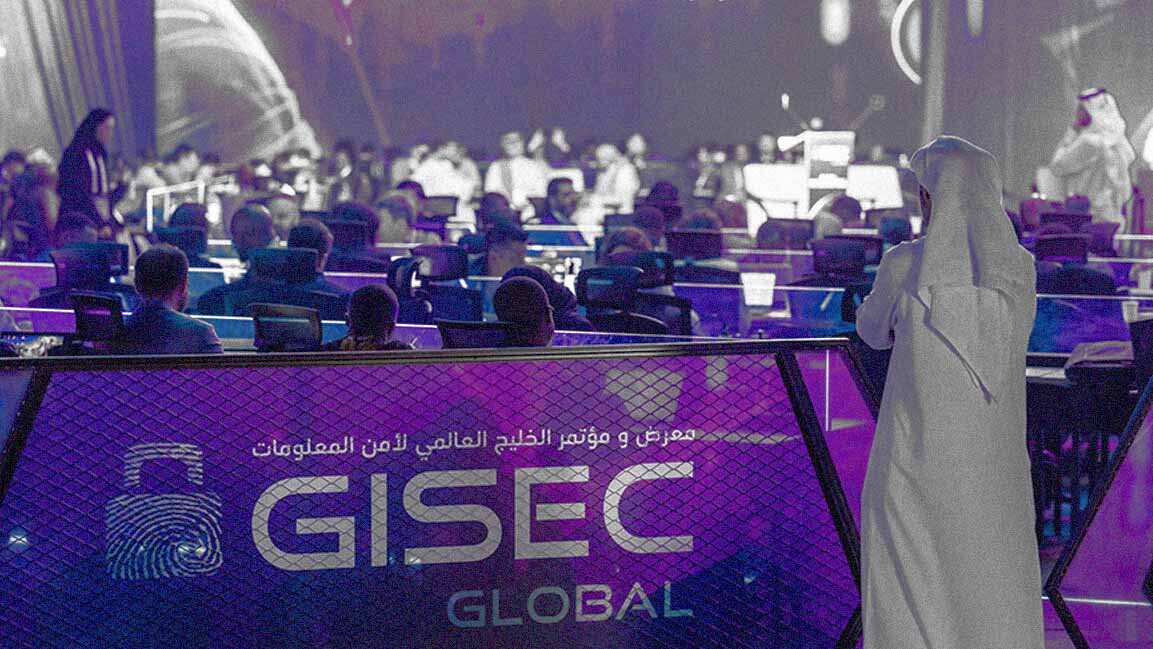


GISEC Global 2026 opened in Dubai this week, bringing together governments, cybersecurity leaders and technology companies as AI, digital security and critical infrastructure remain key priorities for the region.
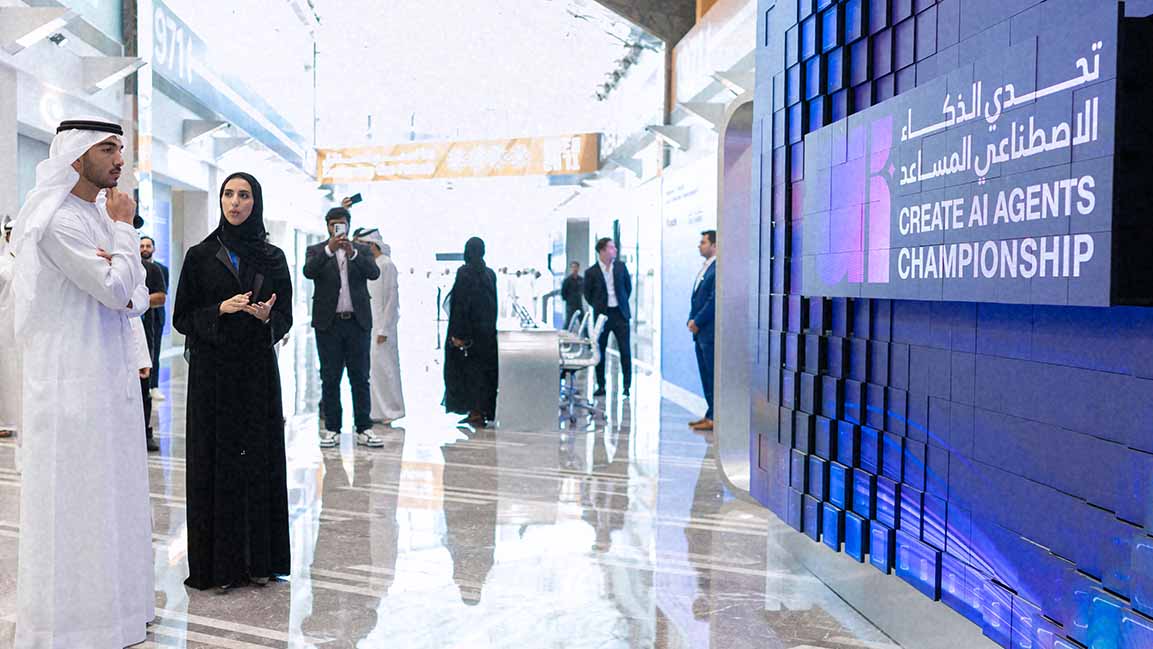
H.H. Sheikh Mohammed bin Rashid bin Mohammed bin Rashid Al Maktoum, the Vice President and Prime Minister of the UAE and the Ruler of Dubai, officially opened the 15th edition of the cybersecurity event at Dubai Exhibition Center, Expo City Dubai, where he toured the exhibition and was briefed on emerging technologies and cybersecurity solutions.
The event is supported by the UAE Cybersecurity Council, the Dubai Electronic Security Center (DESC), the Ministry of Interior, and the Dubai Police.
The growing scale of the event comes as cybersecurity investment across the Middle East and North Africa continues to gather pace.
According to Mordor Intelligence figures cited by GISEC, the regional cybersecurity market is projected to grow from $3.67 billion in 2026 to $6.54 billion by 2031.
AI THREATS
From the opening day, artificial intelligence emerged as one of the defining themes of GISEC Global 2026, with discussions examining how the technology is simultaneously reshaping cyber defense and giving attackers new tools to operate at greater speed and scale.
Across the Main Stage, experts focused on AI-enabled threats, national cyber resilience and the growing vulnerability of critical infrastructure, as governments and businesses grapple with a cybersecurity landscape increasingly intertwined with economic and national security.
During a session titled “Cybersecurity Is Defining the New Order,” Dr Mohamed Al Kuwaiti, Head of the UAE Cybersecurity Council, highlighted the strategic implications of AI-powered cyber threats and the need for a collective approach to resilience.
“Cybersecurity culture is the responsibility of everybody. Our first line of defense is still the community,” he said.
His comments reflected a broader shift running through the conference: cybersecurity is no longer being treated solely as an IT issue, but as a challenge that can affect economies, public services, infrastructure and national security.
UAE-BUILT AI
One of the major announcements at GISEC Global 2026 came from the UAE Cyber Security Council and Open Innovation AI, which launched a specialized artificial intelligence model developed in the UAE specifically for cybersecurity.
Built collaboratively by the two organizations, the model combines the Cyber Security Council’s domain expertise with Open Innovation AI’s AI engineering capabilities.
Unlike general-purpose AI models, it has been designed specifically for cybersecurity workflows, including vulnerability identification and assessment, secure code analysis and remediation, incident investigation, security advisory analysis, root-cause and impact analysis, patch assessment, and cyber-defense reasoning.
The model is intended to support cybersecurity professionals rather than replace human decision-making.
It can generate structured outputs that can be integrated into security platforms, enterprise systems and Security Operations Center workflows, potentially helping teams analyze threats and respond to incidents more efficiently.
A key part of the announcement is its focus on technological sovereignty.
The model can be deployed within private, controlled and sovereign environments, allowing organizations to retain greater control over sensitive cybersecurity data and AI workloads.
It was trained using Open Innovation AI’s AI Fabric, which uses distributed training and GPU optimization to support the development of AI models at scale.
The initiative also draws on proprietary cybersecurity data and the company’s own AI platform.
The launch reflects the UAE’s broader push to build advanced domestic capabilities at the intersection of artificial intelligence and cybersecurity, while reducing reliance on general-purpose technologies developed for less specialized applications.
It also aligns with the UAE National Strategy for Artificial Intelligence 2031 and wider efforts to strengthen digital resilience and sovereign technology capabilities.
“Artificial intelligence is rapidly changing the cybersecurity landscape,” said Al Kuwaiti.
Dr. Rachid Belmeskine, CTO and Co-Founder of Open Innovation AI, said the company’s ambition is to build advanced AI capabilities in the UAE for strategically important sectors.
“Our ambition is to build advanced AI capabilities in the UAE for strategic and high-impact domains. Cybersecurity is one of those domains,” he said.
Belmeskine added: “Together with CSC, we are combining deep cybersecurity expertise with our AI engineering and proprietary platform capabilities to develop a specialized model that can support security professionals while being deployed within controlled and sovereign environments.”
DEEPFAKE DEFENSE
DESC also unveiled three initiatives to strengthen Dubai’s cybersecurity capabilities.
At the forefront is SARAAB, an open-source AI model developed by an Emirati team to detect deepfake videos. DESC says it is the first model of its kind developed by a government entity in the Arab region.
The model will be made available through developer platforms, allowing researchers, AI engineers and cybersecurity professionals to test, build on and contribute to its development as deepfake technologies become increasingly sophisticated.
DESC also launched the Dubai Cyber Skills Framework, designed to establish a common reference for cybersecurity qualifications, certifications, training pathways and career progression.
A third initiative, the ISR Auditor Certification Program, will train auditors and information security professionals to assess compliance with Dubai’s Information Security Regulation using standardized methodologies and evidence-assessment practices.
GOVERNMENT COOPERATION
Institutional collaboration was another focus of the event, with DESC and the Financial Audit Authority signing an MoU to exchange expertise in cybersecurity, audit, oversight, and compliance.
The agreement will allow both entities to share technical and professional knowledge, develop joint training programs and workshops and collaborate on procedural guidelines, frameworks and audit methodologies.
The partnership is also intended to improve readiness around risks related to systems, data and the wider digital environment as government operations become increasingly connected.
CYBER SKILLS
Alongside new technologies and institutional agreements, Dubai is using GISEC Global 2026 to build practical cybersecurity skills across government.
The second Dubai Cyber Challenge, organized by DESC on September 16 and 17, brought together up to 100 cybersecurity professionals from Dubai government entities.
Participants competed in more than 30 practical challenges covering web security, digital forensics, reverse engineering, cryptography, and artificial intelligence, with a total prize pool of AED 100,000.
The competition uses scenarios designed to replicate real-world cybersecurity challenges, testing participants’ analytical, response and problem-solving capabilities while helping identify emerging cyber talent, according to the Emirates News Agency (WAM).
QUANTUM READINESS
Commercial cybersecurity providers also used GISEC to showcase technologies addressing threats emerging from advances in AI and quantum computing.
Help AG, the cybersecurity arm of e&, showcased solutions to help organizations prepare for a post-quantum environment.
Among the solutions being presented is Quantum 360, a three-layer service that scans cryptographic keys and algorithms, evaluates an organization’s readiness to adopt post-quantum cryptography, and provides decision-makers with recommendations for a secure transition.
Help AG also signed a strategic security partnership with Aqaar in Ajman, with additional agreements expected during the exhibition, according to WAM.
AI IN THE SOC
Paramount Computer Systems, meanwhile, launched SoCMate, an AI-powered security investigation assistant designed to help Security Operations Center teams investigate threats using natural-language queries.
Currently available for Microsoft Sentinel, the UAE-developed tool connects fragmented security data and provides analysts with attack context and recommended next steps.
Paramount says investigations that typically take several hours could, in some cases, be reduced to about 8 to 10 minutes.
“Across the Middle East, organizations are expanding digital services, cloud environments and connected infrastructure at speed,” said Premchand Kurup, CEO of Paramount. “That creates a clear need for continuous security monitoring that can operate 24×7 without depending solely on scarce specialist resources.”
Paramount is also developing solutions to help organizations adopt AI while complying with UAE security and regulatory requirements.
Hala Al Saadi, Vice President of Cloud Security at Paramount Computer Systems, told WAM that the increased use of AI in cyberattacks has created a need for AI-powered defensive tools capable of identifying threats before they escalate into full-scale incidents.
CRITICAL INFRASTRUCTURE
Sessions focused on oil and gas and critical infrastructure explored how attacks targeting operational technology, sensors and digital twins can move cyber risk beyond conventional IT environments.
Experts highlighted the potential for cyber incidents to create physical, operational and safety consequences, increasing the need for organizations to prepare for disruptions across both digital and physical systems.
Amer Sharaf, CEO of the Cyber Security Systems and Services Sector at DESC, also outlined Dubai’s approach to resilience against AI-powered threats, highlighting AI-enabled defense, trusted digital identity, resilience by design and the importance of the “human firewall.”
LIVE CYBER DRILLS
The conference program was accompanied by live ethical hacking and open-source intelligence demonstrations, the GISEC Decode competition, and the School of Cyber Defense, giving attendees opportunities to test their cybersecurity skills in practical scenarios.
This year also marked the launch of the inaugural Cyber First Leadership Summit, themed, “Securing a Cyber-First New Digital Order.”
The summit brought together policymakers, regulators and cybersecurity executives to examine how governments and businesses can respond to a digital environment in which AI, national security and economic resilience are increasingly interconnected.
At an invitation-only Global Leadership Roundtable focused on protecting the $28 trillion digital economy, government and industry executives also examined AI sovereignty, cyber resilience and the security of technologies underpinning the global economy.

Featured Videos
Today's Top Stories:
More Top Stories:



FROM OUR PARTNERS