- | 9:00 am
How the hottest places on Earth are becoming the world’s innovation labs
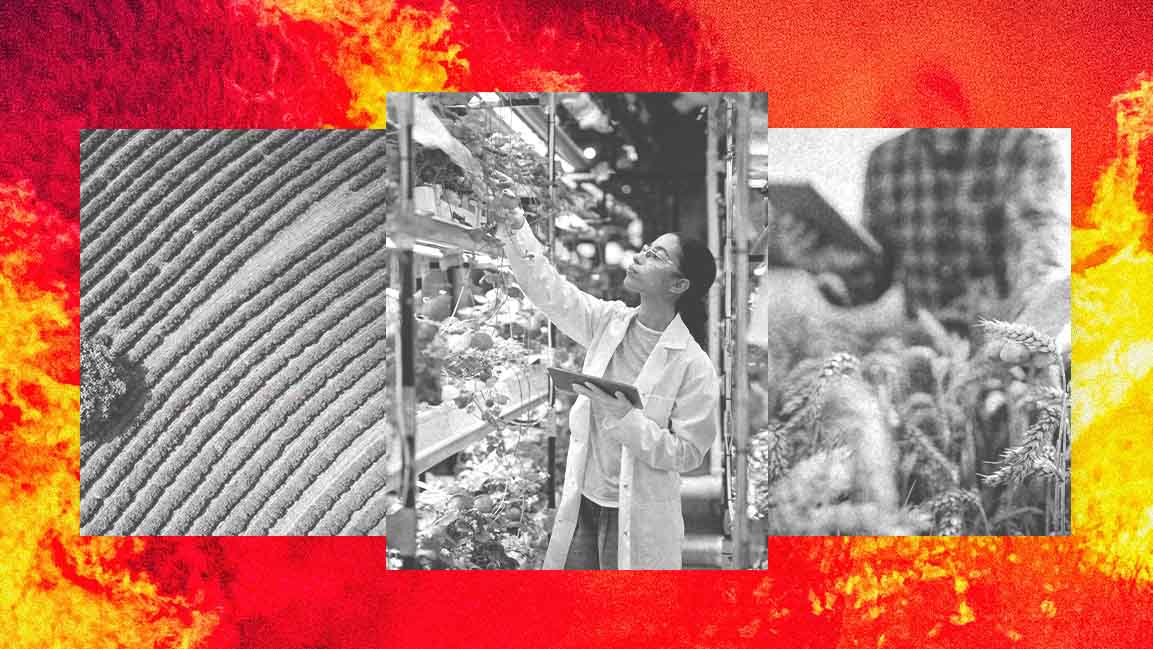
From seaweed-cooling systems to AI-powered agricultural drones, a new generation of founders is rethinking how cities, food systems, and communities survive extreme heat.
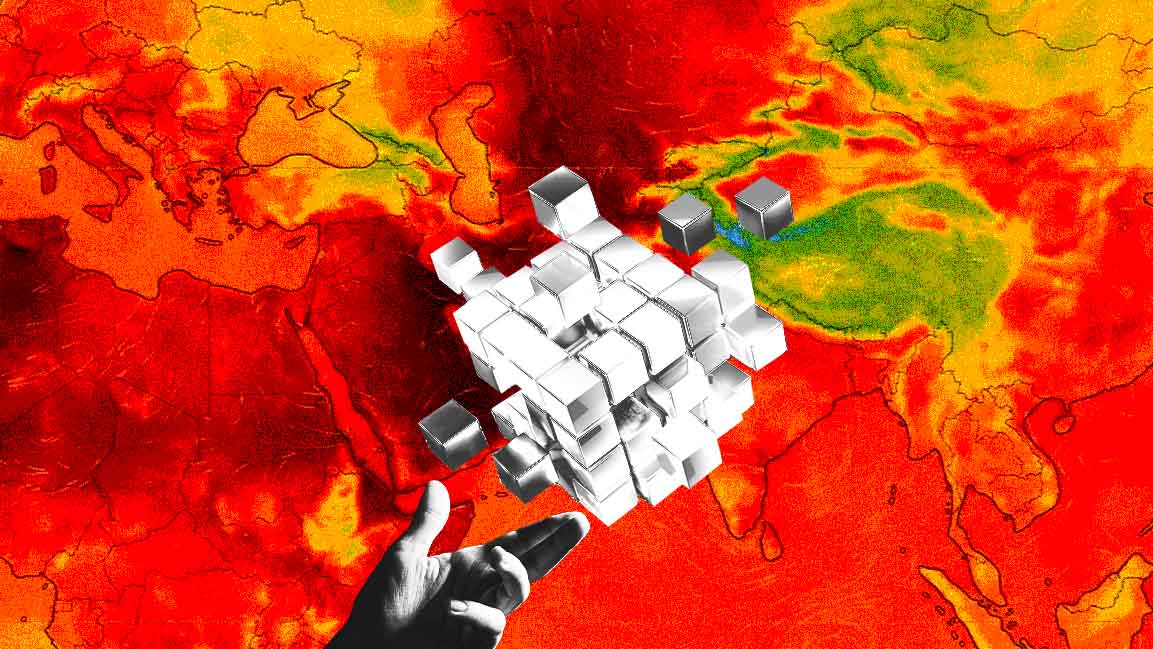


During summer, many areas in the Middle East, North Africa, and the Indian subcontinent experience intense heat. Metal surfaces burn to the touch, cars heat up like ovens, and batteries can overheat fast. People avoid public spaces, and neighborhoods look for ways to stay cool and find shade.
In some regions, temperatures can go above 50°C. Dealing with extreme heat has become a regular struggle, and increasingly, the best innovative ideas for coping are coming from communities that are living through climate extremes.
There’s a new kind of climate entrepreneurship that focuses on survival—helping farmers spot crop problems early, making cooling systems from ocean waste, and reviving old cooling methods using local materials.
THE GLOBAL SOUTH AS A CLIMATE LABORATORY
Expo City Dubai Foundation’s latest edition of its Global Innovators Program focused specifically on extreme heat adaptation, and the response was telling. More than 1,000 startups from 84 countries applied.
“When we thought about extreme heat, we thought about urgency,” says Yousuf Caires, executive director of Expo City Dubai Foundation.
“Extreme heat disproportionately impacts countries in the Global South that are often less equipped to deal with prolonged drought, water scarcity, and the displacement that follows,” Caires adds.
The selected cohort included Moroccan builders reviving passive cooling construction methods, Egyptian entrepreneurs transforming ocean waste into cooling materials, and Indian agritech startups using drones to predict crop stress before harvests fail.
For Caires, the range of ideas reflected a larger shift underway. The foundation’s latest cohort focuses specifically on startups building for communities across the Global South, where prolonged drought, rising temperatures, and resource scarcity are already reshaping livelihoods and accelerating migration pressures.
NOT EVERY CLIMATE SOLUTION LOOKS FUTURISTIC
One surprising finding is that future solutions for extreme heat might not look like the high-tech ideas we usually expect from climate technology.
Some rely on ancient building techniques. Others simply convince farmers to plant differently.
“We are not a high-tech-only program,” Caires says. “We care about high-tech, low-tech, and sometimes no-tech at all.”
That distinction matters because extreme heat is forcing founders to rethink what resilience actually means.
For decades, technology ecosystems optimized for speed, efficiency, and scale under relatively stable environmental assumptions. But as climate volatility intensifies, startups are increasingly designing around durability, adaptability, and local survivability instead.
The result is a new generation of businesses in which climate adaptation is deeply intertwined with local culture, material availability, and community behavior.
BUILDING COOLING SYSTEMS FROM OCEAN WASTE
Egyptian startup Visenleer is building passive cooling systems using seaweed-based yarns and discarded marine waste collected from coastal environments. Moemen Sobh, founder and CEO of Visenleer, says the idea emerged from observing how rising temperatures were destabilizing both ecosystems and the livelihoods of fishing communities across the region.
“I come from a family of fishermen,” Sobh says. “After observing the overlapping crises in our coastal environments caused by rising temperatures, specifically waste leakage, fragile livelihoods, and increased exposure to extreme heat, we realized we could reimagine ocean waste and seaweed-based yarns into sustainable, passive-cooling materials.”
The company’s cooling solution, FisherShade, is designed for use in schools, clinics, and public markets that are exposed to intense heat.
But technology is just one part of their approach.
“We specifically designed this project so that the systems are owned and serviced by local fishing cooperatives,” Sobh says. “That allows us to build dignified economic opportunities and provide a stable income for fishers who are too often left behind.”
Focusing on the community is becoming a key feature of climate adaptation startups in areas most affected by heat.
“The primary drivers behind our project are ecosystem restoration, waste reduction, and the urgent need to protect vulnerable populations from extreme heat,” says Sobh.
He adds, “Through our community-centered approach, we have already diverted approximately 20 tonnes of ocean-bound plastic and upcycled roughly 60,000 fish skins.”
WHY LOCAL SOLUTIONS MAY SCALE FASTER
“Communities cannot be passive recipients,” Caires says. “The best projects are the ones where communities are involved from the beginning.”
This becomes especially important in regions where imported technologies may be expensive, difficult to maintain, or incompatible with local infrastructure realities.
In Morocco, one of the program’s startups is reviving traditional, cooling-oriented construction techniques that use locally sourced materials and regional craftsmanship.
“When a solution uses local resources and traditional craftsmanship, it can scale faster because communities already understand it, trust it, and know how to build it,” Caires says.
This matters because, as the world gets hotter, some of the best solutions might come from updating old systems designed for tough climates, not just inventing new ones.
THE RISE OF PREDICTIVE CLIMATE TECHNOLOGY
Indian agritech startup Fuselage Innovations is approaching the heat problem from the opposite direction, through predictive analytics, drones, and digital farmland diagnostics.
Founded after the 2018 Kerala floods devastated the founders’ family farmland, the company now develops uncrewed aerial vehicles capable of identifying crop stress and heat-related agricultural vulnerabilities before visible damage occurs.
“Farming is still largely reactive, while the conditions demand predictive, heat-resilient approaches,” says Devan Chandrasekharan, Managing Director of Fuselage Innovations.
The startup’s drone systems monitor soil conditions, crop stress, and overall agricultural health in real time, helping farmers intervene earlier before losses escalate.
“Current farming practices lack timely insights, which leads to delayed decisions and higher input costs,” Chandrasekharan says. “Our project addresses this by enabling early detection of crop stress using aerial sensing and analytics, allowing farmers to take targeted, timely actions.”
Seaweed cooling systems and AI-powered farm drones might seem very different, but both are answers to the same problem: extreme heat is changing how everything works.
THE BUSINESS OF ADAPTATION
In the past, most climate innovations aimed to cut emissions, switch to clean energy, or make industries less polluting. These efforts remain important, but adaptation is now becoming its own area of business.
With heatwaves worsening around the world, cities and businesses now face a pressing question: how can people continue to live and work in places that are becoming harder to endure?
That challenge is creating entirely new markets for cooling infrastructure, heat-resilient materials, agricultural adaptation, water efficiency, and climate-responsive urban systems.
It is also changing the psychology of entrepreneurship itself.
“The mindset is: there is a problem, and I’m going to make it my problem,” Caires says.
In the last few years, Expo City Dubai Foundation has reviewed almost 12,000 startup applications from around the world and has funded over 200 companies in 97 countries. Caires says the best founders are usually not tied to just one technology.
Instead, they become obsessed with solving a specific problem.
“The best founders fall in love with the problem, not the solution,” he says.
WHY THE HOTTEST CITIES MAY SHAPE THE FUTURE
This way of thinking may become even more important in climate adaptation, where conditions change quickly and fixed technologies can quickly become outdated.
“If your commitment is solving the problem, you keep adapting the solution until something works,” Caires says.
The Gulf itself is becoming an increasingly important laboratory for this kind of thinking.
For decades, cities like Dubai have operated under environmental conditions that much of the world is only beginning to experience at scale. Heat management, water efficiency, cooling systems, and climate-responsive urban planning are already deeply embedded in daily operations across the region.
As global temperatures rise, that accumulated experience is becoming strategically valuable.
“In Dubai, there’s always this feeling that you should be building something, solving something,” Caires says.
That mindset is beginning to shape how startups think about climate resilience more broadly, not just as sustainability branding but as an operational necessity.
And unlike earlier eras of climate technology, which often centered on Western markets, many of today’s adaptation startups are emerging directly from communities already confronting environmental disruption firsthand.
The result is innovation that often feels less abstract and more immediate.
Some solutions use advanced AI and data analysis, while others revert to older passive cooling designs. Many mix both approaches.
But increasingly, the common denominator is adaptability.
“We cannot prevent the heat from happening,” Caires says. “But we can adapt.”
Planning for hotter conditions is no longer just a sustainability effort. It is now a basic need for cities, food systems, and communities to keep working and stay livable. And the startups figuring out how to work in extreme heat today could help guide how the rest of the world adapts in the future.