- | 9:00 am
The Gulf is still selling oil for dollars. It’s just spending them very differently
A shift toward domestic investment, regional markets and strategic partnerships is reshaping Gulf capital flows, according to some. Others aren't so sure the shift is real.
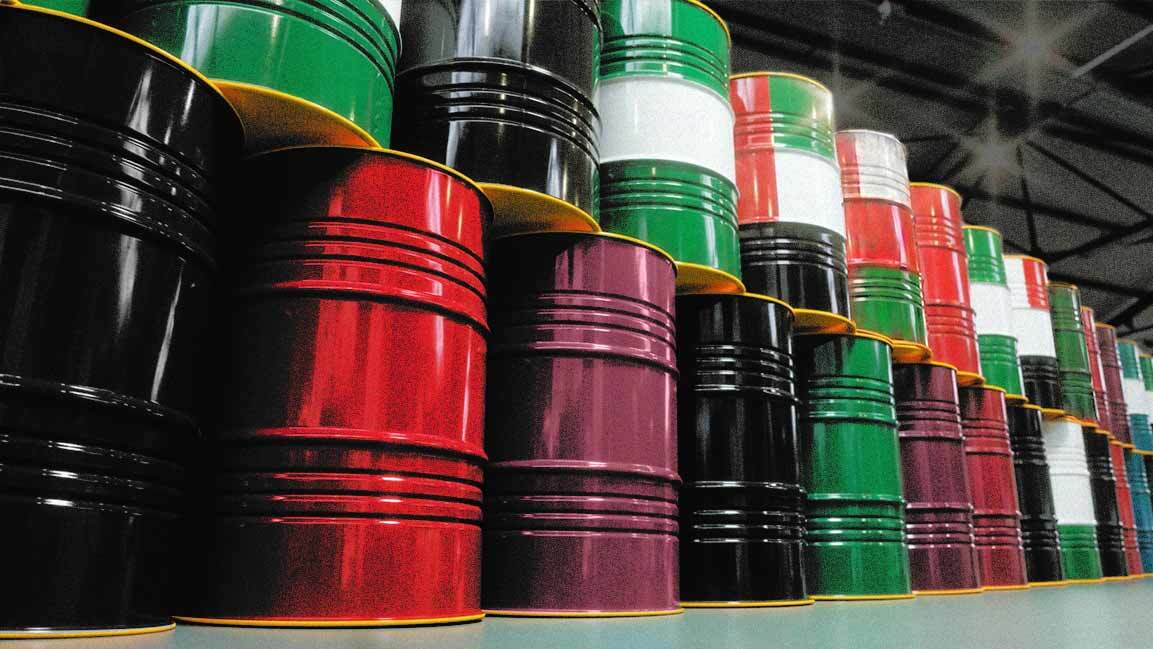


There’s a particular kind of problem that comes with having more oil money than your economy can absorb, and for fifty years, the Gulf’s answer was deceptively simple. Send it elsewhere. Mostly to the US, mostly into Treasury bonds, in a cycle economists call petrodollar recycling – oil sold for dollars, dollars reinvested in dollar-denominated assets, round and round. It worked, in the sense that any well-parked surplus technically works. Still, it functioned more as a holding pattern than a deliberate strategy, a reliable place for capital rather than a plan for what that capital could build.
That’s no longer the only option. The region has spent the last decade building the industries, capital markets and infrastructure to put its own petrodollars to work at home, and sovereign wealth funds have become the ones deciding whether the money still needs to leave at all.
For decades, the petrodollar system routed Gulf oil revenue almost automatically through Western financial markets, a default that made sense for its time. That default has started to loosen. With more options on the table, the region is weighing where this capital can do the most for the Gulf itself, and what that shift could mean for markets elsewhere as the answer increasingly points inward.
SAME MONEY, DIFFERENT INSTINCTS
John Calabrese, Assistant Professor at American University and Senior Fellow at the Middle East Institute, points to how the old system worked. Oil revenue is routed mostly into US Treasuries and banks in London and New York, chosen for safety and liquidity above all else. What’s eroding that arrangement, he says, goes beyond simple diversification. “They’re wary of over-exposure to US politics and sanctions risk, and they have developed extensive economic ties with Asian countries,” he says.
Not everyone reads this as a genuine break from the dollar. Steffen Hertog, Professor at the London School of Economics and Political Science and a former advisor at the Gulf Research Center, is skeptical. “There has been some diversification in how petrodollar earnings are invested abroad, with a relative shift towards Asia and emerging markets,” he says. Oil is still priced and traded in dollars, and dollar assets still dominate GCC portfolios, in his view.
He argues the underlying currency hasn’t shifted. Instead, the evolution has been in how money is managed, with sovereign wealth funds becoming more active in direct investments and allocating more to alternative assets, while the US dollar remains firmly at the center.
The change looks less like a currency question and more like a mindset shift to Farah Mourad, Senior Market Analyst at IG Group. Where the old approach treated foreign bonds as a safe place to store surplus wealth, the new one treats capital as something that has to earn its keep.
“Now the priority has flipped. Capital has to work harder. It needs to generate active returns while also bringing technology, expertise, and supply chains directly into the region,” she says. She describes it plainly as a move from passive saving to strategic investing.
That framing gets a harder edge from Amjad Ahmad, Managing Partner and Emerging Markets Advisor at 500 Global, who disputes the idea that politics sits at the center of any of this. He argues the shift predates today’s geopolitical tensions. “As Treasury yields fell, increasingly sophisticated Gulf allocators, shaped by long relationships with top global asset managers, pushed further into private markets and direct equity to pursue better returns,” he says.
That financial recalibration, he argues, coincided with a broader recognition that oil dependence and heavy public spending had a shelf life. “Diversifying the portfolio and the economy became the same project,” he says.
Omar Allam, CEO and Chief Investment Officer at Allam Global Ventures, frames the shift as entirely structural rather than incremental. Petrodollar recycling used to be one-dimensional, he says, routing liquidity to Wall Street or London and collecting a passive return, a model he describes as fading fast. With non-oil GDP growth now outpacing hydrocarbon growth across the region, Allam argues that GCC sovereign wealth funds have evolved from passive asset managers into active architects, investing in strategic assets, both hard and soft, and in the global supply chains that tie their domestic and regional economies into the wider world.
“Oil revenue is being recycled directly into local high-growth sectors, under hard national strategies like Saudi Vision 2030, Qatar National Vision 2030 and Dubai’s D33, to build a knowledge-based economy and a permanent domestic and digital industrial base,” he says.
SOVEREIGN MONEY, HOMEGROWN MARKETS
Gulf sovereign wealth funds investing at home converge on one word before splitting on how far that word actually goes. That word is infrastructure.
Calabrese frames the shift in the broadest terms. Funds like the Public Investment Fund, Abu Dhabi Investment Authority and Qatar Investment Authority are building out local stock markets, private equity and venture ecosystems, giving Gulf states homegrown financial infrastructure instead of functioning as a deposit base for Western banks.
Zoom in on the mechanism, though, and the picture gets more specific. It isn’t just capital showing up domestically, Mourad believes. It’s capital showing up in a role that changes how markets behave.
“These funds are now acting as cornerstone investors for major domestic projects, and that’s maturing local markets quickly,” she says. Instead of exporting liquidity to New York or London, these funds are creating local listings and deepening regional debt markets, giving exchanges like Tadawul the scale to be taken seriously on a global stage. Once a sovereign fund takes the first position in a market, she argues, international investors tend to follow, almost as a matter of course.
Ahmad backs that story with numbers that make the shift hard to argue with. He traces the inward turn to motives that stacked up more than a decade ago, economic diversification, political influence, and supply chain resilience, and points to the scale of what followed. “MENA venture capital funding grew from roughly $200 million in 2015 to $4 billion in 2025, a nearly 20x increase, as sovereign and family capital anchored the region’s first generation of institutional fund managers,” he says.
For Ahmad, the significance isn’t just the dollar figure. It’s what that capital built underneath it, a stack of venture capital, private equity, private credit and secondaries that barely existed a few years ago, now feeding a pipeline of tech IPOs starting to diversify public markets long dominated by state-owned enterprises, banks and energy companies.
Allam backs the scale of that shift with figures that are hard to ignore. GCC sovereign wealth funds now manage almost $6 trillion, more than 40 percent of the global total, though he argues the number itself isn’t the point. “What matters is not the scale, it is the discipline, deliberate and deployed with purpose,” he says. He points to GCC issuers raising more than $130 billion in bonds and sukuk in a single year, with IPO volumes topping $20 billion, evidence, in his view, of exactly the pattern Mourad describes.
“When a sovereign of that size anchors a listing, it takes early risk off the table and pulls private and foreign capital in behind it,” he says. That, he argues, is how deep markets are built that are less dependent on Western exchanges, a departure from strategies he sees as no longer suited to today’s fast-paced global investment environment.
Not everyone finds the story that clean. Hertog pushes back on the assumption running through the other three accounts, that sovereign investment automatically deepens domestic capital markets. “I am not sure there is a direct link,” he says. The connection only holds, in his view, when funds actually divest state-owned holdings into public markets, and not every fund does that consistently, a reminder that anchoring a project and growing a market are related, but not the same thing.
Justin Alexander, a non-resident fellow at the Arab Gulf States Institute, goes further still, arguing there has been no significant shift in this direction at all. Certain funds have always been, in part, domestically focused, including those that evolved from holding companies for state-owned enterprises, such as Mumtalakat in Bahrain, ADQ in Abu Dhabi, and PIF in Saudi Arabia.
If anything, he sees the movement running in the opposite direction, with some of these domestic-focused funds taking on more international investment in recent years, not less.
The exceptions he does point to are modest, Qatar Investment Authority’s $3 billion allocation to local and regional venture capital funds, and the formation of the Oman Future Fund as a domestic accelerator, and he’s careful to note that occasional sovereign fund investment into domestic equity markets, aside from long-term strategic holdings, remains limited, with public pension funds playing a larger role in that space than sovereign wealth funds do.
NEW PARTNERS, SAME OLD CURRENCY
What most people overlook about these deals, according to Allam, is how they’re actually structured.
“They begin at the government-to-government level, through strategic partnership councils and sovereign memoranda, and those frameworks unlock the capital at the business level,” he says. The state sets the terms and de-risks the relationship, in his account, while sovereign funds and national champions follow with the actual capital.
That marks a departure from the old model of simply lowering tariffs, giving way instead to economic partnerships that pair market access with committed capital and foreign direct investment.
Allam is also careful to frame this as truly reciprocal, not one-directional. With supply chains factored in from the start, he argues, a dollar invested in UAE infrastructure or a sector of economic priority is, in effect, also a dollar invested in the partner country, the ones who engineer, supply and build alongside it, with both sides sharing the return. “A petrodollar surplus that once bought a bond now buys a position in a strategic industry and a relationship with a fast-growing partner,” he says.
The debate becomes less settled once the conversation shifts beyond the Gulf itself. Bilateral partnerships with China, India and other emerging economies are clearly growing, but whether they fundamentally alter where petrodollars end up, or simply broaden the range of destinations, is far less agreed upon. “It’s part of the picture, but not the whole thing,” says Calabrese.
He points to foreign investors showing up in Gulf markets themselves, drawn by market reforms and by regional exchanges being added to major emerging-market indexes, resulting in a mix of homegrown capital and genuine outside interest instead of a one-directional shift eastward. What that capital is actually being used for, in his view, has changed just as much as where it comes from.
Earlier, diversification mostly meant parking oil revenue in passive financial assets abroad, effectively a rainy-day fund. “Today it means actively funding the non-oil economy at home, mega and giga-projects, tourism, manufacturing, advanced tech,” he says, describing petrodollar revenue as increasingly aimed at building lasting economic capacity more than simply accumulating a buffer.
Mourad reads the Asia pivot as more decisive, framing it not merely as a marginal adjustment but as a structural evolution.
“This reflects a move from depending on one financial system to operating across several,” she says. In her account, deploying capital into China and India serves a dual purpose: securing long-term energy demand while also taking equity stakes in fast-growing technology and industrial sectors across Asia. That, she argues, diversifies both the Gulf’s investment exposure and its long-term economic relationships beyond traditional Western markets.
However, Allam sees the same dynamic playing out with even more precision. Growth on Tadawul and ADX, he argues, isn’t accidental retail volume, it’s highly calculated, and the same pattern shows up on the Qatar Stock Exchange. But he’s careful to note that redirected oil revenue only starts the process.
What keeps foreign capital coming back, he says, is the underlying market infrastructure, common-law centers like DIFC, ADGM and QFC, inclusion in indexes like MSCI and FTSE, genuine regulatory reform, and a steady pipeline of privatizations.
Not everyone is convinced the shift runs that deep. Hertog is the most restrained voice on both fronts. On the Asia pivot, he cautions against reading too much into it. “There is some geographic diversification, but it doesn’t supplant the US dollar given the unrivaled depth of US capital markets,” he says.
He’s similarly skeptical about how much sovereign capital is driving the exchange boom itself. “Not a huge amount as sovereign wealth funds don’t actively deploy a lot of capital on local stock markets,” he says. The holdings these funds do have on regional exchanges, he explains, are largely legacy positions, while much of the new investment is coming from private investors rather than the funds themselves.
PASSIVE WEALTH, ACTIVE STRATEGY
Diversification, in Ahmad’s telling, was once a misnomer. He describes the old approach as recycling for safety and yield, US Treasuries, blue-chip Western equities, trophy real estate. “Today it’s about developing domestic industries that will drive private-sector growth and diversification across finance, tourism, logistics, advanced manufacturing, AI infrastructure, and other emerging technologies,” he says.
Gulf states are also using long-standing relationships with asset managers and international companies to structure local deals aimed at securing access to knowledge, technology, markets and key products. The capital that results, in his view, is more patient and more strategic, built to own and control assets outright instead of simply gaining exposure to someone else’s economy.
That earlier approach wasn’t really diversification at all, in Mourad’s view. “A decade ago, the Gulf didn’t truly diversify, they prioritized safety, concentrating their oil wealth in low-risk, passive Western bonds,” she says. That has evolved into a dual strategy focused on growth and risk management, with sovereign funds moving into high-growth sectors like AI, fintech and renewables instead of holding paper assets that lose value to inflation. She frames it as more than portfolio management, the mechanism transforming the Gulf from an oil exporter into a self-sustaining regional hub for innovation and trade.
Hertog offers a more compact version of the same trend. More capital, he says, is now deployed into actively managed assets in strategic sectors such as renewables, tech, defense and logistics, both locally and internationally.
For years, petrodollars bought foreign real estate and sovereign debt, according to Allam. Today, he says, they buy the future of the domestic economy. Diversification, in his account, has moved from aspiration to operations, with budgets, deadlines and accountability now attached to it. He points to a tightly interconnected approach behind the recycling itself, anchor investments in sports, media and entertainment pulling an entire value chain behind them, spanning real estate, travel, tourism, hospitality, transport and logistics, with technology acting as the thread that ties it all together.
None of this happens without consequences for who gets to manage the money. Western financial institutions built substantial businesses in the Gulf on the strength of the old model, and all five sources describe that relationship changing in real time.
For Calabrese, it comes down to a shift in leverage. “Gulf states have more leverage and are behaving more like partners than the clients of Western banks and asset managers,” he says.
Western institutions have established a local presence and are now co-investing alongside their advisory work, putting them in direct competition with local players and Asian institutions for the same mandates. He also points to a wider consequence beyond the Gulf itself, with other emerging markets also competing for the same pool of capital.
Those able to offer partnership value, technology transfer, job creation and local content will have an edge over those offering yield alone, and with more capital staying inside the Gulf, there may simply be less left over for everyone else to compete for.
Mourad sees the relationship evolving in much the same direction. “Western banks are no longer the exclusive gatekeepers of Gulf wealth,” she says. Institutions seeking access to these mandates increasingly need a permanent on-the-ground presence rather than treating the Gulf as another regional outpost.
Ahmad frames that same dynamic as a test. The relationship with Western financial institutions, he says, is shifting from transactional to strategic, with Gulf investors raising their expectations for what capital should buy, not just access to passive funds, but direct exposure to deals, attractive co-investment rights, and a lasting commitment to reinvesting locally.
“Western banks and asset managers willing to put skin in the game locally, by building teams on the ground, backing domestic companies, and recycling fees and profits into the region, remain valued partners,” he says. Those still treating the Gulf purely as a source of outbound liquidity are finding it harder to sustain the relationship.
Hertog agrees that expectations have changed. “There is a stronger expectation that Western banks and funds have a strong local presence and co-invest in local assets,” he says.
Allam puts a finer point on the same shift. “There is a myth worth killing, Gulf capital is not a blank check. Any successful investor or operator in the region knows it,” he says. These funds now shape the terms of engagement outright, in his account, deciding what gets built, how a deal is structured, and which sectors and geographies matter, while expecting global partners to act as real co-strategists with a real stake in the outcome. He describes the dynamic as reciprocal by design.
A Gulf sovereign taking a position positions global investors to benefit alongside it, just as global partners bring a deal or a technology, positioning the sovereign in return. The firms winning mandates here, he says, are the ones with physical presence and their own capital at work in the region, as opposed to those flying in for the pitch and flying back out.
SELECTIVE MONEY, SELECTIVE WINNERS
If Gulf capital is becoming more selective, the natural question is what that means for everyone else competing for it. Mourad sees a real squeeze coming. “As the Gulf directs more capital inward and toward specific strategic partners, other developing economies chasing the same money may feel the squeeze,” she says. In her view, the terms of engagement have changed, and attracting Gulf investment now requires offering something commercially mutual, whether that’s access to critical supply chains, infrastructure, or technology partnerships, instead of relying solely on the promise of a decent return.
The pressure, in Calabrese’s account, comes from two directions at once. Developing countries aren’t just competing with each other for Gulf money, he says; they’re also competing with the Gulf itself, as more of that capital is staying home or circulating within the region rather than flowing further into global markets.
Layered on top of that, Gulf investors have grown pickier about what they want in return. “They want a real relationship, a piece of the technology, having local workers trained or hired, or forging a long-term strategic tie,” he says. Countries able to offer that broader value proposition, he argues, will fare better than those with little to offer beyond an attractive yield.
Hertog, however, sees the picture differently. He argues that the Gulf’s shift toward a more diversified, actively managed investment model has expanded opportunities for many emerging markets, enabling them to attract Gulf capital into strategic sectors where the GCC previously had little or no presence, including minerals and logistics.
Allam sees the dynamic as more layered than either a squeeze or an opening alone. “It cuts both ways,” he says. The Gulf, in his account, has become a major source of capital for other developing economies, a long-horizon ally active from Egypt and Africa to India and Asia, while simultaneously competing hard for the same capital, talent and corporate headquarters, backed by zero percent corporate tax in free zones, golden visas and common-law courts.
The bar for everyone else, he argues, has been raised. Markets that offer clear rules, stability and the chance to co-invest alongside a sovereign anchor will draw both Gulf and global money. Those who can’t will increasingly find themselves competing for a smaller and more selective pool of investment.