- | 9:00 am
What should the future look like? Inside the tech-funded program to create a new aesthetic
Billionaire Stripe CEO Patrick Collison and libertarian economist Tyler Cowen have created a grant program to replace modernism—and define a new look for the 21st century.



In late December, Stripe CEO and tech billionaire Patrick Collison and libertarian economist Tyler Cowen published a one-page website with the provocative title “A Call for New Aesthetics.”
In around 500 words, the two longtime collaborators outlined an informal grant program they were launching to fund artists and thinkers who want to define the aesthetic of the 21st century. The 20th century, they noted, was largely influenced by a design ethos that emerged from the Bauhaus school of modernist art, architecture, and craft that launched in Germany in 1919. In the 21st century, they argued, perhaps it’s time for something new.
Collison and Cowen offered no specifics on what that might look like. But for anyone with an idea for what shape a new aesthetic might take, they pledged to issue grants ranging from $5,000 to $250,000.
And plenty of people had ideas. Hundreds of ideas poured in. “We had to close applications after a few weeks because there were so many,” Collison wrote on X.
In May, Collison and Cowen announced that they had issued 28 grants, and the projects range widely. There are designers exploring new architectural styles and languages. There are publishers experimenting with bookmaking. There are technologists examining the role of design in software, and the role of code in design.
There are sculptors, painters, illustrators, YouTubers, hardware designers, and makers. One is “rethinking what personal computing should be when the software inside it can think.” Another is building a “silent, analog meditation timer.” Another wants to “depict the projected abstraction of life as perceived by life.”
As the CEO of a $159 billion company, Collison can afford to sow these aesthetic seeds, and spurring cultural change has become something of a hobby for him. Back in 2019, he and Cowen argued in The Atlantic for the development of “progress studies” to better understand how progress happens, and Stripe later acquired the ideas journal Works in Progress to further explore these concepts. Collison has also invested more directly in culture-shifting endeavors, including the blank-slate city-building project California Forever and the pro-housing group California YIMBY.
The call for new aesthetics is a headier extension of these interests, and a much more open-ended brief. To understand how Collison and Cowen’s provocation may translate into some new aesthetic movement—or multiple movements—Fast Company reached out to several grantees to learn about their work and what they plan to do with their grant money. (Collison and Cowen did not respond to an interview request.)

The birth of an aesthetic
Whatever comes from it, this is a novel attempt to create a new design movement. By sprinkling money with few strings attached, Collison and Cowen are taking a light-handed approach to spurring change. But they’re not the first to explicitly try to launch a new design movement.
Sarah Lichtman, chairperson of the Pratt Institute’s history of art and design department, says there have been times in the past when wealthy patrons have created the conditions for new design movements to emerge, or even launched new design styles directly.
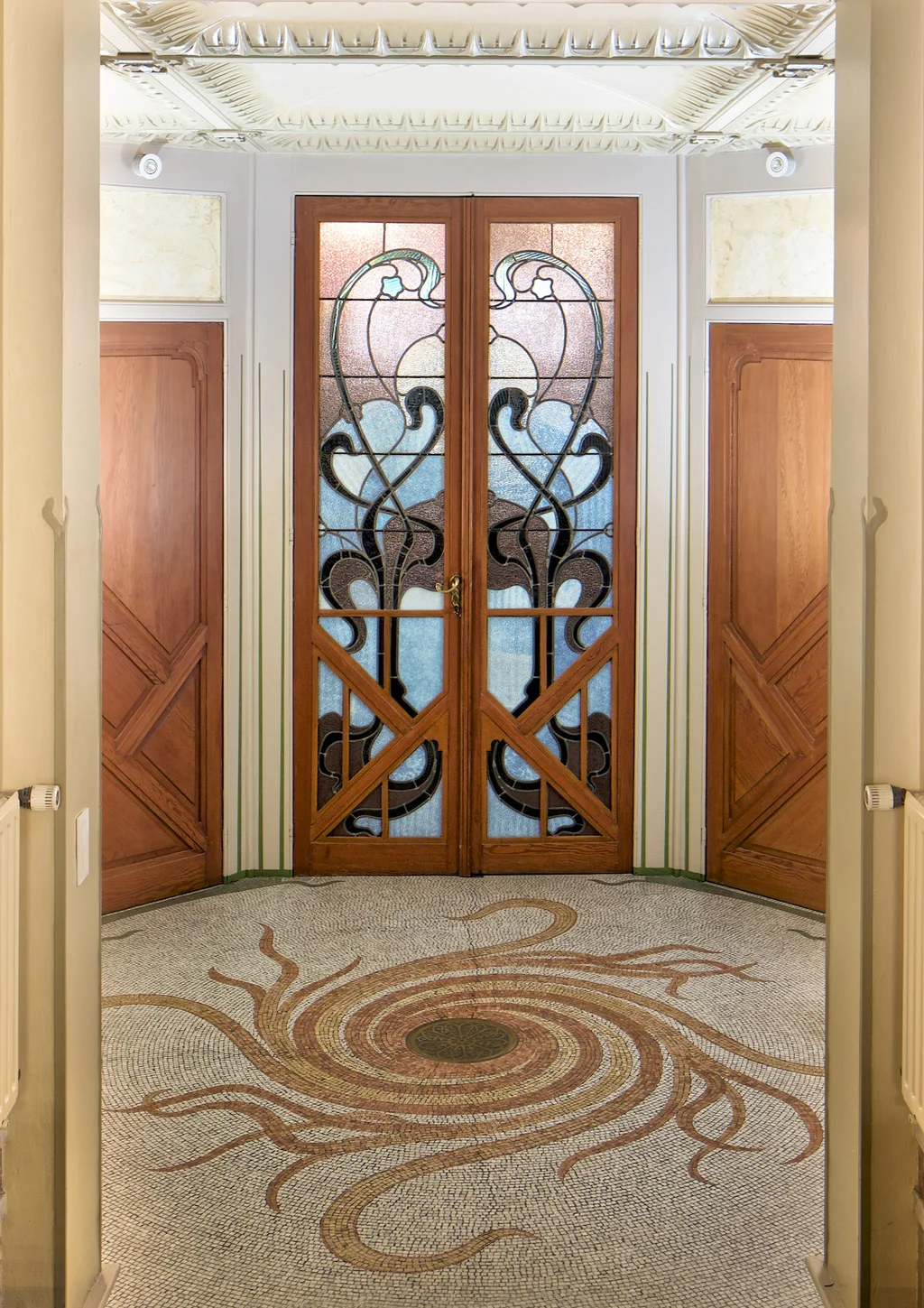
She points to Émile Tassel, a professor of descriptive geometry at the University of Brussels, who commissioned Belgian architect Victor Horta to design what is considered the first art nouveau building in 1893, spurring an architectural offshoot of a design movement that flourished for two decades. “Patrons have long been an important catalyst for design movements,” Lichtman says.
So have broader global conditions, from times of technological change to states of unrest and conflict. “Oftentimes, new design movements are spurred by economic, social, or political upheaval. Think of the Bauhaus after World War I or streamlining during the Great Depression,” Lichtman says. “As with artistic movements, design movements wanted to break from what came before and create a ‘style for the age.’”
The Bauhaus, which Collison and Cowen singled out in their initial call, arose at a dizzying moment of industrial and technological change bubbling up after the end of the first world war. These conditions led its founder, architect Walter Gropius, to propose a school that eliminated barriers between art, craft, and industry, infusing new production techniques and mass-produced materials into art and craft practices that had long been more bespoke.
This resulted in architecture’s modernist movement as well as groundbreaking evolutions in sculpture, textiles, and furniture design. As a formal school with an ideological bent, it’s no surprise that the Bauhaus ended up turning this methodology into a movement, and breaking from the past.
Collison and Cowen aren’t funding a school, though, so what comes out of their grant program is less likely to carry the same methodological focus as something like the Bauhaus. The 28 grants they’ve issued may result in 28 individual movements, or none at all. Collison and Cowen aren’t concerned.
“[We] are excited to see what they create,” Collison wrote when the projects were announced. “I don’t think we or anyone has found what the new aesthetic or new aesthetics are,” Cowen said in a podcast after the grants had been awarded. “I’m fine with that.”
After interviewing several grantees, it’s clear there’s a hunger for design approaches and projects that diverge from preexisting norms. In hearing about the work these grantees are proposing, a few big themes emerged, and they may help us understand what at least one wealthy instigator wants the future to look like.

After Modernism
Many of the New Aesthetics grantees are doing work in the realm of architecture and cities. Given Collison’s interests, this may be unsurprising; “Architecture seems to me like the discipline most ripe for new ideas,” Collison wrote in a reflection on the grants issued.
One recurring idea among several grantees is that a new aesthetic should necessarily rebel from what many see as the status quo of Bauhaus-inspired modernism that can be found in minimal buildings around the world. These are the frequent target of grantee Ruben Hanssen, whose YouTube channel, The Aesthetic City, takes deep dives into the historic architecture and urban design principles used in cities around the world.
“Everywhere we see new business districts being built, new skyscrapers, they all have a minimalist aesthetic. . . . Architecture has kind of stood still,” Hanssen says. “I’ve been wondering for a long time, isn’t there an alternative way to see a futuristic architecture, like a new architecture for our time?”
He’s using his New Aesthetics grant to develop a series of videos looking at how old design principles can combine with new technology to create that new architecture.
“I believe that one solution is in looking back and looking at what we can learn from earlier times. Not to copy the past, but to learn from the frameworks of the past and then to apply those in new and exciting ways,” Hanssen says. “Within the restraints of the classical design language, there’s infinite possibility for experimentation and renewal.”

Less international, more ornamental
For some, a new aesthetic movement could begin with reviving something they see as being lost in the wave of modernism: ornament. From the art deco arches atop the Chrysler Building in Manhattan to the art nouveau extravagance of Antoni Gaudi’s La Sagrada Familia in Barcelona, ornamental flourishes are central to some of the most celebrated buildings around the world. Several grantees lament that these flourishes are not more common.
This type of ornament on building facades faded with the emergence of the international style, a modernist architectural style of pragmatic glass-and-steel skyscrapers and downtown developments shaped by the development of industrial building materials and the demand for buildings to generate economic returns.
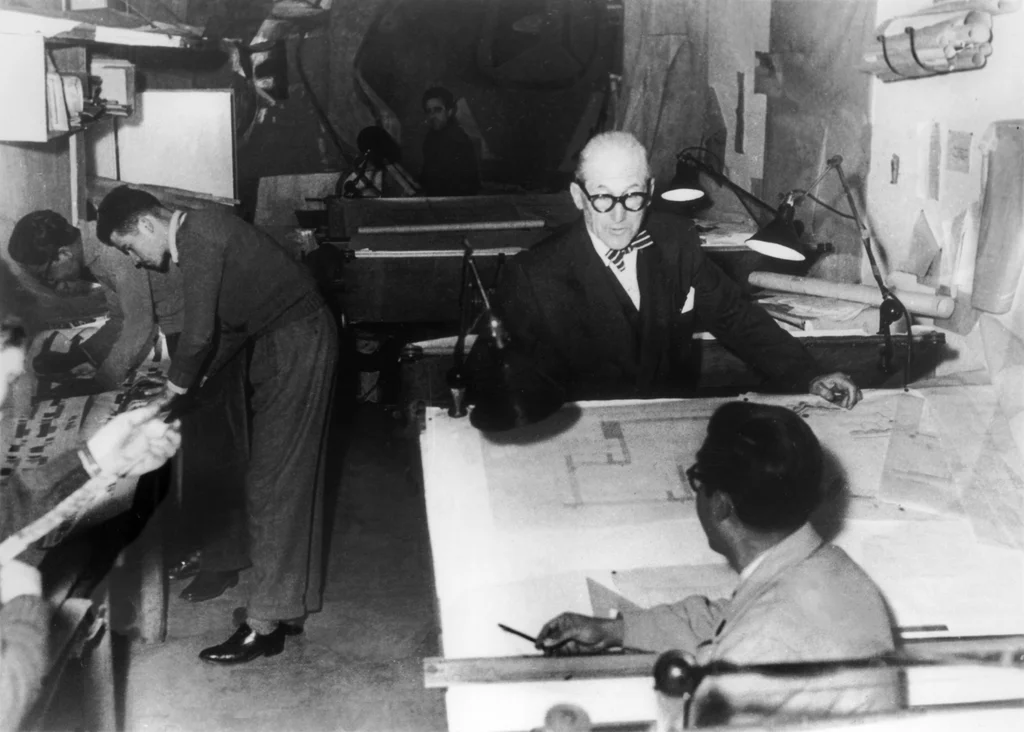
Grantee Megan Gafford, an artist and illustrator, is using her grant to push back against modernism’s repression of ornament. “I already had this pet theory that drawing was the murder weapon, so to speak, of ornamental architecture, that the first wave of modern architects like Le Corbusier won over the second wave, their students and their mentees, through the power of drawing more than the buildings themselves,” she says. “I wanted to redeem my art form.”
She’s traveling around the world for a series of what she calls observational drawings, spending upwards of 12 hours over several days closely observing and drawing remarkable buildings. She plans to visit art deco gems in Miami and Mexico City, and expressive French Colonial buildings in Shanghai, as well as buildings she’s less fond of, such as the brutalist icons of London and Le Corbusier’s modernist planned city Chandigarh in northern India.
The goal is to use this deep period of observation and analysis to fuel a second stage of her work developing what she hopes will be a new ornamental style of architecture—one that draws from history while also looking to the future.
“Modernism doesn’t need to be disavowed. It needs to evolve,” Gafford says. “We can have architecture that has elements of modernism and the millennia of ornamental history we had before that, too.”
Toward a science of beauty
A new aesthetic may not be based just on historic precedent but also on empirical data. Grantee Alihan Dumankaya sees the future of design emerging from a scientific approach of using data to understand why people like what they like, and what makes a good place.
Originally from Istanbul, trained in New York, and now based in Barcelona, Dumankaya is an architect who grapples with the contradictions between universal design principles and vernacular architecture.
In the grant application he emailed to Collison and Cowen (which he shared with Fast Company), Dumankaya explained that since launching his own architecture firm in 2024, he has been consumed by trying to answer what he sees as the big questions facing architecture: “Why certain places make us feel good, why many people find more ‘soul’ in traditional architecture, and whether there is a scientific approach to design.”
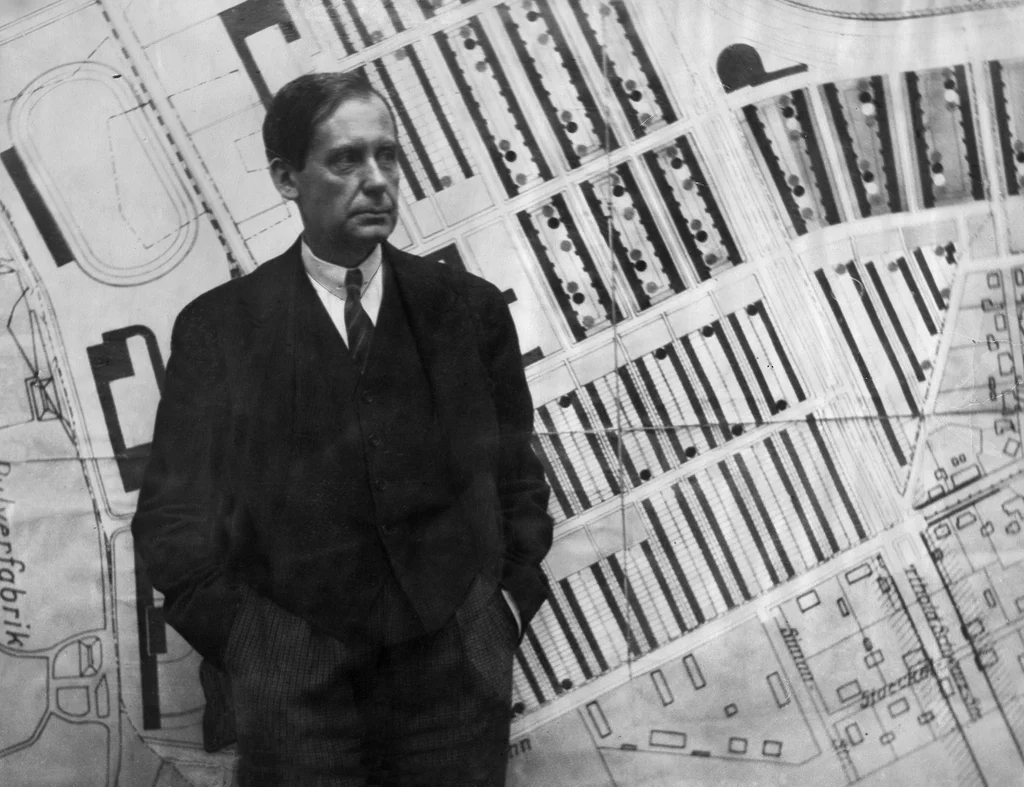
Studying everything from classical architecture to design philosophy to neuroscience to AI, Dumankaya has been trying to understand exactly what makes people perceive a space as beautiful. The most objective answers he’s found are in the works of Christopher Alexander, the influential and controversial architect whose books A Pattern Language and The Nature of Order are regarded as pioneering studies into the systematic underpinnings of architecture and urban design.
“He was describing, after decades of analyzing the places that he found beautiful, what are their geometric properties,” Dumankaya says. “He’s talking about the geometry. He’s not talking about theories.”
Dumankaya finds a strategy in that framework, using long-established building forms to provide the basic geometry of a structure, but then catering its materials and design details to local conditions. “We are building in the real world on real sites where real people live. They interact with nature, with the climate. So obviously it’s going to be a different aesthetic language for every single project,” he says. “But there are certain principles that we could apply to every project.”
Learning from the past
The lessons of vernacular architecture are another recurring theme among grantees. One is Joseph Jutras, a Canadian based in the Dutch city of Utrecht who is using his grant to launch a training academy that will teach traditional architecture.
“This is a bit ironic because, of course, the whole thing is new aesthetics,” Jutras says. “The way I framed it when I applied for the grant was that it actually is new in this era, because in this era we’re not doing it—certainly not at scale.”
Jutras, who is not an architect, says architectural education has largely ignored traditional architecture in favor of modernism, forsaking the lessons offered by buildings that make up some of the world’s most picturesque and livable cities.
It’s a point he’s been making for the past five years, running a summer training program for people interested in traditional architecture. The grant will help him expand this program into something more extensive, offering an alternative training for architecture students beyond the more conventional curricula of architecture schools.
Jutras argues this is not about nostalgia but about embracing architecture that makes sense in its context while also being beautiful. “I think the new aesthetic will be actually going back to a traditional aesthetic that is local, that’s not totally international, and is informed by the local vernacular architecture and what works well for that particular climate,” he says.
Old and new technologies
For all their warm feelings for the architecture of the past, none of the grantees Fast Company spoke with sees a new aesthetic emerging from a purely historical place. In fact, most if not all of the grantees see new technologies being essential to the development of new design approaches and movements.
Grantees Adam Davies and Jack Marsh built their design practice Not Quite Past from a blend of very old and very new technology. Using AI image generation tools, they create bespoke Delft tiles, the white ceramic tiles with hand-painted blue designs that have been produced since the 1500s.
They’ll be using their grant to explore another blend of technology and interior design, creating what they call a “moving decoration,” using digital screens to display slow art in a way that reconsiders what it means to decorate a space. It’s an effort to “try to meld new display technologies and traditional interiors and aesthetics,” Davies says.
Screens, Marsh argues, excel with virtual experiences but their decorative potential is often shunted to the realm of advertising or entertainment.
“Screens have been optimized for sucking you in, for taking you away from the world,” he says. “We’re really interested in trying to create screens that are decorative, and finding a way to give them materiality, finding the artists who are willing to create a certain form of art.”
He sees this decorative screen playing a kind of “moving fresco” that has “the velocity of clouds.” Marsh and Davies hope to produce an initial installation of this concept later this year.
It’s a rethinking of an existing technology that could have widespread implications for interior design, though it’s unlikely to rewrite the rules for how buildings and cities are designed. Marsh argues it doesn’t have to, and the point of the grant is to fund projects that collectively push design in new directions.
“We have all these incredible technologies and we seem to be at an amazing inflection point of civilization,” Marsh says. “Why are we not using new technologies to try and develop things, as they were so keen on doing throughout the 19th century and the 20th century?”
Could the New Aesthetics grant approach work?
For Collison, the stakes are fairly simple. “Many things today are ugly and far uglier than they used to be or need to be,” he recently wrote in a long post exploring why he’s become so interested in aesthetics. Citing his approach at Stripe, he suggests that attempting to inject beauty into the company’s work has been a helpful approach for breaking out of standard practices that, in the world of business, can sap creativity.
“Explicitly allowing aesthetic considerations to carry weight avoids having to justify every assessment with some kind of torturous empiricism,” he says.
More beauty is certainly an appealing goal. Simply deciding there should be a new aesthetic won’t necessarily make one materialize, but Collison and Cowen’s instigation has at least kick-started some ambitious new projects. If it’s in many ways a rebellion against modernism and, by extension, the Bauhaus, it’s hard to see another Bauhaus-like entity rise in its place.
But given how fractured culture and society are, and how decentralized people’s experience of the world is, aiming for a single new aesthetic, or a one-to-one replacement of modernism, would be a vast oversimplification. As AI tools and technologies drastically change cultures and economies (and mint a new generation of incredibly wealthy people), there’ll be plenty of room for a much wider range of design approaches and movements than ever before.
Collison and Cowen’s “Call for New Aesthetics” may be a timely mix of this cultural and technological tumult, a large pot of money made available as AI, war, and uncertainty in the political and economic realms is leading many to reconsider the way things are. For the grantees they’ve funded, the money is now in the bank and the work can begin. What, if anything, happens next is uncertain. But there is a chance the design world is about to see something very new and different.

Featured Videos
Today's Top Stories:
More Top Stories:





FROM OUR PARTNERS