
- | 9:00 am
Gulf nations built more infrastructure. Did they build it smarter?
The Strait of Hormuz closure is testing Gulf infrastructure, putting resilience at the center of the region’s next wave of investment.
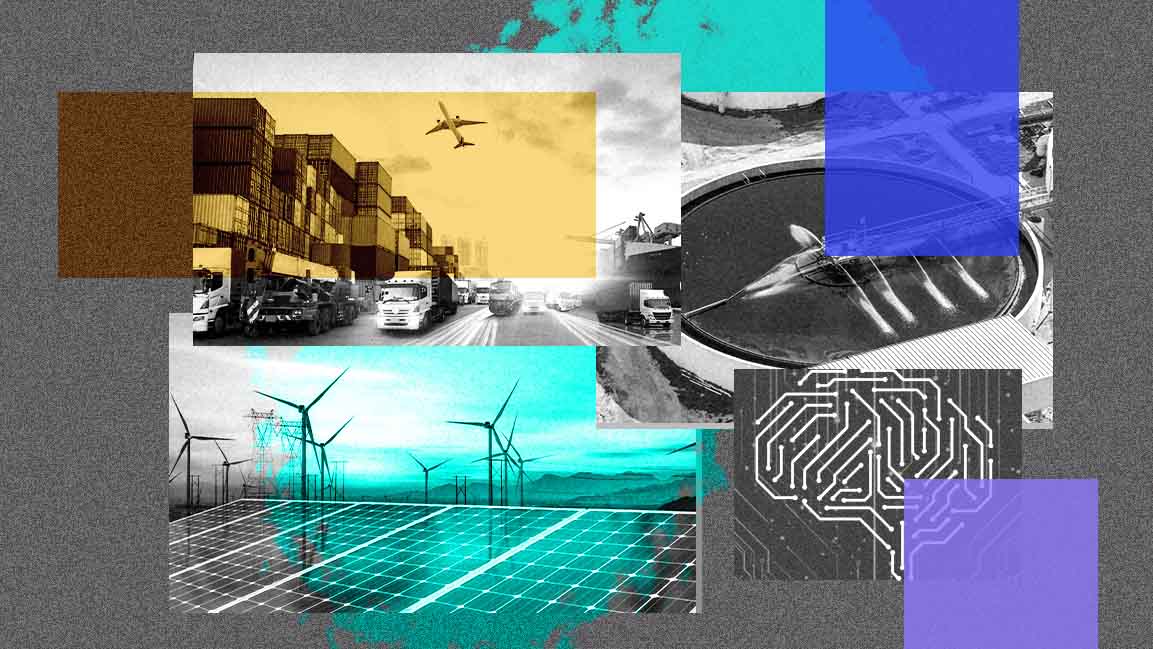


Over the past decade, the GCC countries have made infrastructure one of their main economic strengths. Now, the region ranks among the world’s most ambitious builders of ports, railways and logistics corridors. This is especially visible in Saudi Arabia and the UAE, where big investments in transport are key to their long-term plans to diversify their economies.
Saudi Arabia has signed more than $75 billion in transport and logistics investment contracts since launching its National Transport and Logistics Strategy. It is developing 59 logistics hubs, while the UAE has connected major ports and industrial centers through a 900-kilometer national railway.
Now, these investments face a new challenge: what happens when a critical route stops working?
The Strait of Hormuz makes the stakes clear. About 20.9 million barrels of oil passed through it each day in the first half of 2025, roughly 20% of global petroleum liquids consumption, according to the U.S. Energy Information Administration. Saudi Arabia and the UAE have pipelines capable of bypassing the strait, but their combined capacity is about 4.7 million barrels per day.
The gap raises a bigger question for the region. For years, success was measured by how much was spent and how big projects were. Now, resilience means asking whether an investment provides the economy with a backup plan when something goes wrong.
THE REAL TEST COMES AFTER SOMETHING FAILS
“Most of the lifespan is decided before anything goes in the ground,” says Omar Al Busaidy, President UAE & Oman at Future Pipe Industries.
He’s talking about pipes, but his point highlights a bigger issue in the Gulf’s infrastructure efforts. Building something is one thing but making sure it keeps working through heat, corrosion, shortages, or disruptions is another.
“A lot of decisions still get made on lowest upfront price, when the number that really matters is what the asset costs you over its whole life,” Al Busaidy says.
He adds: “Out here that means taking the soil, the salinity and the heat seriously at the design stage…Do that well, and something can run for fifty years without much attention. Do it badly, and you’re back doing repairs and replacements within ten.”
In the Gulf, that calculation is becoming harder. Extreme heat, saline groundwater, and difficult soil conditions can accelerate deterioration. Water infrastructure is particularly exposed because much of the region depends on desalination and networks that carry that water over long distances.
“So much of ours is desalinated and then moved long distances, which makes that network a critical national infrastructure whether people think of it that way or not,” Al Busaidy says.
Amel Chadli, President of Gulf Cluster at Schneider Electric, argues that longevity also depends on whether infrastructure can change after it is built. Rather than designing assets around today’s requirements alone, she says owners need systems that can expand as technology, populations and energy demand change.
“Infrastructure remains fit for purpose over the next 20 to 30 years when three key principles are embedded from the outset: electrification, digitalization, and sustainability,” Chadli says.
She adds: “Rather than designing assets for today’s requirements alone, organizations must create flexible, scalable platforms that can accommodate future expansion and technological advancements without requiring major reinvestment.”
In Chadli’s view, the aim is to avoid expensive replacements each time demand changes.
Energy offers the clearest large-scale example.
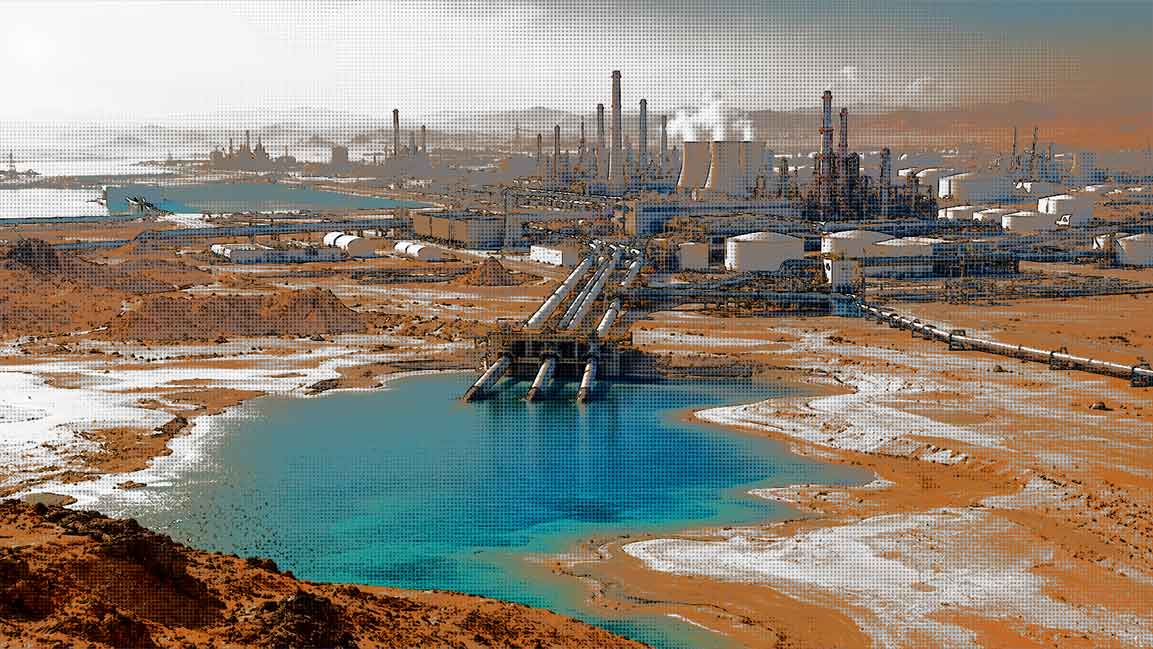
Saudi Arabia’s East-West Pipeline carries crude from the kingdom’s eastern production areas toward the Red Sea. The UAE’s Abu Dhabi Crude Oil Pipeline transports crude to Fujairah, outside the Strait of Hormuz. Together, the routes provide about 4.7 million barrels per day of bypass capacity, according to the EIA.
Transport infrastructure is starting to provide similar options. Etihad Rail connects the UAE’s western border to Fujairah on its eastern coast, linking 11 freight terminals and four major ports. The planned 238-kilometer Hafeet Rail project will eventually connect Oman’s Sohar Port with the UAE network.
This makes the system less dependent on any single one.
REDUNDANCY STILL HAS LIMITS
The closure also shows how difficult it is to engineer away geographic risk.
EIA data show oil flows through the strait fell from 20.7 million barrels per day in the fourth quarter of 2025 to 14.6 million barrels per day in the first quarter of 2026. Even the region’s existing bypass pipelines could accommodate only part of the volumes normally passing through the waterway.
The economic effects spread well beyond oil. UN Trade and Development said in its July/August 2026 Global Trade Update that problems in the Strait of Hormuz were raising energy, transport, logistics and production costs. Prices for internationally traded goods rose about 3.6% in the first quarter and an estimated 5% in the second.
Alternative routes can reduce the Gulf’s dependence on a single chokepoint, but they don’t eliminate risk. As infrastructure becomes more connected, one system increasingly depends on another to keep working.
That dependency is particularly clear in digital infrastructure. Johannes Hummer, CEO of Freedom Telecom International, argues that the Gulf’s growing investment in data centers, cloud computing and telecom networks requires its own layer of redundancy.
“AI data centers, cloud platforms, subsea connectivity, cybersecurity capabilities, and national telecom networks are treated even more as critical assets,” Hummer says.
The UAE has invested heavily in 5G, cloud computing, data centers, and AI infrastructure. Still, even with large domestic computing power, a country can be at risk if its international connections rely on only a few routes.
“The resilience of such infrastructure can only be complete if it’s supplemented with international redundancy capacity and cross-border connectivity,” Hummer says.
This is important because physical and digital infrastructure are now closely linked.
Ports rely on communications networks and software. Railways need signaling systems. Water networks increasingly depend on sensors and automated controls. Data centers need dependable electricity and connectivity.
And as AI and data centers expand, Chadli sees another pressure point emerging underneath that digital growth: the electricity networks required to power it.
“Energy availability is not a generation issue in the Gulf,” she says. “While the region has considerable sources of energy, the real challenge is speed, grid delivery, and extreme power density.”
AI and hyperscale data centers can place far greater loads on power distribution and cooling systems than traditional facilities. In the Gulf, high temperatures add another constraint.
Chadli argues that the response will require denser power systems, storage and microgrids that can manage peak loads and maintain reliability.
A failure no longer has to remain inside the infrastructure where it started.
That makes Hummer’s argument similar to Al Busaidy’s, though they approach it differently. The strength of an asset depends partly on the systems around it.
For example, a sophisticated data center without resilient power and international connectivity has a weak point. The same goes for a desalination plant connected to a deteriorating water network.
The region’s infrastructure challenge is therefore shifting from individual projects to the connections between them.
THE NEXT BILLION HAS A DIFFERENT JOB
This is where it becomes more helpful to ask if the Gulf is building too much. But the answer is not simply to build less.
The more important question is which vulnerability the next project will address.
Al Busaidy believes one answer is to design infrastructure for the real conditions it will face. “What used to count as extreme is just normal operating conditions here now,” he says.
That has implications for procurement. Governments evaluating projects primarily by construction costs risk underpricing the costs of decades of maintenance, replacement, and resource losses. An asset designed to last longer may cost more initially while becoming cheaper over its full operating life.
For Chadli, this is why simply adding more power capacity isn’t enough. “The challenge today is not only generating enough energy, but also ensuring it is distributed, managed, and optimized efficiently to support economic growth and digital transformation,” she says.
That shifts part of the infrastructure debate from construction to management. If operators can use real-time data to anticipate failures, manage peak demand or draw on storage during periods of stress, existing infrastructure can carry more of the burden before another large asset needs to be built.
The next phase of Gulf investment may therefore have to reward redundancy and durability as aggressively as it once rewarded scale.
That could mean additional cross-border connections rather than another isolated asset. It could mean strengthening the electricity and water networks that feed major developments.
These investments aren’t as easy to show as a new skyline. However, recent shipping problems have made the economic value of these investments more apparent.
UN Trade and Development estimates global goods trade reached about $13.7 trillion in the first half of 2026, 12.5% higher than a year earlier.
For Gulf economies seeking to capture more of the trade among Asia, Europe, and Africa, infrastructure needs to function well in two ways. It must move faster when the system works, and preserve enough alternatives when it doesn’t.
That is a tougher standard than kilometers built or dollars spent.
It also changes the answer to the question hanging over the Gulf’s construction boom. The region’s problem isn’t necessarily that it has built too much infrastructure. It’s that the value of the next project will increasingly depend on how well it protects everything already built.
“Resilience tends to be won or lost in the parts nobody photographs,” Al Busaidy says.
After a decade focused on infrastructure the world could see, the Gulf’s next competitive advantage may come from the parts that go unnoticed…until something goes wrong.