- | 1:00 pm
Building AI that understands Arabic, dialects and identity
At MBZUAI, women are moving from AI’s classroom into its research labs, helping shape technologies that reflect the UAE’s language and culture
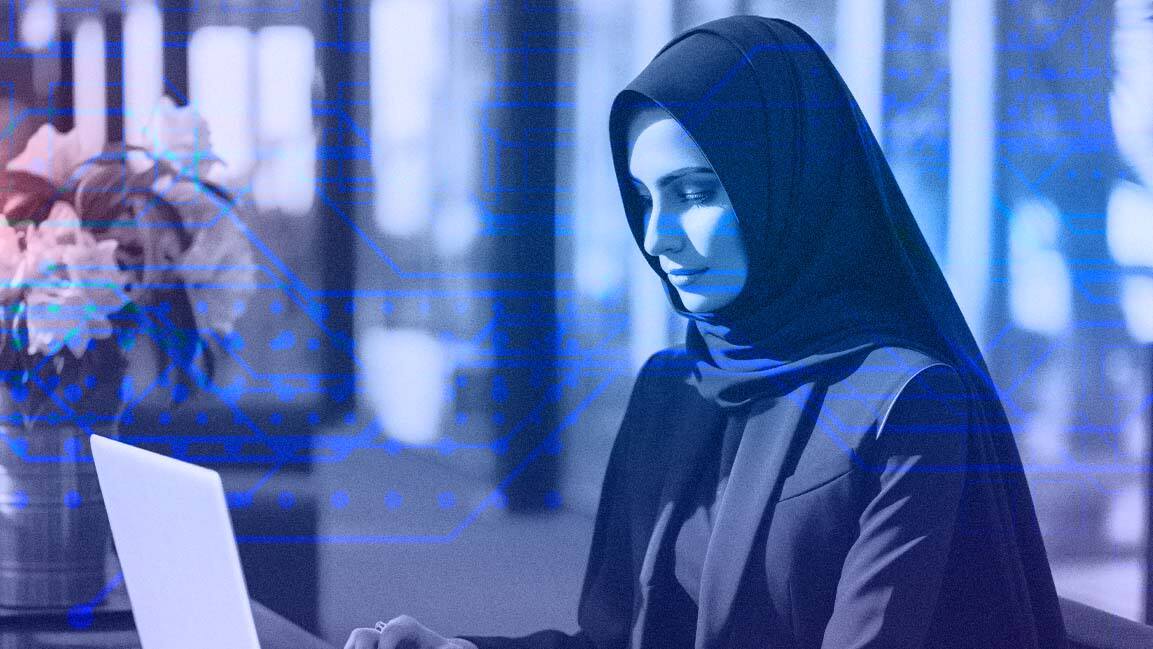


The UAE’s artificial intelligence ambitions are not limited to algorithms and computing infrastructure but pervade the people developing the technology. Among them is a pioneer, Dr. Hanan Aldarmaki, Director of the Center for Teaching and Learning and Assistant Professor of Natural Language Processing at Mohamed bin Zayed University of Artificial Intelligence (MBZUAI).
Aldarmaki became the university’s first woman and first Emirati faculty member when she joined in 2022. Today, she researches Arabic language and speech technologies, teaches and supervises AI researchers, and leads the university’s teaching and learning efforts.
Her career also reflects a broader shift in the UAE: Emirati women are increasingly moving into scientific research and advanced technology, rather than simply participating in the sectors as users or professionals.
At MBZUAI, female students account for 54% of the Emirati student population in the university’s 2026–27 cohort.
For Aldarmaki, one of the most important questions in AI is also a deeply local one: Can technology accurately understand the people it is built to serve?
Her research focuses on natural language and speech processing, with particular attention to Arabic and low-resource languages and dialects.
Arabic presents a complex challenge for AI because of its many regional dialects. Spoken Emirati Arabic adds another layer of nuance—and capturing those differences is the focus of work being carried out through Ramsa Lab, a national initiative dedicated to documenting spoken Emirati dialects.
The project is about more than teaching AI to recognize different ways of speaking. Much of the UAE’s intangible heritage has traditionally been passed down orally. Recording and documenting spoken language can therefore help preserve cultural knowledge while creating datasets and resources that enable AI systems to better represent Emirati language and culture.
That intersection of technology and identity is becoming increasingly important as AI systems influence everything from search and translation to education and digital assistants.
Aldarmaki’s own path took her from the UAE to postgraduate studies in the UK and the US before bringing her expertise home. She holds an MPhil from the University of Cambridge and a PhD in Computer Science from George Washington University.
Now, she is helping build the pipeline for the researchers who will follow.
For Aldarmaki, that ecosystem is the product of sustained investment in education, research and women’s participation in the workforce. Her message to girls considering careers in AI is straightforward–build expertise.
Understanding the language, concepts and technical foundations of a field gives women more than an entry point into technology. It gives them a voice in deciding where that technology goes next. That distinction matters as the UAE positions AI as a pillar of its future economy.
But Aldarmaki also sees a limit to the technology-first narrative. AI, she argues, is ultimately a tool—not the destination.
The challenge for the next generation of researchers is therefore not simply to build more capable systems, but to ensure those systems contribute to human prosperity and a sustainable future.
For Emirati women entering AI, that means having a role not just in adopting the technology but in deciding what its future looks like.

Featured Videos
Today's Top Stories:
More Top Stories:


FROM OUR PARTNERS