
- | Salam
Saudi Arabia’s energy future depends on turning digital ambition into execution
Scaling the digital systems behind Saudi Arabia’s energy future
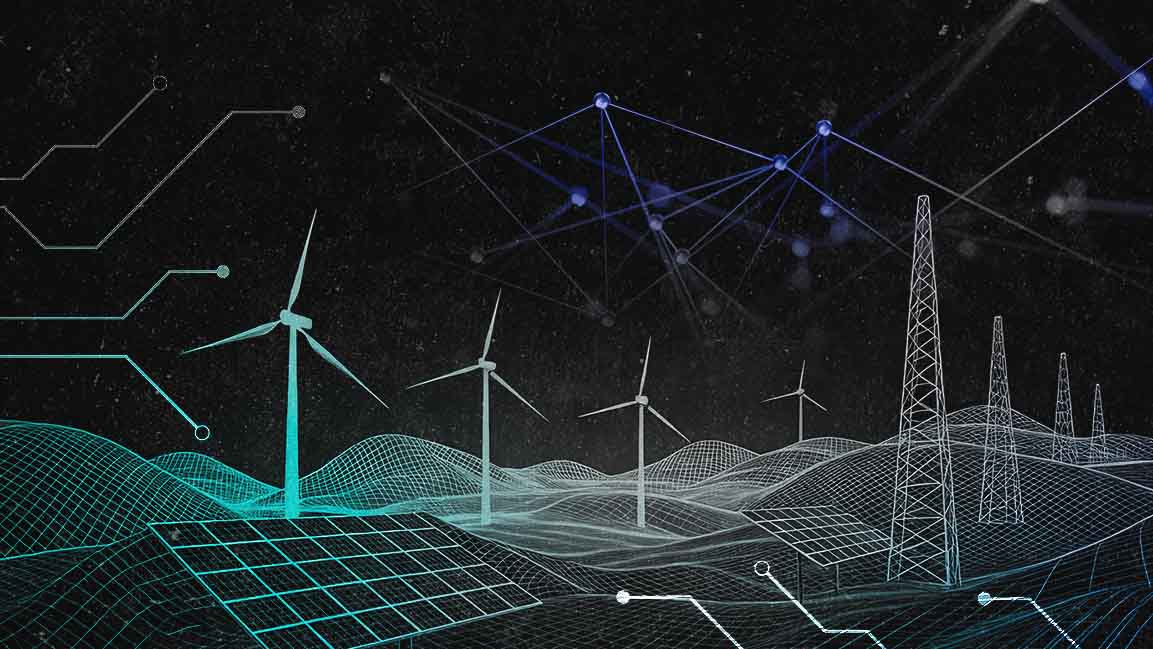


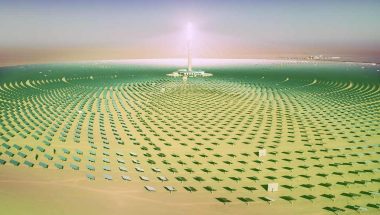
Saudi Arabia’s energy transformation is evident in the scale of what is being built: vast solar and wind projects, new infrastructure, and an electricity system being reshaped for a more diversified energy mix.
The kingdom’s ambition is significant. Under Vision 2030, Saudi Arabia aims to generate 50% of its electricity from renewable sources by 2030. By the end of 2024, the Kingdom had 6,551 megawatts of renewable capacity installed across nine solar projects and one wind project, according to the General Authority for Statistics. Grid-connected capacity reached 4.1 GW during the year, following a record 3.7 GW connected in 2024 alone.
THE DIGITIZATION OF ENERGY
Less visible but incredibly critical is the digital layer behind this transformation: the networks, data, and technology needed to manage a more complex energy system in real time.
As more assets come online, technologies such as private 5G, edge computing, and AI are becoming increasingly relevant to how energy companies monitor operations, anticipate maintenance needs, and make decisions.
Abdullah Al Khorami, Chief Business Officer at Etihad Salam Telecom Company, says the business case for digitizing oil and gas operations is already established.
He points to the Khurais field, where Saudi Aramco reported a 15% increase in oil production after installing 40,000 sensors and advanced process controls. At the Fadhili gas plant, artificial intelligence reduced amine and steam use by 10-15%.
“These are Saudi results on Saudi assets, and they set the benchmark every operator in the kingdom now works against. The technology works, and the business case is proven.”
THE CHALLENGE OF DELIVERING
The challenge, Al Khorami argues, is no longer setting the kingdom’s digital ambition but delivering it, turning that intent into working systems.
“This is where most programs stall, and where the energy economy will be won over the next decade. The scarce resource now is the capacity to execute at national scale.”
That execution gap is not unique to energy. BCG research has found that 70% of digital transformations fall short of their objectives, with fragmented systems, connectivity limitations, security gaps and unsuccessful pilot projects among the factors that can prevent technologies from moving into full-scale deployment.
“The failure comes from accumulated friction: connecting systems that were never built to work together, at a scale where every gap compounds,” Al Khorami says, noting that the challenges are particularly pronounced in energy.
CLOSING THE GAP
Saudi Arabia already has a strong digital foundation, with the kingdom’s digital economy valued at approximately $132 billion and contributing 15% to GDP.
GSMA Intelligence ranks the kingdom among the world’s 5G leaders, with an average download speed of 314 Mbps in 2025, based on an analysis spanning 187 countries.
Al Khorami says closing that gap requires a more integrated approach, rather than deploying technologies in isolation.
“A digitized field needs pervasive connectivity, private 5G across remote sites, edge computing that processes data where it is generated, AI trained on operational data, and cybersecurity built for critical national infrastructure.”
For energy companies operating across some of the kingdom’s most remote locations, the practical challenge is making those technologies work reliably beyond the data center.
“Fields sit hundreds of kilometers from the nearest data center. Operational technology and IT have to converge without compromising safety. A dashboard in Dhahran is worthless if the wellhead 300 kilometers away has no reliable connection.”
Al Khorami says the industry has moved beyond simply providing bandwidth toward designing, deploying and managing broader technology environments.
“That shift matters for energy because it removes the integration risk that sinks most projects. One partner owning the outcome, from network design to a running system, compresses the distance between ambition and realization.”
Security raises the stakes.
“A connected oilfield is national infrastructure, and every sensor added to it widens the surface that must be defended. Digitization and cyber resilience have to advance together,” Al Khorami says.
He believes that technology is only part of the equation. Delivery also depends on having the people and expertise to operate increasingly complex digital systems. Few energy companies want to build and staff a full technology organization to manage networks, AI models and security operations outside their core business.
“They put Saudi engineering and operations talent behind the systems so the operator can concentrate on production. That keeps capability and skills inside the kingdom. Local capability is what keeps a project running long after the launch event is over.”

Featured Videos
Today's Top Stories:
More Top Stories:


FROM OUR PARTNERS