
- | 2:00 pm
Egypt looks to boost exports across Africa as intra-continental trade grows 5.5% to $214 billion
With exports to African markets reaching $7.6 billion in 2025, Egypt is seeking new trade partnerships and opportunities beyond North Africa.
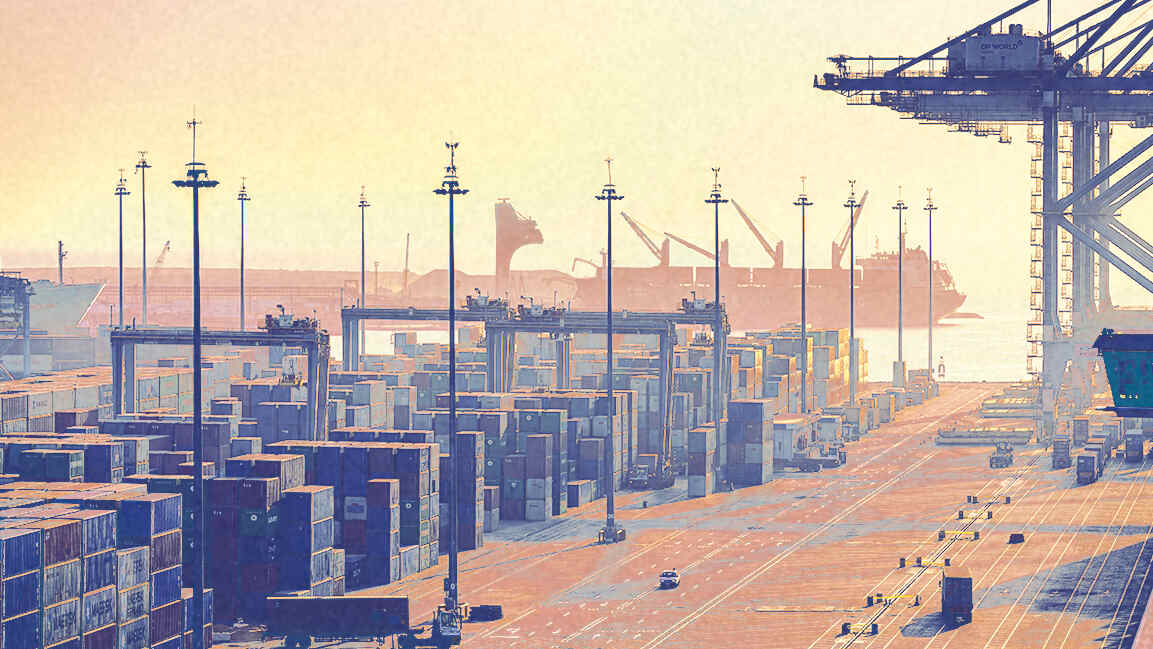


Egypt is looking to strengthen its trade presence across Africa by expanding export destinations, building commercial partnerships, and improving market access for locally manufactured products.
Speaking at the Scaling Egypt’s Industrial Champions forum, Industry Minister Khaled Hashem highlighted the continent’s potential for Egyptian businesses, particularly across the industrial, agricultural, engineering, and construction materials sectors, according to Daily News Egypt, as reported by Zawya.
The forum, organized by the American Chamber of Commerce in Egypt (AmCham Egypt) in partnership with the African Export-Import Bank (Afreximbank), brought together government officials, business leaders, and financial institutions to discuss opportunities for expanding Egypt’s trade footprint.
Hashem said intra-African trade reached approximately $214 billion in 2025, representing a 5.5% annual increase, while the continent’s total merchandise trade stood at around $1.5 trillion.
Despite its industrial capabilities, Egypt accounted for just 4.4% of intra-African trade, equivalent to approximately $9.3 billion.
The minister said the figures underscore the need to strengthen Egypt’s competitiveness and expand its presence across African markets.
Increasing exports remains a key government priority, with Africa offering opportunities to accelerate growth and diversify Egypt’s international trade relationships.
Egypt seeks to diversify export markets
Egyptian exports to African Union countries reached approximately $7.6 billion in 2025, down from $7.8 billion the previous year. Meanwhile, imports declined from $2.1 billion to approximately $2 billion, bringing total trade with African Union countries to $9.6 billion.
Egypt’s leading exports to the continent include electrical machinery, plastics, iron and steel, processed food, agricultural produce, and construction materials.
Electrical machinery and equipment accounted for approximately $633.6 million in exports in 2025, followed by plastics at $544.4 million and iron and steel at $528.3 million.
Libya remained Egypt’s largest African export market, receiving approximately $1.5 billion worth of goods, followed by Algeria at $1.2 billion, Morocco at $1.1 billion, Sudan at $957.1 million, and Tunisia at $431.3 million.
While North African countries continue to dominate Egypt’s regional export activity, Hashem emphasized the importance of establishing a stronger presence in East, West, and Central Africa.
As part of these efforts, the minister revealed plans for a major project in Tanzania and an upcoming visit to Côte d’Ivoire in November to explore additional investment and trade agreements.
He also stressed the importance of improving logistics networks, trade procedures, and product quality standards to help Egyptian businesses compete more effectively.
Strengthening trade partnerships across Africa
Mohamed Kassem, chairman of the Egyptian Exporters Association, said Egypt has significant opportunities to expand exports of agricultural products, pharmaceuticals, chemicals, and fertilizers.
However, he noted that the country’s trade activity remains concentrated in North African markets and Sudan, despite its broader economic relationships across the continent.
Kassem called for improved shipping infrastructure, greater access to market information, stronger export financing, and increased participation in international trade exhibitions.
Discussions at the forum also focused on the African Continental Free Trade Area (AfCFTA) and its role in reducing trade barriers, facilitating cross-border transactions, and unlocking new commercial opportunities.
Participants emphasized the need for stronger collaboration between governments, financial institutions, and private companies to help exporters secure contracts and enter new markets.
As intra-African trade continues to expand, Egypt is seeking to leverage its industrial capacity and commercial partnerships to capture a larger share of the continent’s growing demand.

Featured Videos
Today's Top Stories:
More Top Stories:



FROM OUR PARTNERS