WISH 2026 to bring global health leaders to Doha to discuss longevity and medical innovation
The Doha summit will bring together researchers, policymakers and healthcare leaders to examine how medical advances can support longer, healthier lives


As people across the Middle East live longer, governments are increasingly focused on ensuring those extra years are spent in better health.
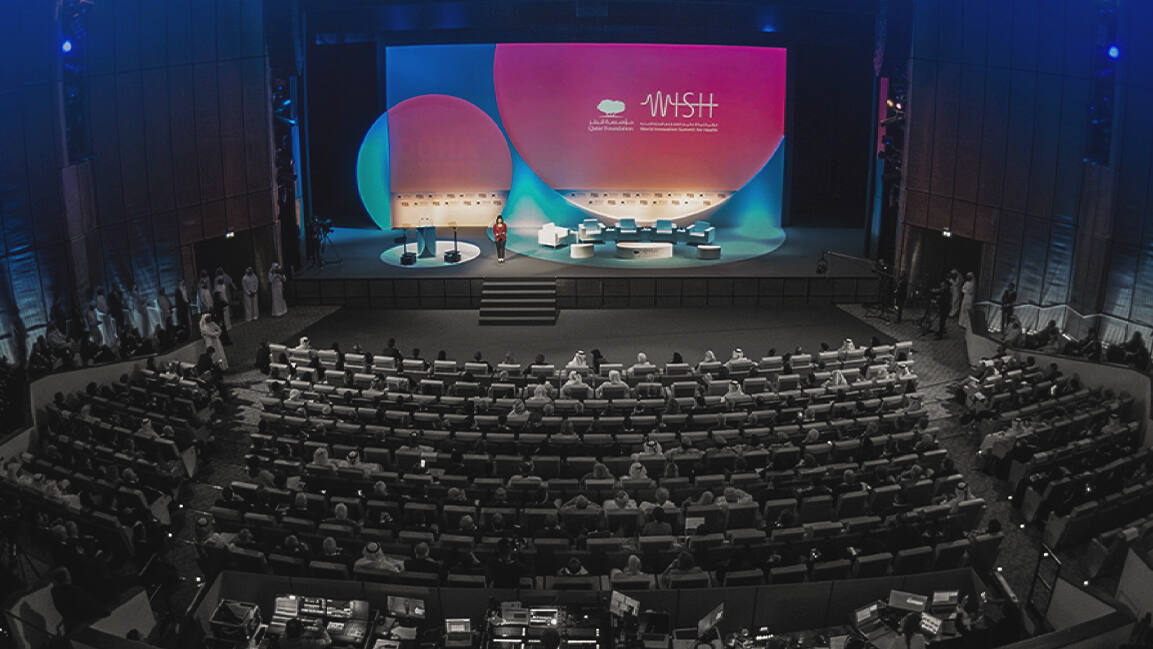
At the eighth edition of the World Innovation Summit for Health (WISH), that focus will take center stage as academicians, researchers, policymakers, practitioners, and innovators convene at the Qatar National Convention Center in Doha on November 29 to discuss the future of healthcare.
Organized by the Qatar Foundation under the theme “The New Health Span,” the summit will explore how advances in longevity research, artificial intelligence, and genomics can improve care and reach more patients.
“The question at the heart of WISH 2026 is simple, but deeply consequential: how do we help people live not only longer lives, but better ones?” said Dr. Slim Slama, CEO of WISH.
“No single country, sector or discipline can answer this question alone. It requires the experience of health systems at different stages of development, the insight of researchers and practitioners, the perspectives of policymakers and the voices of communities themselves. WISH brings these diverse global perspectives together in Doha so that evidence, experience and ideas can be examined with the seriousness these challenges demand,” he added.
The two-day program is organized around five pillars: The Longevity Dividend, Financing the Cure, AI and Human-Centered Health, Future of Fertility, and Health Diplomacy 2.0.
The opening program will focus on how research into aging can inform public policy and routine care, and how communities can help people stay active and connected as they grow older. The opening ceremony will feature a keynote by David Sinclair, a professor of genetics at Harvard Medical School, and an address by WISH Executive Chair Lord Darzi. Andrea B. Maier of the National University of Singapore will join the opening plenary on the science of aging.
Access to new treatments runs through two other pillars. Financing the Cure will focus on cell and gene therapies, which can carry high upfront costs even when their benefits may take years to establish. The Future of Fertility sessions will look at how reproductive technologies are expanding patients’ choices and how safeguards can keep pace as those options become more widely available.
Finally, Health Diplomacy 2.0 will focus on how countries can work together to keep essential health services running during conflicts, disease outbreaks and disruptions to medical supply chains.
The plenary “Artificial Intelligence Across Health Systems” will explore how healthcare providers can tell whether AI tools remain safe and effective once they are used in patient care. Speakers include Dr. Dominic King, corporate vice president and health lead at Microsoft AI, and Dr. Ahmed Elmagarmid, executive director of the Qatar Computing Research Institute.
The discussion will cover how providers can monitor those tools in practice, who is accountable for their use and how to maintain patients’ trust.
Beyond the plenaries, the summit will host roundtables, Arabic-language sessions and youth discussions with QatarDebate Center. The Majlis program will bring participants together to discuss how societies share responsibility for care and how communities can support older people’s independence.
The Spotlight Stage and Innovation Showcase will connect innovators with policymakers, investors and healthcare professionals. The program will feature pitches from innovators supported by Qatar Science & Technology Park and the Qatar Research, Development and Innovation Council, alongside projects by high school students participating in Innovators of Tomorrow, a WISH initiative with the Qatar Scientific Club.
WISH will release four reports during the summit: The Longevity Dividend: Lessons from Science and Society, Financing the Cure: New Models for Breakthrough Therapies, The Future of Fertility: Navigating Technology, Power and Policy, and Artificial Intelligence Across Health Systems.
The reports will explore what evidence would justify using tests that estimate biological age in routine care and what funding and specialist services are needed to deliver breakthrough therapies. They will also cover how providers can oversee AI after regulatory approval and how fertility regulation can keep pace with new technologies and the growth of commercial services.
“A discovery can change what’s possible years before it changes anyone’s life. What happens in between depends on decisions about what we fund, how early we act, and what evidence we require before we change care,” said Dr. Taskeen Khan, WISH’s director of research and policy.
Qatar’s Ministry of Public Health is a strategic partner for the summit. Previous WISH research has informed national policy in Qatar.
The decisions on the agenda in Doha will shape what patients can expect from the next wave of medical advances.
WISH is holding the summit in partnership with Qatar’s Ministry of Public Health. As an initiative of Qatar Foundation, it brings together research, education and policy perspectives to examine how medical advances can translate into stronger health systems and better health outcomes.

Featured Videos
More Top Stories:



FROM OUR PARTNERS