
- | 2:00 pm
HP expands AI across PCs, printing and security with new devices and enterprise tools at Imagine 2026
From AI PCs to secure printers and gaming systems, HP’s latest lineup focuses on performance, automation, and connectivity.
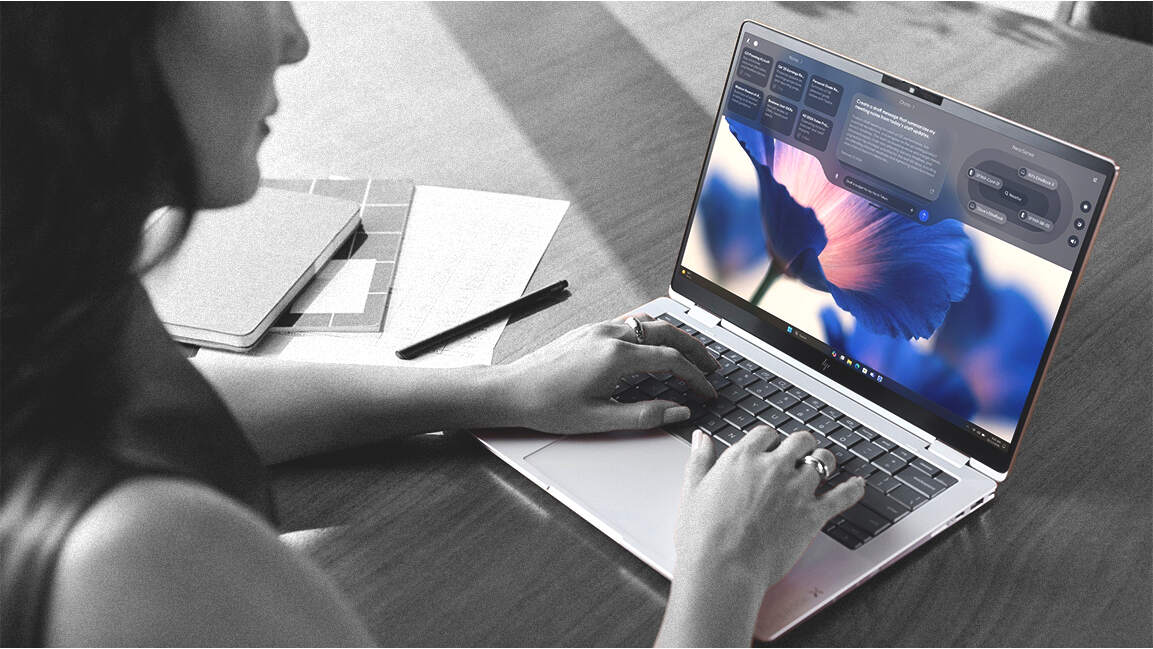


At its Imagine 2026 event, HP unveiled a broad slate of updates across printing, PCs, gaming, security, and workplace software, reinforcing a more unified vision for hybrid work. Central to the announcements is a deeper integration of AI across devices and workflows, aimed at boosting productivity, simplifying user experiences, and enabling more intelligent performance. From AI-assisted PC optimization to smarter document handling in printing, HP is positioning its ecosystem to reduce manual tasks and deliver more personalized, efficient workflows.
Smarter business printing
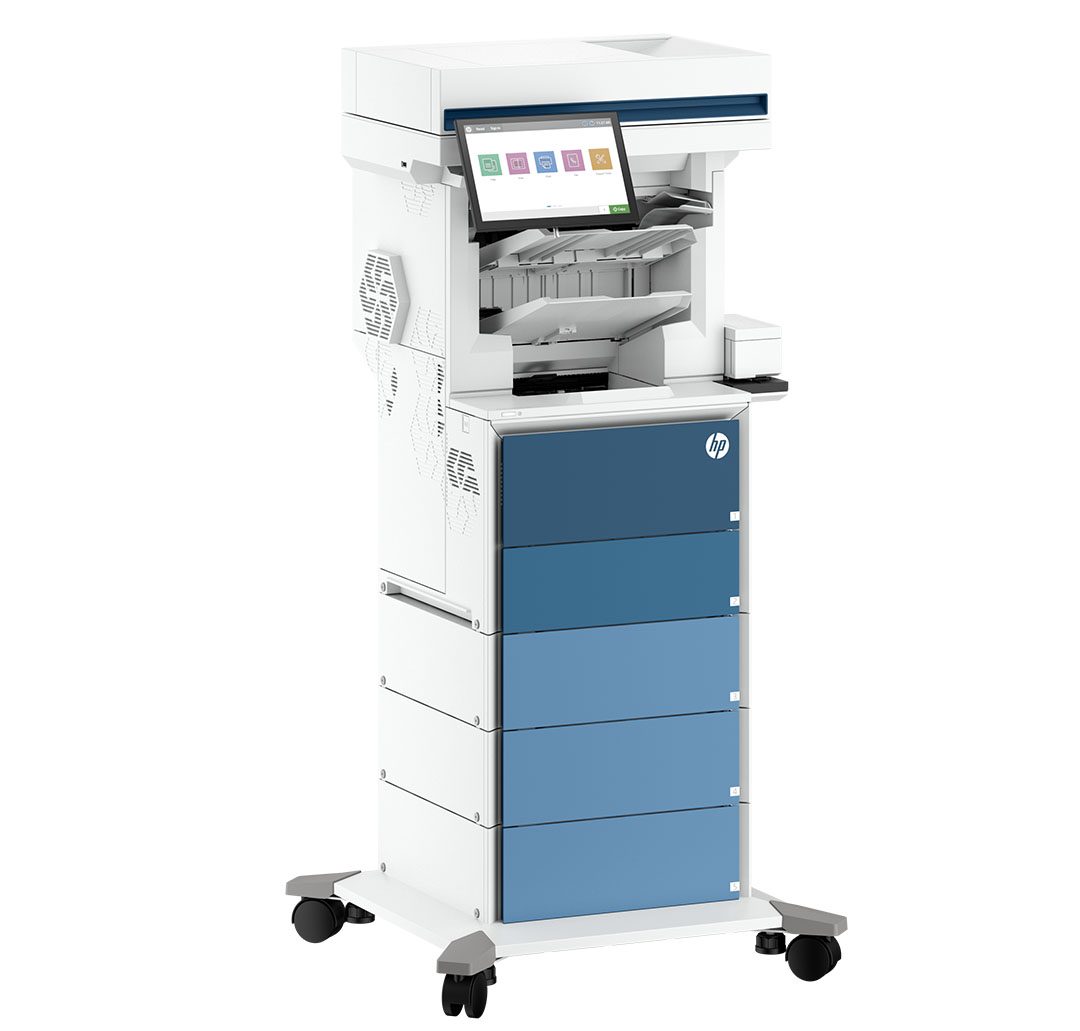
LaserJet Enterprise 5000/6000 Series
HP introduced two new LaserJet lines aimed at improving workflow integration and security across business environments. The LaserJet Pro 4000/4100 Series is designed for SMBs, offering compact monochrome printing, simplified setup, Wi-Fi 6 connectivity, and AI-powered document tools, alongside quantum-resistant protection to strengthen device-level security.
For larger organizations, the LaserJet Enterprise 5000/6000 Series delivers higher performance, with print speeds of up to 57 ppm and duplex scanning of up to 200 ipm. It combines HP Wolf Enterprise Security with remote monitoring and predictive maintenance, while adding AI-driven features such as OCR and automated redaction. The series also supports integration with Microsoft 365 Copilot through HP Workpath apps. The Pro range is expected to launch in May, while the Enterprise series begins rolling out in March, with broader availability by June.
AI-ready workstations
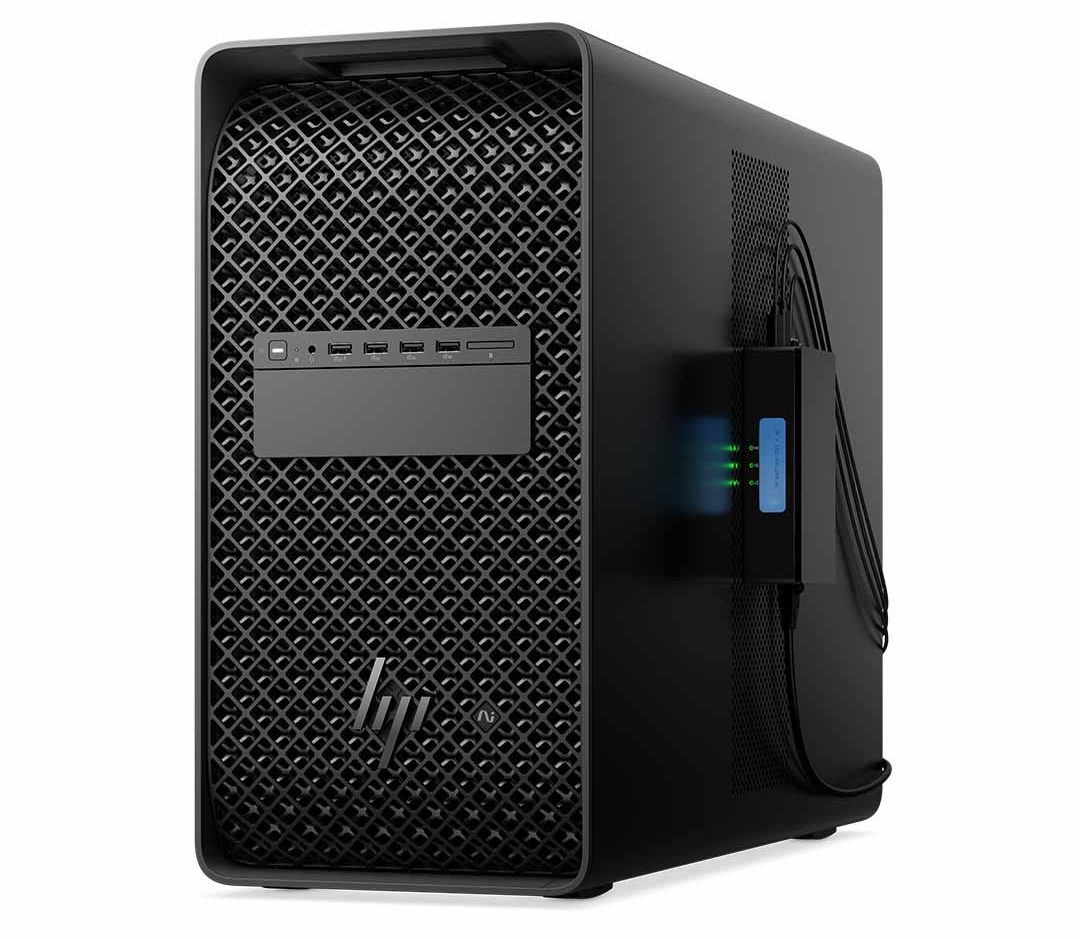
HP Z8 Fury G6i
HP expanded its Z workstation portfolio with a clear focus on AI and high-performance workloads. The Z8 Fury G6i is built for intensive applications such as AI development, simulation, and visual effects, featuring support for multiple high-end GPUs and next-generation Intel processors. A new Max Side Panel increases internal capacity to accommodate larger graphics components while maintaining optimal thermal performance.
On the mobile front, HP introduced updates to the ZBook lineup, including the ZBook X G2i and ZBook 8 series. These devices deliver AI-ready performance with both Intel and AMD configurations, scalable memory, and enhanced portability for workflows such as 3D design and rendering. The company also expanded Z Boost, its GPU-sharing platform, to support rendering alongside AI workloads, improving resource utilization across distributed environments.
Commercial PC expansion
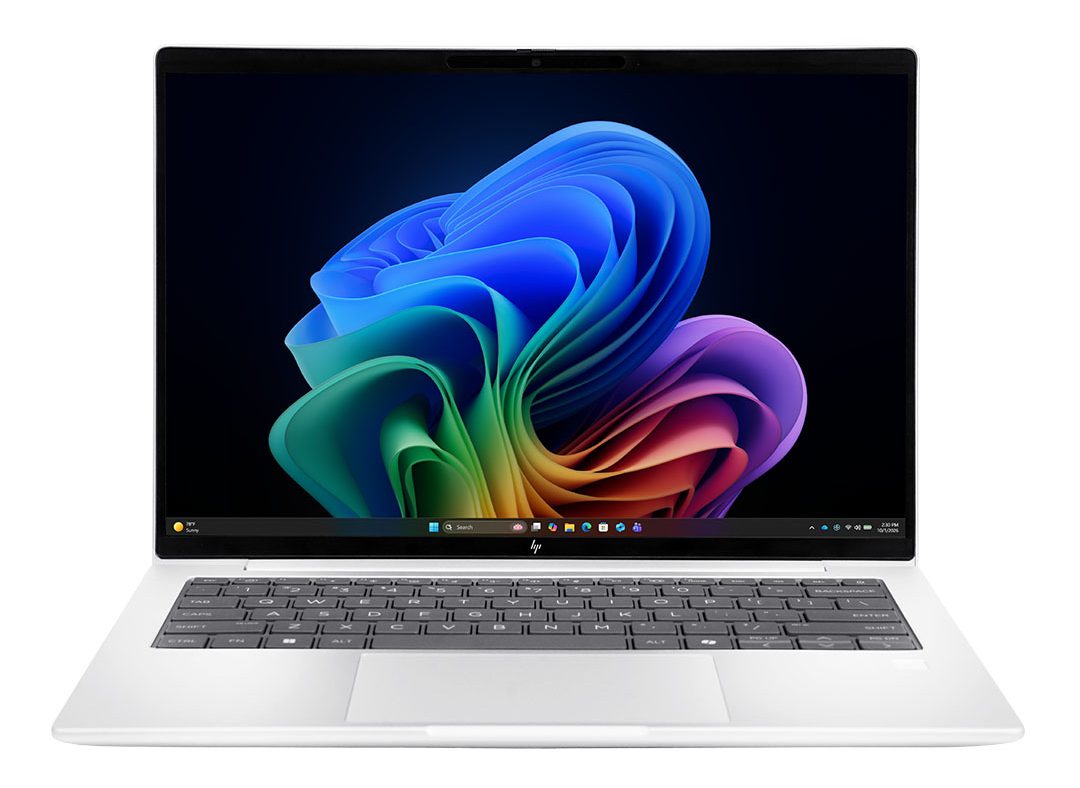
HP EliteBook 6 G2q
HP broadened its commercial PC lineup with a new range of notebooks and desktops, led by the EliteBook 6 G2q. Positioned as an AI PC, the device is powered by Snapdragon X processors delivering up to 85 TOPS of NPU performance. It supports advanced AI workflows through on-device processing and partner integrations, while also offering long battery life, 5G connectivity, and a thinner, lightweight design. Security features include HP Wolf Pro Security and physical intrusion detection.
The broader portfolio includes updated EliteBook 8 and EliteBook 6 series for enterprise users, the ProBook 4 series for SMBs, and EliteDesk 8 desktops. Together, these systems offer flexible configurations across Intel and AMD platforms, allowing organizations to tailor performance, scalability, and cost to different business needs.
On-device AI layer
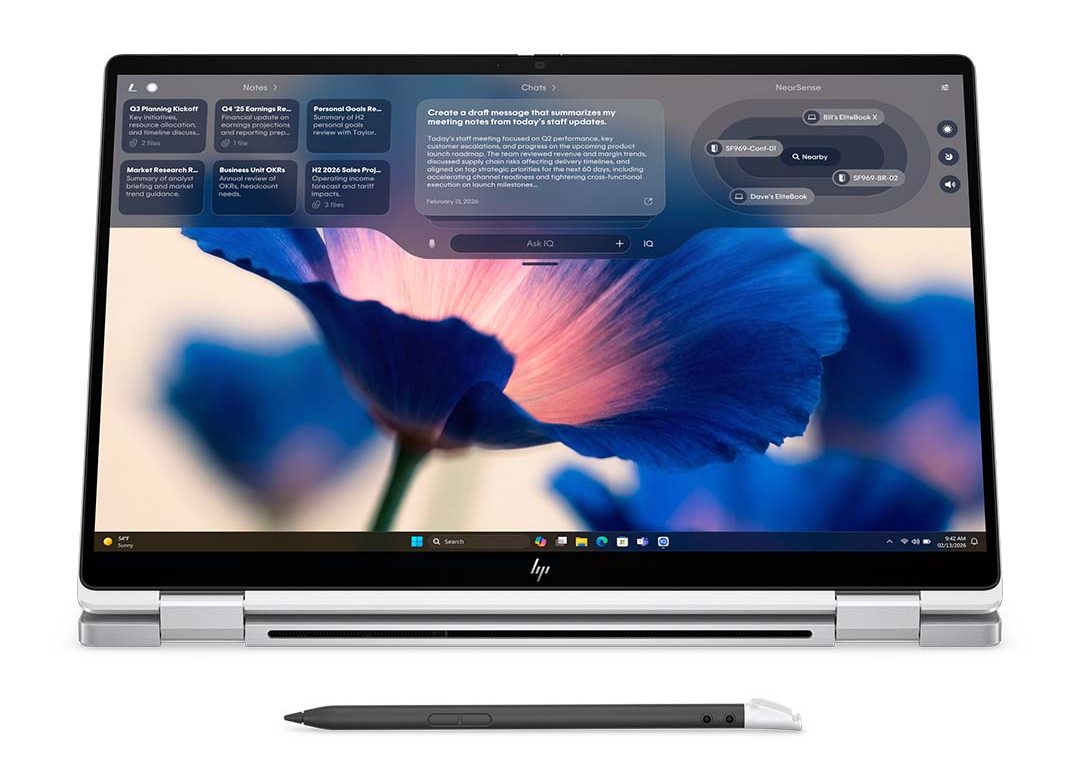
EliteBook X G2 HPIQ
HP introduced HP IQ, a workplace intelligence layer that uses on-device AI to enhance productivity and coordination across devices. Debuting on the EliteBook X G2, it enables features such as contextual assistance, document analysis, note-taking, and meeting support, with a broader rollout planned across additional devices.
Positioned as a layer across workflows, HP IQ is designed to help users manage tasks more efficiently by bringing AI capabilities directly to the device. The company plans to expand it across more of its portfolio, aligning with its broader push to integrate AI into everyday work experiences.
Integrated within HP IQ, the company also introduced NearSense, which enables proximity-based connectivity and collaboration between devices, allowing real-time file sharing and workflow transfers without relying on cloud services or manual pairing.
Developed in collaboration with Google, the technology leverages Device-to-Device Infrastructure (D2DI) to support cross-platform interoperability, including Android integration. HP plans to extend NearSense across its ecosystem to enable features such as device discovery, simplified pairing, and direct printing or display casting, supported by AI-driven context awareness.
Gaming meets AI
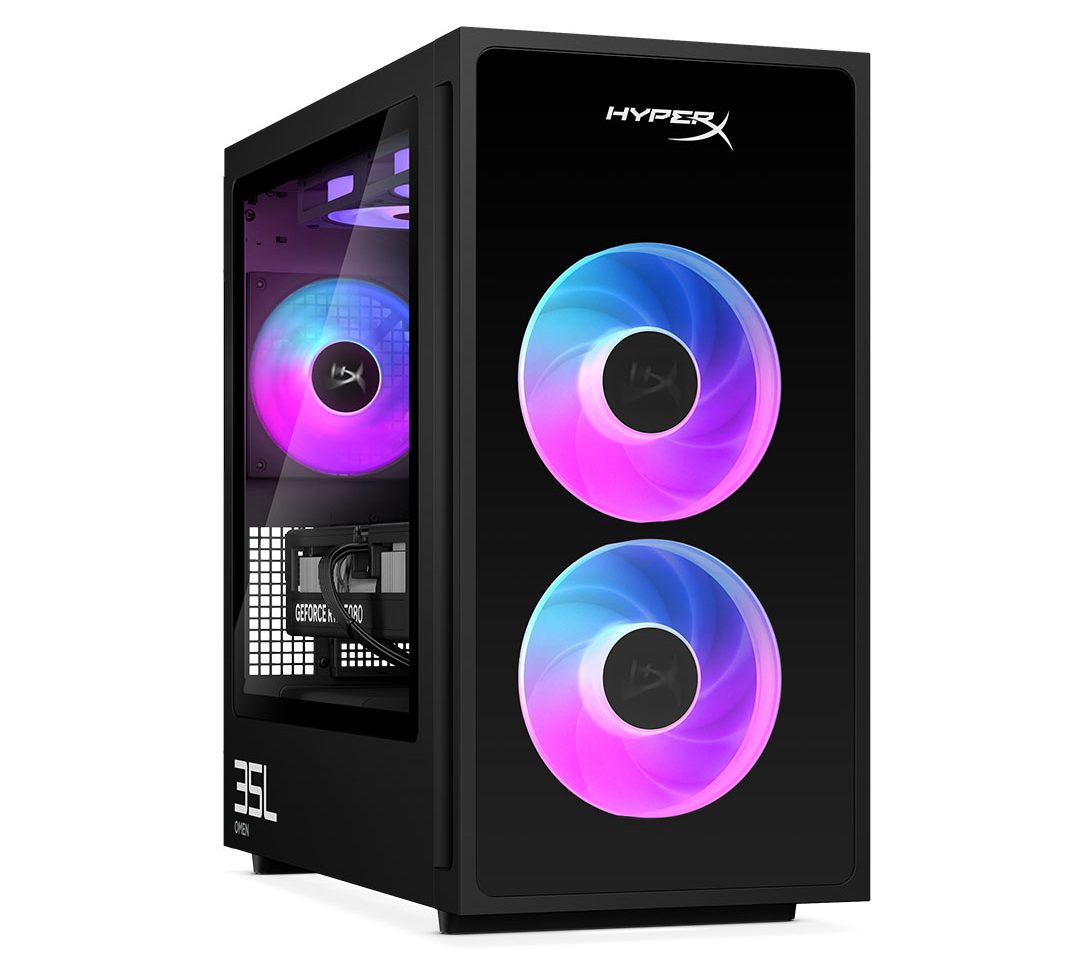
HyperX OMEN 35L
HP announced updates to its gaming portfolio under the HyperX and OMEN brands, combining new hardware with AI-driven optimization. The OMEN MAX 45L desktop is built for high-performance gaming, featuring the latest Intel Core Ultra processors, NVIDIA RTX 50-series GPUs, advanced Cryo Chamber cooling, and modular expandability for customization.
The OMEN 35L offers a more accessible alternative, retaining a similar architecture with optimized thermals for consistent performance. On the software side, OMEN AI expands automated performance tuning across titles such as Minecraft, Roblox, and Marvel Rivals, using machine learning to optimize settings and improve frame rates. The OMEN Gaming Hub also introduces AI-powered features through integrations with HeyGen and Voicemod, enabling video creation, translation, and real-time voice customization.
Hardware-level security
HP introduced TPM Guard, a hardware-based solution designed to prevent physical attacks on Trusted Platform Modules by encrypting communication between the TPM and CPU and binding the module to the device. This approach targets “TPM bus attacks,” which can bypass encryption through direct hardware access.
The company also expanded its HP Wolf Security capabilities, improving integration with enterprise systems and adding features such as enhanced connectivity, recovery support, and centralized log management. In parallel, HP is extending quantum-resistant cryptography across its printer portfolio. The LaserJet Pro 4000/4100 Series brings these protections to SMBs, while the Enterprise 5000/6000 Series adds advanced threat detection, automated recovery, and safeguards against emerging quantum-related risks.
Workplace intelligence platform
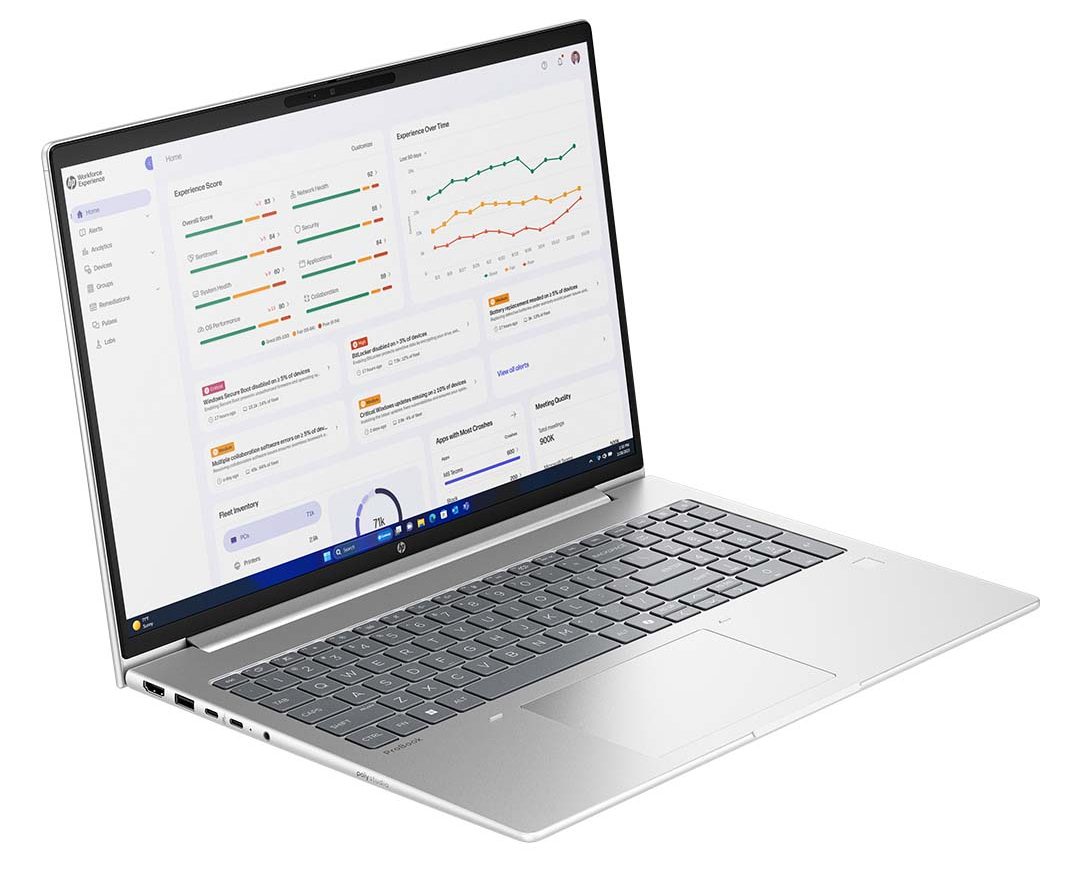
HP Workforce Experience Platform (WXP)
HP introduced new AI-driven features in its Workforce Experience Platform (WXP) to improve visibility into device performance and automate issue resolution. The platform can identify early signs of system strain, including memory and application issues, and provide data-driven recommendations to optimize resource allocation and maintain performance.
Enhancements also include expanded API capabilities with Wolf Protect and Trace, allowing IT teams to remotely locate, lock, or erase devices, even when powered off. Additional updates include workflow automation, customizable reporting, and integration with platforms such as Microsoft Teams. HP also launched Poly+ Analyze, a service for managing HP Poly collaboration devices that offers diagnostics and support to improve meeting performance, with additional features such as carbon footprint reporting expected by mid-2026.
Taken together, the updates show how HP is integrating AI across its portfolio, from hardware to software. The focus is on improving performance, strengthening security, and making it easier to manage devices and workflows as hybrid work becomes the norm.

Featured Videos
Today's Top Stories:
More Top Stories:





FROM OUR PARTNERS