
- | LEAP
Saudi Arabia didn’t just host a tech event. It’s one of the world’s biggest ones
Saudi Arabia's global tech festival LEAP 2026 returns to Riyadh from 31 August to 3 September, uniting AI, fintech, space tech and world class investors.
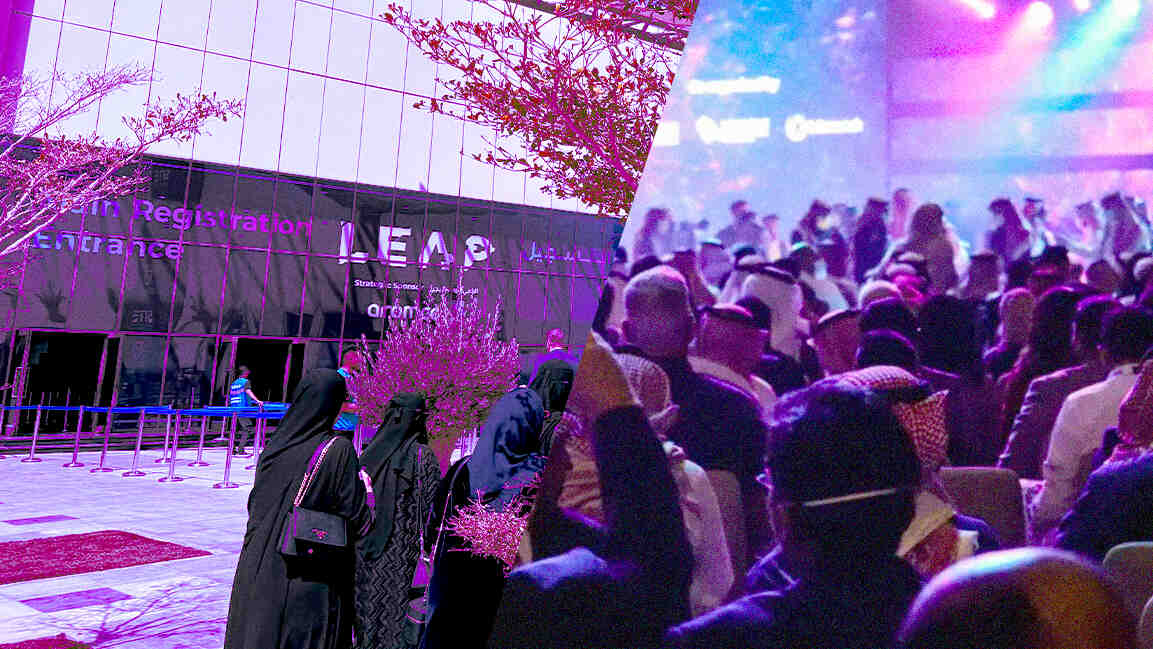


When $14.9 billion in deals are announced at a single event, people stop asking whether Saudi Arabia belongs in the global tech conversation.
They start asking how to get a seat at the table. That is the position LEAP has reached in its fifth edition – returning to Riyadh from 31 August to 3 September 2026.
Mike Champion, CEO of Tahaluf, the joint venture behind LEAP, does not linger on the numbers. What he wants to talk about is the decision that made them possible.
“I expect the Kingdom to become one of the world’s most important incubators for technology that will eventually define how other economies are run,” he says.
FESTIVALIZING THE FUTURE
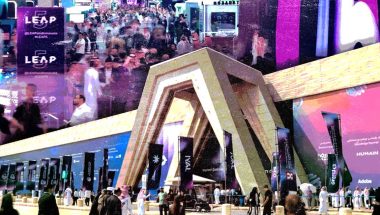
“One of the decisions we made very early was to festivalize LEAP,” Champion says. “In simple terms, that means designing the event less like a traditional conference and more like a global festival of technology. We wanted to create something people are genuinely excited to attend, where innovation is experienced as well as discussed.”
Saudi Arabia’s ICT market – the largest in the Middle East at more than SR180 billion ($48 billion), with its digital economy contributing around 15% of the national GDP gave LEAP fertile ground. But Champion is clear that scale alone did not build the audience. The festival format did.
Alongside its headline stages, LEAP 5 includes immersive environments like the Tech Arena, community-driven zones such as GameX Creative and Sports Hub, and city-wide programs like LEAP Nights that push the experience well beyond the venue.
“It has evolved into something closer to a global technology festival than an industry conference,” Champion says, and the numbers bear that out.
This LEAP edition will span more than twenty stages covering climate, health tech, fintech, space tech, and smart cities.
DeepFest, Tahaluf’s dedicated AI event co-located within LEAP, returns with a program built around governance, ethics, sustainability, and robotics, alongside hands-on demonstrations. A new addition, LEAP Connect, promises structured matchmaking designed to translate stage conversations into real partnerships.
THE CAPITAL BEHIND THE CONVERSATION
Numbers define LEAP as much as spectacle does. At the 2025 edition, Groq, a US artificial intelligence company, used the stage to announce a $1.5 billion partnership with Aramco Digital to build AI infrastructure in Saudi Arabia.
For Champion, that moment crystallizes what the platform is engineered to deliver: “Real announcements and real progress happening in front of a global audience.”
The investor profile at LEAP has evolved accordingly. In its early editions, attendance skewed toward international firms seeking to understand regional opportunity. Today, Champion describes a very different room.
“We are seeing stronger participation from global infrastructure providers, major artificial intelligence companies and tier-one venture capital firms that are actively deploying capital and forming partnerships,” he says. At LEAP 2025, roughly 1,900 investors managing an estimated $22 trillion in assets participated in the event.
For LEAP 5, the investor community grows more structured. Participants include Morgan Stanley, the Public Investment Fund, Tencent, General Atlantic, and BlackRock, institutions whose presence signals, as Champion puts it, “a growing level of conviction about the region and about LEAP’s role as a global meeting point for the technology industry.”
The event’s Rocket Fuel Pitch Competition, offering $1 million to early-stage startups, runs alongside a curated investor program spanning 60 technology verticals.
SAUDI ARABIA’S MOMENT
No account of LEAP can be separated from the country in which it sits. Saudi Arabia’s ICT market is now the largest in the Middle East, valued at more than $48 billion. Its digital economy contributes around 15% of the national GDP.
With 2026 designated nationally as the Year of AI, there is both political intent and institutional infrastructure behind the Kingdom’s technology push.
Champion sees this not as a backdrop but as the central variable. “In many markets, innovation happens incrementally,” he says.
Adding: “In Saudi Arabia, solutions can be tested and rolled out across entire industries, from government services to energy, healthcare and mobility. The investment is real, the mandate is clear, and the pace of execution is unlike anything I have encountered in a comparable market.”
Riyadh’s geography reinforces the argument. The city sits within an eight-hour flight of roughly 60% of the world’s population, a fact that has made it a natural convergence point for global capital and regional innovation.
That convergence, Champion argues, has produced real and lasting outcomes beyond the deal announcements. The story of Reme-D, a US deep-tech health startup that won LEAP’s Rocket Fuel competition in 2024 and has since deployed diagnostic kits across 92 hospitals and laboratories in Egypt, now testing more than 50,000 patients monthly, illustrates the kind of trajectory LEAP aims to accelerate.
TAKING THE BRAND EAST
Five editions in, Tahaluf’s ambitions are no longer confined to Riyadh. LEAP East – the brand’s first international extension – will land in Hong Kong from 8 to 10 July 2026. The location is not incidental. “Hong Kong sits at the intersection of global capital and Asia-Pacific innovation,” Champion explains, “creating a natural gateway to Chinese and regional technology markets that are driving some of the most advanced developments in the world today.”
The expansion follows a model that Tahaluf has already proven with Black Hat Middle East and Africa, LEAP’s cybersecurity counterpart, which has become a major platform in its own right. The organization’s stated mission – building global platforms that bring together the industries shaping the future of economies – is beginning to look less like a vision statement and more like an operating plan.
It is the kind of bet that, made anywhere else, could sound like boosterism. Given what Tahaluf has built in Riyadh in four years – and what it is now attempting in Hong Kong – it is harder to dismiss than it might once have been.
Featured Videos
Today's Top Stories:
More Top Stories:



FROM OUR PARTNERS