- | 2:00 pm
Renewable energy reaches record 5.15TW as world races toward 2030 target
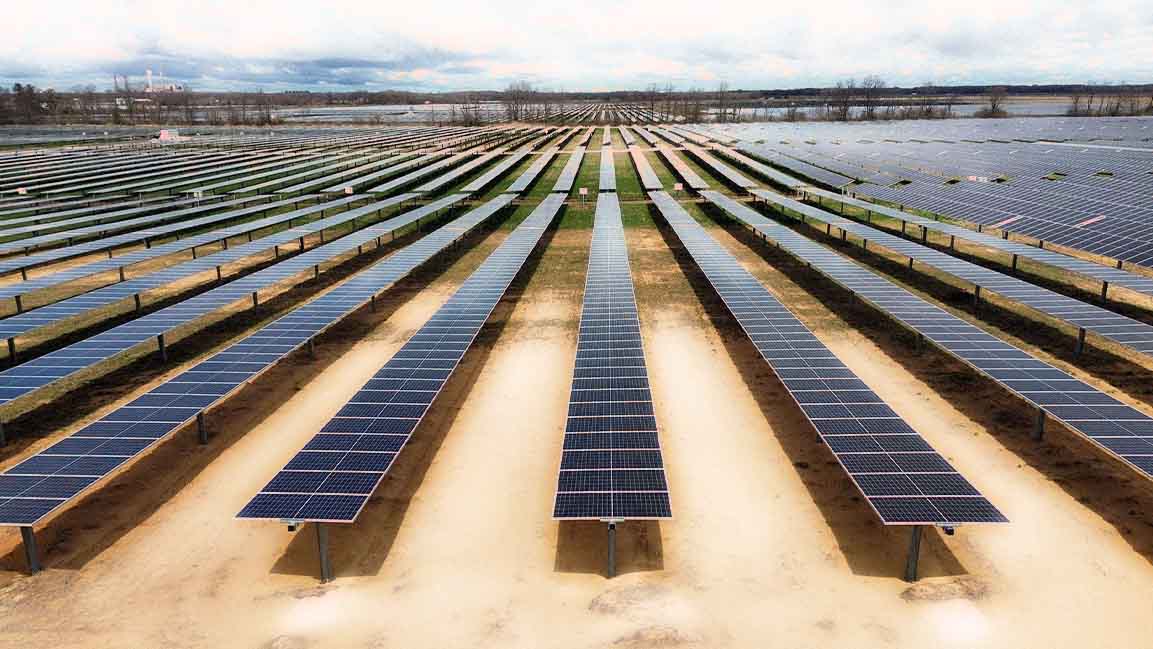


Global renewable energy capacity reached a record 5.15 terawatts (TW) in 2025, but the pace of deployment will need to accelerate by nearly double to meet the global target of tripling renewable capacity by 2030, according to a new report.
The world added a record 693 gigawatts (GW) of renewable capacity last year, but annual additions will need an average of around 1,200 GW between 2026 and 2030 to reach the 11.2 TW target agreed under the UAE Consensus at COP28.
The findings, published by the International Renewable Energy Agency (IRENA) alongside the COP31 Presidency of Türkiye and the Global Renewables Alliance during Climate Week NYC, found that global energy intensity has improved.
In 2025, global energy intensity improved by around 2%, only half the 4% annual improvement needed to meet the UAE Consensus target of doubling the rate of energy-efficiency gains by 2030.
The report identified investment, electricity grids and electrification as major challenges to scaling renewable energy fast enough.
Investment in grids and flexibility will need to rise to almost $1 trillion annually between 2026 and 2030, more than double 2025 levels, according to the report.
The agency also called for faster deployment of battery storage, efficient electrical technologies and other forms of system flexibility as electricity demand rises.
Around-the-clock renewable energy systems that combine solar, wind and storage will become increasingly important, while digitalisation and artificial intelligence could help better match electricity demand with clean power supply.
Battery storage costs fell 30% between 2024 and 2025 and 95% since 2010, strengthening the economics of storage as renewable generation expands. The report also found that around a quarter of utility-scale solar capacity commissioned globally in 2025 was paired with storage as part of systems designed to provide renewable power around the clock.
Variable renewable sources such as solar and wind are projected to overtake total fossil-fuel generation capacity by 2030 and account for around 62% of global installed power capacity, up from 35% in 2025.
The shift is expected to make electrification increasingly important to meeting global energy and efficiency targets.
According to IRENA, greater electrification will be central to achieving the UAE Consensus goal of doubling the global rate of energy-efficiency improvement by 2030.
Beyond that, the agency said that further acceleration will be needed to increase electricity’s share of global final energy consumption to 35% by 2035, a target currently under discussion as part of the COP31 agenda.
Francesco La Camera, Director General of IRENA, said renewable energy could still close the gap to the 2030 target, but warned that energy efficiency is lagging while electricity demand is growing faster than expected.
The agency’s updated roadmap called for faster electrification and the rapid expansion and modernisation of renewable generation, grids, storage and other sources of system flexibility.
United Nations Secretary-General António Guterres also called for faster action to remove bottlenecks holding back the energy transition, increase investment in developing countries and reduce dependence on fossil fuels.
Chris Bowen, Australia’s Minister for Climate Change and Energy and President of Negotiations for COP31, said greater efforts were needed to support investments across electrification infrastructure, including modern grids, storage and reliable clean electricity. He added that Australia was working closely with Türkiye to ensure COP31 places electrification at the centre of its agenda.
The report is the third assessment of progress toward the renewable energy and energy-efficiency targets agreed under the UAE Consensus at COP28, ahead of COP31 in Antalya, Türkiye.

Featured Videos
Today's Top Stories:
More Top Stories:




FROM OUR PARTNERS