- | 9:00 am
Humanoid robots may be coming to the GCC. But don’t throw out your mop yet
While humanoid robots can serve society and individuals, doubts remain about whether people will welcome them into their homes and feel comfortable with them at work or in hospitals.
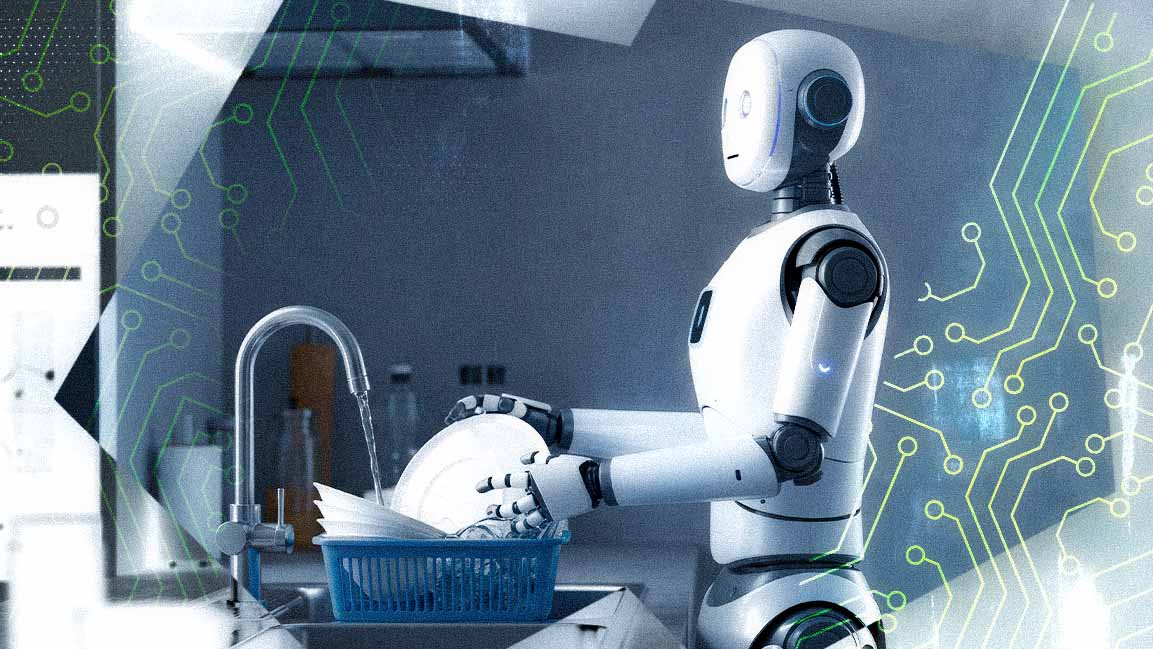


A humanoid boom is sweeping globally. It is probably the last brick in the towering castle tech companies are building around embodied AI—human-mimicking robots with expansive capabilities. You must have seen a sword-brandishing, back-flipping humanoid performing elaborate martial arts routines in China.
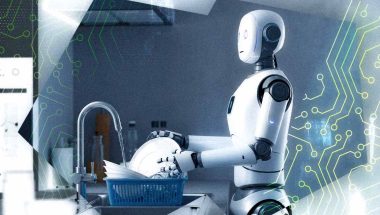
Well, the market for bipedal robot dancers may be limited, but how about having a humanoid robot at home to chop your vegetables, fold your shirts, and make your bed?
Chinese tech firm GigaAI has announced the (allegedly) first commercial robotic butler ever. They will start deployment in Wuhan in the first half of 2027. In Japan, humanoid adoption is so widespread that there is even a “robot ambulance” for on-site repairs.
The shift from machines that repeat to machines that think and act is already underway.
WILL HUMANOIDS BE ACCEPTED?
But unlike China and Japan, where robots are one of many answers to their ongoing demographic crisis, doubts remain that the GCC would see serious, large-scale deployment.
Will everyday people here, although they think humanoids are cool tech, welcome a synthetic person walking through their living spaces? At homes, workplaces, schools, and hospitals.
In the next couple of years, experts say it will be a watershed moment for robotics, but a lot remains before humanoids can be brought into homes.
“Humanoid robots may slowly get accepted in the Middle East, just like in the rest of the world, though adoption speed may vary,” says Dr. Michel Pasquier, a Professor of Practice in Computer Engineering at the American University of Sharjah.
“Culture is a key factor,” Dr. Pasquier adds. “User needs will be a strong driver: quick integration will likely occur first in healthcare, retail, plants, and other industries, addressing a shortage of qualified personnel and/or the difficulty of the tasks.”
Morgan Stanley projects the humanoid robot market will hit $5 trillion by 2050.
Acceptance is essentially a function of infrastructure, says Dr. Claudio Zito, Assistant Professor at the School of Mathematical and Computer Sciences, Heriot-Watt University Dubai. “If the technology is integrated into the ‘smart’ ecosystem, integrated into smart homes, government service apps, and modern hospital systems, it becomes invisible infrastructure.”
He adds that the region is building this infrastructure from the ground up, giving it a structural advantage. “With a younger demographic, a high density of tech-savvy early adopters, and aggressive national digitization agendas, the region isn’t just following the Japan model; it is poised to leapfrog it.”
ROBOTICS IN THE REGION
Globally, embodied AI is expanding faster than any other industry. In the GCC, countries have elevated robotics to a matter of strategic importance for their future economies, attracting enormous attention, capital, and optimism.
Robotics companies are pushing forward and showcasing their latest models. In Riyadh, a showroom displaying cutting-edge humanoid robots opened last year, and there’s a plan to deploy about 10,000 of these machines, two-armed, two-legged robots, in industries across Saudi Arabia over the next five years. In September, CyberHero x Riyadh, the world’s first global humanoid robot sports league, was launched in Riyadh.
Humanoid robots are now appearing in newsrooms. Kuwait News introduced Fedha, a virtual news anchor, and Asharq News launched an AI version of Hadil Eleyan.
In Dubai, Civil Defense, Police, and the Municipality use robots as firefighters, in beach rescue teams, and for administrative tasks.
Dubai-based No Competition Infinity Gaming Development Services has signed a deal with China’s Jiangsu Yunmu to supply up to 10,000 humanoid robots a year for real estate, education, and construction.
Hospitals also use robots to assist with surgeries.
That’s not all. A real estate development in Dubai recently announced plans to use robots for household help, security, cleaning, healthcare support, and even making coffee.
CAN THEY BE TRUSTED?
That’s all fine. But scaling adoption raises questions about reliability and the slightly unnerving tendency of these machines to fail.
In August, in China, a headless humanoid robot called Superman, built by Unitree Robotics, clocked a running speed of 12.66 meters per second, beating the record set by Usain Bolt. It was a spectacular demonstration, but after it, Superman veered off course and crashed into a wall.
And this is where things get a little weird. The ignominious end of Superman’s running feat demonstrates that the technology still has a long way to go.
Safety challenges have marred humanoids’ progress. They pose real physical risks as they are capable of causing injuries as simple as falling over onto a person’s foot. High prices and short battery life have also limited their appeal. Plenty of roboticists are skeptical that a human form is the best shape for a robot to take.
Most importantly, trust is lacking.
“Studies have shown that people struggle to accept humanoid robots, for various reasons,” says Dr. Pasquier.
These reasons include safety, psychological factors, and data privacy.
“The more realistic the robot’s appearance is, the more discomfort or even aversion humans feel. Another concern is safety; people often fear potential breakdowns or unpredictable behavior that could be harmful. Data privacy is also a big issue; users are increasingly concerned about their personal information being misused. Last is the rising anxiety about job replacement, which hampers the use and integration of robots,” adds Dr. Pasquier.
Advancements in AI have undoubtedly made robots easier to train, but they have yet to enable them to truly sense their surroundings,
There’s a new class of gig workers, hired by data-collection firms and known as physical AI trainers, who document themselves, strapping a phone or a camera to their forehead, from the endless rhythm of everyday life—washing and folding laundry, cooking, doing the dishes—to looking after bedridden patients at home, and their recordings, which follow a detailed set of instructions, are used to help train robots in human behavior.
“As humanoid aesthetics become more functional rather than ‘human-mimicking’, with a focus on utility over physical appearance, distrust fades. People trust what provides consistent, measurable results,” says Dr. Zito.
Also, humanoid robots have become more capable in movement and interaction, but their general practical abilities remain well below those of humans in unstructured environments such as homes.
FUTURE OF ROBOTICS IN THE REGION
The region is already integrating robotics into many fields, such as logistics, healthcare, construction, and smart city services. The GCC humanoid robot market is projected to reach $234.3 million by 2031. In the wider MENA market, revenue is projected to reach over $526 million in the early 2030s. This is mainly driven by heavy investments in Saudi Arabia and the UAE across cultural engagement, entertainment, and industrial sectors.
Over the years, at many tech events in the region, robots in many forms—including humanoid ones—have been showcased, entertaining the public and demonstrating their skills. Many are specialized to do practical tasks, such as transporting heavy loads or inspecting sewage pipes. Today, however, things are mostly for show.
But experts say showcases like this matter because they let the public see robots up close, and future progress in adopting humanoid robots will depend on several factors.
According to Dr. Pasquier, first, government initiatives are essential to enable AI and automation strategies, including good funding and policy support. Second, broader economic diversification would enable a shift toward more automated manufacturing and technological innovation. Third, integrating modern infrastructure, from smart devices to high-speed networks and digital services, will facilitate the seamless deployment and broad adoption of robots.
“The ‘Human-in-the-Loop’ model will define the future of robotics in this region,” adds Dr. Zito. “People will embrace robots that augment human capability rather than replace it. The factors encouraging adoption will be the need for increased medical support for an aging population, and government initiatives that position the region as a global testing ground for the ‘smart cities’ of tomorrow.”
The region is in the early stages of embracing this new technological revolution. Still, one thing is clear: like everything else with AI, humanoid robots will probably get here, and into our homes, faster than we imagine.