- | 12:00 pm
Dubai-based No Competition signs five-year deal for up to 10,000 humanoid robots annually
The companies will explore applications across construction, real estate, gaming, education and technology research.


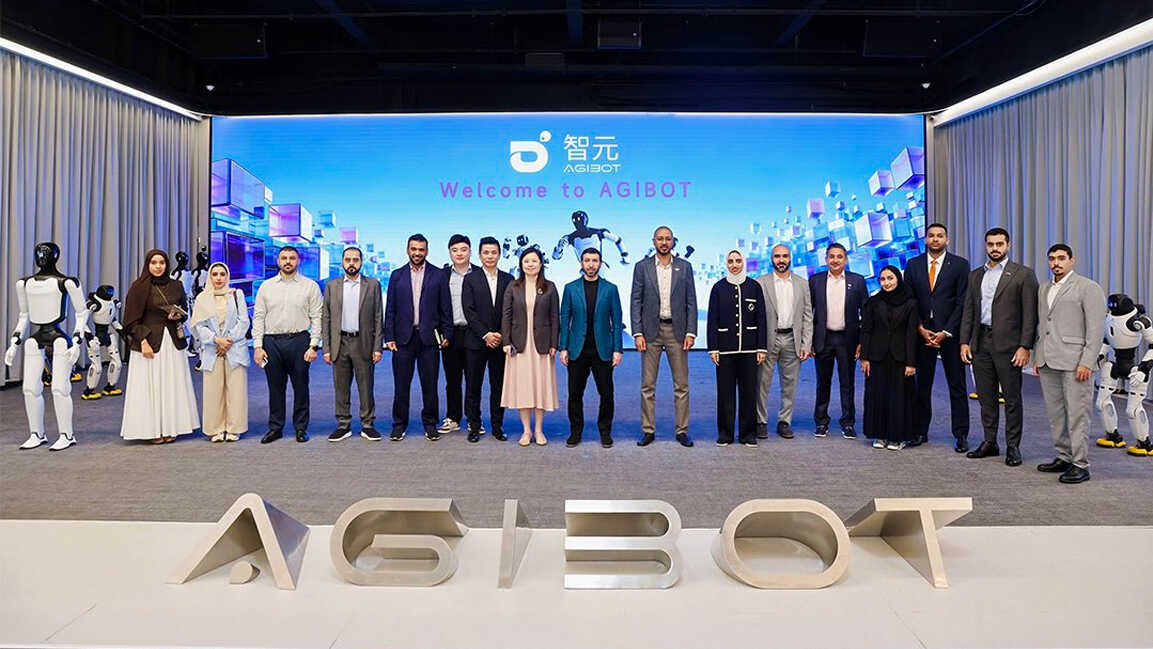
Dubai-based No Competition Infinity Gaming Development Services has signed a five-year technology agreement with Chinese manufacturer Jiangsu Yunmu Intelligent Manufacturing Technology, providing contractual capacity to supply up to 10,000 humanoid robots annually.
Signed in Taicang, China, the agreement will focus on developing and deploying solutions that combine artificial intelligence, digital twins, advanced simulation and humanoid robotics.
The companies will initially assess potential applications across construction, real estate development, gaming, education and technology research and training.
The 10,000-robot annual capacity is subject to adjustment based on project progress, technical validation, and the expansion of commercial applications, and therefore does not represent a confirmed order or deployment volume.
The partnership combines Jiangsu Yunmu Intelligent Manufacturing’s humanoid robotics development and manufacturing capabilities with No Competition’s experience in gaming, virtual environments, real estate and simulation.
Manuel Zau Polo, President of No Competition Infinity Gaming, said: “Our vision is to turn simulation, artificial intelligence, and digital twins into operational capability in the physical world. The robot is one part of that equation. The real value lies in building the system that allows us to train, test, refine, and scale these machines for real-world applications.
“Our goal is to reduce the risks humans are exposed to and help save lives, to educate children through these technologies, and, most importantly, to increase the number of jobs worldwide”.
Under the partnership, the companies will examine how humanoid robots could be applied in construction and real estate, as well as potential uses in gaming, education, and technology research.
No Competition plans to use virtual environments and digital twins to simulate and test processes before deploying technologies in physical settings. The approach would allow tasks to be modeled, evaluated, and refined before robots are introduced into live operations.
The development is expected to progress from technology validation to pilot projects and, subject to the results, potential commercial-scale deployment.

Featured Videos
Today's Top Stories:
More Top Stories:





FROM OUR PARTNERS