
- | 1:00 pm
These ‘smart molecules’ could change how we detect and treat cancer
A new class of molecules that diagnose, monitor, and treat cancer simultaneously, transforming care into real-time intervention.


Cancer doesn’t wait. But the system that treats it often does, taking days between scans, more days before a diagnosis, and even more before treatment begins. Meanwhile, the disease keeps moving.. The tools for detecting cancer and those for treating it usually operate separately and rarely converge.
This could change soon.
Researchers have developed a new class of “smart molecules,” recently published in the Journal of the American Chemical Society. These molecules are designed to break down those boundaries between detection and treatment by combining both functions into a single system that operates within the body as the disease progresses.
A MOLECULE THAT SEES AND TREATS
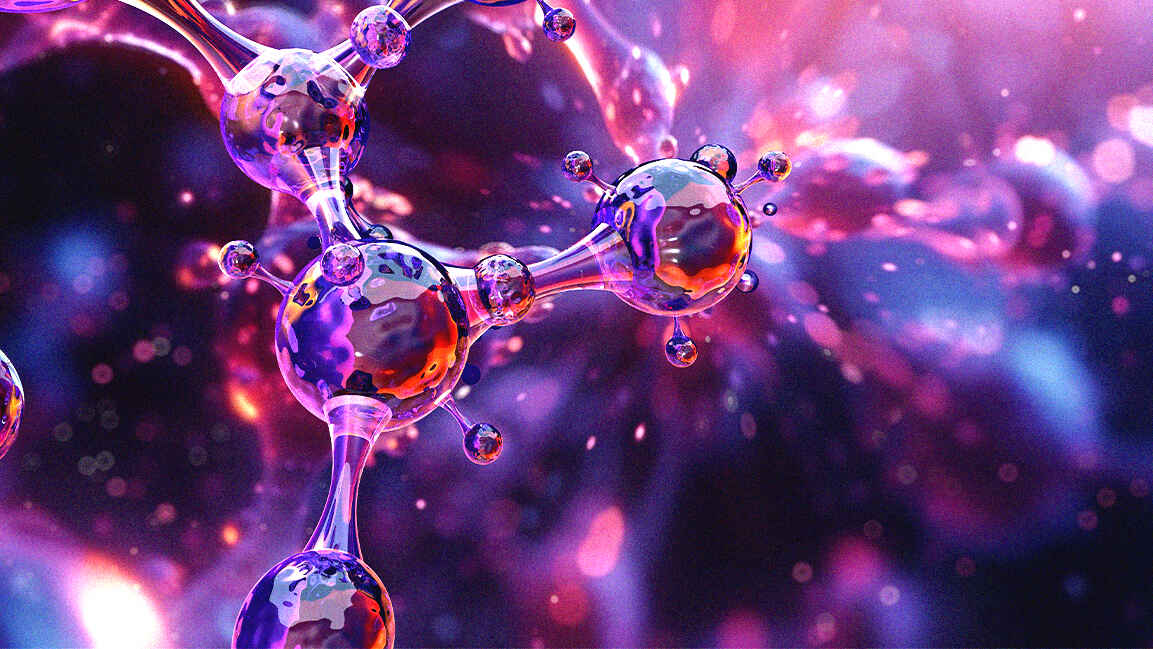
This highly engineered molecular structure is built around manganese, a biocompatible metal. Unlike conventional drugs, these molecules are not simple compounds. They are a mechanically interlocked architecture; think of them as tiny, nanoscale knots or rings, designed to perform multiple functions inside the body.
On one hand, the molecules enhance MRI scans, lighting up tumors with greater clarity than standard contrast agents. On the other hand, they actively attack cancer cells by triggering intracellular stress responses, generating reactive oxygen species, disrupting mitochondrial function, and ultimately inducing programmed cell death.
So, the same molecule that helps doctors find a tumor can also start to destroy it.
FROM TWO STEPS TO ONE
Farah Benyettou, a Research Scientist at NYU Abu Dhabi and one of the study’s authors, says the real breakthrough is how this technology changes the whole treatment process.
“It changes cancer treatment from a two-step process into one integrated approach,” she says. “Traditionally, doctors use one agent to diagnose (imaging) and another to treat. Here, the same molecule does both.”
“This means we can see where the drug goes in real time and treat the tumor simultaneously,” she adds, “making therapy more precise and reducing unnecessary exposure to healthy tissues. It’s a step toward truly personalized medicine.”
HOW MOLECULES WORK
Benyettou says these molecules are “smart delivery systems.”
Once injected, they circulate in the body and preferentially accumulate in tumors. They help doctors clearly visualize the tumor using MRI. Once inside the tumor, they activate and exert their therapeutic effect, especially in the acidic environment of cancer cells, adds Benyettou.
In other words, they do not just sit in the body; they react to what is happening around them.
“So they find, highlight, and treat the tumor at the same time,” she says.
A SAFER IMAGING ALTERNATIVE
MRI scans today often rely on gadolinium-based contrast agents, which have raised concerns over long-term accumulation in the body. The new system replaces gadolinium with manganese, a metal that is generally better tolerated biologically.
That could mark a significant improvement in patient safety, particularly for individuals requiring repeated imaging, such as cancer patients undergoing ongoing monitoring.
It is more than just swapping metals. These molecules are designed to respond to their environment, so their imaging and therapeutic effects are stronger within tumors. This helps make treatment more precise and protects healthy cells.
BREAKING THROUGH THE BRAIN’S DEFENSES
One of the most striking aspects of the research is the molecule’s ability to cross the blood-brain barrier, a tightly regulated shield that prevents most drugs from entering the brain.
“This is extremely important, especially for brain cancers like glioblastoma,” Benyettou notes.
“The blood-brain barrier is a natural defense that blocks most drugs from reaching the brain. If a molecule can cross it, it means we can deliver both imaging and treatment directly to brain tumors, one of the biggest challenges in oncology today.”
If this works in humans, it could lead to new ways to treat some of the toughest and hardest-to-reach cancers.
FROM SEQUENTIAL CARE TO REAL-TIME INTERVENTION
Perhaps the most transformative aspect of this research is how it challenges the traditional sequencing of cancer care. Instead of a drawn-out progression in which doctors first scan, then analyze, then treat, and only later reassess, this approach collapses those stages into a continuous, responsive cycle.
As Benyettou puts it, the goal is to “see where the drug goes in real time and treat the tumor simultaneously,” allowing clinicians to monitor progress in real time rather than waiting for follow-up procedures. The result is a more adaptive model of care, one in which intervention and insight occur in tandem.
ENGINEERING A MOLECULAR BALANCING ACT
Designing a molecule that can do all of this is no small feat.
“The main challenge was balancing several difficult requirements at once,” Benyettou explains.
She describes the process as ensuring that the molecule remains stable in the bloodstream “so it doesn’t break down too early,” while also being engineered to activate only within tumors “to avoid harming healthy tissue.” At the same time, it must deliver strong imaging performance and retain enough potency to kill cancer cells effectively.
“Achieving all of these in a single molecule required careful design of both the structure and the properties of the system,” she says.
EARLY RESULTS, BIG IMPLICATIONS
In early studies with cell cultures and animals, these molecules showed they could build up in tumor tissue, improve imaging contrast, and greatly slow down tumor growth.
The research also found encouraging safety results, with no immediate signs of serious side effects. While this is an important first step, it is still early, and human trials will be needed to confirm both how well it works and its long-term safety.
Making these molecules is complicated, and producing them at scale will be difficult. Getting regulatory approval will need many human trials, and long-term safety, especially with repeated use, must be carefully proven.
However, if this technology makes it into clinical use, it could help doctors find cancers sooner, treat them more accurately, and make quicker decisions. Instead of treating the whole body with strong therapies, treatment could focus only on where it is needed.
The appeal is clear: fewer fragmented procedures, more efficient care pathways, and potentially better outcomes with less strain on patients.