- | 9:00 am
Stablecoins are entering the mainstream in the Middle East. Here’s why
Stablecoins in the Middle East are gaining momentum as banks and fintech firms expand cross-border payments and digital finance.
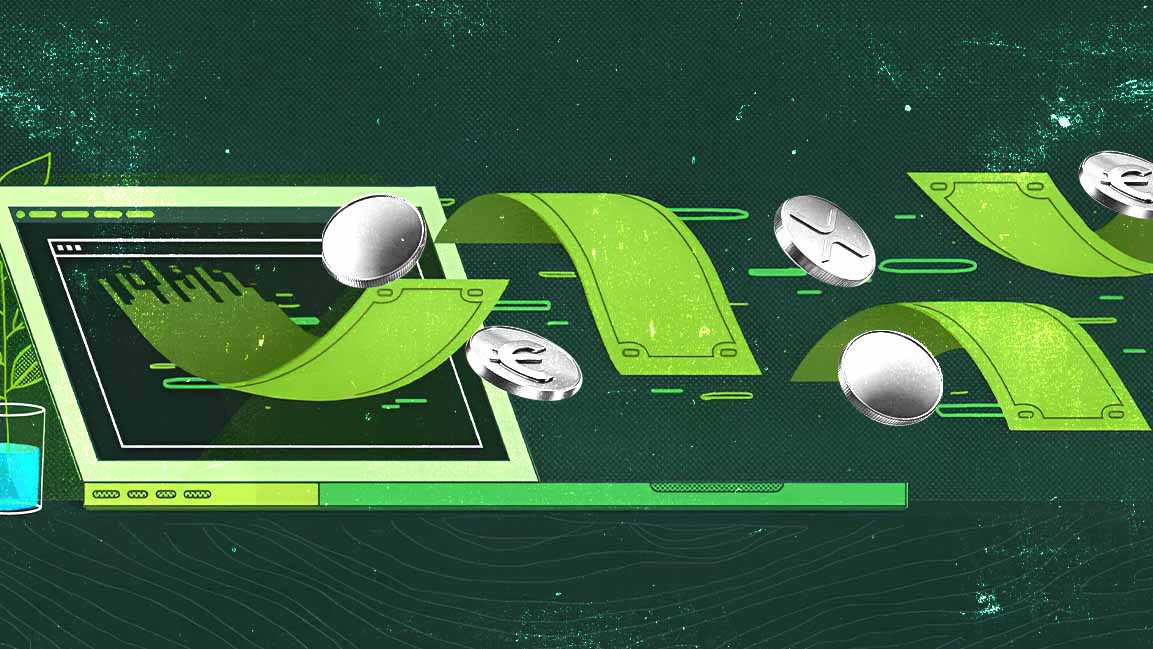


Strip away the trading-floor noise, and a quieter shift is reshaping finance in the Middle East. Stablecoins dollar- and dirham-pegged digital tokens designed to hold their value are becoming the rails of choice for moving money across borders. In a region defined by expatriate remittances, sprawling trade corridors, and one of the world’s fastest-growing digital banking populations, that shift is no longer hypothetical.
While bitcoin still wears the high-risk label, stablecoins are being adopted by the very institutions that once gave crypto a wide berth: banks, regulators, payment firms, and fintechs hunting for faster, cheaper ways to settle cross-border payments.
The industry is maturing in plain sight, away from speculation, toward infrastructure. That shift is becoming harder to ignore.
Experts say the digital assets and payment industry is becoming more mature, shifting away from speculation and focusing more on building solid infrastructure.
“Crypto’s initial wave was driven by price volatility, and the same characteristic that attracted speculative interest also made it impractical for everyday financial use,” says Rahul Kumar, Head of Digital Assets MENA at Capital.com
He adds that stablecoins address a fundamentally different need. “They function as a settlement asset for institutions, a common value layer that different platforms and wallets can plug into, and a practical payment rail for end users, all without the price swings.”
Global stablecoin transaction volume hit roughly $30 trillion in 2024, according to Capital.com MENA. Remittances sent across those rails are already undercutting traditional cross-border channels on cost.
The region’s biggest players have noticed. Last year, IHC, ADQ, and First Abu Dhabi Bank (FAB) unveiled plans for a dirham-backed stablecoin, issued by FAB and regulated by the UAE Central Bank.
In January, the Central Bank of the United Arab Emirates approved the country’s first USD-backed stablecoin, USDU, under its Payment Token Services Regulation. USDU is issued by Universal Digital, a crypto firm regulated by the Financial Services Regulatory Authority at Abu Dhabi Global Market.
Kumar says the attention stablecoins are receiving now “reflects a maturation” in how the market thinks about digital assets. “It is less as instruments for speculation, and more as a regulated financial infrastructure that solves real operational problems, particularly where settlement is slow, fragmented, and cross-border.”
Reece Merrick, Managing Director for the Middle East and Africa at Ripple – a payment solution company – says the shift toward stablecoins reflects a broader evolution in how digital assets are being used.
“We’re seeing less a shift away from crypto, and more an evolution toward real-world utility for digital assets,” Merrick says. “As the market matures, businesses and financial institutions are increasingly focused on how blockchain technology can solve practical challenges around payments, settlement, liquidity, and the movement of value globally.”
FIXING VOLATILITY
Crypto was originally pitched as an alternative financial system. But the volatility made them difficult to use as a medium of exchange. Stablecoins try to fix this by keeping their value tied to traditional currencies, usually the US dollar.
“A stablecoin is a digital token designed to maintain a stable value, typically by being pegged one-to-one to a reference currency, most commonly the US dollar. Think of it this way: a stablecoin is the mechanism, and a digital dollar is the outcome…The important distinction is not the label but rather what sits behind it.”
This difference is important because not all stablecoins have the same level of risk.
Kumar adds: “An algorithmic or poorly backed token may carry the same name but a very different risk profile. The real task is separating robust designs from everything that simply shares the same label.”
The growing focus on reserve backing, redemption rights, and regulation is also changing how financial institutions view stablecoins.
Tarek Soubra, CTO at Al Maryah Community Bank, believes regulation is fundamentally changing how financial institutions and consumers alike perceive stablecoins.
“Regulation is changing the perception of stablecoins from speculative crypto assets to regulated digital payment instruments. The question is no longer only about price volatility; it is now about reserve backing, redemption rights, compliance, and regulatory supervision.”
But Soubra continues: “However, adoption still needs more effort to convince everyday users and businesses that UAE-regulated stablecoins usage is safe, linked to a real currency, backed by proper reserves, and issued and operated within a regulated ecosystem.”
The UAE has positioned itself as one of the region’s most active digital asset hubs, with regulators increasingly creating frameworks around tokenized finance, virtual assets, and stablecoin issuance. Earlier this year, Al Maryah Community Bank worked on an AED-pegged stablecoin regulated by the UAE Central Bank.
According to Soubra, regulation may ultimately determine whether stablecoins move beyond crypto-native users and into mainstream financial systems.
“As our stablecoin is regulated by the Central Bank of the UAE, which requires the issuer to place 100% reserves before minting any token, this gives users confidence that their holdings are properly backed and protected, which further encourages the acceptance of stablecoin,” he says.
COMPETITION IS IN PAYMENTS
The best business reason for stablecoins may not be about crypto trading. Cross-border payments are still slow, complicated, and costly in many places, especially for remittances. This creates an opportunity.
Traditional international transfers often rely on long correspondent banking chains involving multiple intermediaries, settlement windows, and processing fees. Stablecoins compress much of that process into blockchain-based transfers that operate continuously.
The model is not without risks. Regulators globally still face questions around reserve transparency, cross-border oversight, consumer protections, and whether privately issued digital currencies could eventually concentrate too much financial power in a handful of platforms. Concerns also remain around fragmentation, with multiple stablecoins competing across different networks and regulatory regimes.
Still, institutions increasingly appear willing to accept those complications if the trade-off is faster and cheaper movement of money.
Merrick says stablecoins are increasingly solving the structural inefficiencies that have historically slowed cross-border payments.
“Traditional international payments often involve multiple intermediaries, pre-funded accounts, settlement delays, and high operational costs,” Merrick says. “Stablecoins can reduce much of that friction by enabling near-instant settlement, improving liquidity management, and increasing transparency across payment flows.”
“The additional advantage that stablecoins bring to the payment world is their 24/7 availability and speed, regardless of the transaction value. This has enabled multiple new use cases and, Visa, for example, allows today issuing and acquiring banks to settle their obligations fully in stablecoins, 365 days a year,” says Soubra.
Stablecoins bring the benefits of digital assets, such as faster settlement, programmability, and transparency, without exposing holders to the price swings of cryptocurrencies. “Those features enabled Stablecoins to evolve into new use cases such as payments, settlement, trade finance, and others,” he adds.
The Middle East is particularly relevant because it combines several factors that make cross-border payments economically important: large expatriate populations, substantial remittance outflows, growing digital banking adoption, and strong trade corridors.
“The biggest opportunity is in regulated cross-border payments, remittances, merchant settlement, and business-to-business transfers,” says Soubra.
Kumar points to the scale of regional crypto flows as further evidence that demand already exists.
“The UAE economy received upward of $56 billion in crypto inflows in the 2024–2025 reporting window, growing at 33% period-over-period,” he says.
A significant portion of that activity, he adds, “reflects cross-border value movement, precisely the use case where stablecoins outperform legacy rails. Traditional remittance corridors in this region involve multiple intermediaries, correspondent banking chains, and fees that disproportionately affect lower-value transfers.”
The financial benefits are getting harder for banks and other institutions to ignore. Traditional remittance costs can range between 3% and 6% of the amount sent, while stablecoin rails can significantly reduce those fees.
“These are not theoretical gains,” Kumar says. “They reflect real users solving real problems with real money.”
That growing focus on utility is also reshaping how banks and fintech firms think about stablecoins.
“All the infrastructure play like payments for stablecoins may sound unattractive however, this is where big volumes (and revenues) are, hence, the interest from banks and fintechs,” says Herve Francois, Head of Digital Assets Investments at SC Ventures and SBI Holdings Joint Venture.
BANKS ARE NO LONGER IGNORING IT
For most of crypto’s history, traditional banks mostly stayed away. But now, that is starting to change. It is not that banks have suddenly embraced crypto ideas. Instead, stablecoins are starting to look more like familiar payment infrastructure.
“Cryptocurrencies are still largely perceived by financial institutions as higher-risk assets while adoption of regulated stablecoins, on the other hand, is becoming more accepted with the growing number of use cases around payments, remittances, settlements, and trade finance,” says Soubra.
Regulation is also speeding up the change.
“Approximately 13% of financial institutions and corporates globally are already using stablecoins, and over 50% of non-users expect to adopt within six to 12 months,” says Kumar.
“What has changed is not the technology but rather the environment around it. Supervisors in key jurisdictions are setting clear expectations for reserve assets, disclosure, and redemption rights.”
This is important because stablecoins are moving into areas that banks have usually controlled.
Standard Chartered estimated in a recent report that up to $1 trillion could shift from emerging-market bank deposits to stablecoins by 2028 as adoption accelerates in cross-border payments and savings.
This raises a bigger question for the financial sector: Are stablecoins competing with banking infrastructure, or are they just the next step in its evolution?
“Stablecoins are not necessarily replacing traditional banking infrastructure, but modernizing how value moves within it,” Soubra says.
Francois believes banks risk falling behind if they ignore how stablecoin infrastructure is evolving.
“If banks ignore the shift, stablecoins could put pressure on deposits, payment flows and client relationships,” Francois says. “But if banks participate responsibly, it becomes an opportunity to build new services around digital money, custody, tokenization, treasury and settlement.”
That distinction could become important as regulators attempt to balance innovation with financial stability.
Unlike decentralized cryptocurrencies designed to operate outside financial systems, regulated stablecoins increasingly depend on reserve requirements, compliance structures, licensing frameworks, and integration with traditional institutions.
DEMAND FOR PRACTICAL UTILITY
Most consumers do not care how the payment infrastructure works. They care whether money arrives quickly, cheaply, and reliably.
And that is where stablecoins may have an advantage.
“What we observe is a shift in what people actually need from digital assets,” says Kumar, adding that the speculative narrative has not disappeared. Still, alongside it, there is a growing, quieter demand for practical utility which allows value to move quickly, affordably, and reliably.”
He believes the long-term value of digital assets may come less from price speculation and more from infrastructure itself.
“The most durable value in digital assets is not in price speculation, it is in the rails themselves,” Kumar says. “The future likely involves digital assets becoming invisible to the everyday user: seamlessly embedded, rigorously governed, and delivering value quietly in the background.”
Merrick agrees that the next phase of digital finance may depend less on speculative trading and more on infrastructure operating quietly in the background.
“Stablecoins are clearly emerging as an important part of global financial infrastructure, particularly in areas such as payments, settlement, and liquidity management, because they solve very real operational challenges for businesses and institutions,” he says.