
- | 10:00 am
Ten Arabic books that defined a region’s identity and continue to shape its cultural consciousness
On World Book Day, a look at ten Arabic books whose reflections on political, social, and philosophical complexities continue to endure across generations
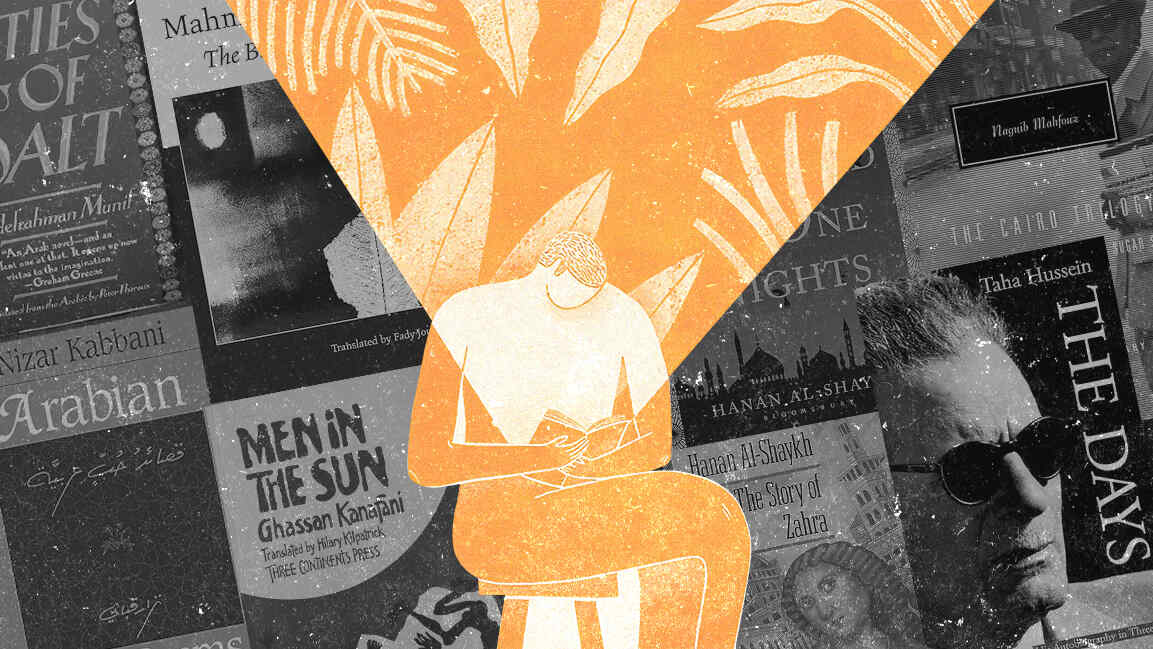


Books do more than tell stories. They carry ideas, preserve memory, and open conversations that extend far beyond their time.
Arabic literature, in particular, is shaped by a body of work that has influenced cultural and intellectual discourse across the region and has reached audiences well beyond it. These writings engage with identity, power, faith, exile, and transformation, capturing moments of upheaval and introspection with a clarity that remains relevant today.
Decades after their publication, many of these works continue to resonate, offering insight into both the past and the present. As World Book Day is marked globally, these ten Arabic books stand out for their lasting influence on how the region understands itself and how it is understood by the world.
One Thousand and One Nights (Arabian Nights)
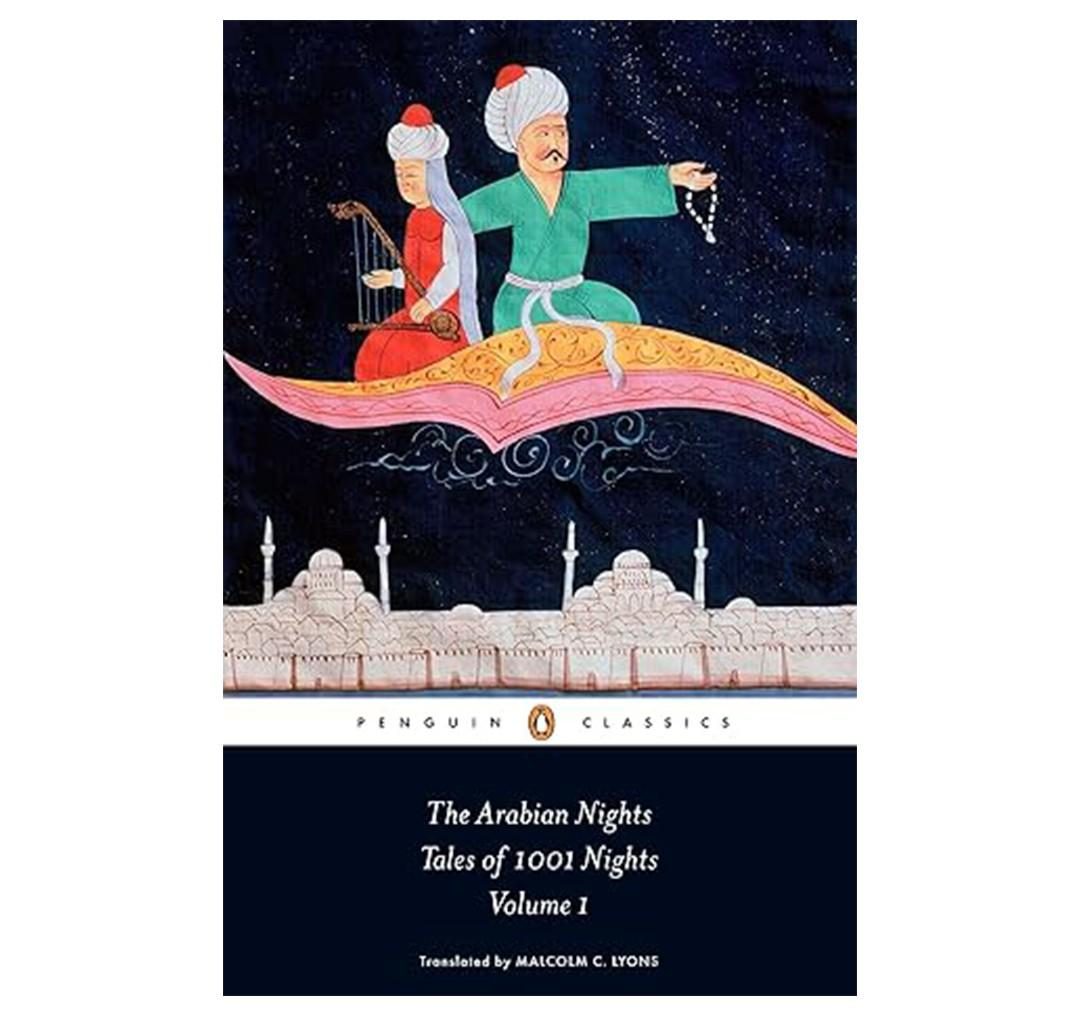
One Thousand and One Nights (Arabian Nights) book cover
“Stories are the bridge between what is and what could be.”
One of the most famous and enduring works of Arab literature is One Thousand and One Nights, also known as Arabian Nights. The collection is widely familiar across the Arab world, with its stories often introduced in childhood and passed down through generations as bedtime tales.
At its center is the fictional character Scheherazade. To delay her execution by a king who marries and kills a new bride each day, she tells him a story every night, ending each one on a cliffhanger. Her storytelling continues for 1,001 nights, gradually transforming the king and ultimately saving her life.
The collection includes a wide range of tales spanning romance, adventure, and fantasy. Among the best known are Aladdin and the Magic Lamp, Ali Baba and the Forty Thieves, and Sinbad the Sailor and his voyages.
One Thousand and One Nights is not the work of a single author but a compilation that developed over centuries. Its origins can be traced to ancient Indian and Persian storytelling traditions, particularly a lost Persian collection known as Hezar Afsanah (“A Thousand Tales”). Additional stories were added from the Arab world, especially during the Islamic Golden Age, when storytelling flourished in cities such as Baghdad and Cairo. Initially transmitted orally, the tales were later written down in Arabic between the 8th and 14th centuries, resulting in multiple versions over time.
The Cairo Trilogy by Naguib Mahfouz
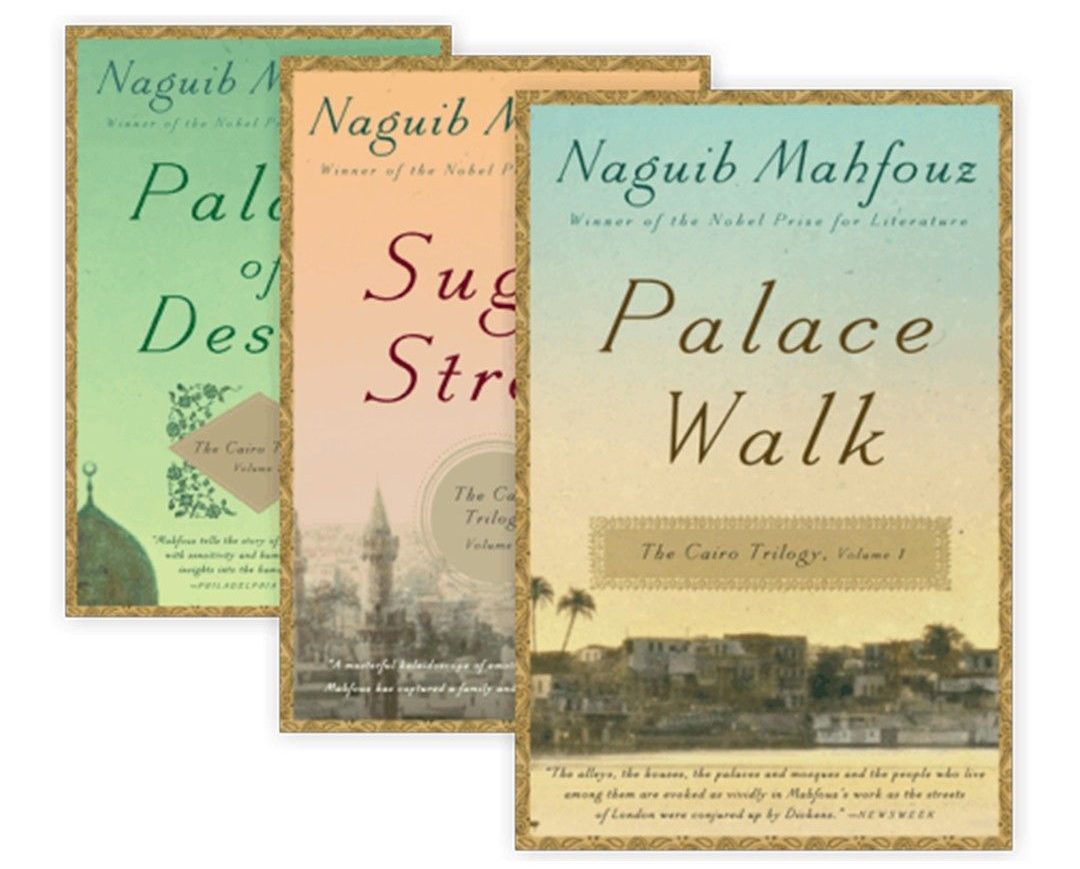
The Cairo Trilogy by Naguib Mahfouz book cover
“The past is gone, and the future is unknown, but the present is all we have.”
Naguib Mahfouz, widely regarded as one of the most influential writers in modern Arabic literature, was the first Arabic-language author to receive the Nobel Prize in Literature.
One of his best-known works is The Cairo Trilogy. This three-part literary masterpiece traces the evolution of Egyptian society through the life of a single family across generations. Each novel, Bayn al-Qasrayn, Qasr al-Shawq, and Al-Sukkariyya, is named after a real street in Cairo. The story centers on the patriarch Ahmad ‘Abd al-Jawad and follows his family from the Egyptian Revolution of 1919 through the final years of World War II, offering a microcosm of Egypt’s social and political transformation in the early 20th century.
A key figure in the trilogy is Kamal, the youngest son, who reflects aspects of Mahfouz himself. His intellectual and emotional journey, from childhood to adulthood, captures the tensions between tradition and modernity, touching on faith, love, self-discovery, and Western scientific thought.
A central theme throughout the trilogy is the passage of time, shown through both everyday routines and the accelerating pace of life across the three novels. Mahfouz suggests that social change is inevitable, driven by the continuous and transformative nature of human development.
The Days by Taha Hussein
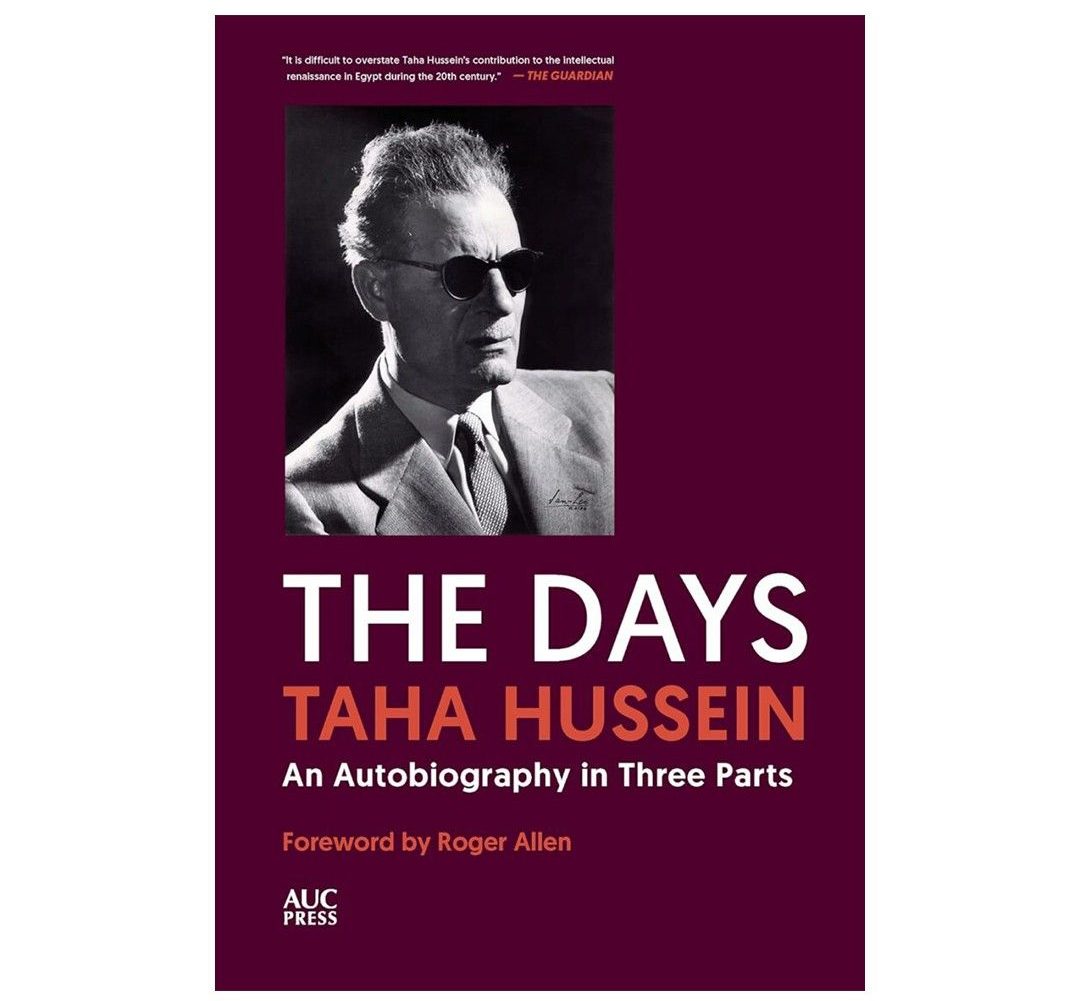
The Days by Taha Hussein book cover
“He began to understand himself only when he began to question everything around him.”
Al-Ayyam (The Days) is Taha Hussein’s most famous work and is considered one of the most important autobiographies in modern Arabic literature. First published in parts between 1929 and 1967, it is structured as a three-volume memoir tracing his life from childhood to early adulthood.
Al-Ayyam traces the early life of Hussein from a rural Egyptian village, where the loss of his eyesight becomes not a limitation but a lens through which his inner world and intellectual curiosity take shape.
At its core, the memoir is a story of education as a transformative experience. Hussein moves from a traditional kuttab to Al-Azhar University, where he becomes critical of rigid systems, then to Cairo University and, later, France. Each step marked a deeper shift toward modern, critical thought.
Told in a reflective third-person voice, the narrative blends intimate memory with sharp social observation, quietly critiquing poverty, superstition, and the limits of traditional learning.
Taha Hussein remains one of the most prominent figures in modern Arabic literature, often referred to as the “Dean of Arabic Literature.” His works span autobiography, literary criticism, fiction, and intellectual essays, many of which helped shape modern Arab thought.
The Story of Zahra by Hanan Al-Shaykh
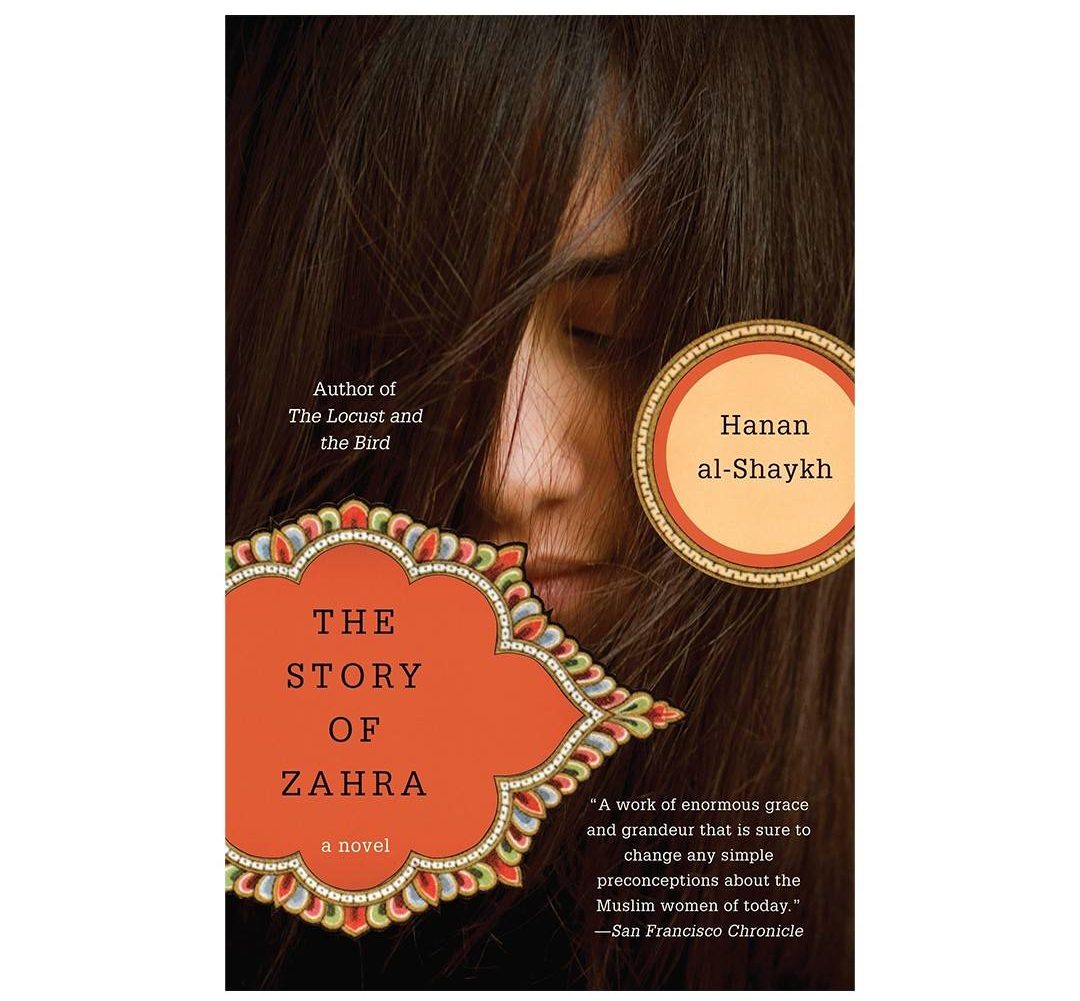
The Story of Zahra by Hanan Al-Shaykh book cover
“I was no longer afraid of death. I was afraid of life.”
Prominent contemporary writer Hanan Al-Shaykh is known for her bold, unflinching exploration of gender, identity, and social constraints in the Arab world. Often regarded as a key voice in modern feminist Arabic literature, her work examines the taboos surrounding sexuality, patriarchy, and women’s autonomy.
One of her most acclaimed novels is The Story of Zahra. Set against the backdrop of the Lebanese Civil War, the novel follows Zahra, a deeply troubled young woman navigating a life marked by family dysfunction, emotional trauma, and social repression.
As the conflict intensifies, Zahra’s personal struggles mirror the chaos around her, blurring the line between victimhood and agency. The novel is especially noted for its candid treatment of female sexuality and its critique of patriarchal structures, making it both controversial and widely influential.
Arabian Love Poems by Nizar Qabbani
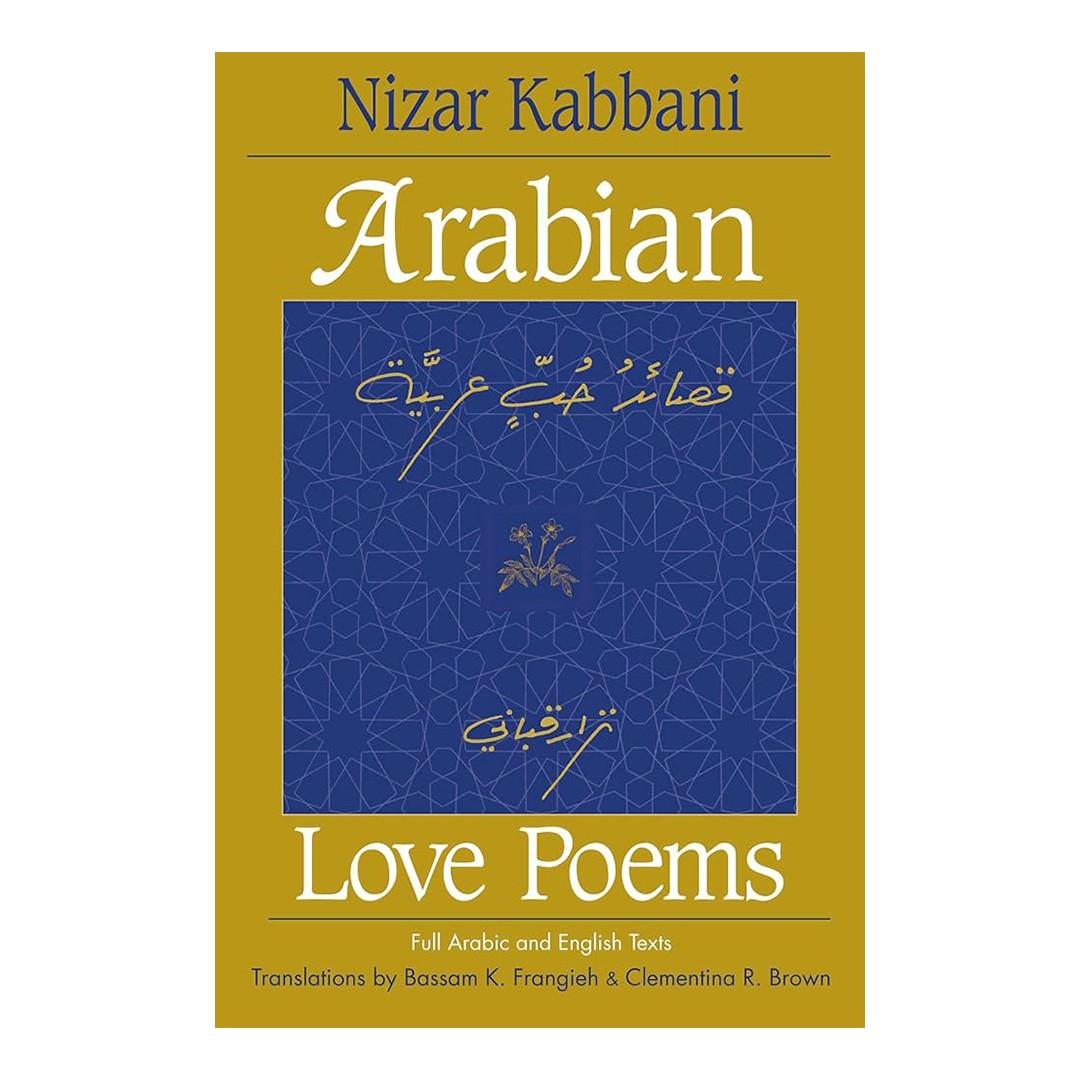
Arabian Love Poems by Nizar Qabbani book cover
“When I love, I feel I am born again.”
Not only fiction, but poetry is also one of the pillars of Arabic literature. Among its greatest figures stands Nizar Qabbani, widely regarded as Syria’s national poet. Arabian Love Poems is considered one of the key English-language introductions to his work. It is a bilingual edition presenting the original Arabic texts, some of them handwritten by Qabbani, alongside English translations by Bassam Frangieh and Clementine Brown.
The collection brings together some of Qabbani’s most recognizable poetic themes, centering on love in its many forms: passionate, reflective, and emotionally complex. Written in a direct and intimate voice, the poems explore the psychological dimensions of relationships, often foregrounding vulnerability, longing, and desire.
A defining feature of the work is its reimagining of women not as abstract ideals, but as fully realized, autonomous figures. In doing so, Qabbani challenges prevailing literary and social conventions, particularly around intimacy, gender roles, and emotional expression.
Beyond its romantic core, Arabian Love Poems also engages with broader tensions between tradition and modernity. Through its blend of lyrical simplicity and emotional intensity, the collection reflects Qabbani’s wider poetic project: positioning love as both a deeply personal experience and a subtle form of cultural and social resistance.
The Butterfly’s Burden by Mahmoud Darwish
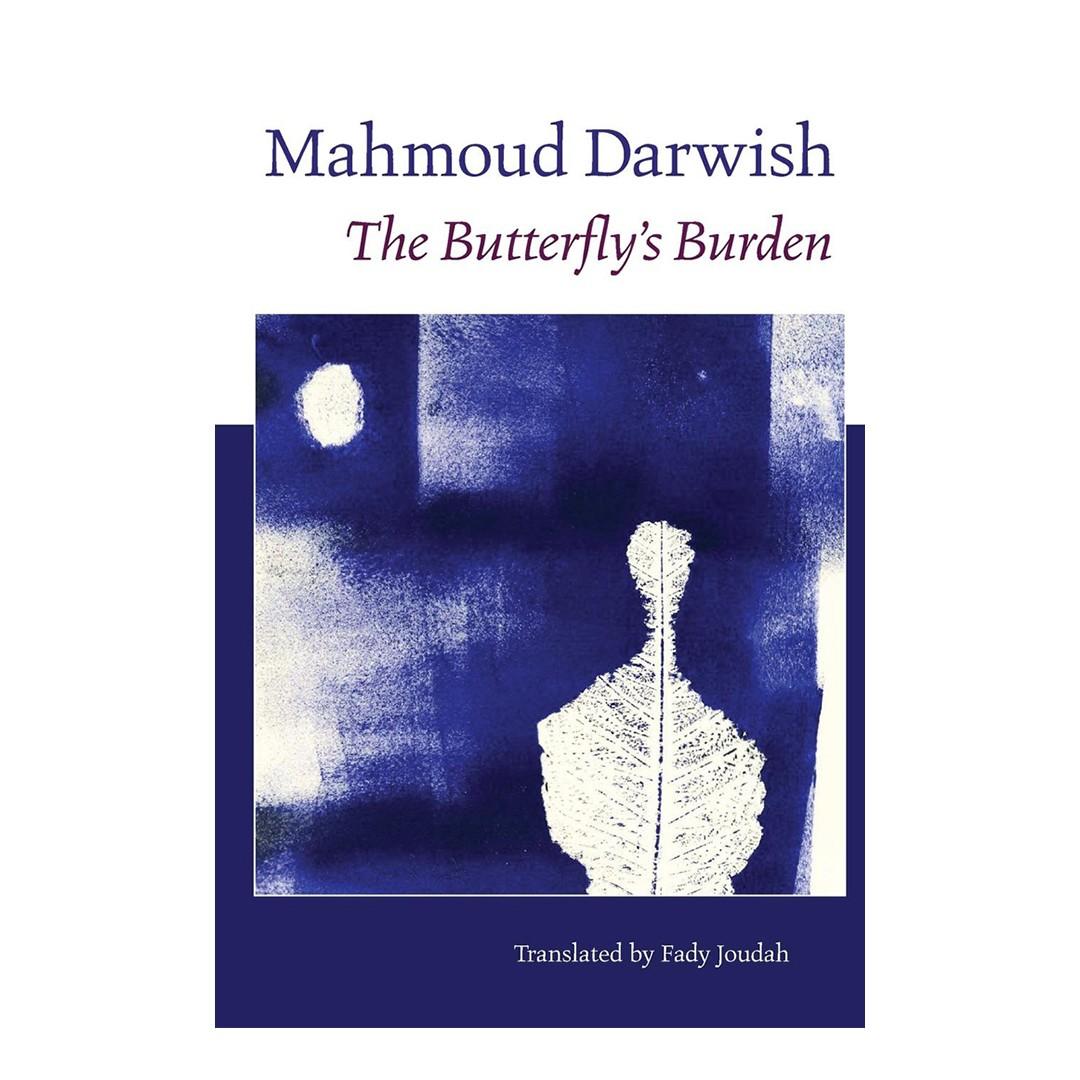
The Butterfly’s Burden by Mahmoud Darwish book cover
“We live as if we will never die, and die as if we never lived.”
The Butterfly’s Burden stands as a defining late work by Mahmoud Darwish, written during the final phase of his career, when his poetry shifted toward a more reflective, philosophical register. Published in 2008, the collection gathers poems that move beyond direct political declaration into a quieter, more introspective exploration of existence.
While still rooted in the Palestinian experience of displacement, exile, and historical rupture, the collection broadens its scope to universal themes. Questions of identity, mortality, love, and meaning recur throughout, framed in a language that is increasingly symbolic and restrained. This shift emphasizes contemplation rather than confrontation, without abandoning the historical weight that underpins his work.
Mahmoud Darwish is widely regarded as the national poet of Palestine and one of the most influential figures in modern Arabic literature. He emerged in the 1960s as a leading voice in Palestinian resistance poetry, using accessible yet highly symbolic language to articulate collective trauma and national aspiration. Among his other notable works are Leaves of Grass (Awrāq al-Zaytūn), and Unfortunately, It Was Paradise.
The Prophet by Kahlil Gibran
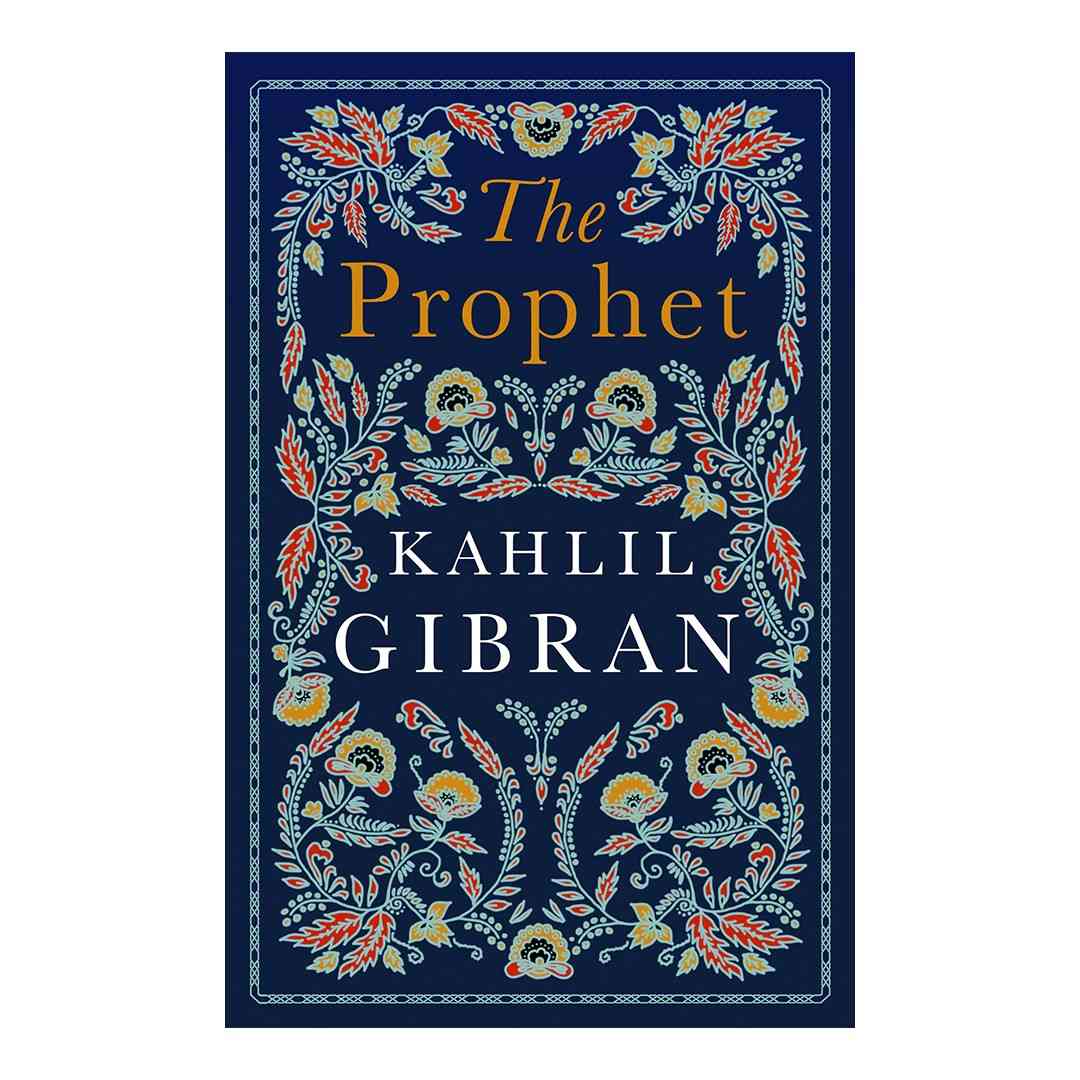
The Prophet by Kahlil Gibran book cover
“The deeper that sorrow carves into your being, the more joy you can contain.”
The Prophet by Kahlil Gibran is one of the most widely read and translated works of the 20th century. First published in 1923, it blends poetry, philosophy, and spiritual reflection in a series of lyrical essays that explore fundamental aspects of human life.
The narrative centers on Almustafa, a prophet who has lived in a foreign city for twelve years and is preparing to return to his homeland. Before his departure, the townspeople ask him to share his wisdom on subjects including love, marriage, work, freedom, joy, sorrow, and death. Each chapter takes the form of a response, offering contemplative insight rather than direct instruction.
Stylistically, the work is known for its poetic prose, drawing on both Eastern and Western philosophical traditions. Gibran’s voice is universal and timeless, allowing the text to resonate across cultures and generations.
Kahlil Gibran (1883–1931) was a central figure in modern Arabic literature and a leading member of the Mahjar literary movement. Born in Bsharri, in present-day Lebanon, he later emigrated to the United States, where he developed a bilingual literary career, writing in both Arabic and English.
Men in the Sun by Ghassan Kanafani
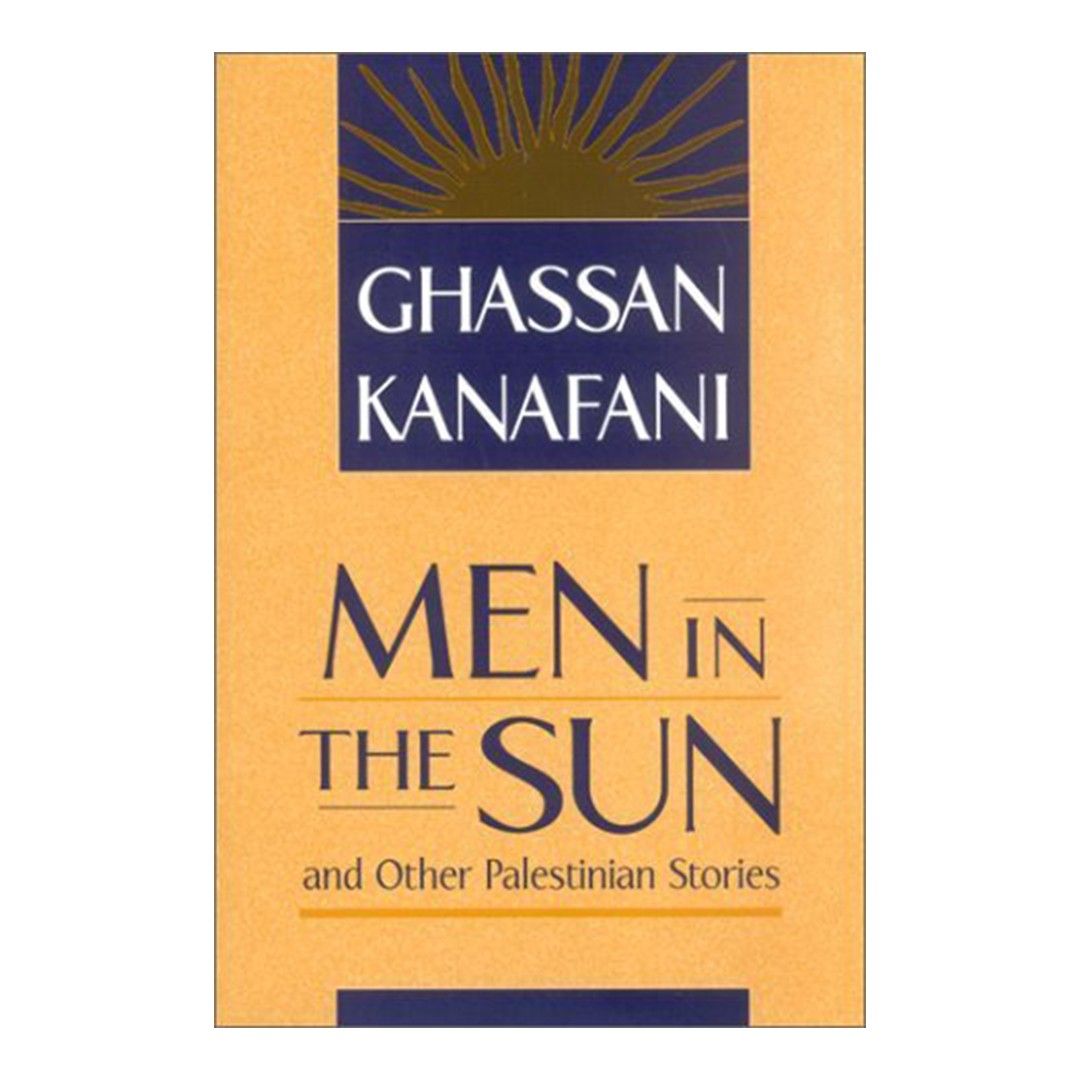
Men in the Sun by Ghassan Kanafani book cover
“We are not afraid of death, but of dying for nothing.”
Men in the Sun by Ghassan Kanafani unfolds as a stark, tightly controlled narrative of displacement and survival. First published in 1963, it follows three Palestinian men from different generations as they attempt to cross the desert into Kuwait in search of work and stability.
Their journey takes place in secrecy, with the men hidden inside an empty water tanker as it travels through the searing heat. Their passage is mediated by a truck driver, whose role becomes central to the novel’s moral tension, embodying both the possibility of escape and the consequences of indifference.
As the temperature rises, the tanker’s confined space becomes a suffocating metaphor for statelessness. Kanafani uses this physical enclosure to reflect a broader political reality. Written in a spare, unsentimental style, the novel relies on symbolism and silence rather than extended exposition. The desert heat, the sealed container, and the gradual breakdown of the journey all function as layered metaphors for exile and erasure.
Ghassan Kanafani was one of the most influential Palestinian writers of the 20th century, as well as a novelist, journalist, and political activist. In addition to Men in the Sun, his notable works include Return to Haifa and All That’s Left to You.
Cities of Salt by Abdulrahman Munif
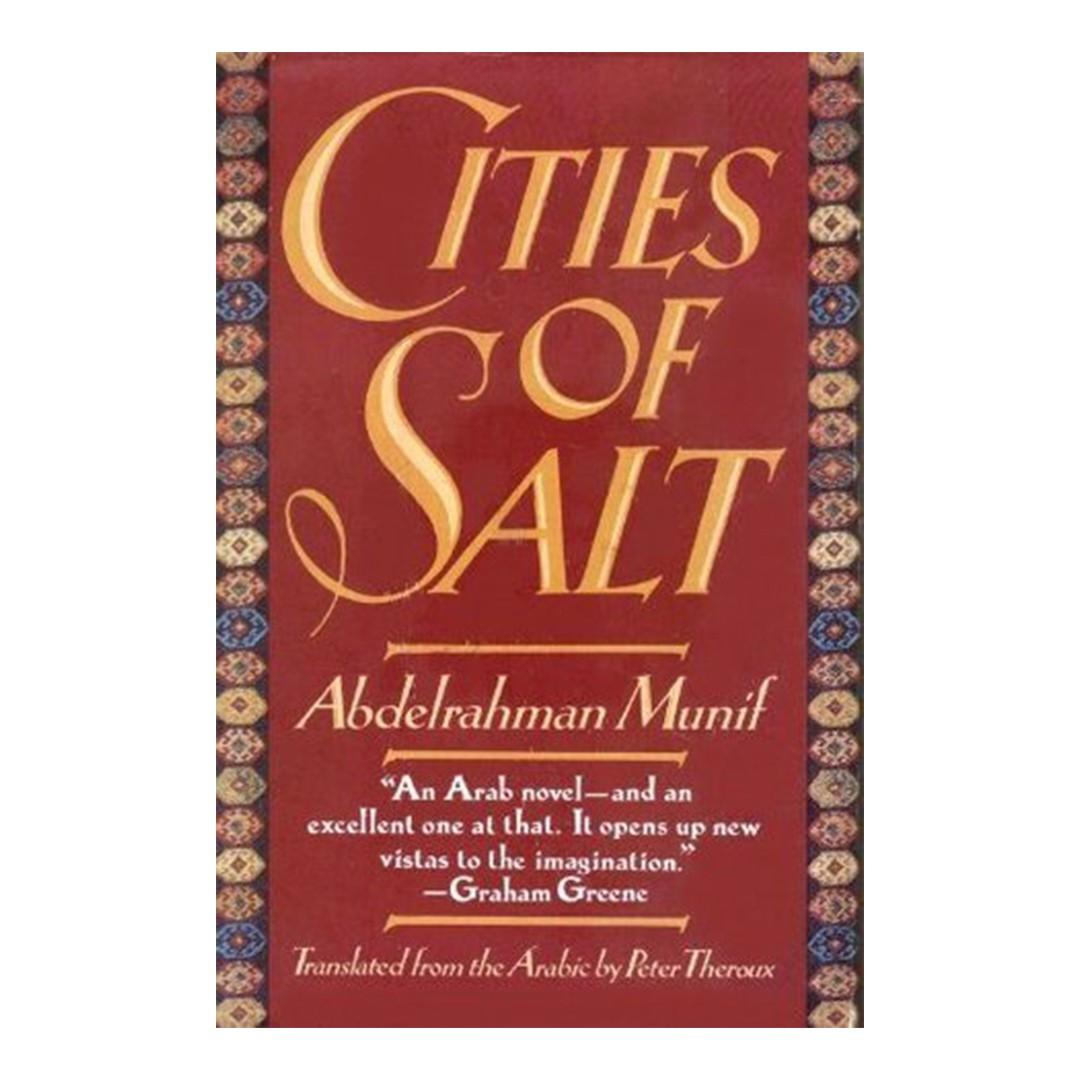
Cities of Salt by Abdulrahman Munif book cover
“They thought they were building a future, but they were losing their past.”
Cities of Salt by Abdul Rahman Munif is a landmark work of modern Arabic fiction, first published in 1984. Set in a fictional desert community, the novel traces the arrival of foreign oil companies and the rapid transformation that follows. What begins as a quiet, self-contained world defined by tribal structures, oral traditions, and a deep connection to the environment quickly gives way to industrial expansion and external influence. Villages are displaced, landscapes altered, and long-standing social rhythms disrupted.
Munif resists a single protagonist, instead constructing a collective narrative that moves across different voices and perspectives. Through workers, merchants, tribal leaders, and officials, the novel captures a society grappling with the promises and consequences of modernization.
Abdul Rahman Munif (1933–2004) was one of the most influential Arab novelists of the 20th century, known for his critical exploration of politics, oil, and social transformation in the Arab world. His works often challenged authority and examined the relationship between power, wealth, and change, leading to some of his books being banned in parts of the region.
Zainab by Muhammad Husayn Haykal
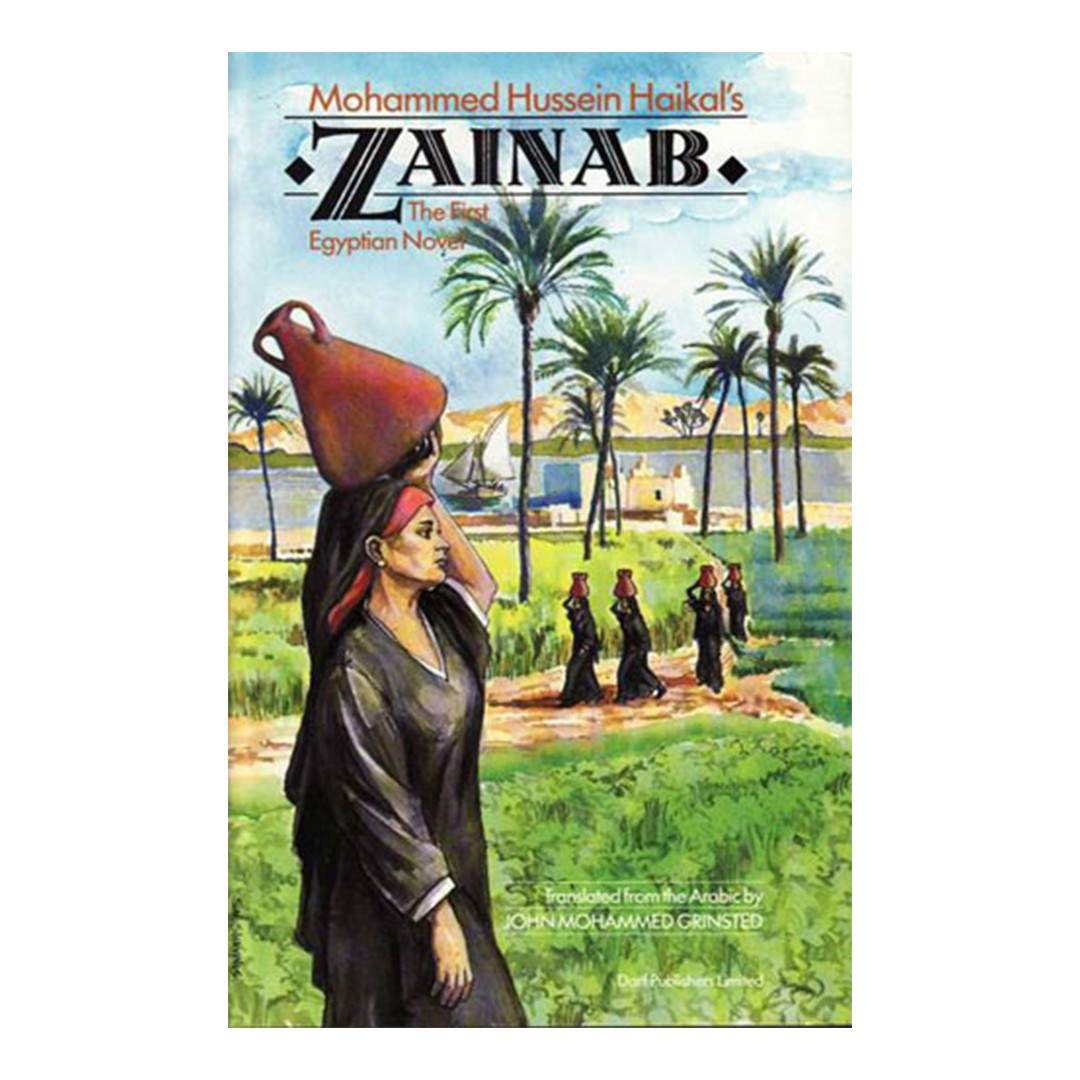
Zainab by Muhammad Husayn Haykal book cover
“In tomorrow there is death and life, heaven and hell… the state of the unknown, before which the mind is bewildered and imagination falls short.”
Zainab is widely regarded as the first modern Arabic novel, first published in 1913 by Muhammad Husayn Haykal under the pseudonym “Masri Fallah” (an Egyptian peasant).
Set in the Egyptian countryside, the story follows Zainab, a young peasant woman whose life is shaped by love, social expectation, and rigid rural traditions. She becomes emotionally attached to Ibrahim, a foreman on the estate, but class divisions and social norms constrain their relationship. Eventually, Zainab is married according to family arrangements, and her personal desires are subordinated to tradition.
At its core, Zainab is both a love story and a social critique. It portrays rural life with a degree of realism that was rare in Arabic prose at the time, focusing on agricultural labor, social hierarchy, and the emotional lives of peasants.
Muhammad Husayn Haykal (1888–1956) was an Egyptian writer, politician, and intellectual who played a key role in shaping modern Arabic literature and thought. Educated in Egypt and France, he was deeply influenced by European literary traditions, which he helped introduce into Arabic writing.
Beyond Zainab, Haykal was a prominent journalist, essayist, and political figure. He served in various governmental and parliamentary roles and was closely involved in Egypt’s intellectual and nationalist movements in the early 20th century.