- | 9:00 am
AI is everywhere in the Middle East. Trust isn’t.
The use of AI is becoming routine across the Gulf.. Trust is proving harder to automate, and increasingly depends on what happens behind the interface.
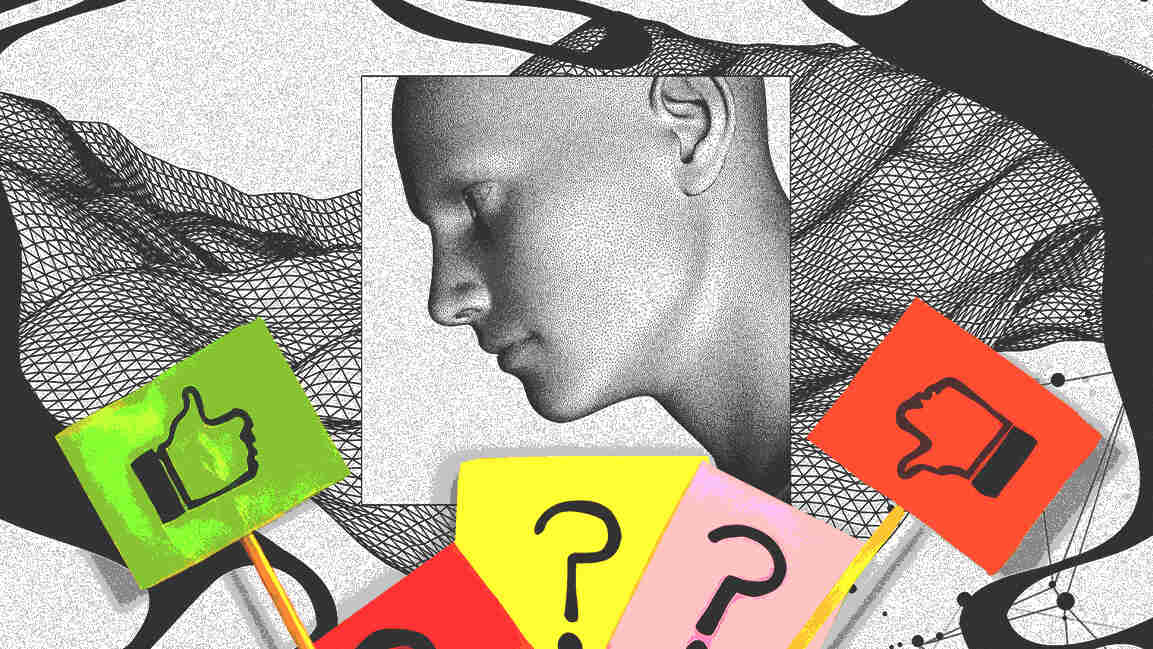


AI has already won the adoption argument in parts of the Middle East. The technology is helping people to work, shop, bank, communicate, navigate public services, and more.
In the UAE, 97% of Emiratis use AI for work, study, or personal purposes, according to research from the University of Melbourne and KPMG in 2025. In Saudi Arabia, the figure stands at 94%.
Interestingly, the same report found that only 53% of UAE respondents believed AI’s benefits outweighed its risks. In Saudi Arabia, 62% said they were willing to trust AI systems, while 73% remained concerned about negative outcomes.
Tabby’s 2026 survey of more than 20,000 shoppers in Saudi Arabia and the UAE found 43% used AI to help make purchasing decisions. Only 30% fully trusted its recommendations. Visa’s 2026 UAE research found that while 85% had used AI to assist with shopping, just 32% trusted AI agents to complete checkout.
These numbers reveal that people are more comfortable letting AI advise than letting it act.
For Johannes Hummer, CEO of Freedom Telecom International, that distinction will become increasingly important as AI takes on more responsibility. Trustworthy AI services, he says, need to be observable, responsible, and reversible.
That means users should be able to understand what a system did, know who is accountable for it, and have a way to challenge or reverse a bad decision.
Tarik Chebib, CEO Middle East at Capital.com, sees a similar issue in financial services, where automation can move much faster than human oversight.
“The real risk is automation increasing the speed and scale of a mistake before anyone notices,” he says. A manual process can fail slowly and visibly, he explains, while an automated system can fail “fast and quietly, across thousands of accounts.”
That makes the ability to detect, contain, and reverse mistakes part of the trust equation. The question, then, is not simply whether AI works. It is about whether people believe they still have control when they don’t.
TRUST ISN’T JUST ABOUT WHETHER AI WORKS
Much of the conversation around trustworthy AI focuses on accuracy, bias, and the quality of the underlying model. But Professor Quy Huy, Solvay Chaired Professor of Technological Innovation at INSEAD, says that trust at work is more complicated.
“Trust is not a monolithic concept,” he says.
Huy distinguishes between cognitive trust, which concerns whether someone believes a system is technically competent, and affective trust, which concerns whether they believe it has their interests at heart.
An employee may therefore believe an AI system is capable of doing its job while simultaneously worrying about what it will do with their data or how its decisions could affect them.
Huy suggests one way companies can assess trust is by looking at what employees are willing to share with AI tools. Someone who trusts the technology may be willing to enter sensitive information, such as details about poor performance or difficult relationships at work. Someone who doesn’t may restrict their inputs to superficial or publicly available information.
In other words, an employee can appear to be using AI while quietly keeping the technology at arm’s length.
That creates a problem for companies eager to measure AI adoption. Usage does not necessarily equal acceptance.
THE AI MODEL MAY NOT BE THE BIGGEST RISK
For Hummer, much of the debate about trustworthy AI focuses on the wrong layer.
“People focus on whether an AI model can be trusted because the model is the visible artifact,” he says. “But trust is distributed across all the components.”
Every AI interaction can involve a chain of systems. Data leaves a device, moves through a telecom network, enters cloud infrastructure, reaches a model, and eventually returns to the user.
“The foundational trust question for end users is: what happens to my data when it leaves my device, travels across a telecom network, enters a cloud environment, gets processed by an AI model, and returns as a response?” Hummer says.
Tarik makes a similar argument from the financial services side.
“The technology itself is the visible 10%. The other 90% is what makes it safe to deploy with real money,” he says, pointing to identity verification, transaction monitoring, encrypted storage, regulatory reporting and audit trails as examples of the infrastructure that customers rarely see.
For him, the model itself is replaceable. The more important question is how the platform around it handles data, access and accountability.
“A well-governed platform running an average model holds up better than a brilliant model running on weak infrastructure,” he says.
That shifts the trust debate away from the AI model alone and toward the systems surrounding it.
WHEN AI ENTERS THE WORKPLACE
The challenge becomes even more complicated when AI starts influencing decisions about people.
Companies may use AI to assess candidates, monitor performance, summarize employee activity, or support managerial decisions. But Huy argues that the technology itself isn’t necessarily the problem.
“AI is just another technology. Trust is developed from how leaders of the organization use this tool,” he says.
His recommendation is less about convincing employees to trust AI and more about involving them in its introduction: explain upfront how and why the tools will be used, communicate how implementation will affect employees, and create a two-way dialogue where concerns can actually influence how the technology is deployed.
That matters because resistance to AI isn’t necessarily evidence that employees are behind the curve.
Huy says that what managers interpret as resistance can sometimes be healthy skepticism. Employees who don’t trust a system may fake compliance, provide only superficial data, use incorrect but plausible information, or secretly turn to other AI tools to work around an organization’s preferred system.
The bigger risk, then, may not be employees refusing to use AI. It may be employees using it without believing in it.
TRANSPARENCY MEANS MORE THAN SAYING AI WAS INVOLVED
Companies often respond to concerns about AI with disclosure. But telling someone that AI was involved doesn’t necessarily tell them anything useful.
“Undisclosed AI use is a trust deficit waiting to surface,” Chebib says.
For consumers, he argues that transparency should answer three basic questions: Was AI involved? What can it decide? And how can I reach a person when it matters?
He adds: “We’d rather over-disclose and build trust than have a client find out after the fact that a decision affecting their money was automated. The technology assists. People decide, and people stay accountable for what happens next.”
The same principle applies to Hummer’s view of transparency. Disclosure alone isn’t enough. Users need to understand what the system did and why.
That becomes increasingly important as AI disappears into ordinary digital services. Consumers may eventually encounter consequential AI decisions without consciously choosing to interact with an AI product at all.
This is where transparency stops being an interface feature and becomes governance.
Research by the University of Melbourne and KPMG suggests consumers want those guardrails. In the UAE, 68% believed that existing regulations were sufficient to ensure safe use of AI. Yet 88% wanted laws addressing AI-generated misinformation, while 84% said assurances of trustworthy use would increase their willingness to trust AI.
Saudi respondents showed a similar tension. While 84% accepted or approved of AI, 60% believed regulation was necessary. Another 68% said they were unsure whether online content could be trusted because it might be AI-generated.
High adoption isn’t eliminating scrutiny. It may be producing more informed scrutiny as consumers discover where AI works—and where they don’t want to surrender judgment.
THE REAL TEST COMES WHEN AI GETS SOMETHING WRONG
Hummer’s third requirement, reversibility, may become the most important as AI moves from generating content to making decisions.
“Reversibility means every AI decision can be rectified if necessary,” he says. “This requires guardrails and human checkpoints.”
Chebib sees the same principle in financial services, where the ability to identify and reverse an automated error can be more important than simply making the system faster.
People don’t necessarily need to believe an AI system will never make a mistake. They need confidence that a mistake can be identified, challenged, and corrected—and that someone remains accountable when it happens.
That changes the competitive question around AI.
Companies have spent the past few years demonstrating what their systems can do. The next phase will force them to demonstrate what happens when those systems shouldn’t have done it.
For Hummer, that means companies need to think about trust before deployment rather than treating it as an add-on. The companies that succeed, he says, will build observability, reversibility, and clear identity into their systems from the beginning.
Huy arrives at the same destination from a management perspective: organizations need to actively manage the different dimensions of trust rather than assuming employees will simply become comfortable with AI over time.
The Middle East has already demonstrated that people will use AI. The more consequential question begins after adoption, when an algorithm stops suggesting what someone should do and starts doing it for them.
At that point, trust won’t be measured by how intelligent the AI appears when everything works. It will be measured by what happens when it doesn’t.